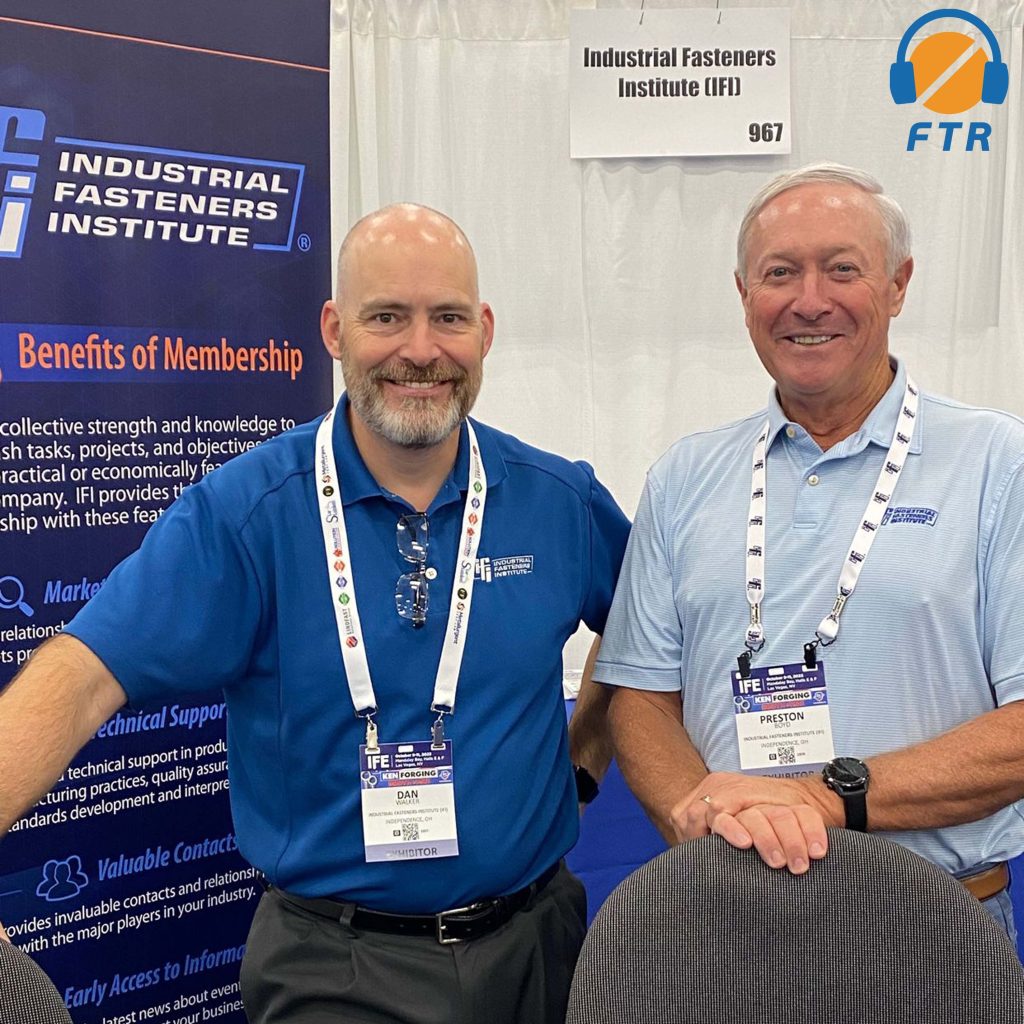
Fastener sales continue to race along, as Star Stainless president Tim Roberto Jr. and news editor Mike McNulty explain as they present the latest high octane FDI results on the Fastener News Report (44:34). Meanwhile, industry journeyman and BBQ connoisseur Tony Martinez of Buckeye Fasteners describes a great place for a pit stop (33:15). Back behind the wheel in the fastener industry, newly appointed All-State Fastener CEO Dan Hill shares his view of the road ahead (15:56). Feature: Dan Walker and Preston Boyd of the Industrial Fasteners Institute describe an exciting new apprenticeship program designed for domestic fastener manufacturing (1:31:55). On the Fastener Training Minute, industry expert Carmen Vertullo looks at hydrogen embrittlement testing (1:20:03). Brian and Eric suspect Sam Altman has a secret fastener fetish.
—
Listen to the podcast here
Important Links
- Dan Walker on LinkedIn
- Preston Boyd on LinkedIn
- Mike McNulty on LinkedIn
- Tim Roberto Jr. on LinkedIn
- Dan Hill on LinkedIn
- Carmen Vertullo on LinkedIn
- Marco Rodriguez on LinkedIn
- Tony Martinez on LinkedIn
- Paula Giorgio on LinkedIn
- Nick Giorgio on LinkedIn
- Laurin Baker on LinkedIn
- Salim Brahimy on LinkedIn
- Mike Mowins on LinkedIn
- Mark Quebbeman on LinkedIn
- Laurence Claus on LinkedIn
- Larry Spelman on LinkedIn
- Brian Musker on LinkedIn
- Eric Dudas on LinkedIn
- Industrial Fastener Institute
- Star Stainless
- Cresa
- FTR@FullyThreaded.com
- FTR Episode #220 FL Why? – Previous Episode
- North Coast Fastener Association
- Big Country Labs
- GM wants parts makers to pull supply chains from China
- Ferraro Foods
- Hill Creek Farm
- AllStateFastener.com
- AFC Industries
- E-Z LOK
- KBC Tools & Machineries
- Rotor Clip
- Fastener Industry Coalition
- TriMas
- LindFast Solutions Group
- Fastenal
- Fastener Distributor Index Monthly Survey
- Böllhoff
- Growermetal
- ARaymond
- MSC Industrial
- Lee S. Johnson Associates
- Fastener Technology International Magazine
- National Electric Manufacturers Association
- Reshoring Institute
- ITR Economics
- McNulty@FastenerTech.com
- Fastener Training Institute
- Carver Labs
- ASTM
- Mid-West Fastener Association
- Laurin Baker Group
- Industrial Fastener Institute
- Precision Metalforming Association
- Forging Industry Association
- Advanced Manufacturing Center
- METAL
- Workforge
- Fastener Industry Coalition
Pit Stop
It is Fully Threaded Radio, voice of the FCH Sourcing Network. If you buy, sell, manufacture, import threaded fasteners, or if you just dig the things, it’s the show for you. Coming to you from semi-rural Northeast Ohio, Eric Dudas with you. The co-host of the show is with us as well. He’s a fastener, code slinger extraordinaire, Brian Musker. What’s up, Brian?
How are you doing? I come from extremely non-rural Chicago suburbs.
It’s bordering on urban where you are.
Not. This is urban. Sorry. I was mistaken with my rural and urban.
I don’t do that. We have roosters. You have parakeets.
This is for video stuff. I should have shown you what the parrot did to one of our electrical cables. How it didn’t get electrocuted? I have no idea. It chewed all the insulation off two of the wires.
Harpo does get into his share of mischief, doesn’t he?
Yes, very much so.
Come on out here to the country, Brian. It’s nice and safe. All we have to do is watch out for the occasional beaver. Maybe a rabbit, opossum, here and there, but otherwise, it’s just great.
That would be much safer than here. We have raccoons, opossums and parrots.
IFI Apprenticeships, Fastener Trends, Industry Updates, And Expert Insights
It’s an urban jungle. It’s very safe here on episode 221. It’s a content-heavy episode. We’re going to dive right in. Our title segment is a conversation with IFI Executive Director Dan Walker and Preston Boyd, who runs the industrial segment of the IFI. That’s the Industrial Fastener Institute.
You might recall from the previous episode, IFI had their fall conference and so much went on. The takeaway for me was speaking with Dan and Preston about the exciting new apprenticeship program that they’re launching. We’re going to fill you in on all the details of that. Plus, a few other things about the IFI that you might not have known. Very appropriate these days, Brian, as more and more people are looking at domestic opportunities. That’s what the IFI is all about, domestically-manufactured fasteners.
Are we right in that game?
On that subject, Tony Martinez with Buckeye Fasteners joins us also to warm up Mike McNulty. He’s going to mention an interesting trend that he’s seeing from the big three automakers. When we get to the Fastener News Report, McNulty is joined by Star Stainless President Tim Roberto Jr. They’re going to look at the Fastener Distributor Index, which is still on a roll, Brian. The Forward Looking Indicator shot up. I don’t know where it’s coming from, but we’re going to keep on taking it. What do you say?
In fact, I was talking to another of our members about that very thing. He wasn’t quite in agreement with the results. He fills the survey. I said, “You need to say something that has a special place to comment far away. Tell them what you think, why you think it’s different.”
The Fastener Distributor Index is a good place to share your ideas with the industry. That was good advice, Brian. We’ll talk about that a little bit later. That’s the Fastener News Report with Mike McNulty. His headline ties into our opening segment, which is that Dan Hill has returned to the fastener industry after a couple of year hiatus.
He has been named the new CEO of Michigan-based All State Fastener. Mike and I didn’t coordinate this, but he used it as the top story. After this episode’s over, you’ll know all about what’s going on up at AFS. Carmen Vertullo has the Fastener Training Minute for us. This time, hydrogen embrittlement aficionados will be very happy. This time, it’ll be hydrogen embrittlement testing.
As usual, we’ll learn tons.
Plus, Marco Rodriguez with Cresa drops in another of his industrial real estate updates. It’s a packed episode, plenty to jam in, and plenty of partners making it all possible. The title sponsors of Fully Threaded Radio are Brighton-Best International. Tested, tried, true, Brighton-Best. Goebel Fasteners, quality the first time. Go Goebel. Star Stainless, right off the shelf, it’s Star.
Fully Threaded Radio is also sponsored by Buckeye Fasteners and the Ohio Nut and Bolt Company, BTM Manufacturing, Eurolink Fastener Supply Service, Endries International, Cresa, Fastener Technology International, INxSQL Software, J.Lanfranco, MW Components, Solution Industries, Volt Industrial Plastics, and Würth Industry USA. Let us know if you’ve got ideas, comments, or questions on the podcast, or otherwise. The email address, FTR@FullyThreaded.com. Brian and I are also easy to catch on LinkedIn.
Eric’s a little easier to catch than Brian is.
Most days true, Brian. After the last episode, I’ve got a correction to make. I was wrong. Lynn does have a LinkedIn account. I never saw her out there. After I made the comment on episode 220, she proved me wrong, came in, and added a comment to one of my threads. Although, she doesn’t have a photo out there, Brian, but she does have a seldom-used LinkedIn account. Sorry, Lynn. I stand corrected. Bet you didn’t even know that, did you?
Not really.
You don’t care, whatsoever, but probably for the best. Keep your mind on what’s important. That is slinging code for FCH and cleaning up fastener data for the fastener industry.
At the moment, lots of it.
Everyone can respect that. Somebody’s got to keep the wheels on this whole machine. Speaking of that, before we get to a quick break and unfurl this very content-rich episode. I want to point out that we’ve been doing several upgrades to the Fully Threaded webpage, which many of you know. I just realized that there’s been a problem with one of the interior pages on the mobile device side.
When you drill into the blog pages, which are cool, we’re putting our show notes and things on these. The style sheet’s all messed up. It doesn’t look quite right. We’re going to get that fixed. Probably, by the time you read this, it’ll be fixed. I did want to make a note of it in case any of you got out there and just gave up in aggravation. Which, let’s face it, I don’t have a very high tolerance for websites that don’t work on the phone anymore. Once upon a time, there was no big deal.
You could say you have very little tolerance for websites that do not work on the phone.
On that subject, I learned something with this new stats counter that we’ve got running on the show also. More and more people are listening to podcasts on watches. Did you know that?
Not at all.
It’s the fastest growing trend in podcasting, much to my surprise.
How does a page show up on a watch then? How does a podcast show up on a watch?
I’m not sure people are using it to view. I think they’re just listening on their watches. That’s my guess. Frankly, I don’t know what people are doing anymore. When I saw that stat, it surprised me. It doesn’t surprise me that more people are listening to podcasts or that they’re using mobile devices. It stands to reason. People want to take it with them. Did you ever think that you would be considered Stone Age if you just used your iPhone podcast app? A few years ago, that seemed like such a hip thing to do.
As opposed to sitting in front of your desk, listening to it on this big screen.
That’s so Windows 95.
I remember Windows 95. I hated it, but still.
We’re running the risk of getting back into one of our retro moments, which we don’t need to do. Put a wrench on this one. Thanks for reading, everyone.
—
AI Fatigue, Industry Trends, BBQ Events, And Shifting Global Supply Chains
Brian, we’re not going to talk very much about AI in this episode. There’s a little fastener industry AI fatigue setting in.
Understandable.
I know there are all kinds of projects going on in the background. It’ll be interesting to see who rips that open the widest, the fastest, but that remains to be seen. Anyway, we’re not going to dwell on AI very much. However, I did want to point out that something occurred to me when I was scanning around. Look at the OpenAI logo, Brian. What do you see? It’s not a Rorschach-type question. There’s a fastener tie in that’s been right under our noses.
I didn’t know that.
I’ll just cut to it. Real closely, it’s a hex head cap screw nestled inside the OpenAI logo. I’ve seen it a hundred times. It just stood out to me.
I must have seen it a hundred times. It hasn’t stood out to me at all.
No big deal. Just stuff you jam in the folder for show note ideas. Here’s another one. We’ve been talking about the NFBBQA on a few episodes. That’s the National Fastener Barbecue Association, folks. A lot of barbecue lovers in the industry. Brisket Fest ‘26 will be here sooner than we know. Last couple of years, Brian, we tied this into the NCFA Social Week.
We’re going to try and do that again and dovetail it. We’re going to be in either the 3rd or 4th week of May 2026 for Brisket Fest 3. A lot of interest this year. It seems like energy is building behind it. The NCFA Board will be making their decision on when their date is. For us, it makes a lot of sense to help each other out on that one.
Standby, everyone. I’ve been getting a few questions on the exact date. Looking forward to seeing a lot of people. I know Carmen’s in, TJ’s in, Rob, Big Country will be here with the whole setup. We’ve got plenty of pitmasters lined up. That’s going to expand even for 2025, too. There’s your update on Brisket Fest ‘26 to those who have been wondering. Tony Martinez with Buckeye, as I announced, he’s going to be joining us to kick off the news. He is going to cook on site this 2025.
One of the things we’re going to talk about in this segment coming up is our discovery of a good pit, not too far from the Cleveland airport. He was also mentioning to me the fact that the big three automakers are encouraging their suppliers to look for domestic sources. Keeping with that, in the headlines, this comes from BusinessTimes.com. The headline is, “GM wants parts makers to pull supply chains from China.”
The story starts out, “General Motors has directed several thousand of its suppliers to scrub their supply chains of parts from China, reflecting automakers’ growing frustration over geopolitical disruptions to their operations. GM executives have been telling suppliers they should find alternatives to China for their raw materials and parts, with the goal of eventually moving their supply chains out of the country entirely.”
That’s going to create an interesting backlash in China.
It is pretty big news. It means a lot of things. Again, Tony has some direct experience with this. We’re going to be digging into this a lot more in upcoming episodes. It seemed like a natural thing to throw this instance whizzed by in the headlines.
Very interesting.
Another guy who will know a lot about this is the new CEO of All State Fastener because they’re heavy in the automaker supply chain. Let’s get to that segment.
—
Dan Hill Returns To Fasteners, Leadership Insights, And Business Growth At All State Fastener
It’s often said in the fastener industry that once you’re in, you’re not getting out. Dan Hill, you have been in the fastener industry and then you haven’t been in. What can I say? Welcome back.
Great to be back, Eric. Thank you very much for having me on the show. Much appreciated. You’re right. It’s a little bit like a Hotel California. You can check out anytime you, but you can never leave. That’s why I’m back.
I guess I was a little surprised when I saw the headline fly by on LinkedIn, because I didn’t know specifically. I had a feeling that this would happen, something like it. Let’s refresh everybody’s memory. You took a two and a half year stint. You’ve been selling pizza. Is that what it is? Bring us up to speed here, Dan. You’re now with All State Fastener. Let’s say that right up front. You are the newly appointed CEO. Congratulations.
Thank you very much. I’m thrilled to be coming back to an industry I truly love. Especially to All State, a company that’s ready to compete and win on a global scale. With the entrepreneurial family foundation that it has, it’s just a great opportunity to come back and have some fun in the business. Prior to that, I have spent my time up in New York, working for a company called Ferraro Foods. Ferraro Foods is one of the largest distributors of Italian fine foods in the United States, over a billion dollars. Going from the electrical industry to electronics, to fasteners, to food and back to fasteners. It’s been a great career in distribution. I’m excited to be back in this industry.
Food’s a big part of what you do still. We’ll talk about that in a minute. I wanted to say that I appreciated that during your brief hiatus from fasteners, you always paid attention to the Fastener Distributor Index. We had a little banter going back and forth from time to time. You kept your finger on the pulse. I was always glad to see that.
You have to keep a pulse. I’ve been on the Board of All State. That also allowed me to stay connected inside the industry. Each industry has their own index. In the Ferraro Food lands and pizza lands, it’s called the Daily Cheese Reporter. It follows the cheese market index. When you’re selling $500 million, $600 million a year of cheese and mozzarella, you have a tendency to take and be glued into that index. It’s very much the same way we were glued into your index. It’s amazing how as you move through different industries, there’s similarities throughout on this distribution side.
You were very active on LinkedIn. I saw lots of pictures of you in all kinds of situations, eating delicious food, a lot of pizza, talking about pizza, and thinking about pizza. I got to say as a side note, Dan. Congratulations on your ongoing training because you’re looking like you’re in pretty good shape still. I don’t know how you did it.
It’s a funny story behind that. I called it my first year at Ferraro. I gained more than 30 pounds the first year. I’m eating pizza every day, seven days a week or pasta. That’s one of the pieces I enjoyed about that business. It’s all the family relationships that you had. If there’s ever a time that I enjoyed making sales calls, it was at Ferraro.
You could be starting in the morning with a slice of pie at 9:00 AM. You’d be encouraged to try Nona’s pizza or lasagna or rigatoni. That first year was tough for me, Eric. I didn’t know how to handle all the eating. Over the past months, I’ve dropped 65 pounds. That’s the best fighting weight I’ve been in years. I found a way to be able to have my pizza and eat it too, if you will.
Way to go. We’ll talk to you offline about the Rugged Nuts and recruiting you onto that team. Not sure if you got wind of all that. You’re a prime candidate.
I’ve been watching the photo shoots of every year. You guys look like you have too much fun in the Tough Mudders. I’m not sure I’m ready for that yet. I’ll tell you what. You guys look like you have a blast doing it.
It’s often said in the fastener industry that once you’re in, you’re not getting out. Share on XThat’s true. You’d fit in in other ways, too. A lot of folks, regular audience members of the show know that I frequently introduce myself by saying, “I’m coming to you from semi-rural Northeast Ohio.” You’re right down the road. At least one of your operations is. Some people know about your maple syrup Hill Farms.
Hill Creek Farm is the name of it. We bought some property out there in Ashtabula in 2018. Slowly but surely, we built it into a full production maple syrup facility and have a lot of fun doing it. It’s important when you travel as much as I do, and as your kids are getting older, like mine are. Having an opportunity to come back to some place where you can enjoy some tradition is important. That’s what Hill Creek Farm has become for us.
The Hill family is getting together and continuing to celebrate those traditions and having a lot of fun out at the farm. Maple syrup, as you well know, can be a tricky business. You’re in business with Mother Nature. A short season this 2025. We had about a three-and-a-half-week season. We tried to produce enough syrup to last us through the entire year. Website sales are way up. It looks like we’re going to make it through Christmas, but it’ll be close. We’ll definitely sell out for sure again before the new harvest in the spring.
Knowing your propensity for dialing all these entrepreneurial endeavors in, I have no doubt that you’re going to do it. Despite what Mother Nature throws your way, you’re going to have it all mapped out. The people who aren’t familiar with the production process, that happens when here in Northeast Ohio? Probably early-mid February, usually?
It does happen in that timeframe. This is when the thaw becomes above 35 degrees or 40 degrees on warm days, and then it drops below freezing. That pulls the sap up and down the tree trunk. That’s when the opportunity to, again, harvest that maple syrup. I should say maple sap. It takes about 50 gallons of sap to make a gallon of maple syrup.
It’s a big ratio. Clearly, a lot of boiling is necessary to get it down into that, what we call liquid gold, so to speak. Again, part of the challenge of the maple syrup business is knowing how long the season’s going to last. Once the photosynthesis takes part and we get in the bud and get leaves, that’s the end of the season.
The syrup tastes extremely bitter at that point of the season. It’s a quick window. You hope to get five or six weeks for that up and down temperature range. Again, 2025 went pretty quick. Went from being cold to a couple of two or three weeks of a warming spell. It went super hot and the trees bud. That’s a bit of the process.
You’re ramping up already for this coming harvest. We’ll wish you luck on all that. I got to say that I would put Northeast Ohio syrup against any on the planet. I’ve said that before. Looking forward to trying yours though still, Dan. Got a farmer down the road here. I picked some up from him. He does a nice job, too. We’ve got other things to talk about and those are fasteners. You’re back in the industry with All State Fasteners, well-known for your footprint in the automotive market. Tell us a little bit about what your job is mapped out in front of you, Dan.
You get to a spot in time where I’m at in my career. I’m very blessed to have the opportunity to select what type of role you want and who do you want to work for. After spending over a year as a Board member of All State and with the Giorgio family, they approached me about becoming CEO. I’m honored to step into that role. Especially with a company with such a rich legacy and a strong foundation built by many generations of the Giorgio family.
We’re down into our third generation here and a couple of grandkids came along. We’ve got some hope for a fourth generation as well. Again, what makes this particular opportunity especially meaningful for me is the chance to build alongside generations 2 and 3 and with a long-term view toward generations 4 and 5. I’m excited to work with my talent leadership team here, a group of passionate people who enjoy growing together.
The future at All State is extremely bright. The company’s been around since 1963. The family has a real commitment to investing in the business and growing it. It’s a unique opportunity for me to get back in the industry much closer to home, too. Jumping in the car in a couple hours can be here. Again, excited about working alongside the family and moving the business to the next level.

You’re headquartered out of Roseville, Michigan, right?
That’s correct.
What’s the big initiative? What’s top on your list?
I’ll go back to the pizzeria business for a minute and bring some of that over into the fastener side. When you’re selling the pizzerias, Eric, there are no contracts. Every single day you earn a pizzeria business owner’s business one line order at a time, one line item at a time, one order at a time. There’s no long-term contracts.
That focuses you to be a very highly invested business person relative to how you meet expectations and customer expectations. If you don’t meet those expectations, they move that order on to someone else. That drives a huge sense of urgency and creates that focus on the customer experience. That customer is everything to the business. It’s not just a slogan. It’s 100% about what drives the business.
We want to bring that customer-focused growth, that customer-focused energy into the All State business at an even higher level than it already exists. Again, from my standpoint, just extremely customer-focused growth and then scalable technology investments. Many businesses that have been around for 50 or 60 years, there’s some archaic systems. We have a great opportunity to invest in some new technology, even going along the AI side as well.
The third component for us is strategic acquisitions. Anytime you’re trying to move a business into the next generation, the intent is to grow fast and grow healthy. It’s a good combination between organic growth, new customers, organic growth with existing customers, and spreading that wallet share. The strategic acquisition side is extremely important. Those are the areas that we’re going to be focusing in on here. As you may have seen, we continue to build out the leadership team here, a fantastic leadership team. It’s built with a lot of industry veterans that are familiar with this playbook. Looking forward to going and growing.
You’ve got a lot on your plate as always. Thanks for rattling that off. It sounds like you’re pretty well rehearsed and ready to get into it. I look forward to seeing you work.
I look forward to getting some more time with you out on West branch and still looking for that magical number one musky.
We’re still chasing that musky.
I’m still chasing that musky. It tasted like a piece of pizza on a Friday afternoon.
You got a lot going on. You got the syrup. You got the fastener gig. We still got to get musky. We haven’t even started talking about barbecue yet, Dan. There’s a lot in store for us. You beat me to the punch. I was going to ask you what you’re bringing from the pizza business into the fastener industry or back into it. You got it. You’ve always been a people CEO. It sounds like you’re continuing there. AllStateFastener.com, that’s where folks can get more info. I look forward to talking to you again, Dan Hill, in the near future.
Thanks, Eric.
—
Warehouse Consolidation Vs. Distribution Strategy, Efficiency, And Customer Service Tradeoffs
This is Marco Rodriguez from Cresa with your industrial real estate update. Is one big warehouse better than three small ones? Owners and managers of fastener distributors run their businesses by the numbers. For companies with multiple locations that have been around a long time or that have grown through acquisition. There’s likely a CFO somewhere pointing to a spreadsheet showing three separate lease payments, three utility bills, and three piles of the exact same quarter 20 Hex bolt. The pressure is on to consolidate.
That CFO may ask, “Why are we paying for all this redundancy?” It’s a great question. The answer isn’t always just about cost. There’s a clash of strategy, efficiency versus service. In the case for consolidation, the efficiency argument, you have the obvious cost savings. You cut redundant overhead, rent, labor, management, and utilities.
That’s pretty simple. The biggest benefit is inventory optimization. Instead of holding 50,000 of a specific washer at three different locations or 150,000 total, you can hold 80,000 of that washer in one central hub. This is a massive reduction of working capital, which can be reinvested to other parts of the business.
Maybe there’s an opportunity to implement warehouse automation. It can be hard to justify a $5 million automated picking system for a 20,000-square foot warehouse. For a single 100,000-square foot distribution center, it can become a huge labor-saving efficiency gain. Every yin has its yang. There’s also the powerful case for multiple warehouse networks.
What happens when a snowstorm, flood, or labor strike shuts down your one central hub? Your entire company goes offline. Share on XThe service argument. The biggest factor here is your last mile. Most end customers, whether they’re manufacturers or on construction sites, operate in just in time. A line down can’t just wait two days for a freight shipment from a central DC. Beyond just storage, these local warehouses become service centers. They are the base for your local delivery and more importantly, your high margin VMI programs.
There’s also shipping costs and speed to consider. If a competitor can promise next day ground and you’re three days away, you’ll likely lose that order. Multiple locations keep you competitive on freight. Finally, there’s the risk. What happens when a snowstorm, flood or labor strike shuts down your one central hub? Your entire company comes offline.
What’s the right answer? As always, it depends. It depends on your customer and the promise you’ve made to them. You need to ask yourself three questions. First, what do we sell? Are you a low cost, high volume national wholesaler or importer? Consolidation supports that model. Second, are you a high touch solution on the shop floor or VMI partner? If so, a local network is your product. Can you have both? Many distributors are moving to a hub and spoke model, a central DC for bulk and slow-moving items, which feed smaller local service centers that stock the A items and VMI parts.
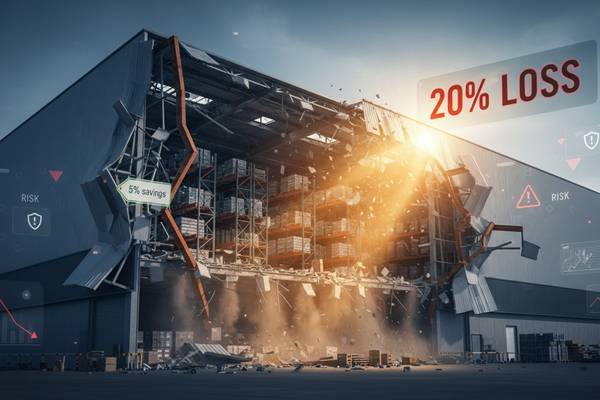
The takeaway is don’t just look at lease payments. Look at your customers. Cutting a warehouse to save 5% on overhead might wind up costing you 20% of your business. Nobody wants that. At Cresa, we build these analyses for our clients all the time. If you want to talk nuts and bolts, or roofs and walls, I’m Marco Rodriguez from Cresa. I can be found on LinkedIn. Hope to hear from you.
—
Hydrogen Embrittlement Testing, BBQ Talk, And Domestic Fastener Supply Chain Insights
If you’re a fan of hydrogen embrittlement or fastener news, this is your favorite segment of the show. Welcome back, everybody. Fully threaded and it’s the news segment. Carmen Vertullo will be hopping on after that with his Fastener Training Minute. He’s going to be rolling out some hydrogen embrittlement testing. That’s why I presented it that way. I don’t know whether we’re going to talk about barbecue or fasteners first. Tony Martinez, Buckeye Fasteners is with me.
Eric, how are you doing?
I’m doing great. I’m a little torn here because we do tend to go down that rabbit hole of barbecue. Sometimes, we don’t emerge quickly.
Not at all. Especially after our last encounter, finding the world-famous hole-in-the-wall. That was absolutely delicious.
I think we found one of the top three barbecue establishments in the Cleveland area that I know of.
It’s funny. It’s literally ten minutes from my house. I’ve never even heard of it. It was just fantastic. The pricing was great. The portion, we were just stuffed.
We’ve started already. Let’s just rewind though for a second. Throw some fastener intel down for everybody so that we can whet their appetite that way as if we haven’t already. We were cruising around the other day looking for this place. You were mentioning to me something that will catch a lot of our readers’ attention. It had to do with the hex flange nut category. What were you telling me?
Buckeye, being a niche role in the fastener world with twelve fasteners and some other types. I’ve been seeing a real big push with domestic manufacturing on these items from the big three, specifically GM itself. It seems like they’re putting a big push on getting these back into the US on items that have primarily been manufactured overseas in China or Taiwan.
In other words, you’re seeing an uptick in inquiries. You’re tying that back to there’s a bigger demand for domestically manufactured products. Is that correct?
That is correct. This was further solidified in the conversation I had. It seems that, specifically, GM is 100% in this initiative. They’re trying to stabilize the supply chain after the disruptions via pandemic. There was some conversation about some geopolitical issues. They’re just trying to strengthen their supply chain and have a little more control.
How long have you been feeling this?
I’ve been seeing this probably since mid-2025. I didn’t know if it was just a feasibility study. What are they looking for? Obviously, there is some concern. Is this just for the next three years? After having the conversation I had, it seems like they are making a concerted effort to make this happen. It seems like it’s going to be a long-term thing and not just due to the current economic uncertainties.
Any other categories affected by this?
I’m assuming it’s going to be all different types of fasteners that are going tier 1 to automotive producing. You might even see it be a tier 2, tier 3, if you’re not going tier 1 directly. I’m only seeing my niche role of weld fasteners. I could see it expanding where something that’s not being domestically produced. They’re probably beginning to push for it soon. That would be my guess.
How is Buckeye Fasteners and the Ohio Nut and Bolt Company responding to this? You guys have been expanding your production capability. It’s always a work in progress over there. How about for this case?
In this case, we are looking at our current capabilities and the ability to see what we can do on producing this. We did recently get a new parts former early 2025. It’s up and running. This machine does have the capabilities to produce this item. We’re looking in what one we would like to dial into because there’s a vast range anywhere from M6 to M14. We’re trying to figure out which one we should go after. We’re looking into tooling. How quick can we get it? What’s our capacity to make this happen? We are definitely taking a concerted effort as well to see if this is something we want to jump on, come first to market.
What else do you think about when you’re evaluating which side of this to jump in on?
As I said, I was first skeptical when it came through. I thought it was going to be just a feasibility study and see if we can get it domestically. This would be beneficial to everyone, especially those automotive brands that are looking to make that change and have a stronger supply chain. We’re looking into some of the items that we do already stock that are produced in Taiwan. We’re going to focus on our high movers that we’re using that are imported directly from overseas.
You’re going to keep us advised on this, Tony.
I’m looking forward to it. I’m looking to see what we can get moving. As I said, I just had to set up a meeting here later in the week to push it home and provide some numbers and see what we can do. I’m looking forward to it. It’s always a good thing to see things coming back onshore. It helps out in the domestic manufacturing process.
Whenever we talk about reshoring, bringing manufacturing back and all that, the conversation about labor and the staff to man all this equipment always comes into it. What’s it looking like from your perspective in the Cleveland market? Are there a lot of machinists that you see are available to jump into these roles should you go in one direction or another? Is it pretty tight here like we hear in a lot of other places?
It’s pretty tight. Seeing what’s out there, I’ve noticed who’s looking for an operator or what’s going on in the market. It seems like a lot of people are trying to find a younger operator force. Where a lot of people I keep talking to are having capacity issues for labor, where the age force is just aging out. Trying to get the younger generation to run a machine is like pulling teeth.
It seems many companies are struggling to build a younger operator workforce as labor capacity tightens and the existing workforce ages out. Recruiting the next generation to run machines is proving increasingly difficult. Share on XMy sense is that a lot of outfits are just struggling to stay, even much less expand.
I would agree with that statement.
That’s a work in progress for the industry. We’ve talked a lot about it on Fully Threaded and across the industry. Thanks for your perspectives on that. We’re going to be hearing a lot more on the general tone of business, be it because of the tariffs or just general reshoring, what have you, when Mike McNulty jumps on with Tim Roberto this time of Star Stainless. They’ll be looking at the FDI talking about a lot of these issues generally. Tony Martinez with Buckeye Fasteners here speaking specifically about an individual case that came up.
During the world-famous barbecue hunt.
Quest for the perfect barbecue. I don’t know if we found it, but we found something pretty good. We’ll talk about that in a minute right after I mention that the Fastener News Report is brought to us as usual by Volt Industrial Plastics, makers of the world’s finest plastic fasteners. The title sponsors of Fully Threaded Radio, Brighton-Best, Goebel Fasteners, and Star Stainless. Buckeye’s been with us almost since the beginning, too, Tony. We sure do appreciate that. You guys have been huge supporters of us. It’s always good to have friends out there on the show floors and someone to go check out new barbecues with as we did. We hit a ringer on this one.
I’m looking forward to going back. I told my wife that’s our new dinner night when we ship the kids to grandma and grandpa’s house. I have no problem with it. It was that delicious.
That’s an endorsement. If you got a woman who went for that, you did well, Tony. We haven’t mentioned the name yet, which I will in a second. Before I do, we’ve been talking about the NFBBQA concept is something that we’ve talked about a little bit, but haven’t fully fleshed it out. One thing that we can do, a service we can provide the fastener industry, would be to identify a couple of must-hit places in each of the big fastener cities where our people hang out. That way, we could have a directory when you’re traveling. You always know where to go and probably who you can stop in at these places with. We are well underway of getting Cleveland locked in.
I would agree with that statement. I can’t express enough, Eric, how delicious that was.
You want to divulge the name?
We can. We got to let everybody know. That’s how good it is. When they’re in the area, they should go. You would never in the whole world, by the size of this place on the side of the road, think it is that great. I’ll tell you what, it was great. What was that name?
It was Bronco. Right on Ridge Road. Not terribly far from the airport and Buckeye Fasteners and the Ohio Nut and Bolt Company. We did do the sample platters where we got a pretty good idea about what these guys put out in terms of their brisket and their ribs. The fries were good. The slaw was good. The sides were all excellent and the ambiance was there. The price was right. You don’t stumble into these kinds of places very often, Tony.
When we looked at it. It was open until 6:00 PM or until they sold out. You know they’re doing something right.
Always the mark of a good place because you know that you’re not getting yesterday’s barbecue.
The smell was great. You could smell the wood just smoking as soon as you pull into the parking lot. Forgot about the cornbread. Everything came with cornbread and that was pretty delicious, too.
However, there was one failure on our part. It was on my part. That was, we forgot completely. We’re so happy when we were done that, we forgot to go back and get the banana pudding.
It just hit me. You wanted the banana pudding. I forgot about that.
Kind of a failure, but the bright side is it’s right there by Buckeye. I’ll be back in the near future. We’ll hit it again.
I was going to say we have to go back now.
I’d be surprised if we don’t hear from a few people who want to join us for the next one after they hear this. Tony, it was a pleasure. I’m so glad that I had the chance to get out there and hang with you and discover this place together. The quest will continue, however. We’ll do it. The quest for fastener news never ends. Mike McNulty knows that very well. Tony, I’d like to thank you for jumping in with me and for giving us a little glimpse into what’s going on in a very important segment of your business. Buckeye fasteners, appreciate you being here. It’s time for you to do a quiz for something else.
That it is. The news about screws that you can use, here is Mike McNulty.
—
This is Mike McNulty from Fastener Technology International Magazine, bringing you the Fastener News Report, which is sponsored by Volt Industrial Plastics, makers of the world’s finest plastic fasteners. The US Federal government set a new shutdown record. Thousands, and possibly millions of Canadian baseball fans are scarred for life.
America solidified its intractable sports gambling problem. New York City voters just flew a bit too close to the sun. I am still focused on fasteners and ready to deliver this Fastener News Report. In this episode, Star Stainless Screw President, Tim Roberto Jr. joins us to reveal the latest results of the Fastener Distributor Index, also known as the FDI.
In this show, we have our top story from All State Fastener, plus newsmaker headlines from AFC, E-Z LOK, KBC Tools, Rotor Clip, the Fastener Industry Coalition, TriMas, LindFast Solutions Group, MW Components, Fastenal, and more. On the back page report, we’re going to talk about States in the USA. We’ll get to all of that and the latest FDI results.
—
FDI Holds Above 55 As Domestic Demand And Outlook Strengthen Despite Market Uncertainty
The seasonally-adjusted Fastener Distributor Index for October 2025 dipped slightly to 55.3 after surging September 2025 to 55.8, seasonally-adjusted. This was the eighth reading above 50 out of the last 9 and the second-best result of 2025. The Forward-Looking Indicator, also known as the FLI, rose to 51.7 after dropping to 48.9 in September 2025.
Fastener Distributor Index data is collected and analyzed by the FCH Sourcing Network and Baird. The FDI seeks to identify demand pricing and outlook trends within the American fastener distribution industry. To get some insight on these results, we’re going to talk to Star Stainless Screw President Tim Roberto Jr. Tim, thanks for joining us on the Fastener News Report.
Thanks for having me, Mike. I’m excited to come back.
Good to have you back on. What do you think about the latest FDI results?
I was pleased. As much as there was a small dip into October 2025, it still seems like it’s reasonably high. We’re seeing some of that relatively to some of the markets that we’re seeing as well. It is pretty indicative of some of what we’ve been seeing. It was a positive trend.
Above 55 is a pretty solid number. That’s two months in a row. You mentioned some sectors are doing well. Do you want to share any of those with the readers?
It’s what you’ll see similar to what we saw in the PMI. I know you see a differential in the PMI this October 2025 when we saw the ISM compared to the S&P. The S&P focuses more on the domestic focused manufacturers. Some of the areas where we’ve been seeing some positive growths are those who are maintaining manufacturing for within our own market.
The world market’s still a little soft overall. You’re starting to see some positive signs of them coming out of it, but it’s still overall soft and slow. The US market, which has been driving a lot of the economic growth over 2025, S&P’s tapped into it. That’s what we’re also seeing with this FDI. A lot of manufacturers that are tied to the domestic focus are doing relatively very well.
The last time you were on was December 2024 and the FDI was at 46. A lot has changed in just under a year.
Will you blame me for that 46?
No, I’m just saying you got some good numbers to talk about this time.
I know. This is definitely good. It’s been positive. We’ve been seeing the trends. It’s good to see.
On the numbers, front sales were down but still pretty strong at a little bit above 60. Employment, deliveries, and inventories all increased slightly. Does that tell you anything, that combination?
You’re just still seeing it. To the point that I just made a little bit ago, you’re still seeing a segment of the markets that are slow. That always gets people a little worried, but we’re still seeing other segments that are so strong that are carrying the rest of the weight. It’s needed. Sales are strong. Employment’s needed to be able to hold up with deliveries. We’ve been seeing that. That is indicative of what we’re seeing. There’s still that sense of uneasiness, uncertainty just because you’re still seeing other markets that are lagging behind.
On the pricing front, we saw month-to-month jumped up a little bit to 75 versus 72 and year-to-year dropped below 90 for the first time since April 2025. Does that mean anything?
It’s hard to read directly into that because the metals have stayed pretty consistent. You’ll see a little bit of movement here or there. With as soft as the world market’s been, for the metals to stay where they’ve stayed has been a very positive sign. I don’t think there’s a whole lot to read just in that little blip because you’re just seeing almost the seasonally-adjusted pricing that starts to slow down towards the fourth quarter anyways.
It’s been way up there ever since the tariffs, too. You mentioned a little bit earlier the PMI. It dropped a little bit to 48.7 versus 49.1. It’s the eighth month in a row below 50. They just can’t get their head above water there.
That’s what I was always interested to compare, that ISM to the S&P. The S&P has been strong. For October 2025, it was over 54. What we’ve been seeing, similar to what we’ve seen. We’ve been going more the route of the S&P than we have the ISM. It’s always a wonder. What’s the difference? The ISM’s a little bit smaller and more focused on larger manufacturers. Where S&P is a little bit larger, 800 in ISM as opposed to 1200 in S&P.
You have the smaller and mid-level manufacturers that will be represented in the S&P that might not be represented in the ISM. I’ve been following both. It’s interesting to always see the differences because when you look at the large manufacturers, they’re struggling with the worldwide demand. Exports are down. We’re seeing a lot of aspects because of the exports that are down because of tariffs and increase of price.
In other words, nothing to worry about.
I’m not necessarily overly concerned. If I didn’t see there was a differential, if we saw that both were lagging behind, definitely worry. There’s always a segment to work. As I said, that is a segment of what we deal with. Distributors that are reading this, they’re feeling the effects of that. We have manufacturers that are definitely down. To that point, it is this crazy market segmentation that we’re seeing. You get some markets that are strong. That’s where it just depends on how well people are versed and how varied they are in the markets that they were supplying.
The other set of numbers we have is the six-month outlook and that staged a pretty decent recovery. It jumped to 44% expecting things to be better six months from now, 34% expecting them to be the same. Only 22% expecting things to be worse. This is a good improvement over the bleak result in September 2025, which was 29, 32 and 39. We had a big shift of people moving into the positive outlook for six months. I don’t know what happened.
People are feeling some of the positive results. When the FDI goes up, when it stays up as it has at the 55% range. You start to feel a little bit more comfortable just because you’ve had a couple of stronger months as opposed to uncertainty where it popped up. We were 51 in August 2025, 55 in September 2025. It’s that sense of, “Was this a one-time thing? Was this a one-month thing? Are we starting to see some of a trend?”
What we’ve seen is there is this trend that it is staying strong. For a distributor, that’s what you have to worry about. The small segment that is doing very well and very strong. Are they going to slow down or is the large portion going to get busier? That’s that sense of uneasiness. We’ve seen that there’s some history of the strength of the market. Even if it might be smaller, we could be a little bit more certain that we feel a little more comfortable on the overall future outlook.
These numbers were taken while the government’s still shut down. It’s still shut down while we’re discussing this. It looks like it’s going to end. Do you think that’s going to have any impact going forward?
I think it will. It’s always nice because it does give you a sense of certainty. It’s just crazy the things that we see going on. At the same time, we also see how strong, and people forget, how strong the US economy is. Despite the craziness and the things we see going on, it keeps chugging away. That’s some of the resiliency and the perseverance we see just in the overall economy. While it does give some consumers a sense of confidence that it’s like, “Maybe we feel a little bit better that there’s not the shutdown.” On the other side, the economy is going to keep rolling just because it has to keep rolling.
It’d be good to get this latest level of shutdown. We’ll see then. Maybe there’ll be another one in January. Who knows? It’s just like playing with fire.
All the time. The sad part is it’s just how we forget that it’s just playing with people. They’re lively.
They aren’t getting paid, right?
Yes, between the military, between the people that are air traffic controllers. It’s how sad that is.
I know a guy who works in the Social Security Ministry, just a regular guy with a wife and kids and bills to pay. He’s just going to work not getting paid.
That is sad.
We’re getting off-track here. Anything else you want to add to these positive FDI numbers and FLI numbers?
It is indicative of what we see on the macro level. We see things that have been relatively strong. We still are trending towards that. The trajectory we’ve seen has been strong. Our goal is to just keep at it. Thornburg, the economist, was supposed to talk to that idea of the narrative as opposed to what’s going on. That’s a huge factor in what we see in our US economy.
What’s the narrative? What are we hearing? All these negative things that are going on out there. What’s going on? You look at the indicators, still some very positive things that are going on. Do we have some reasons for concern? We do. Hopefully, those will continue to get addressed. At the same time, we also see some good things going on in the manufacturing sectors that are especially focused here in the US. In the US economy, that’s still strong relative to the rest of the world.
If you get into data centers or the electro industry and things like that, they’re just taking off.
Blowing up, yes. Very exciting.
This is a sidebar. I was at a conference and we were talking. It was all about data centers, electro industry, and things like that. They were saying in Europe, it’s all about preserving carbon. We’re all figuring out how to make, adjust to the new technology, right?
You’re not kidding.
We’re going to jump into the comments. As usual, there’s a lot of tariffs in here, some other things, and a little bit of shutdown. I’ll read the comments. You can jump in on any of them if you want to add anything or dispute anything. The first one is, “Tariffs are the reason for drastic increases. Sales revving up, but volume is down. An increase in revenue is based on the increased costs and tariffs.” There’s any truth to that sales are up, but volume is not?
That’s why it’s important for companies to continue to track volume just to see relative to what dollars do. Go up, go down. That’s always the volatility, especially on the stainless side that we’ve always seen, historically. Volume’s a great indicator of what’s going on. We haven’t necessarily seen that slow down in volume.
It’s important for companies to track volume alongside pricing to understand real market movement. Prices may rise or fall, but volume shows what’s truly happening beneath the volatility—especially in stainless, where fluctuations are constant. Share on XAt least, it stayed steady, including some steady increases. At the same time, there are other areas that you’re seeing volume slow down. Again, that’s market segmentation. Not sure what market they’re addressing themselves. Their first point is true. You’ll see it’s hard to get excited over revenues that you know are up because of a tariff as opposed to a volume. I get that concern. For us, we always try to continue to make sure that we’re following the volume track. That’s the push for us. To say, “How are we holding up to that so that we’re holding the market?”
Smart. The next one is pretty straightforward. “US-made parts will continue to be favored by buyers when possible.” The next one says, “It’s crazy. Tariff uncertainty remains a big problem. It’s all through the supply chain and the public doesn’t realize how insidious it is. Plus, from Thanksgiving on, things slow down naturally until after the first of the year.”
To the first point, ideally, it’s great to sit there and say, “We’re going to buy American.” Realistically speaking, there’s families that can’t afford that. Speaking to a market, for us, you’re talking in fasteners. It could be six or seven times higher the cost of domestic versus import. Depending on what you’re looking at, depending on the material involved, labor involved in doing it. That’s a huge jump. Certain families, they just wouldn’t be able to afford that.
It’s a great idea to have to say, “Let’s buy US-made or whatever we can.” The reality is some people just can’t afford that. That’s a huge spike in inflation for them in their own household. Some people are just trying to get through. While I’d love to see that a reality, the infrastructure of US manufacturing, we need to address that. On the fastener side, we’re starting to see it. We’re seeing people come on board. We’re seeing capacities grow. When it’s over all said and done, I don’t think we have that capacity to be able to continue to support the economy as it grows.
It’s not just flipping a switch. It takes a lot of time.
A lot of money.
Hiring, training, fastener training, too.
That is true. It’s a capital expenditure that people have to ask, “Are they going to do that?” It takes a while to get that money back. That return on investment, you have to have the stomach to be able to do it.
Next one, “Tariffs are still affecting business levels as companies are delaying orders in hopes of avoiding tariffs. European customers are ordering directly from Europe to avoid tariffs.” Interesting.
There is definitely some of that in the market. That fear of getting stuck with both overpriced material if the tariffs suddenly go away. I know the talk has been with the court case going on.
We didn’t even mention that yet.
Knowing that that could play a definite part of it. For us in the fastener industry, it only plays half of it because 232 and 301 tariffs won’t be going away. They’ve already been tested and true through the courts. This will take more away, the IEEPA tariff situation, but still. That uncertainty does give people a little bit of fear of, “I don’t want to be stuck with overpriced inventory.”
That’s where the market’s going to be able to shift through that to say, “How do we do that?” You find partners who are willing to take on that risk, mitigate that risk. That’s where, historically, in our industry, we’ve seen the master distribution fill that hole. There is some uncertainty. What do we do? We lean on others for the time to lean on their inventory until we get some more sense of certainty, of what that’s going to look like long-term.
There’s a good chance that these IEEPA tariffs get overturned because the Constitution gives power to these tariffs to Congress, not to the Executive branch. If they get overturned, which if I’m looking at the country. They probably should be. The people get their money back.
That’s above my pay grade. Good thing I’m not the person that has to deal with those ramifications. I’ll just focus on selling nuts and bolts. That’s all I want to do.
People feel like a sucker because they bought a lot of stuff and paid the tariffs that they didn’t have to. I even miscalculated them. Anyways, let’s move on. Next one. “Our incoming order rate continued to be strong in October. I’m sure November and December will be down slightly due to holiday schedules, but we’re hoping for a strong Q1 in 2026.”
I hear a lot of customers have been saying similar things along that same route. October 2025 was definitely strong. Even some of this beginning of November 2025 has stayed relatively strong as well. It’s been interesting to see. Knowing that there’s some seasonality between the holidays, that there’ll be some slowdown. That’s that slowdown to wrap up for a Q1 that should be good. It should be positive because we’ll be outside of probably some of the constitutional tariff talk.
We’ll have, at least, more clarity on that. We’ll focus just back on building the market and what’s going on back into the manufacturing. It’s like what happened with the 301 tariffs where it did take a while. There was a lag in markets because there was so much uncertainty. People felt comfortable and confident to say, “Got to move forward tariffs or not. There’s still things that need to be made, products that need to get out.” For us, that’s just opening that up.
The next comment is what you were saying earlier about the narratives. “Despite the government shutdown and other negative indicators in the news, our business continues to grow to our surprise.”
As I said, that is the resilience of a US economy. We wouldn’t be the economy we were if it wasn’t as resilient as it is. For us, although it’s driven a lot by consumer confidence and consumerism itself, the same point. There is still production that takes place. We’re seeing that production at high levels. We’re seeing big projects that are still being laid out. There’s still very exciting things to look forward to and to see on the horizon that keep you motivated and keep that hope alive.
All right, last one. “Cost of goods is up due to tariffs, but also some from the depreciating dollar. Hard to predict activity level with so much chaos regarding trade policy.” Kind of a downer ending there.
Not necessarily. It is a reality when you see the things that go on. There is some play with the US dollar. The US dollar in the early 2025 was giving a lot of room. It has made a bounce back to the second part of 2025. You’ll see some play with that. That’s definitely part of it. For us, we don’t get so caught up in those things that we can’t necessarily control.
What we do is we look at what is right in front of us in the business. What we’re doing is having those conversations with customers, continuing to serve the needs that they have, and be the best vendor that we can. That goes for all of our customers too. It’s the same thing. It’s easy to get caught in the fray of all that other stuff, we lose sight of who we are and what we need to do.
At the end of the day, we just need to sell. Sell fasteners, sell bolts, but also sell the overall value of what you bring to a customer who might feel that sense of uncertainty. How do you help them mitigate risk? How do you help them deal with some of the things that they’re dealing with? How do you show the value you are as a partner? That’s important.
That’s a good segue to go into. We’re going to give you a chance to tell the readers what’s going on with you. Most readers, I would assume, know that Star Stainless Screw is part of the LindFast Solutions Group. What’s going on with you guys?
We’ve come down from the big Dodgers victory for the World Series, we can focus back in.
You’re a Dodgers fan?
Who isn’t, Mike? Everybody should be. After a back-to-back World Series, we should be very excited.
Unless you’re from Canada, you’re still nursing.
I know. I try not to talk about that with our Canadian LSG. We keep that on the quiet. This is why hopefully only the US will hear this segment.
I know that if you lose in a game seven extra innings, that scar never goes away. It’s lifetime.
It’s definitely brutal. That is for sure. We’re excited at LSG because we’re seeing some things that we had been planning for a long time come to fruition. We’re seeing this integration of facilities in Chicago and LA, our two largest markets where the three major brands, LindFast, Lindstrom, Star, are all under one building. Working towards coordination with software that’s coming down the road, working with AI to bring some new innovative ways of looking at quoting and for our sales platforms.
That’s going to be exciting. Looking at a new e-comm platform that we’re hoping to come out with in 2026. That will be exciting for everyone, where we could finally be on a single platform to be able to buy from the different divisions. For us, it’s just been a whirlwind because there’s a lot of things going on, but a lot of good things.
We’re seeing that. We’re listening to what customers have to say in those areas that we know that we should be better, making it a reality. The exciting part is both making a reality, but at the speed of which it’s being made a reality. This is the speed of business. It’s crazy to think that we’d be able to get some of the things we’re getting done in such a short amount of time.
It speaks to the team that we have. That’s one of the fundamentals of LSG. We hire good people. We have amazing teams that work together and get excited about working together to have this one LSG. That’s a true belief. You could have a bunch of strong little single robots. I’m going to date myself. I don’t know if you remember, Mike. One of my favorite cartoons growing up was Voltron. Voltron was one of my favorites. It was a Japanese cartoon. It’s these little robots that would get into these battles.
When they’re all by themselves, they’re always losing that battle. They come together as this one big robot and nobody can mess with Voltron. I truly believe that that’s LSG. We’re that Voltron that when we come together, it is impressive to see. It’s fantastic. I’m hoping that the market’s going to continue to see the improvement of what master distribution looks like because of that. I’m excited about what that offers.
You got the Voltron analogy and the baseball analogy, too.
You can’t go wrong with the actors of Voltron.
Annihilate everybody. Not annihilate, but good performance. I’ll say it that way.
That’s what we want to do. That’s a sign of a good company. It’s not indicative of what’s going on outside of your company. It’s the internal drive. We know who we could be and what we should be. We do want to be the best version of ourselves. That’s what drives us every single day. It’s never the external aspects of it. It’s the internal drive that should drive us. If it’s external, that only goes so far. If it’s internally driven, every day you come in, it’s going to be, “What can we do to be better?”
It’s good. It shows. You guys had a good presence in Las Vegas, which is the last one in Vegas. It will be in Phoenix in 2026. You had a good presence there. A lot is going on in the news. We’ve got some in the news segment. We got some personal announcements coming up. You guys are making things happen.
We’re excited. We’re seeing this growth of this vision that we have for who we could be. It’s just exciting to be a part of.
Anything else you want to add? You got me thinking about baseball. Those two plays in the ninth inning. Craziest thing I ever saw.
That should always be on your mind until the 3P. You should continue to remember that.
I’m okay with the Dodger. I’m a baseball fan. I’m old and I’ll date myself. I remember Tommy Lasorda, Kurt Gibson and Orel Hershiser. Always loved the Dodger Blue. Never my hometown team, but I always admired the Dodgers. I’ve read books about the Brooklyn Dodgers. I feel bad for the Canadian Blue Jay fans because 2016, we know what happened in Cleveland. Chicago put the knife in. Anyways, good to talk to you on fasteners and baseball and cartoons.
That was good catching up with you, Mike.
Thanks again for joining us. We’ll look forward to having you on again in the future.
Sounds great. Take care.
That was Star Stainless Screw President Tim Roberto Jr. The FDI number for October 2025 was 55.3 versus 55.8 in September. Visit FDISurvey.com to participate in the process and get a detailed PDF copy of Baird’s monthly analysis. For our top story. As stated earlier in the show, All State Fastener, also known as ASF, a leading global distributor in the automotive, industrial, and commercial fastener markets, appointed Dan Hill as Chief Executive Officer alongside a transformative remake of its senior leadership team.
The leadership overhaul signals a bold new era of modernization, global expansion, and customer-focused growth for the third-generation family-owned company. ASF owner Paula Giorgio, on behalf of the Board, said, “Dan brings a proven record of scaling privately held distribution businesses into global powerhouses. Having served on our Board, Dan understands the AFS culture, shares our growth vision, and has already immersed himself in our operations and people.”
ASF co-owner and board member Nick Giorgio added, “All State Fastener is moving forward with its renewed focus and determination to strengthen our presence in the fastener industry. We’re committed to sales and operational excellence with a clear focus on attracting and retaining top talent and partnering with the best companies in American manufacturing and beyond.” Dan Hill most recently served as CEO of private equity-backed Ferraro Foods, where he led expansive growth to more than $1.2 billion in revenues and executed a successful acquisition campaign. Previously, he served as CEO of Würth Industry North America and is executive vice president of the Würth Group.
Dan said, “I’m thrilled to be coming back into an industry I truly love, especially to ASF, a company that’s ready to compete and win on a global scale. With our entrepreneurial foundation, strong family ownership, and now world-class leadership team, we are positioned to modernize our systems, diversify and expand our customer base, and invest in the incredible people who make ASF what it is now.”
ASF’s newly appointed senior leadership team includes Andrew Taylor as COO, Jon DeRyckere as CFO, Laura Locker as Director of Human Resources, Patrick Muldowney, Director of Supply Chain, TJ Downey, Director of Sales and Operations, Darin Sirois, Director of Project Management, and Mersija Mehmedovic, Director of Automotive Sales.
Hill emphasized that the leadership transformation is part of a broader mandate to drive exponential growth through diversifications of ASF’s customer base and strategic acquisitions of privately held fastener companies across America, while innovating through critical investments in scalable technology. Hill concluded, “If you’re a fastener company looking for a strategic partner with resources, reach and vision, All State should be your first call.”
Next up in this Fastener Newsmaker Headlines. In corporate news, AFC Industries launched AFC Tooling and AFC Aerospace and Defense. E-Z Lok expanded its Finserts product line. KBC Tools and Machinery celebrated 60 years of operation. Rotor Clip released a new 3D aerospace application video and launched a Spanish language website.
Böllhoff opened a production site in Turkey. The Fastener Industry Coalition, also known as FIC, unveiled a new domain name and a refreshed website at www.TheFIC.org. Growermetal achieved ISO 27001 certification. TriMas agreed to sell its TriMas Aerospace segment. Kia and ARaymond partnered on a solar project.
In personnel news, LindFast Solutions Group, also known as LSG, welcomed Rosa E. Hearn as the new Vice President of Marketing and Joe Carlier as Senior Director of Global Accounts Outside Sales. It named Mike Robinson, Vice President Global Accounts. MW Components named Thomas A. Amato, Chairman and CEO.
MSC Industrial announced a planned CEO transition. Dominick Bair joined Lee S. Johnson Associates as territory manager. Fastenal named Max Tunnicliff as CFO and Senior Executive Vice President. Howmet Aerospace made executive leadership changes. You can get details on all of these stories and more in Fastener Technology International Magazine and the Fastener News Report monthly newsletter, both available online at FastenerTech.com. Let’s turn to the back page to talk about states in the USA.
The United States runs on a federal system widely known as federalism. Power is split between its 50 states in Washington, D.C. That structure creates natural competition as well as checks and balances. It also highlights the strengths and weaknesses of each state. It shows where performance rises or falls. Competition and differences between states are important. A few recent lists drove this point home to me.
The United States operates under a federal system known as federalism, where power is divided between the 50 states and Washington, D.C. This structure creates both competition and checks and balances, while also revealing the strengths and weaknesses… Share on XFirst, at a recent IFI event, the top states for manufacturing were named, Michigan, Indiana, Wisconsin, Ohio, and Kentucky. No surprises there. Those states built the backhouse of American industry and still carry a lot of weight. Next, the National Electric Manufacturers Association reported that 44% of the investment in electrical grids comes from just five states, North Carolina, Georgia, South Carolina, Tennessee, and Michigan. That tells you who is putting real effort and money towards power infrastructure.
There’s the reshoring story. The Reshoring Institute named GE Appliance of Louisville, Kentucky as the winner of its National Metalworking Reshoring Award for 2025. GE plans to invest $3 billion over five years to expand domestic production across its plants and micro-factories in the USA. The money is being spent in Kentucky, Tennessee, Georgia, Alabama, Connecticut, and South Carolina.
Finally, ITR Economics laid out two lists that should make people pay attention. They rank states based on risk and preparedness ahead of their forecast of a 2030 Depression. The ten least-risk states in order are Utah, Georgia, Idaho, South Dakota, Oklahoma, Iowa, Alaska, Nebraska, Colorado, and South Carolina. The bottom ten, also in order, are Connecticut, Rhode Island, Massachusetts, Hawaii, New Jersey, New York, Vermont, California, Illinois, and Washington, D.C., which isn’t a state, but a very powerful region.
The patterns are hard to ignore. Some states are positioned for stability and growth. Others are not. When you look at all four lists together, the point is clear. Our state system rewards initiative. States that invest, plan, and build are the ones gaining ground and ready to weather difficult times ahead. Others may rely too much on old assumptions and bad ideology. That’s the nature of federalism. Competition exposes reality.
Every state has its own identity, history, culture, and strengths. The system works because those differences are allowed to exist. That’s the value of the structure we inherited 250 years ago and still depend on. As we look ahead, the question is, “Where does your state stand?” This has been Mike McNulty of Fastener Technology International Magazine, bringing you the Fastener News Report. Please send your news, pictures, comments, corrections, or complaints to me at McNulty@FastenerTech.com.
—
Hydrogen Embrittlement Test Standards Explained: Choosing The Right Method
This is Carmen Vertullo with your Fastener Training Minute coming to you from the Fastener Training Institute and Carver Labs in beautiful El Cajon, California. This topic comes from a client who requested some hydrogen embrittlement testing, which is one of my favorite topics, as you know. The client, basically, was having some product process for electroplating to ASTM F1941/F1941M. That standard requires hydrogen embrittlement testing. He did not know what standard he wanted me to use for the testing, so he listed several.
He said ASTM F606. He listed ISO 15330, ASTM F1940, ASTM F1624, ASTM F519, and NASM 1312-5. He even listed an obscure DIN standard called DIN 50969-2. He didn’t know which one he wanted. He wanted me to figure out which one was the most appropriate. That is an insanely abusive question, I have to say. However, that’s the business I’m in. I took the abuse. I got him his answer. When I return, I’ll tell you what that answer was.
We’re talking about test standards for hydrogen embrittlement primarily for fasteners. I listed a whole bunch of standards right before the break. I’m not going to list them again. It turns out that three of those standards are not appropriate for finished fasteners already made. Those are ASTM F1940. That standard is for the process control testing for hydrogen embrittlement. That is, if you would like to be able to prove that your process is under control in the plating or coating operation. You would use that test. It’s expensive and requires special specimens.
ASTM F1624, similarly, is a hydrogen embrittlement susceptibility testing process that requires special specimens as well. It’s very expensive. It’s designed to know whether or not a particular plating or process in combination with a particular material or a standardized material is going to be a hydrogen embrittlement producing combination. A similar one, ASTM F519, also tests for hydrogen embrittlement susceptibility. It basically deals with plating and coating, but also the environment. We can test whether or not our product is going to be subject to environmental hydrogen embrittlement or external hydrogen embrittlement.
I apologize if you don’t know what hydrogen embrittlement is. I’ll just give you a quick 30 second explanation. High hardness materials, steel fasteners in particular, are susceptible to catastrophic failure by a process called hydrogen embrittlement. If hydrogen gets into the part and the part is put under a load, generally, that hydrogen gets there through the electroplating process. We call that internal hydrogen embrittlement.
We install the part. A short time later, it fails catastrophically. We also have a type of hydrogen embrittlement called external or environmental hydrogen embrittlement. That’s when the hydrogen gets into the part from the environment. Usually because the environment is causing the fastener to corrode or something around it to corrode that generates hydrogen. Steel likes to soak it up like a sponge, and then we have that failure.
Having said that, fasteners are particularly susceptible because unlike every other part of any particular assembly, they are under a tensile load. Everything else is being squeezed together by the fastener. The fastener itself is under a great tensile load. Of those standards that I mentioned earlier, four of them are for testing fasteners, or at least, they contain within them processes for testing fasteners.
ASTM F606 fastener test methods have all kinds of fastener testing in it. One particular type is for testing for hydrogen embrittlement. These tests are called stress durability tests. ISO 15330 is exclusively for testing fasteners for hydrogen embrittlement. NASM 1312-5 is exclusively for testing aerospace fasteners for hydrogen embrittlement. That DIN 50969 has to do with structural bolts that are metric. Nobody uses that that I know of.
These fasteners happen to be very small metric fasteners in the range of M2 to M8. I immediately took the DIN standard off the list. I started figuring out which one is most appropriate. I already know, for example, from years of doing testing that ISO 15330 is the best of the three left behind ones. That’s 15330, ASTM F606, and NASM 1312-5. For a variety of reasons, it’s the best.
First, it’s a metric fastener, so that helps. Secondly, it does not require any weird apparatus, just a test plate. You don’t have to have any load cells. You don’t have to have any wedges. You don’t have to have anything, but a torque wrench to do this test. It is the best at detecting the hydrogen embrittlement because, in my opinion, it applies the greatest load.
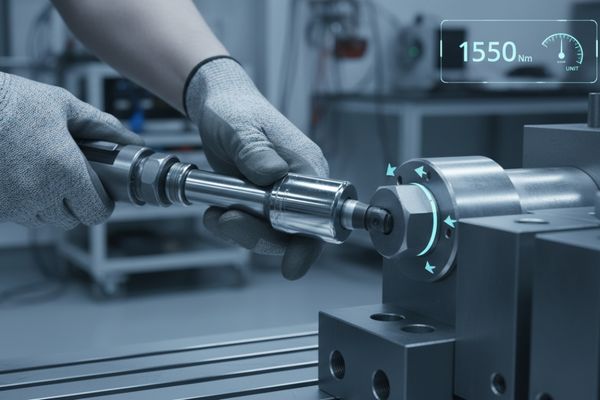
To apply the load using ISO 15330, we simply screw the fastener into a hardened test plate with a hardened top surface. It could be a washer. We use some lubricant. We torque it with an indicating torque wrench until the torque stops going up. It isn’t getting any tighter than that, no matter what you do. That is the best, I should say, load or highest load that we can put on that fastener.
That’s the object of the game. We wait for 24 hours. We give it another little snug. We wait 48 hours. We give it another little snug with the torque wrench. No broken fasteners, then you have a passing test. Normally, if you have a failure, it’s going to break on its own. It’s not going to break when you retighten it. That’s a simple test.
ASTM F606 is similar to that, except for fasteners over a quarter of an inch, it wants you to put a wedge under the head. That’s a relatively brutal thing, too. It’s going to detect the load. You have to come up with a wedge. That’s a problem. For the smaller screws that don’t require a wedge though, we only tighten to 80% of the tensile strength. We have to figure out what that is. You have to do a calculation, use a lubricant, use a load cell. Whatever they want you to know what that is.
F606 requires that after you’ve done the test and removed the screws that did not break, you got a successful result. You have to examine it with twenty times magnification, another pain in the butt and that adds to the cost. Finally, there’s NASM 1312-5, which in some regards, is the most forgiving of all. Almost every paragraph in it says, “Do this, but you can do something else if you want to. Any other thing that works is fine.” It’s a relatively wide-open standard.
However, it requires at the end, not a visual examination, but a magnetic particle inspection. That adds to the lead time, the cost, and so on. Generally, if you have an HE failure, the head’s going to come off or the parts are going to break in the threads. These inspections are silly. In my mind, I’ve never done one where either the visual examination or the non-destructive inspection has detected a crack. If you’ve got HE, the bolt is going to break.
Having said all that, ISO 15330 is the winner. That’s the one that I recommend 100% of the time, unless there’s a compelling reason not to use it. That only compelling reason would be the ignorance of somebody who put it on a drawing or is requiring it on a purchase order, in which case you can send them to me. I’ll talk them out of it. There are some other hydrogen embrittlement tests, for example, for nuts or other things that are weird. I didn’t talk about those here.
Generally, ISO 15330, in my opinion, is the go-to test standard. I will tell you it’s being modified. We are in the middle of changing that standard to fix a few silly things. It says in it, you should do this test right after plating within 24 hours. We know that’s nonsense and also not very practical. A few other things in it that we’re tuning up.
Within a few months, ISO 15330 will not only be the best standard as it always was for HE testing. It’ll also be much improved on top of being the best. ASTM F606 also just got modified. It didn’t do much improvement to it. We did clear up the requirement for wedges because it never did address wedges for smaller screws. It addressed the wedge. It just says the wedge angle is zero, so there’s no wedge. That’s about all I can think of on the topic. This has been Carmen Vertullo with the Faster Training Minute. I hope you learned something. Thanks for reading.
—
IFI Leaders Discuss Industry Growth, Membership Expansion, and Apprenticeship Programs
Dan Walker and Preston Boyd, it’s been a long time coming. Glad you guys are on the show.
Thank you, Eric. Glad to be here.
Thanks so much, Eric.
We’ve been talking for a long time about this. It started back at Fastener Week in Chicago, again in Vegas, then in Louisville. We’re here. You have a lot going on at the IFI. You could say that this segment has been eight years in the making, couldn’t you, Dan?
You could say that, Eric. You are the first person in the fastener industry I ever met.
What are the odds?
I boarded an airplane and sat next to this guy wearing a Kerr Lakeside hat. It was you. Right then and there, you asked me to be on the show. You scared me to death.
When I found out that you were the new executive director of the Industrial Fasteners Institute, I was not going to pass that up, Dan. I just didn’t know it was going to take me this long to get you here.
I didn’t know it was going to take this long for me to finally have something to say.
Meanwhile, the soft-spoken Preston Boyd’s in the background here. Little did I know that you had a hand in a lot of this going way back to Rob Harris’ time.
I had the distinct opportunity, when I was the chairman of the IFI, to head up the search committee and come up with a replacement for Rob Harris. Those were very big shoes to fill. You met Dan in 2017. I met him around 2015 when he was an applicant for Rob’s job. I also have the distinction of being the guy that didn’t hire Dan. My wife never lets me forget that.
What year was that then that you were IFI chairman? Do you recall?
In 2017. You get both years. You’re only there for a year, but you span across. 2017 and 2018 was my opportunity at the helm. It was a very difficult decision because Rob had been such a fixture. The chairman didn’t have much to do because Rob ran the organization so well. To lose him, at that point in time, was a milestone in the history of the IFI.
Rob Harris was a very interesting man. He probably deserves a dedicated segment. One of these days, we should think about that. As history unrolled, we met each other, Dan, as you said. You were just starting out. A lot of things have happened with the IFI. One thing in particular I’ve noticed, and I mentioned this to you guys during our meetings this summer. You seem to have a much larger profile on the distribution side. Whereas when I first got into this business back in ‘06, it was mysterious. What’s the IFI? We certainly never saw you at the Vegas show and things like that. You’re changing that, aren’t you?
We are. We’ve always been exhibiting at the show. We’ve taken a much more active role in everything. You’ll probably see us a lot more on social media through LinkedIn. We’ve got a newsletter we’re sending out. Much of what the IFI has been doing for probably the last 25 years from the outside is almost a mystery. Like I would like to say, the best kept secret in the industry. It’s an organization that’s dedicated to manufacturing. Our membership is primarily manufacturers and their suppliers. We don’t have distributors as members. Although our members, oftentimes, do partner and work with distributors.
It’s going both ways, too. People are becoming more interested in the manufacturing side, given the times we live in. Everything. I was out there in Louisville my first time this fall 2025. I noticed other companies that were first-timers, such as INxSQL Software, thinking along the same lines.
Our membership has grown tremendously. I’m going to kick it to Preston to talk about the membership growth because he’s had an integral role in making that happen for us.
Thank you, Dan. You can’t discount the impact of COVID on people’s need or involvement in associations. Both the IFI is experiencing growth. I know from attending the regional association meetings that people just feel the need to connect again. That’s been the underlying current with the IFI being more visible. We are attending those events and participating.
Overall, the attendance at all these regional shows helps promote that as well. It wasn’t an intended strategy. It was just a consequence of what we’re all facing. Certainly, the tariff situation has put more importance on the domestic manufacturers as well. We are interacting more with the distributors because the market demands it.
I didn’t mean to imply that you had no presence whatsoever at these shows. It just seems like it’s very amplified. People are paying more attention. That would have been a better way to say it.
You’re right, Eric. We sat back and experienced the show more than contributed to it. That’s our goal moving forward. To be playing a much more contributory role in the success of these trade shows and the exhibitors that are at the shows. We’re encouraging our members to attend those shows. Even planning our own divisional meetings to take place during the trade shows in order to capture a larger crowd of people so we can have more interaction.
We’re going to talk about your apprenticeship program. That is one of the big flagship planks of your administration, if you will, or what you’re trying to do, Dan, which is great. It plays right into that whole idea of an increased demand on domestically produced material. In addition to that, the IFI is doing so many things that before we get into that topic, we should run down that quickly so that people can appreciate it. Those who haven’t caught on yet.
One of the things that I took away from your support of the Mid-West Fastener Association FSTNR Week this 2025 was meeting Laurin Baker. He’s semi-retired. Jennifer Baker Reid is running things mostly over there, but he had a presentation. He’s a very interesting man. The two of them have done a lot to represent fastener manufacturing in Washington. Amazing.
We started our long relationship with the Laurin Baker Group during the Fastener Quality Act work that was being done by a lot of partners in the industry. IFI felt that it was very important to retain the government affairs council to have somebody in Washington, DC. That was watching after the interests of manufacturers, but also the industry at large. They played a pivotal role in making sure that that legislation was passed and that it worked for everyone.
I was on the IFI website. By the way, that’s IndFast.org. I went to that page. You’ve got a PDF download of the Fastener Quality Act and a cheat sheet of FAQ notes available. That’s very helpful. People don’t realize the impact that the Quality Fastener Act had on the industry. It’s ancient history, but it’s still very important. Isn’t it?
It is. There were some questions about whether or not we should take that off the website because it’s older information. It certainly is still relevant. Things crop up every day with regard to quality and that reminder that manufacturers have such robust quality programs. It’s important to keep that information out there. Make sure the history isn’t lost with new people that get in the industry.
It wasn’t always that way. In addition to the lobbying efforts, there’s a tremendous amount of work that the IFI does with standards. Independence, Ohio is your actual physical headquarters. I know you provide a lot of support for standards committees and so forth there, too. Excellent facility. I’m so fortunate that I live so close to it and get a chance to get out there occasionally.
IFI is headquartered in Independence. We’re in the offices of the Precision Metalforming Association. We’re located in their building. PMA and IFI and the Forging Industry Association are all co-located in this facility. Although, we’re independent organizations, we do a lot of sharing and a lot of learning with each other. Our collective staffs can work together in concert on things. We can learn a lot from each other.
Speak about the IFI technical materials that are available and the wide variety of online resources that you’re providing.
Thanks for bringing that up, Eric. It’s always good to promote the stuff that we’re doing because people tend to forget that we have a technical committee. We have members that are actively working on standards committees. We’re not just a publisher of standards. Everyone is familiar with the online Book of Fastener Standards and our hard copy Book of Fastener Standards.
We’ve done multiple editions of that. That’s been a Bible for the industry. In that document, we have IFI standards. We have standards from other organizations. Our members are active on all those committees. Not just writing IFI standards, but also ASTM standards and SAE standards. We also work on aerospace standards and other types of standards that aren’t even in the book. We have a very vibrant and active technical committee with the industry’s technical experts that work on those things.
From time to time, we have to publish our own standards where there’s a gap in an existing standard. We’ll do that. Many times, that document will live for a while and become an industry standard. It gets usually absorbed into a larger standards body because there’s more interest in it. People want to develop it further. We’ll give our standards to other organizations sometimes to have them develop as their own with our participation.
We also mentioned the online Book of Fastener Standards. We have the IFI Technology Connection as well, which a lot of people understand what that is. It is basically a database of all the data in the standards. Our subscribers can use that tool to write spec sheets when they advertise or when they’re working with their salespeople to come up with solutions for their customers. That’s a pretty popular solution that we have.
Wasn’t that one of the big initiatives that Joe Greenslade was behind?
It was. Joe drove that thing. It was his concept. That was Joe’s brainchild. For many years, he helped us develop that. Joe was a brilliant man. He had the forethought to come up with that. Joe’s been gone for some time. When he was alive, he was still working with us on continuing to keep it updated and helping to brainstorm ways to make that tool better. The management of that tool has been given to Salim Brahimy. Salim is the one that safeguards the data in there and makes sure it’s all kept up to date. Initially, that was Joe Greenslade’s brainchild.
He was way ahead of his time. Not surprising. Fortunately, it’s in good hands with Salim. Preston, just out of curiosity, do you have a favorite IFI standard?
No, but I can put together a scramble team.
I was asking that in jest, Preston. I wanted to point out that you’re on the industrial side primarily of the IFI. The organization is divided into several units, isn’t it?
It is. We have our Aerospace Division. There’s a gentleman, Mike Mowins, who performs the same services to that membership group that I do with the industrial products. On the automotive side, we’ve got Mark Quebbeman, who’s probably got two to three decades of automotive experience coming out of Semblex. Mark has got a wealth of background dealing with the big automotive companies.
I was talking to Mike in Louisville about his endeavors with additive manufacturing. He is on fire over that stuff.
Very passionate. Isn’t he? He’s a phenomenal guy. Just a wealth of information.
We’re very fortunate to have some people with a lot of experience working in the IFI staff. Most people are familiar with Laurence Claus. Laurence won an award at the IFE shows. Congratulations to Laurence on that. We’re very proud of that. Salim Brahimy, which everybody knows, you’ve had him on the show before too. He’s our technical director. He’s got a PhD in Metallurgy and runs the hydrogen embrittlement laboratory in Montreal at McGill University.
Most people probably don’t know that we have the three division managers. They have a wealth of experience, Mike and Mark and Preston. They’re invaluable to the IFI because they understand the divisions that they work for. IFI is divided into end customer divisions. In the past, we were divided by fastener size. Now, it’s the end customer groups. That was a smart move. That was under Rob Harris’s tenure that that happened.
It made most sense because being able to be responsive to the needs of those customer groups was very important and makes sense for that type of organization. We also have an ASD Division. We call that ASD. It’s Associate Supplier Division. That’s the companies who make the manufacturing equipment, the people that supply the products and services, the outside services that manufacturers need. It’s a pretty vibrant organization with over 180 members.
That number 180, it sticks out in my mind because if I recall, that was roughly the number of attendees that you had in Louisville this 2025 for the Fall Conference.
We didn’t have one person from each company, unfortunately. We had very good attendance at that meeting. That was the highest attended Fall Meeting we’ve ever had. We have two meetings a year, primarily for all the members. Two membership meetings. One in the spring, we call our Annual Meeting.
The Fall, we have a meeting and 180 was the top for us. In the past, we would get 90 to 100 people at a meeting like that. It’s a sign of the times that people are, like Preston said, flocking to their association and participating. At our Spring Meetings, we’re getting upwards of 250 people. That’s just amazing because the numbers just continue to grow.
That’s impressive. You could feel the energy. It’s high. I was surprised when the current chairman, Larry Spelman went to the podium for the initial address and said, “We’re going to go around the room. Everybody’s going to stand up and introduce themselves.” I said to myself, “You have to be kidding me.” He did it. We went around the room. It took fifteen minutes. Everybody said their name, where they were from. Although, it seemed a little strange to me at first. By the time it got rolling, I felt like, “This is a smart thing to do.” It seemed like the energy in the room was just perfect for that.
Every person that comes to the meeting is important. It’s like it’s the first time you attend something. You feel like you’re an outsider. You don’t know anybody. We know that it’s important to do that. We do it at every meeting.
We’ve talked about some of the things that you guys are doing. Did I miss any of the biggies before we get into your apprenticeship subject?
We’ve got a lot of other things going. I’d like to focus on apprenticeship. We have our Member Training Program, our Government Affairs Program. We have all of our committee work that we’re doing. All of that’s important, but I would love to talk about our Apprenticeship Program because that is the newest thing.
Let’s dive right in. We were, oddly enough, just talking with Tony Martinez from Buckeye Fasteners in the show. He pointed out the exact scenario that you’re looking to address with this. Of course, we talked about it extensively over the summer at these meetings. We’ll just tee off on that, guys.
It’s pretty obvious no matter what kind of manufacturing you do or what type of business that you have that the biggest problem the industry faces is a lack of skilled workers. Not just being able to train them, but also being able to find them. Where are they going to come from? Where are you going to get somebody with the skills you need?
No matter what kind of manufacturing you do or what type of business you have, the biggest problem the industry faces is a lack of skilled workers. Share on XOftentimes, you’re hiring someone who has very little in terms of skills because they don’t take shop class in high school. Metalshop is not offered in many places. People don’t just arrive on day one knowing how to operate a machine. Some of them don’t even know shop math or understand any of the safety things they need to know to work in a modern manufacturing facility.
We partnered with Marshall University’s Advanced Manufacturing Center in 2023 to start on the process of developing an industry-wide Apprenticeship Program for the machine operators. I’m happy to say that we have successfully launched that program. It’s up and running. We have thirteen IFI member companies already involved in the process. Some are at different stages. There are thirteen companies that have inquired and started the process, which is fantastic to hear.
Eric, I had the pleasure of visiting the Marshall facility over in Huntington, West Virginia and spending time with the people there. We talked primarily about how the process is going to take place with new candidate companies coming in from the IFI. This organization over there, they’re a pretty special group of people.
Thirty strong and growing. The genesis of Marshall was to support the Department of Defense. The Department of Defense created the funding and supported Marshall to go out and begin to build the supply base for the Department of Defense. They recognized that the impact of the lack of skilled workers was having on the ability to build ships, to develop new tools for the army.
That’s the background of this program. Critical, essential manufacturers being able to provide the United States military with the tools they need to defend our freedom. It’s a pretty dynamic organization over there. They’ve got a lot of programs that have already been put in place that we’ll be able to leverage off of. We’re excited about it.
It’s a real game changer in how we’re going to get this implemented with our membership. The playbook is there. We just have to adapt it to the fastener industry. It’s going to happen quickly. As Dan mentioned, we’ve already had thirteen companies sign on to help them become more competitive and go out and attract the type of individuals they need to staff their facilities.
Let’s then backtrack here and frame out what the program entails.
A good question, Eric. It’s important to note that IFI has had some successful programs before that we are still involved in. One at Compton College in Los Angeles, where they do some training at that community college. They do hands-on work with heading machines and other equipment. Those programs are much shorter than this one. Those programs are six weeks. The person gets turned over to the company. They get hired. They learn how to operate machines from more experienced operators at those companies.
This is much different. This is a longer commitment. It’s around two years in the Apprenticeship Program. The big difference is they don’t start at a university or in a shop somewhere sponsored by the state or a school. They get hired by the company first. They enter the Apprenticeship Program under the watchful eye of the company with the support of Marshall University. They start that process. There’s a whole series of different steps that come along in the process as they build their competency. They move up the chain within the Apprenticeship Program.
There are, essentially, three different apprenticeship programs that are out there. Two of them are a little bit different. One is for hot forging machines. One is for cold forging machines. One is a combination of that, which is hot and cold forging. As Preston said, this program builds off the successful implementation of other apprenticeship programs that have come before this. It’s unique in that it focuses on the fastener manufacturers equipment.
You can get an apprenticeship program to come alongside this one in electrical maintenance, industrial maintenance, precision machining, quality control, tool and die making, CNC, and hot and cold forging machines. Those types of operations are used in all of our members’ facilities. You don’t just pick one program necessarily. You can have more than one program running at the same time. Depending on the type of people you want to get skilled.
That clears something up for me. Apprentices, you’ll call them, do not have to be in West Virginia during this program.
They don’t. I’m glad you brought that up because this is a national model. We have members that are in Arizona that are involved in this program, California. Some that are in Massachusetts, some that are in Ohio. Some that are in Detroit, some that are in Chicago. They’re everywhere. Marshall does support the program everywhere. Very little training would ever be done at the Marshall University facility in West Virginia. It would all be done in the members’ plant.
The process, as it begins, it’s a five-step process where if a company expresses interest in doing this. Marshall will come out to your facility. They’ll visit you, have a conversation with you about the type of occupations you’d like to enter into the apprenticeship program. They customize and finalize the on-the-job training competencies and the training plan with you.
They help you identify the mentors within your own company. They perform train-the-trainer operations with them to make sure. Your best header operator is not necessarily the best teacher. They make your header operator into a better teacher because these people are going to be apprenticing underneath that person. They do a signing ceremony with the company and set your launch date. They provide ongoing support throughout the whole process.
It’s not just a two-year fixed process either, Eric. It’s a requirement of 4,000 hours of training, which is about two years. That can take place over a four-year period or longer if it has to because someone might take a break or have reasons why they can’t finish it in 4,000 consecutive hours. That’s not the ideal. There are 4,000 hours’ worth of touch points in that program that makes someone competent to be a header operator.
Any manufacturer will tell you it takes that long or longer to do it on their own, anyway. Sometimes, I’ve heard members say, people that operate the most complex machines in the plant. It could take 6 to 8 years to get that person competent to operate that machine on their own. This program is an accelerator for our members to help them get there faster with a more structured program. It’s not one-off individual programs being implemented by companies.
Any manufacturer will tell you it takes that long—or longer—to do it on their own anyway. In some cases, especially with the most complex machines in a plant, it can take six to eight years to fully develop someone into a competent, independent… Share on XThere are two things about the program that I want people to know. There’s something in this for both sides. Manufacturers get the benefit of having a structured program. It is fully funded. It doesn’t cost them anything to do this. They don’t have to spend a penny. Marshall University provides all that support through grants that they have. They don’t have to pay anything. They do have to pay their employees. They’re paying an hourly wage.
They get the benefit of having an industry that’s full of competent, trained people that they can hire. People move around. The apprentices can take with them that credential. This is a transferable credential that these people have. What we’re trying to do here is professionalize header operators just like plumbers and electricians and carpenters have been professionalized through their apprenticeship programs.
I follow you. As we know, the journeymen, headermen that are in the industry are highly professional, by and large. This has been a problem of getting new recruits up to speed and operational. It sounds like this is a great ticket. Let me ask you this, guys. One of the fundamental challenges with this whole thing is getting people in the system in the first place. Does it also address basic recruitment?
I’ll answer that based on some of my history running a heading operation. That’s a significant challenge, getting people in the door. Marshall does focus a part of their efforts in training the HR Department to talk about best practices and what’s been successful for other companies that they’ve worked with. Certainly, trying to get people engaged at the high school level, technical college level.
They bring many insights into how successful companies are gaining on getting people, qualified applicants, to come inside their building and take a look at the employment opportunity. It’s a total playbook that they developed. As Dan mentioned, if you were to try to monetize what they bring to the party, it’s probably a $12,000 to $15,000 program that they’re going to bring in for free. Our members are going to get this entire package and the assistance of all the personnel at Marshall to launch the program.
They’ve got some technology that I saw when I was over there. They will go in and video that seasoned senior machine operator. Rather than wait for him to be able to explain what he’s doing, they will video that and then professionally edit that. Make that part of the package for the apprentice as he progresses. Again, at some point, that senior machine operator is going to walk out the door.
What this does is it retains that knowledge and that generational gap that would have been there when he left. He was the only guy that knew how to set up for a particular product or a particular diameter on a machine. It’s an entire package that starts with getting the applicants coming in the front door.
That sounds like a tremendous process. If I do say so, it sounds like you’re addressing two challenges that the industry has. One being bringing new people up to speed. The other is preserving some of that institutional knowledge that’s leaving. People have been very concerned about that. It sounds like it’s a great solution.
It is. It’s not a silver bullet by any means. Companies that maybe find it to be too daunting to get involved in a program like this right off the bat have another option at Marshall. That is the pre-apprenticeship program. No cost to do that. They can be involved early on where they’re not on the books yet for apprentices.
They’re not officially enrolled in the program. They can still take advantage of all the online training tools, the other training tools Marshall develops, the mentoring, and all those things. The hope is that they’ll get into a full-blown apprenticeship program. That’s a terrific way to start. We’ll give them access to some of the thousands of online training classes that are available in shop math and the employee onboarding, the safety and all those things that they have to have.
In addition, companies that are involved in an apprenticeship program become open to applying for grants to help pay for things that are available from DoD through a program called METAL. The METAL program can provide things like PPE, training materials, computers, and other things for companies that have apprentices on their staff. There’s a lot of incentives aside from the business incentives of growing your workforce and having more competent skilled workers. Some assistance in making sure that you have all the things they need to be successful.
A lot of the people who are involved in manufacturing who are reading, you’ve captured their attention, Dan and Preston. How did they get on board with all this? First of all, they probably have to be IFI members.
They don’t, Eric. We encourage them to join because we have all sorts of other benefits that they would get from it. We helped develop the program. Changes to the program are probably going to come from within the IFI because of our membership base. Any manufacturer can approach Marshall. It’s a publicly funded program.
They’re using tax dollars to support this. I would encourage anybody to inquire with Marshall. If they want to get in touch with somebody, I don’t care if it’s an IFI member or not. They can contact me. Just go to the IFI website, go to the contact page, and send me a message. I’ll connect them with Marshall so they get that journey started.
Marshall is the on-ramp for this.
It all started with the IFI working with Marshall to develop it. We’re all for recruiting companies to come and join IFI if it’s a good fit for them. I think it is. We have other resources that go into that program that are available to our members to encourage them to take part in the apprenticeship program. We’re here to also help keep the industry healthy. Marshall’s got a publicly funded program here. It’s available to everyone.
On the subject of IFI recruitment, Preston, I’ve seen you in action making the case. Here’s your chance to lay it out for the Fully Threaded audience in case there are any prospective members in the audience.
The value of membership in the IFI starts with the relationships. Again, what we’re going to, hopefully, gain from this apprenticeship program is a collaborative effort of those thirteen companies that are starting. We’re going to learn a lot. Some of the challenges, headwinds we’re going to run into. We’re going to learn a lot about how to successfully implement a program. That’s almost part of the creed of the IFI. We’re stronger when we’re holding hands and going forward and addressing things like this.
I can tell you since 2017 when I was chairman, workforce development has been the primary challenge for all of the IFI manufacturing members. I just feel as though we’re going to make some quantum strides as we kick off this program. The success and how that success happened is going to be part of the secret sauce that we’re going to share with other IFI members. If workforce development is your primary problem, we’ve got a value proposition here with membership in the IFI that will help address that for you.
Everyone is familiar with Laurence Claus and the work that he does. You see him with the Fastener Training Institute teaching classes. Laurence also is IFI’s Director of Education and Training. All IFI members receive our training programs for no cost. These are training programs that you would pay thousands of dollars for per student.
If you send four of your people to the IFI headquarters, we’ll give them breakfast and lunch. We’ll teach them for two days straight on topics of interest that are going to help your company be successful. That doesn’t cost you anything except a car ride or a plane ticket if you’re further away from Cleveland. We also do webinars throughout the year.
I would encourage anybody to go and look at the IFI website. Go on the events calendar. Take a look at the training that’s coming up in the future. We’ve got the next six months, at least, up there of all the classes that we’re teaching. All IFI members have access to an online training system called Workforge. There’s no cost to that either. That’s the same program that Marshall uses for the apprentices.
If you’re interested in getting involved in an apprenticeship, the first place to start is join the IFI. Get involved in our online training. Get involved in our in-person training. Take advantage of the Workforge membership. Familiarize your staff with how to manage that, how to train their people. Enter the pre-apprenticeship process with Marshall. From there, enter the apprenticeship process. You’re going to come out a much more successful company on the other side.
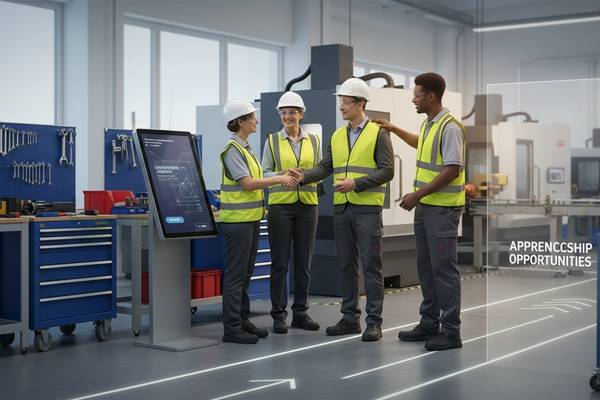
When you look at the benefit of the training alone, the training and the Workforge, our government affairs people will set up meetings with your congressman or your senator. We do fly-ins in Washington. You’re receiving all these legislative updates on a weekly basis. In addition to anything about EPA, Energy Star, CBAM, all the other environmental regulations that are going on.
That’s all stuff that IFI members get every day. Those are the unspoken benefits that you get when you’re an IFI member. The networking is great. You’re in the room with the leaders of the industry. If you’re interested in talking to manufacturers and you want to make the leadership, come to an IFI meeting because that’s where they’re at.
That says it all. Guys, I appreciate you sharing all this. You got me excited about it. I want to go to the Spring Meeting. Where’s it going to be?
That’s in Scottsdale, Arizona. The dates are March 7th through 10th, 2026. It’s at the Omni Scottsdale Resort and Spa at Montelucia, right at the base of Camelback Mountain. Our golf outing, if we want to talk about golf, sometimes you do. That is going to be held at the Camelback Country Club, which is a fantastic venue.
You cut me off at the pass there, Dan. I was going to wind down the conversation with a pointed question to you that I raised on that fortuitous flight to Vegas, where we first met out on our way to the Vegas show. It has to do with this idea that I dreamed up, where the IFI plays the NFDA in a golf outing. For some reason, I’ve never been able to get it to take shape. Maybe the time’s coming.
The good golfer on this show now is Preston Boyd. I’ll let him address this controversial issue you’re bringing up.
We’re doing a good job of recruiting new members. Specifically, we are focused on people like big country, Rob Reynolds as a member to add to the IFI team. There’s a number of good golfers within the IFI organization. I know, Eric, we just somehow have to make that thing happen.
We’ll have to fight over who gets Rob.
I was just going to say that. There’s a couple others I could think of. Distribution is going to fight for him and a few others too. I knew it was a can of worms. I didn’t understand exactly why, but maybe we could talk it over in Scottsdale some more. What do you think?
Sounds good.
Sounds like a great idea.
Thanks again, gentlemen, for coming on. You do great work at the Industrial Fastener Institute. Again, the website for that is IndFast.org. Keep it up, guys.
Thanks for having us on. We appreciate the opportunity.
Thanks for all you do, Eric.
—
ASME Standards, Industry Updates, And The Future Of Fastener Collaboration
Brian and Eric, back with you to close out another one. Brian, do you have a favorite ASME standard?
No particular one. To me, they’re all a little troublesome because they differ very slightly for the ASTM standards, which I’ve had to deal with.
You’re always coding around all that stuff.
I have to tell the difference. It’s awkward.
I’m going to go with ASME B18.2.1, the king of the hex head cap screw standards in keeping with our comment on the OpenAI logo earlier. I should be agnostic about all that though because we’re equal opportunity fastener guys.
We try to be.
As our Dan Walker and Preston Boyd of the Industrial Fasteners Institute. They’re doing good work, bringing higher visibility to the IFI. A lot more distributors are paying attention to them as a result. The new apprenticeship program makes a lot of sense. Very good to see. I’d like to thank Mike McNulty and Tim Roberto Jr. It’s great commentary on another exciting FDI guys. Congratulations on your Dodgers, Tim. Do you notice how Mike perked up at the end there when they started talking about baseball?
Even though he’s focused.
He’s extremely focused on fasteners. I tell you. You want to divert his attention, talk to Mike McNulty about baseball. He always lightens up. On the show, we heard from All State Fasteners CEO Dan Hill and barbecue connoisseur, Tony Martinez of Buckeye Fasteners. Carmen Vertullo had the Fastener Training Minute. We also heard from Marco Rodriguez of Cresa with his commercial real estate update. Thanks guys. Lots of good info on the episode.
The title sponsors of Fully Threaded Radio are Star Stainless, Goebel Fasteners, and Brighton-Best International. Fully Threaded Radio is also sponsored by Buckeye Fasteners, BTM Manufacturing, Eurolink Fastener Supply Service, Endries International, Cresa, INxSQL Software, Fastener Technology International, J.Lanfranco, MW Components, Solution Industries, Volt Industrial Plastics, and Würth Industry USA. Our email address is FTR@FullyThreaded.com. Let us know what you think of the show. If you’ve got suggestions, fire away.
Before we roll out of here, Brian, one final point to note. This was picked up by McNulty on the news report. The FIC, Fastener Industry Coalition that is, sent out a press release announcing their new domain and website. Get out to TheFIC.org to see it. You can see their new website. It looks like they’re re-energizing themselves, regrouping. they’re going to make another thrust at industry relevance. What do you think, Brian?
In case you don’t know, it’s the Fastener Industry Coalition.
Apparently, Harpo is quite excited by this news.
You’re right. I’ll go and look at their website.
One of the things that I think they’re trying to achieve with this is to put a single point of access for all of the organization calendars. It’s always a headache trying to set something up if you’re in the scheduling business and not clash with some organization or some show that’s happening. I see that they have links to the individual organization, upcoming events, which is very handy. What I’d like to see is some kind of a merged calendar where everything is all represented in one. I know that this is a huge headache. Nobody knows how to do it. Maybe we should ask Sam Altman how to tackle this one with his fastener-encoded logo. Maybe he’s a secret fastener fetishist.
I’m sure he’ll be able to convince us that it’s completely possible despite how hard it seems. He convinced me they could make a website, tried to convince me how great at programming ChatGPT 5.0 was. This will be a little simpler.
I sense we’re going to have a show in the upcoming months that’s going to just deal with all of these little tests that we’ve done. Not just us, but a lot of people who’ve been doing these things and realizing that it’s good for about 80% of what you needed to do. The rest of it, you’re on your own. Therefore, the whole thing is like, “Why bother?”
Anyway, back to the fixed site. There’s one other thing that I am going to have to bring up with the appropriate members at the appropriate time. That is there is a conspicuous absence of one key industry organization. I can overlook the NFBBQA not being included, Brian. Let’s face it, we’re a little bit of a fringe group.
Not that fringe.
For screw sakes, where’s the Naperville Fastener Association in the mix?
I would have thought the Traveling Salesman would have been right on that.
Among others, yes. Cavoto, Cameron, you guys got to shout out for this. Otherwise, good job guys. Keep moving things ahead. That’s what we do here in the industry, right, Brian?
We try to do that.
We’ve brought ourselves to the end of another episode of Fully Threaded Radio. Glad you clicked in. We’ll be back soon with another episode. I’ve got an Unthreaded edition coming up with Marcel Goebel. Looking forward to that. Until then, for Brian Musker, this is Eric Dudas. Get out there, sell some screws. Keep your eyes peeled for NFBBQA-worthy pits out there. We’ll talk to you next time.
See you next time, folks.
 Apple Podcasts
 Spotify