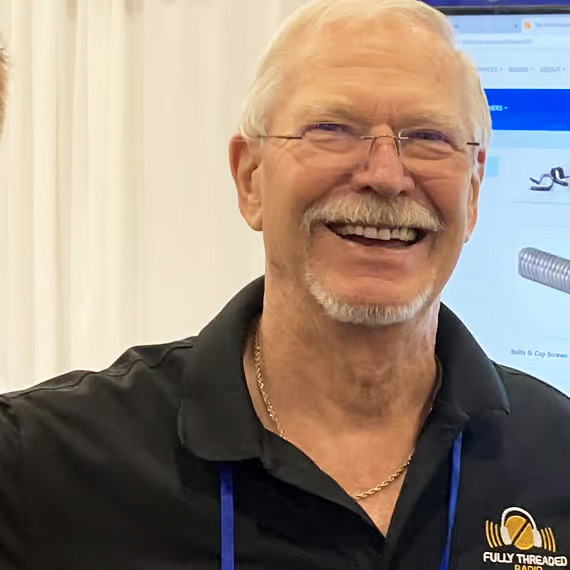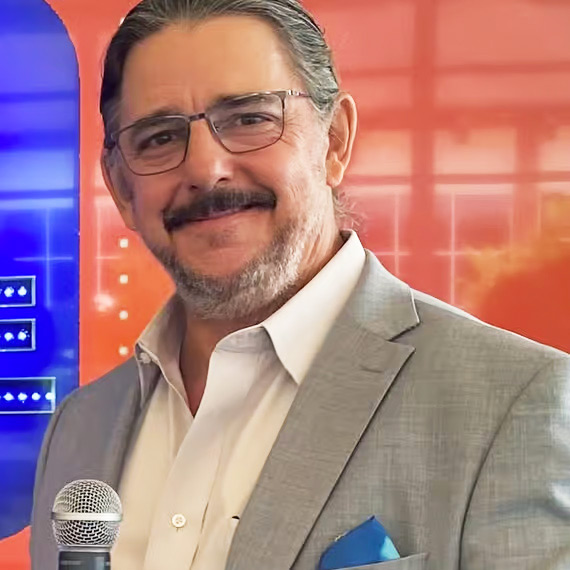
Goebel Group CEO Marcel Goebel discusses his life in the fastener industry, expansion across Europe and entering the U.S. market, fastener fitness, finding the right people, and the World Rivet Congress.
—
Listen to the podcast here
Important Links
- Marcel Goebel on LinkedIn
- Christian Reich on LinkedIn
- Elias Goebel on LinkedIn
- Goebel Group
- Goebel Fasteners
- Industrial Fasteners Institute
- Southeastern Fastener Association
- Internationl Fastener Expo
- National Fastener Distributors Association
- Tough Mudder
- SmartCert
- Lonni Kieffer on LinkedIn
- FTR Episode No. 221 – Pit Stop – Previous Episode
FTR Unthreaded: Marcel Goebel
This Unthreaded edition of the show is a conversation with Marcel Goebel. He’s CEO of the Goebel Group, which includes Goebel Fasteners, longtime partners of the show. This is yet another conversation I’ve been looking forward to for a very long time. As you’ll soon hear, Marcel Goebel is a lifelong fastener guy, distributor, manufacturer, innovator, and entrepreneur. He’s also a fitness enthusiast, world traveler, and family man. It’s a great conversation.
The title sponsors of Fully Threaded Radio are Goebel Fasteners, Brighton-Best International and Star Stainless. Fully Threaded Radio is also sponsored by Buckeye Fasteners, BTM Manufacturing, Eurolink Fastener Supply Service, Endries International, Cresa, INxSQL Software, Fastener Technology International, J.Lanfranco, MW Components, Solution Industries, Volt Industrial Plastics, and Würth Industry USA.
One of the things I found very interesting in this conversation is Marcel’s comparisons between doing business in his native Germany and the US. He took the company in 2016 and recruited Christian Reich, who’s the CEO of Goebel Fasteners here in the US. Many of you know him. You get the backstory on that.
During the course of that discussion, I was very interested to hear that he’s experienced many of the same challenges building a solid workforce. It was something I wasn’t expecting. Marcel lays it out. We also talk about the World Rivet Congress event that he threw to launch Goebel’s huge new rivet manufacturing facility. Hope you enjoy it. Thanks for reading, everyone. Here’s my conversation with Marcel Goebel.
—
Marcel Goebel, thanks for being here.
Thank you, Eric.
You’re the CEO of the Goebel Group. At least, that’s the formal title that you’ve got. I’ve just known you as Marcel and watched you grow. It’s been a great thing. I’m so glad that we’re able to sit down and let folks get to know you a little bit better.
Thank you for the invitation.
It’s been a few years now that we’ve been connected. Again, it’s been very thrilling for us to watch you guys grow. We’ve been doing so side by side. Looking at the Goebel website, I can see the history. You’ve got it laid out there. Very quickly, we’ll get to the point. How long have you been in the fastener industry you, yourself?
The Goebel Group’s Family Founding And Marcel’s Start In 1995
Eric, I started 1995 in the fastener industry. The company was founded in 1979 by my mother and my uncle. Before, we had a screw production close by. Everything started from that.
That answers the question. I knew there was the family tie-in because of the name. That was your mother. Very interesting. Your first product was screws.
We were well known for tapping screws and self-drilling screws. We manufactured that before we started in 1979. From 1979, we took a focus also on riveting products like blind rivets, closed end rivets, peel-type rivets, high strength rivets, and also the setting tools for that.
People think about Goebel Fasteners and you’re known as the rivet source. I always wonder how people get into that. How did you get into rivets? Was there a particular need in a market that you were serving and that’s how you got into it?
Becoming The Rivet Specialist For Sheet Metal Applications
The rivets were used in sheet metal applications. Everything has started with the self-tapping screws for sheet metal applications like tubes for power stations, refineries, and oil platforms. There were also a need for rivets. From there, everything has started with the ordinary or simple ones with the open type rivets. We became more and more a specialist for other kinds of rivets and applications. We have seen the need and developed that. That was the beginning of the things we are doing. We have the whole range.
Fast forwarding to 2016 when you broke into the North American market. The majority of Fully Threaded Radio audience members are in North America. That’s where the story begins for them. This is the background. In learning about Goebel and your history, many people have told me or likened it, I’ll say, to some of the stories of these early small companies that begin in a garage.
I love these stories because they’re stories of people starting modestly, and then with your World Riveting Congress. We’re going to talk about that. It’s just incredible the progress you’ve made. We’ll get to talking about your vision also, which is equally impressive. Fast forwarding all the way from these humble beginnings in a garage, which you can feel free to elaborate on a little bit to your World Congress in 2025. What a ride.
That’s true, Eric. When we were kids, my mother started with my uncle. Everything started with roughly €20,000. That was everything we had in the pocket. We had no warehouse or office. Everything started from scratch. We had these screws and rivets under our bed in the living rooms or in the garage. It’s incredible. During the evening, we also assembled in front of the television screws with washers because we had no machinery.
We had a very simple start. Everything started in the garage. After a while, we had to progress forward. We did the first rental in another garage and then another garage. Everything started garage by garage. When we had no more space to grow, we decided to move to another place, but also with a garage. It’s fantastic. I heard many stories from others that it starts from the living room or at home.
It’s a classic story.
From there, we had a hot ride. You can imagine when we were picked up from school by my mother. My brother and I, at that time, we were picked up and directly straight to the company. We grew up there in the office, in the warehouse. We played around fasteners. That’s maybe also a lovely story because many people ask us, “Why do you feel so comfortable with fasteners?” When we hire, for instance, most of them ask me, “Why do you have so much passion on fasteners? Why don’t you do shoes or something? That’s more fantastic for me. Fasteners are so boring.” It is not.
It’s in your blood. You don’t have to explain that to this audience.
If you are in the fastener industry, it becomes a passion. For many years, we have also decided to go back with manufacturing stuff. You become closer to the product as ever before. You have daily challenges to manage technical things and so on. Once you’re in the fastener industry, you cannot move out. If somebody quits from a company or something, usually you see him after a while in another company. It looks like it’s a family.
Let’s clarify. In those early days, you were a distribution company. It sounds like you were doing some kitting or at least, some repackaging. What you’re describing is your evolution into a manufacturing company. Do I have that right?
Exactly. In the ‘60s, we manufactured screws. My uncle saw my mother established Goebel. We were originally a distributor with screws and rivets, but also accessories like drills. In the very beginning, we had a lot of related fasteners, but then we took focus on special fasteners. We repack that at the very beginning. We branded our products early with Goebel. In the very beginning, we were more located in Germany. We had no branches all over the world. We had the German mark. The borders were not there. We had no internet. We had the datafax. All these kinds of stuff. That was a long way from where we are.
When did that international expansion begin? What year would you put that at?
There was something that’s called globalization. We heard about the internet. There was a possibility to connect each other around the globe. There were possibilities to communicate with other manufacturers around the globe. We have started the first branch in the Netherlands. It’s very close to Germany. It’s at the border. Afterwards, we started in France, then in Poland, and we had something in Norway. The big thing that we did was 2016 when we made the big step to the United States. That was a big journey in life, I would say.
The Big Step To The United States In 2016
That was a big and bold move that you made. How were you feeling at that time when you made that expansion? That was taking a very large risk, wasn’t it?
I was overwhelmed and excited. I traveled only once in my life to New York with my former girlfriend. I was also overwhelmed with everything. When we made the decision to go to the United States, most of the guys asked us, “Why did you figure out to go to Houston, Texas?” I can tell you something in Europe. We are usually also well-known as a premium supplier for all the refineries. In the United States, 70% of the refineries are in Texas.
That was mostly the reason in the very beginning to go to Houston, but I had no idea. I was super nervous and excited and overwhelmed about how big everything is and very friendly. We directly moved into a big building. That was super exciting. From there started the story to find the right people, the right guys.
Discovering Christian Reich As The US CEO And Business Driver
This is going to lead us to a big move that you made when you discovered the current CEO of your North American operations, Christian Reich. He is the guy who reached out to us right after you started, when you were trying to get your name out there and everything. What a guy you found.
Exactly, Eric. To be honest, he is the man and he’s driving the business. When I met him for the first time, that was at the OTC 2016 in Houston. The oil trade show. He was also a young guy at that age. I was a little bit older. I had a good luck with him. We made a big journey. In the very beginning, we had no customers. We had nothing. We had the vision. He was the guy who trusted in me. I trusted in him. Since that time, we are well-connected like close friends or like father and son. He’s hardworking. He has driven the business to where we are.
That’s proof right there because you’ve made great strides. Everybody knows Goebel. I have to say that everything that you do, it projects an extremely exciting professional look. It’s more than skin-deep because you’ve hired a lot of good people. Your team of reps is outstanding. The product is known for its quality.
I’m very glad. When we meet in Vegas, it’s like coming home. We lived there for a while. Houston, Texas was my family. We traveled there. My wife lived for thirteen years in the States. To go to the States and the name is branded everywhere, it makes me super proud. It’s much better than in Europe, believe me. When I go to the big shows here, it’s fine. If you come to the States, I like that. I like the fastener industry. I like how Christian has moved that. We have certain sales reps for us and with us, let me say. It’s like a team. It’s very family-driven. We do good business with them. It’s fantastic and lovely. I like it very much.
I remember when I first met you, you were a lot less confident in your ability to communicate in English. I have to tell you that I’m impressed with anyone who can go to a foreign country and operate in the native language. In my experience, at least many German people, Europeans in general, have a much better command of English than Americans do of, you name the language, German or any other language spoken in Europe. I have to say you’ve obviously learned a lot. How did you refine your English? How did you approach it?
The best thing was to improve that. When we were living for a while in the States, we made friends there. I was always interested in the language. For instance, with Christian, he’s funny. Sometimes, because he can also speak German, that’s fine. Sometimes, if he wants to speed up the communication, he’s talking in English and I’m in German. We mix that up to speed up the communication.
It’s a fantastic language. We learned that at school. At school, to learn English in Europe, especially in Germany, is not that easy. There exist other European countries, for instance, Netherlands. These guys speak English much better. I have improved that for a while when we were living in Houston. My wife lived for thirteen years in Los Angeles and Florida. We like to talk in English at home.
My little daughter is attending international school. She’s much better than me. She always says, “The pronunciation, you must do this way and that way.” It’s so funny. She has much better vocabulary than me. We do that because we were thinking maybe we will live in the future in the States, we need to prepare our kids.
I have a son, Elias. He lived for nine months in Australia. His English is also pretty better than mine. He’s also starting to tell me in my life many times, “Marcel, the pronunciation.” I have two kids with very good English. I have another daughter, Lina. Three kids. I’m a family man. If we have chances at home to speak in English, we do that to improve it as best as we can, Eric.
You’re doing a great job. I have a friend who is from Cologne. He’s a younger guy. He’s early 30s. He speaks perfect English. Better than a lot of Americans. I asked him how he learned. He said he watched obsessively every episode of Seinfeld.
That’s also good.
Again, the internet is helping with all that because we have almost a world culture now with social media and so forth. Talk a little bit more about Elias. He makes lots of appearances at the shows with you and travels widely with you. What’s he doing and what’s his role in Global Fasteners?
Elias is working since 2019 in the company. He has studied engineering. His idea was to move to Canada. I told him, “If you go to Canada or to the United States, believe me, you will not come back.” I’ve tried to give him a job in the company. He’s been working since 2019. He’s in charge of marketing. That was in the very beginning, but he’s in the manufacturing. He’s in charge of a lot of technical stuff, like drawings, developments, and so on. He’s not working at the machineries. He’s in charge mostly of technical stuff, technical drawings, development. He’s very good at that.
I would think that with an engineering background. Now that you’ve moved into manufacturing, it would be right up his alley.
Especially now we see manufacturing which we established in Germany. There are a lot of daily challenges. You need to speed up. If you want to be faster and quicker as shipments from Asia, for instance. You need to develop products faster. Get the tooling and the wire. That is our big advantage. We are very flexible. He needs to develop very fast many kinds of rivets, other stuff, and so on. He’s doing pretty good in that. He’s very technical-driven like his dad.
What year was the first time you guys made it to the Vegas show? Because that was when I first met you in person. Do you remember? Maybe 2017 or 2018 in that zone?
Exactly. That was the first Vegas show. It’s overwhelming for sure. It was my first time in Vegas.
I bet you’d been to the Stuttgart show many times. How do you compare and contrast? What’s the feeling of those shows in comparison, would you say?
The Stuttgart show is pretty big. It’s also a big fastener show, but it’s more conservative. There is no after show party. You have nothing like what you do with the golf. After the show, usually you have a drink or something. It’s not everything at the show directly. Everything around, we see pool party opening and so on.
It’s very different from Germany. Here it’s the big show in Stuttgart. This is more like you go to the show, you make some leads. Afterwards, you give the leads to your sales guys. Socializing is not the same like in Vegas. This is like the fastener family. I like it very much. I complained a couple of times here. I told the guys in Stuttgart, “If you want to make it better, check out what they’re doing in Vegas, for instance.” Maybe it’s culture stuff here.
When you got to Vegas, what did you think? You hinted that it was a little overwhelming. What was your big takeaway? What did you think when you first got off the plane and you saw the strip?
What you said already is overwhelming. We walked the whole night there. We went to a couple of casinos. I’m not a big gambler. I’ll just say there’s no way if you go to the hotel or anywhere. There’s a lot of casinos, good food, bars and everything. There’s nothing that you can compare here in Europe. I haven’t seen that before. The first time I was overwhelmed and sleepless I would say.
That’s saying something because you’re a world traveler. You’re a cosmopolitan kind of a guy. Vegas is definitely unique on the face of the earth, isn’t it?
It is. I heard that they will move to Phoenix next time.
That’s true. What do you think of that?
I was in Phoenix before, also at the trade show. You mentioned earlier, I traveled to many places in my life, also in the States. Phoenix was hot. I remember it was hot. Not bad. It was hot, different, desert, but also pretty nice.
Fair comment. That’s a contrast to the fastener industry in the US and in Germany. What other contrasts do you notice? Starting off in a garage modestly in Germany, as I said before. It’s a little bit of an eye-opener for a lot of people here in the States because I don’t think they have much of an idea or a feel for it. There isn’t the same distribution model over there, is there?
In the US, we follow strictly and we do strictly the business only with our sales distributors. We have authorized distributors. Goebel Fasteners is doing no business directly. We only sell the products to the distributors. We go out with the distributors to specify the products by the OEMs. That’s it. We sell it to the distributors and they sell it to the customer.
In Europe, it’s a bit different because we came from the end-user business in the very beginning. We have both models here in Europe and Germany. That is pretty good running. It’s accepted in the market because it was from the beginning. With the manufacturing, we are moving back to sell more to the distributors. We are more focused on the manufacturing. We do it for the distributors. The distributors take it in stock and sell it to the end user. This model is more and more on focus and so in our future as well in Germany.
From what you’ve seen, do you think that the model in North America is changing at all? Do you think that it’s going to remain that way going through distribution and so forth?
As a manufacturer, we believe very strongly in this model. That means we can take more responsibility on manufacturing and developing with our distribution partners. They are much better than us in marketing. Communication with the end user can pick up the technical need or, let me say, applications. They are daily by the customer. It’s a great model. That’s why we try to implement that also more and more here in Germany for the European market as the manufacturer and follow this model.
The Strategic Return To Manufacturing Post-Pandemic
Let’s talk about your evolution into a manufacturing company because this is a huge thing for you. When did you start getting serious about building out Goebel into a manufacturing powerhouse? You’ve made some giant moves.
We had all these experiences during the pandemic. The pandemic has shown us how fragile supply chains are. We were also manufacturing a lot of our products in Asia. A couple of here in Europe, but we also followed globalization. Build up production plants in China or Taiwan. I traveled all my life to Asia. When we had this pandemic running around the globe, the supply chains were disrupted.
We had the first time in our life the feeling, “We can’t get the products on time and also our customers.” We were pretty lucky because we handled that pretty well at that time. We had good stock. We wanted to prepare ourselves for maybe something else coming up in the future. We don’t know. Elias and me, we were sitting together and we had a chance. We got an offer to buy a production plant from Spain.
It’s a smaller one. A family stopped with that during the pandemic. We flew to Spain. We bought it. We paid for the machineries. Finally, we were lucky that we arrived in Spain. We found the machineries. That was also something because we were not sure. We invested, first of all, on that. We took all the machinery by truck back to Germany. We started the big refurbishment of the machineries, with process control, tooling and everything. That took roughly three years with the setup.
Find people who are willing to work hard and get their hands dirty. It’s quite a challenge, but once you’re used to running the machines with the right team, you can grow steadily from there. Share on XI can tell you, finally we are very happy that the first year we are manufacturing. We can manufacture roughly 250 million pieces per year. That’s our first step in what we did. We invested in much more machines. There will come a lot more machines by the beginning of 2027 in January with multi-station machines. We want to become a big manufacturer. We believe in that. I also talked to Christian many times. Once we are deep in the manufacturing here, it’s also an idea to set up something in the States. We have bigger plans for that.
You jumped ahead and you answered a big one. I am glad and interested to hear about that. Any timetable for that?
In 2026, we will get nine further multi-station machines, more nailing machines, and thread rolling machines. We will develop lockbolts here or rivet nuts or high strength rivets. We will start with standard rivets. That is our idea in 2027 in Houston. This is the rough schedule. Start with some machines and so on. We have then enough experience with manufacturing. The return of investment can become much easier and quicker.
What we face here is the same everywhere in finding the right skilled people. That is something. I don’t know how it is in the States, but I can tell you here. You must find people who are willing to work hard, make their hands dirty, and so on. It’s quite a challenge. Once you are used to running the machines with the right people, you can pretty well grow with that.
The Skilled Labor Shortage: Attracting The Next Generation To Manufacturing
This is a major theme in the North American fastener industry. There’s a big challenge for all manufacturing companies to find qualified, willing people to take those roles. It’s very interesting that you mentioned this. You’re saying that in Germany, you’re finding a similar situation. How long has it been like this? Germany used to have the reputation as an absolute industrial powerhouse filled with willing workers. When did that change?
It’s something I also talked to a lot of friends of mine who also have companies. It looks like after the pandemic. We had personal feeling to find the right people, skilled people and people who are willing to work. Something has changed there. It’s my personal feeling and what I heard from other guys. Germany was maybe well-known around the globe for hardworking people. A lot of things have changed.
It’s not only in Germany. It’s all over Europe. Maybe the younger people changed, too. It’s maybe not sexy to work on the machine. It’s maybe more likely to go for the social media stuff, internet, and so on. It is different. This is noisy. It’s dirty and so on. It’s maybe something younger people don’t like. I don’t know exactly. That’s my personal impression about that.
What’s your strategy for finding people then? How do you do it?
It’s hard. We are going to schools, for instance. We invite schools in early stages. We work together with universities to find engineers. We do something in sports clubs here with promotion. We support with jerseys, and so on. We try to show them that we are a company in this town or area who can provide a very good atmosphere. That is something we are certainly not alone. It’s a lot of companies fighting for skilled people.
You also need to give them some special benefits. It’s not only to give them water or something for free, or the coffee. It’s much more. You need to treat them pretty well. You must lead younger guys. You must give them some prospects for the future, and so on. To find the right skilled people or people who want to work for the company, it’s quite challenging. It’s a daily challenging job, believe me.
Benefits is one way, for sure. A lot of companies have floated that. I saw on LinkedIn, you had a post there with one of your German operations. You had a few fastener dogs out front. That was good to see.
We are a very dog-friendly family, I would say. My son started with a dog to bring it in the company. One guy from the purchase department, the HR, and the sales. It is lovely. They bring the dogs to the company. It makes it a little bit more funny in the atmosphere. It’s not that stiff and always work.
For folks who didn’t know about that, you’ve just endeared yourself to another stripe of the fastener industry. There are a lot of fastener dog lovers out there. I guarantee you. Are there trade associations similar say to the IFI that we have here in the States? I just did an interview with Dan Walker, Executive Director of the Industrial Fasteners Institute. He is running an apprenticeship program for the purpose of getting folks in the door and getting them trained up. We’ll see how it works. It’s a great idea. It’s a long time coming, but here it is. Anything like that in Germany?
We have one association for fasteners. It’s quite different because what you mentioned in LinkedIn, how you are linked together as associations. I know from Christian, he’s also a member. He’s also in the Southeastern Fastener Association and the IFE, in seven or eight associations in total. MFA and so on in the United States. It looks like you guys are doing that pretty well.
It comes together. You have content for two or three days at site. It’s also fun stuff. The community is much different. Usually here, it’s more like to come together, talk about problems, and try to find solutions. Everybody’s driving home. There’s no socializing stuff. It’s a human thing. We can learn from the States how to implement that. Here, it’s quite different. It’s very serious, I would say.
Leadership, Trust, & Staying Sharp: Building Connections & Discipline In A Global Industry
Once again, it sounds like a difference in culture there. You’re right. Christian has done a magnificent job of representing global fasteners in all these associations. The regional associations here are quite strong. We have the NFDA for distributors on a national level. Goebel is also very well-represented there. Good work on that front.
Christian is traveling a lot. He’s doing that pretty well. He’s the face of the company in the States. He’s everywhere and also with sales reps together. I know that with Threaded Radio, you are also supporting Goebel Fasteners for a long time. We are also very thankful for that. If you want to make business, it’s very important to listen to the industry, to be well connected, to understand trends because we are all sitting in the same boat.
What I feel personally, even if you are maybe a competitor. You talk to each other. There is not something that you come in trouble with somebody. I like it very much. It seems to be very open, fair, and space for everybody. Everybody is doing a great job. That’s my personal feeling and what I figured out when I was in the States. When I compare that to Europe, it’s more like competitors also talking to each other, maybe. Also, looking at each other and if they can catch some customers from the other one. It’s like fighting every day. It’s a bit different.
Getting back to Christian and showing up everywhere and traveling around. It’s funny because when you first get to meet him, he’s a man of few words or so he seems. He doesn’t speak extensively about anything. He’s always got so much going on, though. You could tell his mind is always working. Sometimes, I’ll say something. He already came to that conclusion. We just didn’t have to air it out. Everything’s just cool.
He’s a very intelligent guy. Some people said he’s holding his cards very close to his chest. I like it personally. He’s a great thinker. He has a great team in Houston to lead. We are also talking about the daily things. You can imagine, especially in the very beginning. Christian and I worked very close together. He became a true leader.
There are also a lot of decisions he sees he’s free to make by himself. It’s not that he needs to ask me all the time about anything. I told him in the very beginning, “If you can manage everything by yourself with a team, great. You don’t need me to ask if we need another desk.” It’s a very trustful relation we or the whole company has to Christian. When he started very young, for him, it was a lot of responsibility to manage.
He did it very well. He’s not a big talker. He’s a very sharp guy. Sharp like a knife. What he’s telling, he’s doing. When he lets us know that he wants to manage things, he’s doing it in a straight way. Even if he must work 48 hours, he’s working with that. He wants to make it happen. He wants to build out the brand. He has great ideas. We also learned from each other. He’s a very trustful and a loyal person.
He is a CEO in practice, not just in title. That’s great to hear. He’s definitely grown into it. You’re probably aware that he also made it onto the Tough Mudder team and impressed a lot of people with his physical prowess. That’s something that I notice every time we get together. Somehow, you and I always wind up at least mentioning our training and all that. For all you do, for all of the travel that you do, and all of the things you’re involved in. You work a lot. You’re in great shape. How do you do that?
I heard. Thank you, Eric. Every time I see you, I’m very impressed with you. I want to touch your muscles and say, “He’s becoming a Hulk.” It’s interesting. It’s very important to keep yourself fit. I can tell you a story. My wife complained a lot when I was training after work. What I did, I flipped that. I said, “In the morning, I can wake up at 4:00 AM. I go to the gym.” We have a private gym in the company. I said to her, “I will start in the morning. I will be there from 5:00 AM to 6:00 AM.” When I come home, nobody misses me. You are sleeping. You complain and it’s great. I flipped that and started in the morning.
For me, I found out that’s much better. I heard something about the 5:00 AM club. People stand up in the morning with the training. It’s good for the physical and everything, to clear up your mind. It’s true. If you made yourself prepared for the day, start early in the morning before the first guys enter the company. You are three hours awake, check yourself out, maybe started to think about what you do at the day. You’re already in.
If you prepare yourself for the day, start early before anyone else arrives, and check in with yourself to plan what you want to accomplish, you’re already ahead. Share on XFitness is something like passion for sure. I like to eat. It’s maybe something else. We see sports stuff. You can compensate for that. I like to go boxing here in our gym. I like to lift up the weights. There’s not a real particular training plan at the moment. At my age, I like to feel fit. I can also feel it if I don’t do that for days. My body reaction is like, “You must do something.” You got too nervous.
You can’t let moss grow.
You get addicted to that, even when you travel. The first thing when I pack my luggage, I ask my wife, “Where are my sports clothes? Where are my shoes?” If you are used to doing that and you miss that, then you feel not balanced. My family knows that. Still, I must go in the morning. Otherwise, they miss me. We found a good way.
As long as you can manage your time to pull that off. It requires discipline. The discipline then becomes a lifestyle. Obviously, that’s where you’re at. Very good. Good work. Keep it up. I got to tell you this. There are several guys in the industry who are in pretty good shape. They’re a little further down the road than you. If you ever need inspiration, there’s some of us who are looking back and going, “Keep it up there, Sonny.” I know you could do it.
That is also something which reminds me. When we were in Vegas, usually the industry was also staying in the same hotel. I met a lot of fastener guys in the morning at the gym. I was surprised. Many of the guys were doing workout in the morning. That was good. I was not alone. They had the first conversations in the morning about fasteners in the gym. A lot of people also from Eurolink. I’ve seen a lot of these shirts there. That was a good idea. The community is doing a lot of workouts.
Good for you. We got to get you on the Mudd team one of these years too. I know you know about it. You’re invited.
I have seen that. I have seen you guys. We will see. Christian asked me already. Maybe in 2027.
I’m not going to put you on the spot. You got a lot going on. You’re always welcome. With all the things you’re jamming in, it’s no surprise that you’re able to be doing the things that you are. One of the big things was your World Riveting Congress. I know that you invited people from all over. I wish I could have been there myself. There were a lot of people from the US. Tell us about it.
Hosting The World Riveting Congress (WRC)
When we started with the idea of manufacturing, Elias and I were sitting together. I also talked to Christian. I said, “It’s time to do something different. It’s all about bringing people together to share experiences.” Not to keep technology only for ourselves. Everybody knows how rivets are manufactured. We said, “We should do something like a big conference.” I picked that up also with Christian and said, “Maybe we can call it the World Riveting Congress. It’s a big name. Why not?” When we can guarantee that’s set up, it’s great. We can also use such a big name. We were working on that for more than one year.
We had a lot of great speeches. That was, in total, over three days. From more than twenty countries, we had people here. The folks from the US, Canada, Brazil, Czech Republic, Poland, Denmark. All over the world. Well-organized, with my family. My wife, Julia, was working pretty hard on that with my kids. Everybody was involved to do something. We booked the hotels. We made a big program. We had some politicians here. Our mayor was here.
In the end, we presented our production for the first time. That was the first time at the World Riveting Congress to see how rivets are manufactured from wire. We had the wire guys here because wire is not wire. We had the tooling guys here. We have shown in 3D how rivets are working and a lot of things. We made a new showroom called Riveting Showroom, with all the tools inside, robot technology, battery tools. At the end, that was something I copied from the States, the golf tournament. It’s the last day. That is not very common here in Europe or Germany.
If I would have known that in advance, believe me, I would have sent you a 30-pack of warm Busch Light for the booby prize. Go ahead.
We missed you, Eric. I’ll just say we will surely do another World Riveting Congress. That was the first one and very successful. Over the two days, there was also a big US truck here. It was not from Peterbilt. It was another one. It’s a Kenworth, a big American truck. This American truck served in Iraq for the US Army. A German guy bought it. He was refurbishing the truck.
We had the great chance to give him some fasteners for free. That was the G-Grip. It’s a complete full stainless steel lockbolt system that is very unique in the market. We invented that. He has used it for the trailer. There was a huge American truck. You can imagine if the American truck is rolling or driving in our little town.
All the people on the street were looking at that because that was the first time people had seen an American big truck here in our town. That was so big. We have also put some fences away here, cut it and grind it down to put the truck in the right place. People had the chance to get some technical details about how to fix, how they use that, and then also to touch the truck.
That was, pretty sure, a highlight at the WRC. Christian did it also very well in English. We have it not only in German, for sure. We had it also in English. We have tried to set that up in French. Finally, we said, “We go with English and German.” We also had a nice evening altogether in a very nice event location in Dusseldorf. We were roughly 300 people inside. Everything was sponsored by the company. We had a great get-together. The next day, we had a little bit of a headache. We moved with the buses to the Netherlands. We played golf in the Netherlands.
How far of a drive was that?
That was roughly one and a half hours away from here. We drove by buses. It was a big group. We played there in the Netherlands. The funny story is, you play not only in the Netherlands. When you kick the ball, there were courts where the ball flew to Belgium. You played at the other border, back to the Netherlands, and so on. That was great. We had luck with the weather. Finally, we also had a great evening after that get-together. That was something I learned from the States, with the golf tournament. Absolutely great.
There were very nice photos on LinkedIn that I saw. We’ll share those so readers can go back and see it because it was very impressive. I look forward to it if you have it again in the future. By the way, the Kenworth, you wouldn’t probably know this. It’s a local name. In the States here, the truckers call those K-Whoppers. That’s the CB radio name for them.
It sounds good.
What was the upshot of the WRC then? Were you looking to generate new business? Were you just looking to build the whole network? What would you say was the main takeaway from the whole thing?
The main thing was for sure the network to bring everybody together. It looks like the hot competitors here. We were very open to sharing everything. It was very important for us to share technical ideas, to make everybody in the end a professional rivet distributor and how rivets are manufactured. Great ideas were born for tooling and so on.
We had great discussions afterwards. I saw that as a conference, not only to promote Goebel as a manufacturer or supplier. At the end, we came out with a couple of good things. For instance, we had SmartCert here. They have also presented everything. That was great because nobody in Europe has seen that before. It’s a great product. I can tell you, the guys here love it. When we manufacture our rivets, everybody can scan that with a QR code. Lonni found more customers here in Europe for their products.
We wanted to also open possibilities for others to make new business, also for optimization, and so on. It’s not that Goebel wanted to make the business. Also, to give our friends opportunities to find new customers. That was a great idea. In the end, everybody was happy. When we had the great evening there at the special location in Dusseldorf, which is very close to here. I asked all the attendees, “Do you want us to make a second WRC?” Everybody was yelling, “Yes, for sure.”
Raise your tilts glass.
We had great success and a good time. Especially also because for everybody, it’s a challenging time. Good vibrations, good feelings, it’s very important for everybody. We all had a great time. It’s not all the time about the business. We are well-connected until now to everybody who attended the WRC and built a great relationship. It’s great. Also privately, I know that some of our guys travelled to others, became friends, and stayed there for holidays. It’s quite interesting how that turned out.
Says a lot about your philosophy overall. Congratulations on that.
Thank you.
I’m going to close out our conversation with a question that’ll come a little bit in an angle to business, which I know you’ll appreciate. You travel all the time. You’ve been everywhere. Where do you go on vacation?
My wife is Italian, but she lives in the States. When I asked my little daughter, she always asked me when we would go back to Houston. She likes the States as well. My wife asked me many times, “We need to go to Italy because of my family.” Usually, we like to stay in the summertime. We go to Italy, to Lake Garda. We personally feel very comfortable there. My wife cooks Italian food. We like to eat Italian as well.
We stay there usually in the summertime for two weeks and enjoy that. You know how it is. My wife prefers that. I have my daughter. I have another daughter. She’s also traveling with us. Elias is independent. He’s old enough. He’s traveling by himself. Before the pandemic hit us, I was traveling close to half of the year. That was exhausting at one point in my life.
That’s a lot.
I’m very grateful that my family supported that. When we were living for a while in the States, for instance, supporting Christian a bit. That was good that the family was traveling with me. That was a great experience in life. It’s also hard when you are traveling alone. The family is at home. I appreciate a lot that we have a good team. They’re traveling a lot and doing all these jobs. I still like to travel. To be honest, with a great team, you can also become a little bit more calm. It’s okay with his age.
Younger people moving forwards have maybe a lot more energy. It’s interesting and very exciting. I’m very thankful that I had a chance to see so many places. Most of the people think, “You are traveling to Asia. What have you seen?” Productions and factories. There’s not that much space left to have a study about everything. There’s a little bit around that. It gives you some space to have a chance to go on the tip of cultures. It’s very interesting.
If you believe and work hard, you can achieve things. You can make things happen. Share on XYou’ve invested a lot. You’ve sacrificed a lot. You’re starting to see the payback. A lot of people are impressed. I’m impressed. I admire what you’ve done. I’m so glad we’ve had this opportunity to bring some of this out. I hope folks know you a little bit better than they did before.
Thank you very much, Eric. I have to say. We have known each other for almost close to ten years. You have seen the strong growth of Goebel Fasteners in the US. When you want to achieve something, you must believe in that. You must work hard for that. Everywhere, it’s the same. I’m very grateful that we made it.
The brand is built out. The products are well-known. The quality is of very good quality at reasonable prices. We can even grow in these challenging times. That means we made it not so bad. In 2024, I was very proud when I heard from Christian that he got the award for the Fastest-Growing Companies in the United States. We achieved the place number 1,340. That was great to see. I have given Christian my thanks to that. That makes me very proud. If you believe and strongly work, you can achieve things. That is a good example in life. You can make things happen.
I love the picture of him in his tuxedo when he received that award. That was fantastic. Once again, I so much appreciate that you’ve been here. I’ve enjoyed the time. I look forward to seeing you again. I’m going to end it this way, Marcel, the way that I say it during your spots here when we plug you on the podcast. That is, Go Goebel.
That’s great. I like it. Thank you very much, Eric.
 Apple Podcasts
 Spotify