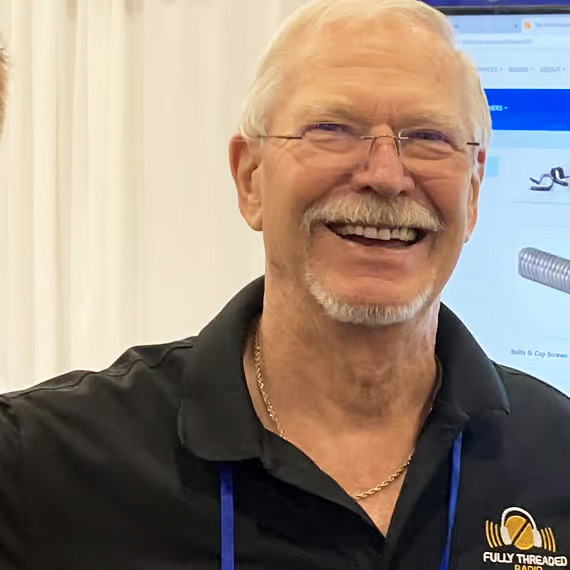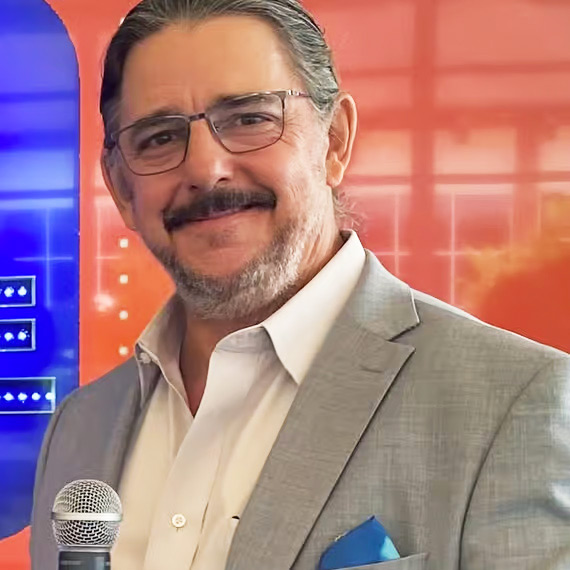
The fastener industry reports brisk sales, but optimism is slipping. Why is this happening? Abbott Interfast president Bob “GQ” Baer joins news editor Mike McNulty to mull over the confusing FDI numbers on the Fastener News Report (52:05). Industry legend, Mr. Bruce Darling, is remembered during a heartfelt conversation with Stelfast purchasing manager, Jim Jordan (1:35:36). IFI chairman Larry Spelman speaks from the recent fall conference in Louisville (15:25). On the Fastener Training Minute, guru Carmen Vertullo talks torque to yield fastening (1:25:21). PLUS: Marco Rodriguez of Cresa: buy vs. lease? (35:31) and Parker Jensen of Atlas Distribution and the NFBBQA (39:47). Brian and Eric point out that you don’t need a moon roof on a lunar rover.
—
Listen to the podcast here
Important Links
- Brian Musker on LinkedIn
- Jim Jordan on LinkedIn
- Parker Jensen on LinkedIn
- Carmen Vertullo on LinkedIn
- Marco Rodriguez on LinkedIn
- Larry Spelman on LinkedIn
- Craig Penland on LinkedIn
- Interview with Craig Penland at Eurolink®
- Jumpstart Vision
- J.H. Botts
- Bob “GQ” Baer on LinkedIn
- Mike McNulty on LinkedIn
- Preston Boyd on LinkedIn
- Dan Walker on LinkedIn
- Abbott Interfast
- FDI Survey
- SPS Updates
- Fastener Tech
- Dick Kleppe on LinkedIn
- Global Fastener News
- Fasteners Clearing House
- Kara Bosse on LinkedIn
- Eurolink
- Matt Delawder on LinkedIn
- Rob “Big Country” Reynolds on LinkedIn
- Carver Engineering and Manufacturing
FL Why?
Whoever drove that week, it was a one-week session between each driver. Bruce would have KFI on, and it would drive me crazy. I already have K-Rock driving him crazy. Dick was pretty mellow. He just wanted the waves. It was just three different personalities, but we all got along really well. At the time, you think, “Is this ever going to end?” Again, as you reflect back, you wish it had never ended.
This court date is coming up, and the reciprocal tariffs are under fire. I am not sure what will come out of that, but that could change all the numbers again. Every time the numbers change, we all spend a lot of time recomputing costs and sales and going back and forth with customers. That in itself is a drag on sales and production.
It is weird thinking about this concept of AI, and you think about robots and the Matrix. You think about computers, people behind their desks, and robots writing code. To support this industry, you have to build these huge data centers. There is going to be a ton of power investment in nuclear, investment in solar, and investment in hydroelectric. What do all those things need, Eric? Our fasteners.
Introduction
If you buy, sell, import, distribute, or manufacture industrial threaded fasteners, this is the podcast for you. I am so glad you clicked in. Hi everybody, Eric Dudas with you again, coming to you from semi-rural Northeast Ohio. The co-host of Fully Threaded is with us as well. Known as the hardest-working man in the online thread game, he is Brian Musker. How are you doing, Bri?
I am good. There are plenty of people who work harder than I do in this industry, but I am doing fine.
The online thread game is a specialty niche. You have to admit it.
Yes, that is true.
A lot of people are working in the shadows. This has become very clear after attending the Vegas show. I just got back from the IFI conference in Louisville. We will be talking about that a little bit. What I know is that lots of people have lots of ideas on how to harness evolving technology. They are working, most of them, in obscurity. Who knows what will come out as a winner eventually? You are one of them.
I am working with Sam on the idea of expanding the product information part of FCH, the scrubber.
That is a very exciting project you guys are working on, building out that data model to make it even more descriptive. In the era of big data, we can do very interesting things with all that. That is another thing we will be talking about quite a bit during the upcoming episodes. On this episode 220 of the show, we have plenty to discuss. We are going to stay away from the AI and data subject, which we have been crashing up against quite a bit, because there’s so much else going on.
Preview Of Fastener News Report, Fastener Training Minute, & Real Estate Update
We will be publishing this on October 16th, 2025. The feature segment on this episode is a conversation with the Vice President of Purchasing at Stelfast, Mr. Jim Jordan. He reflects on his days learning the ropes of supply chain and inventory control with the late great Bruce Darling. Bruce is remembered by many as the materials manager at Porteous Fasteners. He was very kind to us in our early days, Bri.
He was.
We needed someone to jump on the podcast and say some words about this remarkable fastener man.
He was a fascinating man. I remember very well in early 2007 that decision from Porteous was so profound. They would try to use the web, and that had to go in front of a board meeting to work out where they could spend $500 with FCH. Remember that?
It goes back a ways, but Bruce helped you push that one through.
He did. He was a very interesting man.
This is a great conversation. On the Fastener News Report, Bob “GQ” Baer joins Mike McNulty. They will zero in on the latest Fastener Distributor Index numbers. This time, it was another dramatic report because the last 30 days were strong, stronger than a lot of people expected. The forward-looking indicator is a different story. Things might be getting a little rocky. GQ is one of the most thoughtful of all the FDI analysts, and it is a good thing he is on with Mike this time.
Handing off to the Fastener News Report, Parker Jensen with Atlas Distribution jumped on. I gave him a crack at explaining the FDI, too. I was not trying to steal Mike and Bob’s thunder, but Parker is out there in the field, and he always has his take on things, so I gave him a shot. He talks to lots of people. On the Fastener Training Minute, Carmen Vertullo talks about torque-to-yield fastening. Could it be the value-added feature your distributor business needs to differentiate itself?
Carmen is going to give you all the details you need to make that choice. Plus, Marco Rodriguez with Cresa has something for us this time. He discusses buying versus leasing commercial property, which is something every business needs to consider at some point. Marco and the Cresa team are experts in that area. He leaves it to the end, always in these updates, Bri. Marco is very easy to find on LinkedIn. That is his preferred contact method. Marco Rodriguez is very fanatic. Get out there on LinkedIn and look him up.
Quick Interview With IFI Chairman Larry Spelman
He is with Cresa. He knows real estate. He knows the fastener industry too because he had an interesting career path coming out of the fastener world into the real estate world. He is one of us, but he will talk to you about all these issues. If all that is not enough and not AI-related for you folks, we are going to kick off this predominantly fastener-related melange with a quick interview I did with IFI Chairman Larry Spelman during their fall conference in Louisville that happened just a couple of days ago. It was a very successful conference. I am so glad I went. More on that in a minute.
It is cool.
Our list of partners is also cool. They keep us going. They enable us to bring everything we do to the fastener industry. The title sponsors of Fully Threaded Radio are Brighton-Best International, tested, tried, and true. Goebel Fasteners quality the first time, and Star Stainless, right off the shelf. Fully Threaded Radio is also sponsored by Buckeye Fasteners and the Ohio Nut & Bolt Company, BTM Manufacturing, Eurolink Fastener Supply Service, Cresa, Endries International, INxSQL Software, J.Lanfranco, Fastener Technology International, MW Components, Solution Industries, Volt Industrial Plastics, and Würth Industry USA.
I very much appreciate several IFI conference attendees who approached me during that event and thanked us for the FCH platform. Let us face it, we will take messages any way we can get them. The email address is FTR@FullyThreaded.com. Like Marco Rodriguez, Brian and I are both out on LinkedIn.
Eric is out there more than me. I am scanning it.
You are more of a lurker. Everyone knows.
I am really.
Lynn is not even out there.
She opens it up and looks through it occasionally.
FTR Website Upgrade & Consolidation
I do not think she has an account, Bri. That is how cool she is. She is like a Bruce Wheeler. They do not even need a LinkedIn account. On the subject of coolness, and before we cut to a quick break, I want to point out that we are upgrading the show’s web experience, building in some new features that have been needed for a long time.
We are doing that, and we are consolidating because it was a little schizophrenic for years having these two web pages, and now we have consolidated it into one. Mostly, it is a step forward, but we did break a couple of things as we are moving ahead. I just want to caution everybody that if you get out there and you get some crazy message, we are going to figure that out. You could still get to the site. Everything is safe.
Everything is SSL-enabled as I understand it, but something is still a little off. We have the admin team trying to smooth all that out. One of the great advantages of this new framework that we are using, Bri, is that we are going to be able to provide a lot more additional info for every episode. That is going to make each show more valuable. It is going to bring more relevance to every episode and a lot more partner value, which is one of our biggest objectives in doing this.
Our sponsors and partners have a dedicated page each, which we have been wanting for a long time. It was not until we got a newer platform to set everything on that we could really do that. It is good. Have a look at it.
A lot of folks are tuning in on their iPhones through the Apple podcast app. Some are tuning in through Spotify. It is the usual hodgepodge these days. There is not just one platform that everybody uses. That’s just the way the podcast world is these days. However you are tuning in to this, thanks very much. New audiences are hopping on all the time. I guess we are going to need to backtrack.
It also makes me feel less bad that we are still using some of the same bumpers that we have had for many years. We have some new ones of those coming too, Brian. Long-suffering, Fully Threaded audience members, stay with us. I know they are going to because we have some great features coming up on this episode and going forward.
Jumpstart Vision & Community Service
One more thing before we take that quick break, I got a message from Craig Penland, longtime partner of the show. He is involved with an organization called Jumpstart Vision, and they have a very important mission. Craig is right on board with it, and he was interviewed recently. I am going to make sure that there is a link for this episode so that you can get out there and see this interview. Jumpstart works with newly released convicts and helps to get them straightened out. It helps to give them a path.
That is very cool.
It takes a special individual to see the need for that and to have the courage to get involved. People who know Craig and the whole Eurolink team know that he is a deeply committed person. I will read a little quote in here that drives that idea home. This is from this interview on JumpstartVision.org.
Craig said, “Second chances, none of us deserves them, but God gives them anyway. If He offers us a second chance, who am I not to do the same for others?” There are lots of examples in this short interview that Craig did. I just want to point it out because we are proud to be associated with Craig. The fastener industry, in general, is filled with people doing all kinds of things like this. Most of you know about the Sleep in Heavenly Peace bed build project that the Parker Fasteners guys, the BTM guys, and lots of others brought to us.
Second chances aren’t something we deserve—but they’re given to us anyway. If God extends that grace to me, who am I to withhold it from others? Share on XThat has expanded so well. Craig is also involved with that. He is doing a lot of things, as are many people in the industry. I just wanted to give a big hat tip to Craig Penland, the Eurolink team, and the fastener industry, which we are deeply honored to be a part of. We are also very glad that you clicked into this episode of the show. We will take a quick break and come back with IFI Chairman Larry Spelman.
—
Interview With IFI Chairman Larry Spelman (Main Segment)
We are here at the Fall IFI Conference in fabulous Louisville, Kentucky. It has been a great event. I am speaking with Larry Spelman. He is the current chairman of the IFI. Congratulations on a wonderful conference so far, Larry.
Thank you so much, Eric. I appreciate that. It is a lot of fun. There are a lot of eager eyes watching these presentations. They are unique to each event. Each event is a different event. We have people making some choices here, so it is really cool.
I am glad I was able to catch you, as everyone is adjourning here for day one, heading off to the golf course. Some of the others are going off on a rather interesting tour this afternoon.
We have about 80 golfers, but the balance of the group is going to go on a self-guided tour. We just gave them a pass and said, “Go enjoy the different tours of Louisville.” There is the Slugger Museum and the Muhammad Ali Center. Tomorrow we are going to go down to Churchill Downs and enjoy some of the horse racing history. What a neat city. What a cool place to be. Bourbon is involved.
Now we are getting to the quick of it. You cannot walk around this hotel, a beautiful location at the Galt House, without realizing that the city is rich in that tradition.
It is everywhere. I actually had someone who is going to be a long-time IFI member retire. We gave him his own version of bourbon with an insignia of the IFI on it. I had the pleasure of providing him with that at last night’s dinner. That was fun.
That was Mr. Jeff Leiter. We are going to be bidding him adieu. Congratulations on growing the IFI because I have noticed a lot of energy. I heard earlier that this is the largest fall conference to date and there are something like 180 people here. It is really exciting.
We tried to make this drivable for a lot of the membership because we wanted to try some different things, like the split sessions and giving people some options. A change to the itinerary was important. We also wanted people to reach into their organizations and bring younger people in, so we can change the profile of the IFI. It is great to see the results of that. We talked about it a year ago, and here we are doing it. The results came through.
I will be talking about that further with Dan and Preston on the show. Aside from growing the association, what is your focus? There is so much going on legislatively and in the industry, but what are you personally focusing on for your chairmanship?
I am making some necessary adjustments so the information can flow to the membership more easily. There is so much changing, and there are so many layers getting added. The IFI has become such a huge resource. Not everybody is aware of all the tools that are at their beck and call with the IFI. It is really about communicating. It is about opening it up. It is about new software resources we are going to be using to make the IFI open up to the membership better.

There is a lot in your value package. We will be talking about that a lot more, too. For audience members who are not familiar with J.H. Botts, tell us a little bit about that. It is a very unusual name. Am I guessing the founder?
John Botts is the founder. His middle name was H. I do not even know what the H stands for. J.H. Botts has been making anchor bolts since 1973 for most of the large pole manufacturers. If the road is lit when you are driving down the street at night, Botts anchor bolts are holding the poles in place. We also do a lot of grid work with utilities. We have a plant in Joliet, Illinois, and we have 60 proud employees who really put a lot of effort into it.
You are well-positioned for your chairmanship. You have a great team here. Again, it is a great event. Thank you very much for the invitation. I look forward to supporting the IFI going forward.
I am looking forward as well, and thanks so much for joining us. This is great. I appreciate it.
—
I am going to spend a couple of nights in Louisville. We are on our way to different parts of Kentucky. It is a very interesting little city, Louisville.
You guys love bourbon.
We had a great time. We went to about three different distilleries in Louisville. It was cool. Angel’s Envy was one of the ones I remember. Some of the others were not quite rustic enough for me. I like the distilleries that are a little bit like Maker’s Mark, somewhere out in the country. It is a really interesting city to visit.
I was only able to stay for the welcome and then the first part of day one. I missed out on that tour, but we will have to catch up with McNulty because I know he stuck around for the whole thing. Carmen was there too.
He would be looking for a vodka distillery rather than a bourbon distillery.
He is a big Tito’s fan. The other day I saw a bottle of Jack Daniel’s vodka. The gimmick is that it is aged in bourbon casks because it has a brown hue. It looked like bourbon. If you did not know it was vodka, you would not have thought it was. He probably found himself a couple of martinis with Jack Daniel’s vodka in them. We will catch up with him, too.
The people who make bourbon could also make vodka or gin if they wanted to. It is just another extra step.
It all starts out much the same. It does not really matter what you make it out of.
How you deal with what you are mixing gives it a different flavor.
All the refining is where the magic happens. The IFI is doing everything it can to broaden its appeal. We have seen their presence more and more. For example, they hosted the government affairs session at the MWFA fastener week this year. They are showing up at the Vegas show. There is a lot of outreach. We will have Preston Boyd and Dan Walker on the show later this month, talking about some of the specific programs. I am really interested in learning about their apprenticeship program.
Being manufacturing-oriented, they are acutely aware of the labor issue. They have some very exciting ways of addressing it. I ran into several people at the IFI that I was not expecting. INxSQL Software was there. I got a free pen, Bri. I got a chance to hang out with Lawrence a little bit more. We have an Unthreaded episode that is already recorded with him. That will be coming out just a little bit after we publish this one. Stay tuned for that. I also met a lot of people whom I had not spoken to before. It was an excellent use of time.
It is a different sort of crowd from what we see at our fastener distributor shows.
It is another side of the industry. Matt Delawder from SWD was there as well, looking like he was about ready to attend the Kentucky Derby.
He probably was.
He was dressed to the nines. He loves representing the MWFA, the best-dressed of all the fastener associations.
Except when I turn it.
That is going to do it for me, and attending fastener events for at least a few months. I do not think I will make it out to Chicago for the MWFA Christmas party this year. I hope you and Lynn will get out there for it.
We will try. It is quite frequently a conflicting thing we have. We have not been able to make it for a couple of years, but we used to.
2026 Fastener Industry Event Previews
I hope you make it out. 2026 is going to be another very interesting year of fastener events. A few of the big ones have already been announced. This is a comprehensive list. The PacWest announced their spring conference that is happening March 11th through the 13th, 2026, at the Westin Anaheim Resort. They like to base out of that location. Fastener Fair is coming on strong. It is turning into lots of people’s favorite national event. This time they will be in Charlotte, North Carolina, on May 5th and 6th, 2026. It will be interesting to see if they do a fusion theme with Cinco de Mayo and NASCAR.
I am not quite sure how you mix those two together.
Gringo tacos. You are a big fan of those, are you not?
No, I like the Mexican tacos. Cilantro and onions, none of this lettuce and sour cream stuff.
This is crappy Velveeta cheese.
Whoever thought that could possibly be called a taco?
Some gringo, obviously. You are very authentic. Anyway, we will see what happens at Fastener Fair USA, May 5th and 6th, 2026. MWFA Fastener Week, the week with no vowels, has a big one this year. It is happening at the end of August. They are changing venues to Navy Pier in downtown Chicago, which is huge.
It is a very cool place, jutting out into the lake. It is an amazing place.
Who knows what DeLotto is going to be wearing that day?
George Hunt has his diamond-studded shoes, remember?
Yes. The thing about him is that he rarely repeats. He has to continuously stun everyone. You’ll never know who is going to turn up here. Anyway, the MWFA is great at that. This 80th anniversary event should be a big one. GQ will be on with Mike McNulty, and he will be plugging that a little bit more on the news report. The last one I have on my sheet is the Vegas show, which is no longer the Vegas show. Now it is just the International Fastener Expo, which is moving to the Phoenix Convention Center, October 8th through the 9th, 2026.
That will be interesting after years in Las Vegas.
Other things being equal, it is going to be a big success. A lot of people are curious and interested. They will be happy if the pricing is a little bit more reasonable.
Vegas has become an expensive place, even though there is news about how the tourists are stopping. They have not made them change their prices. It is still a very expensive place to go and stay.
I cannot for my life.
Pretty much everything. Gas prices are really strange these days. I do not know about you, but here in semi-rural Northeast Ohio, this is October 2025 in case you are tuning in the future, but we are paying as low as $2.45 a gallon for fuel.
That is cheap. That could not possibly be the case in Chicago. Really cheap is about $3 a gallon.
Even having said that, with all the incumbent graft and necessary taxes, that is still a reasonable price considering so many other things are at all-time highs.
Your average price is, in general, a dollar less than ours.
Fastener Technology International Magazine & Lunar Rover Story
All this is to say that nobody knows what the prices of fuel will be like. I saw the new October-November Fastener Technology International magazine, Bri. It is another fine issue. McNulty does such a great job editing that magazine. It is just so dense with high-quality info. This time, I zeroed in right on page 206. Why? It’s because there is a story about lunar rovers and a company, a startup called NeuroSpace, German-based, that specializes in lunar vehicles. What did you make of this?
I thought it was a very good advertisement for a very famous and frequently knocked-off German plastic screw produced by a company called EJOT. I thought the design of it was a little bit of a letdown. It looked like a World War I tank. I thought coming from German people, who have access to Porsche design, they could have designed a slightly better-looking moon rover.
Maybe they were shooting for something that looks like an updated version of the famous Apollo lunar rover, which was used up there. That thing looked like something the Little Rascals would have put together, but this thing looks very kludgy. The image that is on page 206 may be AI. I do not know whether it is even a photo or a model of the thing. It is actually just an AI depiction.
When I first looked at it, I thought, “Why do they not use the completely round top?” Usually, it was one of the old World War I tanks where the gun was stuck. It used to spin around like a Dalek machine.
You would not need a moonroof on it. You are already on the moon.
Good on them. If they can produce one, it has to deal with a really tough environment, going from in the sun when it gets warm to down near absolute zero.
The article explains how they are doing all of this very comprehensive testing for everything from vibration to radiation and microgravity variations. All kinds of things that I guess aerospace people think about all the time, but most fastener people do not. My question, though, is, who are they actually building this for? They reference NASA and the CNSA in the story. I presume that is the Chinese equivalent of NASA. There is another one there that I do not know what it is. ISR.
I would say it would be the European Space Agency.
They were not listed. They do not have any money, though, Bri. That is probably why.
It is like the rest of us.
We have lots of money, Bri. It is just not real. This lunar rover, maybe it is. It is definitely a curiosity.
Apart from the ones driven by humans on the moon, they have not been amazingly successful. Moon rovers develop, they fall over, and things go wrong with them. Maybe they can do a better one.
Apart from the ones driven by humans on the moon, they haven’t been particularly successful. Moon rovers are developed, but they fall over and things go wrong. Maybe they can build a better one. Share on XIt sounds like you are of the view that we actually had a lunar rover up there already. Do you think that the lunar rover was mostly assembled in place once they disembarked onto the lunar surface during that Apollo version of this thing? It has always bewildered me how they could have possibly jammed all that equipment into that teeny little capsule that is said to have landed up there.
I presume it unfolded. It had to. Remember, it was a bigger unit that landed on the moon because the whole bottom part of it was the launch pad for the little bit that flew away.
I remember going to the Smithsonian Institution as a young kid and seeing those artifacts from the Apollo missions, and I said to myself, “I could probably build one of those in the basement myself.” I hoped Mom would not mind if a whole bunch of the tin foil was missing from the kitchen drawer.
You had to take the tin foil and then put varnish on it to make it look like gold.
I also do not see any solar panels on this thing in this picture.
I noticed that, too.
Maybe it is a hybrid, getting back to the whole subject of the cost of gas. Maybe gas is so cheap that they think it is easier for them to just bring a few gallons along.
I have a feeling they would not find quite enough oxygen to run their engine up there, but they will need batteries somewhere.
That is the beautiful thing about these kinds of things. They can miraculously overcome previously impossible engineering problems. Next thing you know, we are cruising around in dune buggies on the moon. We have gotten a little far afield. I just wanted to really plug the latest fastener technology, but I could not resist pointing this out because it is a curiosity.
The article is about the EJOT screws that they have been testing to make sure they can withstand all the rigors of launch.
Do we have any EJOT screws in the FCH sourcing network that you know of?
Yes, we do. It is a very common, very well-known screw, but mainly just for plastics. It has been copied many times.
You would think with 1.8 million listings at FastenersClearingHouse.com, it would not be a big shock to find some EJOT screws. Now, what would be really interesting would be if these guys from NeuroSpace showed up and did a few queries and bought a few of their screws through FCH. Put one of your sniffers on that, Bri.
Stranger things have happened. We very frequently have the Navy shipyards buying stuff off FCH, and we ended up setting up a special account for them.
I am glad you are out there taking care of those specialty users of the network. We do what we can. I was spreading that message at the IFI when I was visiting. Our purpose is to expand the FCH sourcing network in every direction we can. These days, with the greater importance of domestic manufacturing, we are looking to make a few more relationships in that area. INxSQL was doing that too.
We had Rob “Big Country” Reynolds on a couple of episodes ago explaining how they are expanding to support manufacturing in every way they can. That is what we are doing too. We appreciate you using FCH, and we appreciate you tuning in to the show. We will cut for a message from our partners. We will also hear from Marco Rodriguez of Cresa. We will get back with what many people regard as the high point of each episode, Bri, Mike McNulty’s news report. Talk to you in just a minute.
—
Industrial Real Estate Update: Buying Vs. Leasing (Marco Rodriguez)
This is Marco Rodriguez with Cresa, and welcome back to the FTR Industrial Real Estate Update. We are tackling one of the biggest decisions a distribution business owner faces. Should I lease my facility or purchase it? This is not just about real estate. It is about cash flow, flexibility, and building long-term wealth. FTR audiences are probably experts at managing inventory and supply chains. Numbers can look like a foreign language, so I will try to translate this into plain English.
First, the purchase option. When you buy a building, you take on much higher upfront costs. Your initial cash outlay is substantial, covering the down payment, improvements, and soft costs like inspections and financing fees. This massive capital investment could otherwise be used to grow your core distribution business. However, purchasing creates significant value over the long term. After slowly paying down the mortgage over a twenty-year period, you own a significant asset.
As an example, many of the private fastener companies that sold their businesses to private equity firms kept their buildings and are now collecting rent checks from those businesses. Now, let us look at the lease option. The huge advantage here is preserving working capital. The initial cash required to lease is only a fraction of that required to purchase. You generally just need two months of rent. One for the security deposit and another for the first month’s rent.
This preserved capital can be kept working in your distribution business to produce returns higher than the appreciation rate of the building. As an industrial tenant rep broker, I can tell you that capital preservation is often the number one priority for a growing business. The downside is that leasing does not create equity. You are paying rent, which typically increases annually by 2.5% to 3%. Over twenty years, the total cash spent is actually higher than the cash outlay for purchasing.
However, the critical benefit of leasing is the flexibility to move. A lease offers a defined term shorter than the life of a purchased asset, allowing your company to easily relocate to a smaller, larger, or even more strategically placed building when the lease expires. This allows you to stay nimble and adapt your footprint without the complicated process of selling your property. It is also worth noting whether you are purchasing or leasing.
Taxes and insurance are ultimately paid by the building’s occupant. Even if your lease is not itemized in a triple net lease, the landlord is passing those expenses onto the tenant in the form of rent. The bottom line is that the choice depends on your company’s financial strategy. To purchase requires significantly more upfront capital, but the long-term annual cost is lower due to the building equity and the potential resale of the building. Leasing requires a smaller initial investment.
Preserving a large percentage of your capital, but it results in a higher average annual operating cost because there is no asset or value at the end of the lease. Many factors, including building purchase price, interest rates, operating margins, and your working cost of capital, should be considered when making these decisions. Understanding the leverage of your capital, how much you put down versus how much you save in the long run, is the first step to making an informed decision on what is right for your fastener distribution business. If you would like my help to build a complete financial model for your situation, reach out to me on LinkedIn at Marco Rodriguez with Cresa. Thanks for tuning in.
—
Interview With Parker Jensen (Atlas Distribution) On FDI/FLI
It is the news segment. I have Mike McNulty coming up in just a minute with the Fastener News Report. He will be talking with Bob “GQ” Baer this time. They will be going over the Fastener Distributor Index, the September numbers. They are pretty interesting. I have somebody on the line here to pass a little time until Mike comes up. Maybe we will dive into the head-scratcher on this one, which is the decline of the forward-looking indicator. Parker Jensen is Vice President of Sales at Atlas Distribution. Brother, what are you seeing out there? How do you explain all that?
Eric, it is great to be on.
Last time I talked to you, you were flying down the high-speed rail somewhere in China. Is that right?
Yes. We were going like 250 miles an hour, recording live on a podcast halfway around the world. Now I am just here in Dallas, Texas. I am interested and excited to talk about this FLI and FDI, and how it does not make complete sense.
It really does not seem to. You get around, and you are always traveling and talking to a lot of people. While you are doing that, you have a knack for mapping out some of the finer eateries on your routes. I have noticed. Are you a member of the NFBBQA?
I am not, but give me an invite, and I will be there.
You are invited right now. Lay down some good barbecue in the Dallas area. I know that you are always sampling what is out there. Do you have a good brisket joint near you?
Pecan Lodge is awesome in Dallas. There is Terry Black’s, which is more famous. They are originally from Austin, but they are also nearby in Dallas. There is Cadillac Barbecue. That is pretty famous around here. I used to live in Fort Worth, and my favorite joint in Fort Worth was Panther City Barbecue in South Fort Worth. It is very well known. I will join the NFBBQA if we can agree that Texas barbecue is the best barbecue in the country.
You are going to have to win a few folks over to prove that, but you are invited to do so. I will take that as an opportunity to invite you to the next fest. We will get down to business there. Right now, let us take a look here at what is going on with this FLI. I distracted you, and now my mouth is watering. It serves me right. It is going into lunchtime, where I am right now. Back to fasteners. What are you seeing out there, Parker?
What we are looking at today, and why we were talking about it being a little weird, is that the FDI was much higher than last month, about four points up. The FLI is about six points down. What I was seeing more of is that the FDI is inflated. It is showing sales being up seventeen points over the last month. I think a lot of that has to do with the tariff prices getting into customers’ inventories and distributors’ inventories, and them going to sell at a much higher price.

If you look at it, we are talking about 50% taxes on almost all of our imported fasteners now, and over 90% from China nowadays. We are talking about an insane increase in prices in the last six months. I would say that 70 sales are extremely high. I am wondering if that is a record. It is definitely the highest this year. I would like to see what the earnings from those sales are because I am sure the earnings are relatively flat while the sales are higher. The sales also include a 40% or 50% tax on the goods that we sell.
You are not mincing words there, and others share that view. We will see for sure. Again, we have Mike McNulty and Bob “GQ” Baer coming up to crash through these numbers. GQ is always very fastidious in the way he goes about that. We will see how it compares. What I am really interested in is whether you see any f a noticeable downturn in demand from your interactions on the street.
Atlas sells through distribution completely. We are only as good at knowing about the market from our distribution partners, who are selling to the OEMs, metal fabricators, and big construction companies. What I am seeing is different sectors doing different things. In regular OEM manufacturing, automotive, heavy truck, trailer, and agricultural equipment, I am seeing that being relatively flat, if not a little slow.
Something that we have talked about before is this huge boom in AI and the data centers that AI needs for all their compute power. When we see these huge investments, 500 billion from Oracle and 200 billion from others, it is like they are all competing on who can make the biggest investment in AI and these data centers. I am seeing that market.
That would be structural fasteners and fasteners related to data centers, electrical, strut accessories, and threaded rod. The construction-related distributors, I think, are doing really well. If you can get a piece of that huge data center pie that grows every day and is going to continue to grow to suck up all this compute power.
I read something recently where if you look at the growth in 2025 so far, we are at a pretty normal two percent growth track for this year. If you take out all the AI growth, we are really at a flat or maybe even a little bit of a downturn for the year. If you can get a little bit of a piece of the fastener pie and the data centers, I think you are doing well. If you are just relying on OEM manufacturing, you are probably flat or maybe a little bit down this year.
That sounds consistent with what we are hearing elsewhere. I think that is a good analysis for right now. It is probably another big reason that people are just not sure what to believe. That uncertainty can lead to the lowering of the FLI for sure. We have the tariffs, and we have this unknown AI bubble. How long will it go? How high will it get until it changes?
There are lots of opportunities in that area for fastener sales to grow. It is weird thinking about this concept of AI, and you think about robots and the Matrix or whatever you think about when you think about computers, people behind their desks, and robots writing code. To support this industry, you have to build these huge data centers. There is going to be a ton of power investment in nuclear, investment in solar, and investment in hydroelectric.
What do all those things need, Eric? Our fasteners. What is good about our industry is that we have been an industry that has been abnormally affected by tariffs because most fasteners are imported, and our tariffs on imports of steel and things made of steel are higher than the rest of the market. What’s good about that is that people always need fasteners. You cannot build anything without a nut, bolt, or screw. People still need us throughout all these changes. It just may come in different forms of how our fasteners are being used.
We are surrounded by them.
Yes, sir.
Parker, the last time I was talking to you personally on the podcast, you were on that high-speed rail. Personally, we were hanging out at the MWFA before the welcome party. You were showing me some of these RFQs that you have coming in, and what it takes to skim through these things. We put a few of them through ChatGPT. I know AI as it applies directly to your job is on top of your mind. Are you using any tools right now that are making your job a little easier or upgrading your efficiency? Are you still looking for the magic key?
It is interesting, Eric. I think my boss, Mr. Scott Camp, and I were pretty skeptical about AI in our industry for a while. We are finding that it continues to get better. Quoting is an extremely tedious part of our jobs in fasteners. Cross-referencing and understanding what a description that was made in the 1960s means is hard, but the AI is getting pretty good, too.
There are companies that we have been talking to recently, like Soft and BoltWise. I even think FCH is using quite a bit of AI. I am curious and want to stay on top of how you are using it to grow. Our business is very personal. It is very personalized to each customer. It is hard to think that AI will replace us as sales reps. If you are not using it in some way, you are probably falling behind.
I have ChatGPT open on my browser most of the time. It is not great for some things. I was using it to try to figure out the HDS code of the gloves I wanted to look at importing, and the tariff rate. For somewhat new things, like all the tariffs that came about this year, it struggles without being able to scroll through years and years of data on the internet to find the answer. It is imperfect, but it is something that we are definitely trying to stay on top of and use in the future.
I am hearing a lot of the same, and we will stand by. We are all looking for that solution right now that is really going to rip it open for us. In the meantime, you are always looking over your shoulder, expecting somebody else to hit it.
Years ago, when you talked about it on the show, I honestly thought it was a little overhyped and thought, “How can AI be used in nuts and bolts?” I am slowly becoming a believer that it is going to be something that we use more and more in our day-to-day.
There are a lot of functions that we can use it for. We will discover them as time goes on, and it is right around the corner. I appreciate that, Parker. You are VP of Sales at Atlas Distribution. You are always welcome on this show. I am looking forward to our first NFBBQA event, when you can show me what you know about Texas barbecue, because it’s going to be a good day.
It is cool to be at the premiere of the show. I have always been a fan, Eric, and it is fun to be a contributor now. Let us get after it with some barbecue. I would love to join this new organization. Do I get a badge, or is there an initiation ceremony?
You could be on the swag committee. What do you say? Membership has its benefits.
Awesome.
There is one more benefit you can provide the show’s audience. I am sure you know what that is.
Yes, sir. It is a pleasure to do this.
—
Now with news about screws that you can use, here is Mike McNulty.
Fastener News Report & Fastener Distributor Index (FDI) Analysis
Thanks, Parker. This is Mike McNulty from Fastener Technology International magazine, bringing you the Fastener News Report, which is sponsored by Volt Industrial Plastics, makers of the world’s finest plastic fasteners. With over 800,000 workers furloughed, October 2025 might just become the US government’s best shutdown ever. The Nobel Peace Prize committee may be going into hiding, but I am still focused on fasteners.
I’m ready to deliver the fasteners report. In this episode, Abbott Interfast president Bob Baer joins us to reveal the latest results of the Fastener Distributor Index, also known as the FDI. Also on our broadcast, we have our top story from SPS Technologies plus newsmaker headlines from United Titanium, Hodel Natco, Rotor Clip, Packer Fastener, Rotwasher, Linfast Solutions Group, Brighton Best International, Bufab, and more. On the back page report, we are going to talk about industry events. We will get to all of that and the latest FDI results right after this.
—
The seasonally adjusted Fastener Distributor Index for September 2025 surged to 55.8 after posting a decent reading of 51.3 in August. This was the seventh reading above 50 out of the last eight and clearly the best of the year. The forward-looking indicator, also known as the FLI, took a nosedive last month to 48.9 after posting an optimistic 54.3 in August, making it six of the last nine months of being below 50.
Fastener Distributor Index data is collected and analyzed by the FCH Sourcing Network and Baird. The FDI seeks to identify demand, pricing, and outlook trends within the American fastener distribution industry. To get some insight into these results, we are going to talk to Abbott Interfast president, Bob Baer. Bob, Thanks for joining us on the Fastener News Report.
Mike, thank you very much for the intro, and it is good to be back. It has been a while.
It’s good to be back. I know you keep the pulse of the FDI close to your chest.
I am a numbers guy, so I do review it, and I do provide the color chart for MWFA monthly, which they post.
Thanks for doing that. What do you think about the latest FDI results?
I was fortunate enough to be on one of the highest, actually probably the highest, months of the year on the FDI. I was really looking over the data, trying to figure out where we are at, what caused it, and where it is coming from. A jump like that obviously indicates expansion, but it is jumping faster than it has in the past. At the same time, the FLI fell sharply.

That suggests that distributors are expecting weaker conditions ahead. Even though the current activity is up, they are cautious about going forward. This divergence of strong current activity and a soft outlook often indicates a late-cycle peak before we see some moderation or flattening. Cautiously optimistic is the word I would use. At 55.8, the biggest contributor to that was sales. Sales is the strongest driver here. It is way up.
That could be a combination of volume, and it could be a combination of pricing. As we all know, tariffs have raised all of our prices substantially. I just wonder how much of that is related to a 15%, 20%, or 40% increase, depending on where the product is coming from. It is hard to tell. The rest of the index is flat. Employment and supplier delivery are consistent. Sales are the major contributor. It is surprising. I was surprised by the number.
You mentioned the sales number. It is the highest of the year.
It is at 70.4 on the data that is being provided. Sales are probably the biggest contributor to the index. I sat down years ago, and I do not know how many of you know what regression analysis is, where you take a number and a bunch of variables and try to work it back into a formula. I figured sales are about 30% of the index. When that number really jumps or tanks, it has a big impact. Customer inventories, on the other hand, have an inverse relationship. If customer inventories are dropping, that is positive for the index because it means future demand is coming. That looked like it was the case here, but the FLI weakness is softening pricing power.
Pricing went down month to month and year to year. It did not go down by a lot, but it did go down.
That indicates that we are becoming accustomed to and used to the tariffs. The good news is that our customers are also becoming accustomed, and it is no longer a negotiation. It is just a matter of fact. Here is what they are, and here is what we have to pay. From this point on, sales are going to level out under the new pricing structure until such time that tariffs go away. We may see a drop. The current strong demand is temporary. We are going to see a slowdown in Q4. Things are starting to take hold. Price increases are starting to make their way through the distribution channel and into the retail areas. Current conditions with the FDI at 55.8 are the best since early 2023.
It is really a big number. FLI headed the other way. You mentioned inventories, and they both went up a little bit, respondent inventories and customer inventories. That usually brings things down, but the sales had a bigger impact.
What is happening here is that some of this is related to tariffs. There were a lot of orders placed in Q2, and a lot of importers brought products in. Nobody knew where the tariffs were going to go. We were trying to avoid further increases in tariffs. Customers’ inventories are still a little high. I think customers are very cautiously ordering, not knowing where the economy is going to go. Distributors’ inventory is higher because that is not gone out the door yet.
The other numbers we have here include the six-month outlook. The six-month outlook got weaker. We had 29% expecting things to be higher six months from now, 32% the same, and 39% lower. The majority expected lower numbers. Last month, we had 39% expecting it to be better, 33% the same, and 27% worse. It looks like the better and the worse have changed places there.
That obviously is a clue to where we are headed in Q4 and maybe even Q1 of 2026. We are expecting a slower order flow unless pricing stabilizes further. If customers’ inventories drop further, maybe some of that distributor inventory is going to go out the door. Forward expectations are definitely weakening. You need to be a little cautious moving ahead. I spoke to a few people in Asia. Taiwan orders are down substantially by 10% to 15%.
They have a lot of capacity available. Their inquiries have dropped substantially from Q2 to now. A lot of this has to do with where we are in the economy. A lot of it has to do with the inventory buildup distributors already have. Some of it has to do with the weak dollar. The dollar has absolutely weakened against monetary products overseas. China is not down as much as Taiwan. The big boys like BBI, Stelfast, and Fastenal are still placing large orders as distributors.
OEM orders have definitely slowed, and a lot of OEMs are actually pushing inventory deliveries out, coming in from China. There is a lot of uncertainty overseas about what the US economy is going to do. The Asian market is actually putting a lot of effort now into looking at other parts of the world markets. It does not mean they will go away from us. We are still one of the biggest customers.
There’s still a lot going on here.
We have the government shutdown. We are on day nine. We have a lack of job data.
By the time people hear us, that might be changed. We are almost in the double digits on the government shutdown. I was wondering about the government shutdown on October first. I am not sure exactly when these surveys were filled out, so I do not know if that had any impact on people’s expectations and people’s answers.
In the eyes of the business market, the data is old, but it is interesting because the market does not seem to care. The S&P and the stock market just keep going up.
There is no correlation there. It just keeps going up.
AI is a big portion of that.
Artificial surge in the stock market, maybe?
I would say artificially inflated would be my definition of the AI market right now. They are all making big investments, and a lot of those stocks are carrying the S&P. The Dow Jones is up probably ten percent this year as well. You look around the job market, and it feels soft outside of healthcare and leisure. People are traveling. Airfare prices and hotel prices are through the roof. People are definitely still not holding back as far as traveling around goes.
The recent cut in the prime rate by the Fed is going to help a little bit, but manufacturing is not booming. It is also not collapsing across the board. There are some sectors, like aerospace and auto, that are up while others are down. Overall, US manufacturing is remaining a little sluggish right now. Firms that strategically start focusing on efficiency and being responsive to their customers are going to come out ahead. I am not sure how growth is going to look going forward, although it is hard to argue with what has been seen so far this year.
The last number we have is the ISM PMI for the manufacturing purchasing managers’ index. That went up a little bit to 49.1. It is still below 50. We have had several months since March of being below 50, but it is trending in a slightly positive direction.
The FDI and the ISM basically mirror each other. Our index specifically reflects fastener distribution and the supply chain. We are a niche that sits somewhere in the middle between raw materials, OEM production, downstream manufacturing, and retail. Because fasteners touch nearly every manufacturing sector, the FDI is often seen as a leading indicator for the broader economy. If that is the indication and we are on the upside, I would expect the PMI at some point to get into expansion.
It needs to get back over the Mendoza line. Speaking of baseball, my condolences to you. I know you jumped back on the Cleveland bandwagon, and it broke my heart to see them knocked out.
I thought they were going to go all the way.
The Tigers had one of the worst records in baseball the last month of the season. Suffering strengthened them for the playoffs, I guess.
They took it out on you guys.
They took it out, and then they are taking the Marlins to game five, which will be over by the time they hear this. The Yankees will probably be buried by then, too.
The environment is uncertain, and it changes more often than ever. Policy changes are coming faster than TikTok changes. It is tough to plan, but you cannot sit still. You have to take a position and move on.
The environment is uncertain, and it’s changing more rapidly than ever. Policy shifts are happening faster than TikTok trends. It’s tough to plan, but you can’t stand still—you have to take a position and move forward. Share on XLet us move on to the commentary, which was mostly positive this month but painted with some uncertainty. We will go through these comments. The first one says, “September was a good month for incoming orders, and Q3 was another record high in shipments. I do not know how long the tailwinds will last, but we are ready to ride them.”
They sound like they are in the right sector.
The next one said, “Despite the political headwinds, our business continues to grow, and we expect the end of the year and the beginning of next year to be positive for our business.”
That is positive, which is great. The first two definitely reflect the trend.
The next one is a little bit more tempered. “September was just an average month, nothing horrible and nothing stellar. I will take that small profit as a win.” Profit is always good.
That is a middle-of-the-road position, which is probably accurate given the uncertainty. We do not know where things are going to go. They look great now. As the FLI demonstrates, there is some uncertainty about the future. Nobody expects us to continue at the current pace.
Next time around, I was thinking maybe we would be escaping the terms, but we have three more comments, and they all have tariff or trade in them. Not as dominant in the last few months. Here’s the first one says, “Tariffs continue to present challenges since there is still a certain amount of mystery surrounding them and where the final numbers will land. Our data center business is at an all-time high, and we expect this to continue into the future.”
I do not disagree with that. As an importer and a domestic manufacturer, we have shifted a lot of products to domestic manufacturing because the tariffs are very fluid. They have not changed lately, but this court date is coming up, and the reciprocal tariffs are under fire. I am not sure what will come out of that, but that could change all the numbers again. Every time the numbers change, we spend time recomputing costs and sales. That in itself is a drag on sales and production.
Calling out specific centers like data centers at an all-time high shows some people are doing well. The next comment says, “The tariffs are slowly coming home to roost, and it is impacting customers. Many are reducing SKUs to reduce fastener consumption. New construction starts are going to fall. Let’s say our local builders are going to finish up and start laying up crews, prices are going up because pre-tariff inventories are vanishing.”
This is where the delay of ordering and coming in happens. Distributors are paying that tariff and having to pass that on to their customers, and eventually getting out in the marketplace. We all knew there would be a lag, and it would come to fruition. Here we are, and it is going to hit the retail market as well. I wonder how this Christmas season is going to go.
If people spend on Christmas as they spend on traveling and eating out, it will be fine. The last comment says, “With all the uncertainty still remaining with trade policy, it feels like customers will remain cautious with purchases, and consumer sentiment indicators are trending down, which will lead to lower demand.”
I agree 100% with that. Our customers are cautiously keeping their inventory low and not loading up because of the uncertainty and the expectation that worth looking up. If you want a Q2, unfortunately, some distributors are stockpiled with inventory, so that if this flips around, there will be inventory available. Once it starts to disappear from the shelf, it is going to disappear quickly. We are going to be in a situation where prices start to rise again.
We have made it through another month. Anything else you want to add on the FLI results or tarrifs or uncertainty?
No. I think we covered up everything. I would like to do a call-out to all those people tuning in. I know it is hard to make time, but this is a really important index to our industry. The more people who jump in, the more accurate the numbers are. The numbers reflect what is happening, but they could be more refined if we had more participation. I know Eric is always calling out for additional participation, too. If you’re tuning in and you’re enjoying the report monthly, by all means, try to jump in and contribute numbers so we can refine them.
That is a good suggestion. The more they participate, the better it is for everyone in the industry. Let us give you a chance to talk about what is going on at Abbott Interfast.
I would like to address Midwest and Abbott, but let’s start with Abbott. We recently came back from the Vegas show. I know people are on the fence about whether the show was good, bad, or indifferent. We had a really good show. We exhibited as Abbott Metalworks in lieu of Abbott Interfast. Abbott Metalworks is our manufacturing division, and we are investing in domestic manufacturing. We are now cold forming nuts and tapping nuts in-house. We have brought in four cold-heading machines so far and a couple of tappers. There is a demand for domestic products, and it is not going to go away. Big distributors will always want domestic product as a backup.
Proximity just makes sense.
There is diversification going on on the purchasing side, and we decided a year and a half ago to jump into this. It has been a challenge starting a cold-forming manufacturing shop from scratch, but we are up and running, and it is very exciting. On the CNC side, we have capacity in our CNC machines. Years ago, we brought in five or six CNC machines. We have been focusing on cold heading. If you are out there and looking to have a product made to very close tolerances, we have open capacity.
You guys started these manufacturing plans several years ago, so it has been a long time in the making.
We did. This is going to be our third of forth year of expansion. We brought in a couple of machines 5 or 6 years ago, but we got extremely serious about it 3 or 4 years ago. About eighteen months ago, we said that if we were going to try to be everything to our customers, we needed to start cold forming. We’re forming nuts. The plan is to go from specials as well, one step at a time. The current tariffs have put a damper on our buying some machines from overseas because our president is now taxing them substantially. We put a hold on it temporarily, but the plan is to go.
You guys had some good four sites, and now we’re going to reap the benefits. You were a popular stop at the IFE show.
We had a really good show and have no shortage of inquiries.
You had a double booth this time, right?
We did. We had a 10 by 20. I appreciate that. Thank you.
It’s very good.
On the MWFA side, we had a huge success with our Fastener Week in Lincolnshire this year. Next year is our 80th anniversary of the MWFA. We are having a big shindig. The show will be taking place at Navy Pier in Chicago. We are still in the planning stages, but the save-the-date postcards are out there. It’s going to be really something. Our scholarship dinner is coming up. We have our Hall of Fame induction for Ross Shephard, Wayne Wishnew, and Brighton-Best. Our speaker is the infamous Rudy Ruettiger of Notre Dame. Have you seen the movie?
More than once.
Rudy will be here, so you should definitely make the trip. It is going to be great. We have our holiday party in December.
I definitely have to check that out. I was at your MWFA Fastener Week two months ago, and you did a great job.
We are trying to reach out to other associations to collaborate because 80 years is a big deal. We want everybody in the industry to be a part of it.
I have to come meet Rudy.
I have never met him, and I am not really a Notre Dame fan, but I will make an exception for you.
I have a friend who played football with him and said he had to mentor Rudy a little bit.
No kidding. He needs to come, and you can talk to him about that.
You have a lot going on at Abbott Interfast, Abbott Metalworks, and the MWFA. Good job with all that.
Thank you. I appreciate it. It is definitely keeping me on my toes.
Anything else you want to wrap up with?
No, I think we’re good. I appreciate being on the broadcast again and looking forward to doing it again in the future. As I told Eric, I am super busy, but I am always happy to jump on with you.
Keep crunching the numbers, making fasteners, and making things happen with the association.
It’s a blessing.
Good. Thanks for joining us, and we’ll talk to you next time. We’ll see you at the next industry event.
Thanks, Mike. I appreciate it. Take care.
Thanks, Bob. That was Abbott Interfast President Bob Baer. The FDI number for September 2025 was 55.8 versus 51.3 in August. Visit FDISurvey.com to participate and get a detailed PDF copy of Baer’s monthly analysis. For our top story. Seven months after an explosive fire at the SPS Technologies factory in Jenkintown, Pennsylvania, the company unveiled plans to rebuild. The factory caught fire on February 17th, 2025.
Officials said at least 60 employees were inside at the time and were evacuated safely. No injuries were reported. On September 25th, 2025, the company met with the community to share plans for a new factory. The new facility, intended to be operational in 2028, will be approximately 350,000 square feet. Operations will include environmental controls for the protection of air, water, and soil.
The SPS team members will use the latest technology and automation to manufacture industry-leading fasteners used in aerospace worldwide. SPS Technologies is a leading developer and global supplier of aerospace nuts, bolts, and associated products. Founded in 1903 as Standard Pressed Steel Company, it is now branded as PCC Fasteners SPS Jenkintown. The company has been developing and manufacturing critical fasteners since the early days of aviation.
SPS technology was acquired by PCC in 2003. You can see renderings of the new facility on page one of the October 20th Fastener News Report newsletter, as well as PowerPoint slides on the SPS community, meeting, and presentation website section available online at SPSUpdates.com. Next up are our Fastener Newsmaker headlines. Incorporate news. Riverspan Partners acquired United Titanium. Optimas launched a new quick-ship manufacturing program.
Hodel Natco Industries acquired Merit Fasteners. Growermetal celebrated 75 years with an open house. Rotor Clip won a Caterpillar supply award. Nefco opened a new branch in South Carolina. Raymond acquired Fasile. Packer Fastener opened a new hub in Mississippi. Bufab signed a framework agreement with Babcock International Group and acquired Novia Group. White Cap acquired Advanced Forming Solutions and Anchor Construction Industrial Products.
Accentra launched a new range of PEEK plastic fasteners. In personnel news, Mallory Nichols of Advanced Components was elected president of PacWest. Bufab appointed Marcus Soderbergh as CFO. Rotwasher announced Ian Van Handel as its new president and CEO. Century Fasteners de Mexico hired Saul Pedraza-Gomez as regional sales manager. Bolt and Nut in the UK welcomed Nick March as operations director.
Linfast Solutions Group named Nick Namacher as VP Corporate Strategy. Brighton-Best International announced Larry Unger as the new national sales manager for the BBI Construction Division. You can get details on all of these stories in Fastener Technology International magazine, Fasterner News Report, and the monthly newsletter, all available online at FastenerTech.com. Now, let us turn to the back page to talk about industry events.
Congratulations to the producers of the MWFA Fastener Week 2025 and the International Fastener Expo 2025, also known as IFE 2025, in Las Vegas, Nevada. Fastener Technology International magazine was on hand for both events as an exhibitor. I am pleased to report that each was well-executed and well-attended. Both were filled with great content and special events for networking.
Nice images from the shows can be found in nearly twenty pages of coverage in the October-November 2025 issue of Fastener Technology International Magazine. Common discussion points included tariffs, AI, digital transformation, mergers and acquisitions, technical fundamentals, and innovations. Economic outlooks and planning difficulties, as well as labor and talent challenges. I saw and heard lots of good things that we can share in Vegas. You can read highlights from my show notes on page eight of the October-November edition of Fastener Technology International magazine. Outside of the exhibit, which is always great.
Other high points for the introduction and acceptance speeches for the IFE Awards, the Industrial Fastener Institute session, and the Jackpot Marketing session hosted by Rosa Hearn of Brighton-Best International and Joe Shoemaker of AFC Industries, and the networking industries, including private ones, hosted by Brighton-Best International, Optimas, and Fully Threaded Radio. Plans are underway for the next versions of these events, and both are heading to new venues in 2026. MWFA will celebrate its 80th anniversary by taking its fastener rig show on the road at Chicago’s Navy Pier, and the International Fastener Expo will head to Phoenix.
—
Fastener Training Minute: Torque-To-Yield Fastening (Carmen Vertullo)
This is Carmen Vertullo with your Fastener Training Minute coming to you from Carver Labs in beautiful El Cajon, California, and from the Fastener Training Institute. Our topic comes from a question that came to our exhibit at the International Fastener Expo in Las Vegas. A distributor asked, “I have a customer who wants me to provide torque-to-yield bolts. I do not know what that is. Can you help me?”
That was an outstandingly good question. I thought it was a great way for a fastener supplier to bring value-added service to their customers who might need torque-to-yield fastening, or let us call it tighten-to-yield fastening. If you understand that concept, you will be able to help the customer out. When we return, I am going to tell you all I know about what we generically call torque-to-yield fastening.
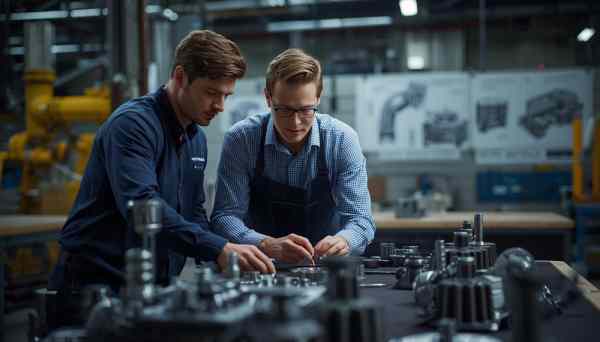
Welcome back, everyone. We are talking about torque-to-yield fastening or torque-to-yield bolts. There is a bit of nuance here where this technology or concept matters. I’m going to start with the most obvious one. When we talk about torque-to-yield, the object of the game is to tighten the fastener down until it experiences permanent deformation. That is yielding. It is beyond the elastic zone and is now in the plastic zone.
That bolt will never go back to the way it was because it is now stretched permanently. Why would we want to do that? That sounds like a dangerous thing. If the bolted joint and the bolt are designed for torque-to-yield, then it is a very safe thing. There are a couple of reasons for that. The first reason is that it is a gigantic target. It is very easy to hit yield and know you are in yield versus a specific torque value or tension. How do we know when we are in yield?
The best way we know is because we have experimented with the bolting beforehand. We have put the bolting in a tension-measuring device like a Skidmore-Wilhelm Bolt Tension Calibrator and tightened it down using torque, angle, or a combination of those things. We watch the needle go up, and when the needle stops going up, we have gotten into yield. We know we have hit the maximum capability of the fastener to go beyond its elastic limit.
That gives us the information we need to know what torque to yield. Now that we have that piece of information, we can take that back to the application, which must be a rigid joint. By the way, that’s another thing that we want to know is to make sure that we have a rigid joint. We use the torque developed from the experiment in the installation. You have to do it more than once to know you have not gone too far beyond yield.
You actually would base it on the specified yield strength of the fastener, not the actual yield strength. One of the primary reasons to do this, in addition to it being a nice big target, is that it allows us to take the maximum safe strength of the bolt and put it to use in the joint. This happens very commonly in structural bolting. Not necessarily intentionally, but oftentimes, structural bolting ends up getting tightened into yield, and it is fine.
If you are in yield, the fastener is holding, and it is not going to lose any of its stretch. If you were to go beyond it to some unsafe level, the bolt would break. If the bolt does not break, you are somewhere in that big plastic zone. It could be as much as 20, 30, or 40 degrees, or even 90 degrees, of target that you can hit there. There are some other reasons to use torque-to-yield. It can also be used as a method to determine what the safe torque would be without yielding.
To do that, we would use what is called an indicating torque wrench. That torque wrench will have a needle on it with a memory, and we simply tighten the fastener until the needle stops moving forward. At that point, something is yielding. It could be the assembly, the bolt itself, or the drive. The threads could be stripped, but we know that is the maximum torque and tension that the joint can handle. We do that maybe 10 or 30 times, depending upon how much experimental accuracy we want.
We take the average of those readings, and our installation torque will be some percentage of that. If all of our readings were very similar and well grouped together, we call that good scatter or low scatter, and we can probably use a fairly high percentage, like 80% or 90%. If the readings are all over the place, then we would use a lower percentage, like 50% to 75%. In that particular application at our exhibit, the application was engine head bolts.
That is a very common application for torque-to-yield. There’s a good reason to use it there. One is that it is a very well-designed, rigid bolted joint. Plus, we have very long bolts that go through the head, through the cylinders, and into the engine block. They are generally going to be 10 inches long, half an inch in diameter, and they’re generally going to have flange bolts with great flange heads and very good bearing surfaces. Everything is flat and level.
Threads on the bolt go into tapped holes in the engine block, not into nuts, and it gives us what we need. That gives us the maximum use of all the strength of the bolt. One very important consideration is that we cannot reuse that bolt. That bolt must be tossed. You want to be careful if you are rebuilding an engine and those head bolts have been torqued to yield, so that you do not reuse them.
Torque-to-yield is one of those things that can really help a supplier to inform their customer not just if they want to Torque-to-yield, but if they want to know what the maximum safe torque is, and how to figure that out. The important thing, though, is to educate or inform your customer that you make sure you do not add a liability or risk to your company because you told them something. There is plenty of good literature out there on torque-to-yield. Find a good magazine article or use AI and tell them about the concept, but be careful that they know you are not recommending this for any particular application.
It is always their responsibility, from an engineering perspective, to know if it is wise. If you need more help, you can always call me at Carver Labs. Our website is Carverem.com. We will be happy to help you or your customer put to use the wonderful technology in bolting called torque-to-yield. This has been Carmen Vertullo. Thank you for tuning in, and we hope you learn something.
—
Feature Segment: Jim Jordan On Bruce Darling & Porteous Fasteners
It is feature segment time. Jim Jordan is the purchasing manager at Stelfast. Previously in his career, he spent a good chunk of it with Porteous Fasteners. During that time, he worked with the legendary Bruce Darling, who sadly passed away in August. Jim recounts some of his experiences working with Bruce and some of the things he learned. He also explains some of the things that he carries with him today during his fastener career. Here is the conversation with Jim Jordan. Jim, thank you for being here.
I am glad to make it.
I was talking to you at Vegas a couple of weeks ago, and I know I gave you a little bit of a pep talk on jumping on here with me. You are not really the most avid public speaker, but I very much appreciate you coming on here, especially when we get into talking about our mentor, Bruce Darling.
The timing was perfect because that was just after Tim Vath accepted me as a young fastener professional and said, “Just say yes and do not say no to things.”
Good point. I really got a lot of inspiration out of this year’s acceptance speech, and Tim did a wonderful job. You go far back with Tim Vath, too, do you not? After your stint at Porteous, you went over to Solution, and that is how you wound up with the Lindfast Solutions Group as purchasing manager.
That is exactly right. I had the pleasure of getting to know Tim early on, once I got acquainted with Solution through Frank DeVito, another old Porteous guy who moved on. He reached out to me when Solution was looking at the importing side of their business and presented me with the opportunity to join the company at that point.
Another name that comes into recent history. I was fishing around for somebody to help me understand what is going on with the tariffs. In a conversation with Frank DeVito several months ago, I was saying, “What we really could use is a guy like Bruce Darling. He used to give these unbelievable presentations.” I first saw him at the PacWest many years ago. He went all the way to the very beginning of the supply chain, from digging the coke out of the ground. He knew every facet of the industry. There’s nobody really doing that. Your name came up as somebody who might be filling those shoes at least as far as LSG goes.
That is high praise from a good friend. I learned a lot from Bruce. His attention to detail was incredible. He was a great mentor of mine and a great person to learn from. I learned how to handle situations between importing and dealing with our supply base offshore, and what that means for relationships. I learned the Porteous way of doing business, which really meant a lot to me. It was family-owned and well respected in the industry back then.
At what stage in your career were you working with Bruce?
I came from Janesville, Wisconsin, and worked for a company called Starline Fasteners for about ten years. That was acquired by Allied International and then Globe. Porteous actually acquired Globe after I transferred to California in roughly 1995 or 1996. I was hired to do domestic purchasing for Porteous. Over a few short months, there was a change on the importing side of the business, and I had that opportunity to run with it with Bruce cheering me along the way.
Formally, his position was vice president of materials management over there at Porteous.
Correct. I was hired as a buyer and then became purchasing manager and director of procurement.
He learned his way through the industry by making numerous international trips. I read that he visited over 425 factories overseas. Did you ever accompany him on any of those?
I had the great pleasure of doing that. He had a three-ring binder that included the names of every factory and who was there at the time of those visits. Bruce was very active in procurement, trying to find new sources. I started traveling with him in 1996 for my first trip. I was roughly 29 years old at the time and had not really been out of Wisconsin. I made the move to California, and then within a few months, I had to get my passport and learn more about our business.
Bruce and I started traveling. I do not know how long you have known Bruce, but attention to detail. He had itineraries down to the T of where we needed to be and who we were going to meet with, and basically a timeframe schedule. Everything was planned out, and I modeled myself to some degree to that today, but not to the extent that Bruce had it down to laundry days. He was just a great person to be around and a great person to learn from. The respect he had in the business, not only internally within Porteous but also with all of our suppliers, was a great thing for a young guy to be around.
I can totally mention that. At the beginning of this discussion, I referred to Bruce Darling as a mentor of both of us. Obviously, for you, he was highly impactful, and you worked with him very closely. For me, it was very casual, but what we did in the early days of FCH was show him what we were trying to do. I told you this before when we were in Vegas, Jim. He saw what we were trying to do at a very early stage, and Porteous was already working with us.
They had given us some of your obsolete or slow movers on the network. We’re also doing some things in linking INxSQL together. Bob Porteous was a big fan of that. He and Bob Raynolds were very strong advocates of that early connection. Bruce endorsed the FCH sourcing network and did a YouTube video back in 2008 or 2009, right after we launched. We knew that it was a big deal because I had an idea. I will never forget that. We always maintain a very warm relationship, even though it was a little different compared to what you would have experienced.
That just sounds like him, always willing to help out and seeing where all this stuff can lead.
We’re deeply 100 on that. Getting back to your travels, I heard about the experiences you had at dinners. A lot of the wall stuff. He was a very homey kind of guy. What was it like? Was he sly as a fox, was he not?
Very much. He was a larger-than-life human, even appearance-wise, and very open to anything that was presented. You never knew what we were going to be confronted with when we were traveling over there. These were the early years in the late ‘90s. There is no comparison to Asia today because everything is modernized. Back in those days, it was dirt roads and no freeways, and no pollution. He was open to that travel, knowing that it’s going to be a tough way to go, but it’s the best way for us to get to know our suppliers, which is to basically visit them.
He definitely understood the importance of travel. We were traveling probably three times a year over there. That was very fun, very exhausting. The experiences are a match. The people that we have the opportunity to meet, know, and learn from. The factory visits were fantastic, and we got to know the families because everything was family-based back then. It was fantastic. The dinners were just the experiences of being around the table with these factory owners and experiencing the way that they communicate with their staff and/or their workers. It was extreme.
A lot of alcohol. I was hired because I was a kid from Wisconsin. I think that was a key point. Those days are gone, Eric. I cannot drink like I used to, unfortunately, but my wife is happy about that. Just incredible opportunities to travel. I remember one of the first trips to China, and we visited a hot nut factory. It was all coal back then, and very dirty. We had lunch with the factory director at his home, which was very unique and cool. His wife and son did some cooking, and the food was fantastic.
The table setting was chopsticks, which was a new experience. Before I started traveling, Bruce instructed me to buy a pair of chopsticks and practice with peanuts so I could maneuver the utensils properly. That was a huge help because we had one plate and one bowl per person. The food was presented, and you put it in a bowl with the plate. If you wanted to kampai and have some beer, you had to finish your bowl and put the beer in the bowl. This repeated throughout the night.
Again, it’s in a local town, and we were in the garage, a garage atmosphere. It was outdoors, and we were turning on. As it got later, drinking a lot and having a lot of great food and conversation, but look behind me, and there were about 15 or 20 people from the town just observing us. That was odd. It was great. It was strange. We were the entertainment for that town for that evening because Bruce and I were large people.
That was something for them to witness, but to see us sharing out with all the drinking and the laughter and everything. I hope I let me with one of my core memories for work is that experience and what it all meant to be together, break bread, meet family, discuss business, of course, and just get to know each other at a different level personally.
He advised you on the finer points of the social graces and then provided all the opportunities, which is fantastic.
I owe everything to all the various people in the Porteous family, taking the chance for me again, leaving Wisconsin to get to California and have this great career from there, rolling the dice with me.
It was a model that worked for Porteous for a long time, wasn’t it? They made a lot of very close relationships, brought in a lot of material from just the right suppliers. It seemed that it worked for a long time.
It was definitely relationship-driven. We had to take care of our customers. We had to buy quality. I learned a lot about quality through another name from my past, Bill Gang. He’s instrumental in the quality of Portius at the time. Bill and I had the pleasure of traveling together as well, and really understood the importance of quality and basically working hand in hand with the factories to make sure that they were producing the parts to the specification. Nuances that we could add to the production, we were eager to share with him.
Where did Bruce pick up all of his technical knowledge?
Before the 40th, he was at RVW and or Bosco. I do not know if he got a lot of his technical side there, but he could read and retain. Again, another quality that we never transferred to me from him. He just retained information.
We take so much for granted these days because we have the internet. We have so many information sources at our fingertips, but he must have been on the phone continuously with all his overseas contacts because he was always up to date on what was going on and not just at the surface level either. He understood the supply chain deeply.
We take so much for granted these days because we have the internet. We have so many sources of information at our fingertips. Share on XYeah, for sure. Again, I think he enjoyed that part of the business with life, too, of learning more and more. At that time, China was still relatively new because of the transformation from Taiwan to China and the investments happening in China. He knew a lot of the people through trading companies or what it may be, and just kept those connections going. He just learned basically again, the business from a Chinese standpoint.
Give us a feel for what the energy was like over at Porteous during that period, because it was a huge name in the industry. It seemed like, at the time, it would never go away, of course, as heydays always seem. You were there with a very interesting group of people, and there are a lot of Porteous alums still in the industry today. I’m sure you can name a bunch of them off, and they’re still very prominent people in the industry.
We were lucky. had a lot of great people across the country. Porteous was growing. Again, the main focus was customer service, taking care of the customer, and making sure that we had the right items that they needed at the time. Again, a family-owned business, and they enjoyed that part of it. Gary and Bob, I believe you knew each other well. They were very good people and good businessmen. Again, we had a training ground for a lot of great people.
Some are still with LSD today, and others are still within the industry. The reputation of Porteous and what it stood for was first-class service. That was the motto. Whatever it took to get first-class service to the customer, we viewed that on the supply chain side to make sure that we were able to have good relationships and understandings with the suppliers to meet the expectations of our customers. To me, it worked hand in hand.
Ultimately, Porteous was acquired by Brighton in 2013, and I believe Bruce pulled way back at that point, right? You continued to have interaction with him, though, I’m guessing.
Correct. I left in early 2013, early 2013. He stayed on and worked remotely, I believe. At that time, he may have been in Nevada and was still working for BBI, doing whatever they asked him. The responsibilities dwindle for him.
What was it like these last few years with Bruce? Did he still reach out occasionally, or was he still available to mentor you a little bit?
I’ll throw this out there for everyone. Yes, he was there. The problem is how life is, you get busy, and you put the “I’ll call him tomorrow. I’ll check the thing.” I just recommend that anyone, do not do that. You never know when that opportunity is going to be gone. Take advantage when you’re thinking about reaching out to that friend or loved one.
Again, time goes by so quickly. We all get wrapped up in the day-to-day, but it’s important to take that step back and appreciate those relationships and friendships that you’ve built along the way. I regret to say I did not have as much contact as I would have liked, as I separated from Porteous and made my next move. That being said, I did have the opportunity to talk with Bruce about a week before he passed. He called me.
We’d stayed in touch, email and things like that, but he reached out, and we had a great heart-to-heart talk for probably about twenty minutes that I’ll never forget. A lot of laughter, a lot of old days, a lot of great stories, a lot of stuff about Porteous, obviously, and some of the experiences that we shared together. It was something I’ll never forget. I treasured the fact that he thought about me there towards the end.
You’re so true, Jim, about keeping in touch with people, and it does require work. I’m so glad that you were able to have that last interaction. That’s just great. Thanks for sharing that.
I appreciate that. Thank you.
You’re doing similar things these days with the LSG group. Of course, as I said, formally, your title is purchasing manager for Stelfast, but you do these presentations internally and keep everybody up to speed on what’s happening with the supply chain. Is that kind of a formal type of thing, or are you just really the informal go-to guy that everybody knows has a clear picture of what’s going on?
It’s a shared formal or informal, if that makes any sense. We do have some meetings that we can talk about, and we can share what’s happening in the market. We try to be as in front of our internal team as possible to share what’s happening with the market, especially with the craziness, as we all know with the tariffs right now, and in the uncertainty that leads for everyone or has led for everyone. I guess my only real comment on that would be that it’s a level playing field. Everyone’s dealing with the same thing in real time. We just have to react the best we can in that type of situation.
What are you focused on right now? There’s so much. Where are you personally concentrating your focus?
Again, a lot of the obviously the procurement side and diversifying any supply base as much as we can. Just staying and getting in tune with the suppliers of watching the advancement within the current supply base, and what they’re able to do and accomplish. Had the opportunity to travel to Asia again this April.
The transformation from pre-COVID for me and then after COVID was like from I think maybe 2019-ish was my last trip, and then we just started this last April again, and to see the growth that happened in those years, those five years or whatever it was, was incredible to see how automated the factories have gotten and how focused on quality they are. The compliance issues are never-ending. They’re standing in step with all of that as well. That’s what my focus is helping to broaden the supply chain. Do not lose fact of the great suppliers that we currently have.
You mentioned supply chain diversification. Of course, a lot of people are thinking the same thing, Jim, but as you said, we’re all faced with this same problem, the same challenge. In terms of supply chain diversification, can you drill into that anymore? Is there anything specifically that you see happening that you could share with us?
We all hear about some of the newer countries, or I shouldn’t say newer countries, but some of the countries that are becoming maybe more active in faster production, from Malaysia to Vietnam, to Thailand, India, of course. With this tariff situation, to dovetail back into that a little bit, it’s impossible, I believe, or very challenging to supplant, but China’s tonnage, the production capacity that’s currently available, to basically pick that up and ship it to another country.
Supply chain diversification is high on everybody’s list. I get why you can’t get into lots of specifics on that, but it’s an undeniable fact right now. Let’s circle back to talking about some Bruce stories. You and Bruce, it turns out, used to carpool over to Porteous back in the day. You had somebody else with you, too. That made a major impact on your young fastener career.
It really did. The other person was Dick Kleppe, who was operations manager and inventory control manager. I should say, inventory control manager. He came over from RBMW or Boston as well, around the same time as Bruce, maybe a little time after that. We all lived within two miles of each other, and we would carpool every morning, be ready by 5:45 in the morning, get to the office by 6:30, beat the traffic, and actually get some work done.
Basically, coming back from one carpool trip after working all day, after we decided that my passport had cleared and all that good stuff, and we’re planning our first trip to Asia. I’m sitting in the back seat of Bruce’s car, and he got a half sheet of paper and a pencil. At that time, it was dark, and I could not see anything, and planning the trip and said, “Jim, write this down.” He’s naming these names.
I’ve never heard of it before, and trying to guess the spelling and who the people are and things like that. I’m not to mention the back seat of the car without a bumpy road and all that good stuff. We planned our first trip within 30 minutes. He had it, as I said earlier, with his attention to detail on the itinerary. This was all penned down once we got back to the office, and we started making the connections of who we’re going to meet, when we’re going to see him, who we’re going to share dinner with, who we’re going to share lunch with, and just got it going.
Those car trips were phenomenal. Never stop talking. Whoever drove that week, it was a week-long session between each driver. Bruce would have KFI on and drive me crazy. I already have K-Rock driving him crazy. Dick was mellow. I just wanted the wave. It was just three different personalities, but we all got along really well. At the time, he thought, “Is this ever going to end?” Again, as you reflect back, he wished it had never been just a great time, great people, and great memories.
Was he a good driver?
Heavy break. We never got into an accident, so yes, I guess we survived it.
Those LA freeway systems are notorious.
It was crazy. The first week or month that we were there, when my family moved there, it did nothing but rain. Of course, thinking, “Here’s this Southern California weather and sunshine and stuff.” It never came. Eventually, we got there, but first talk about driving on the freeways, driving a big van from Porteous that I was getting from A to B without knowing where I was going. At that time, Thomas guides. It was a nightmare, but again, I survived it. That’s all good.
Setting up those trips and at that time was no picnic either, considering there was no net, no cell phones, nothing. It was quite different from what it is today. A lot of legwork. We had to go into making those trips, all those plans.
I make them go golf, because a lot can happen between that, especially in those days. With the road conditions and everything else, and transportation as it was, with flights that could change and things of that nature. Pretty remarkable.
What do you carry with you today that you attribute to the training that you received under Bruce, or at least his mentorship? What’s one of the biggest skills that you continue to use to this day?
I would have to say a better relationship. Getting to know the vendors, getting to appreciate what they do, learning from them, and helping teach them along the way to the way of the LSD way. Just communication, always try to be available to answer any question, and be involved with what each factory is doing.
That’s a very good legacy to carry forward. I’m sure he would be very proud, and we were very fortunate to have known him.
Great man. Great family.
Jim, I sure do appreciate you sharing a few of your reminiscences. I know once again, you do not relish public speaking, but I knew that you would do a great job of giving everyone a little thumbnail about Bruce Darling. He’ll be missed.
I appreciate that. Again, as you mentioned, as we started talking about the stories, it just came. Hopefully, did not bore you, your audience too much, but it meant a lot to me to f share a little bit about Bruce and our time together.
Maybe next time we’ll do a little bit more of an expanded reminiscence on the vibe over there at Porteous. I’m sure you’ve got a lot of good Bob and Barry stories to share, as well as a few others from some of the other characters that came out of there.
A lot of great characters, a lot of great friends, too. Again, it was a pleasure for me to make that move from Wisconsin to California. I appreciate Bruce and the Porteous family giving me that opportunity to get me to where I am today.
The fastener industry has taken a lot of people on interesting trips. Jim Jordan with the LSG group, you’re no exception. Thanks for being here.
I appreciate it, Eric. Thank you very much.
We’ll be back with more Fully Threaded just a second.
—
Have you talked much to Jim Jordan, Bri? I have not.
I had not really talked to him either. I talked to him in Vegas because I was thinking about how to put this segment together, and I really had to convince him. He is a very soft-spoken, modest guy. He does not really like the limelight. I am so glad he was able to share his remembrances of Bruce Darling. Fortunately for the industry, Bruce passed on a lot of his wisdom. Jim carries that forward and helps a lot of people at LSG. It is very good to have him with us.
There are a lot of notables in this industry, and many of them are hidden.
It is our ongoing mission to bring these voices to the forefront. In this episode, in addition to Jim Jordan of the LSG group, I would like to thank Bob “GQ” Baer, who sat in with Mike McNulty in the Fastener News Report. I also thank Parker Jensen with Atlas Distribution, IFI Chairman Larry Spelman, Marco Rodriguez with Cresa, and Carmen Vertullo with the Fastener Training Minute. We also appreciate our supporters and partners as we produce and build the show. FCH Sourcing Network, the Fastener Distributor Index, and data cleansing scrubber software. Especially now, as we are bringing it into the AI world. See, Bri, I had to throw that in.
I thought you were going to leave that out completely.
Our partners make it all possible. The title sponsors of Fully Threaded Radio are Star Stainless, Goebel Fasteners, and Brighton Best International. Fully Threaded Radio is also sponsored by Buckeye Fasteners, BTM Manufacturing, Eurolink Fastener Supply Service, Cresa, Endries International, INxSQL Software, J.Lanfranco, MW Components, Fastener Technology International, Solution Industries, Volt Industrial Plastics, and Würth Industry USA. Please let us know what you think. If you have questions or suggestions for Brian, the email address is FTR@FullyThreaded.com. What is your favorite bourbon anyway, Brian?
It is a bourbon that we got from a distillery that is not sold in Illinois, called Cinder and Smoke. It is about sixteen years and it is a beautiful bourbon.
My favorite scotch was Lagavulin, aged sixteen years.
It is very unusual for bourbons to be aged that long. They usually age them for 6 or 7 years. When I first went to the Maker’s Mark distillery, I asked them why they did not try aging it longer. I said, “Why?” They said, “Nobody will pay for it.”
Inventory Classification Discussion
Time and money run everything, Bri. If you are in the fastener game, it is also about inventory. To close it out here, I went back in the archives of GlobalFastenerNews.com and found an article that John Walsh wrote in 2001. He was covering the Western Fastener Association, where Bruce Darling was a presenter. He said to think of inventory as money off your bottom line. When I came across this, I immediately realized why he was so prepared to embrace the FastenersClearingHouse.com sourcing network mission.
He gave a lot of ideas in this presentation, but zeroed in on one aspect of it that a lot of people probably will identify. He suggested categorizing your excess inventory into three groups. First was what he called a lump, which are A or B items that you just have too much stock of but will likely sell. The second group is the slow-moving stock, where action needs to be taken to sell them. The third is the obsolete items that take several years to clear out and need aggressive action.
We’ve dealt with all of those classifications.
It only took us a little while to realize that most of the people who list inventory on FCH have a mix. A lot of the stuff that gets listed is the A and B stuff. It is not a surplus or dead inventory site only. There is quite a bit, but the people are looking for stuff. They’re doing spot buys and gap buys. This is all part of the ecosystem.
Bruce Darling knew what the carrying costs of inventory are, and on the listing side, that was why he was so adamant that putting your stuff on FCH is a no-brainer in the fastener industry, which we’re very grateful for. I hope you enjoyed the conversation with Jim Jordan. We’re very grateful you clicked into the show. As always, if you are a new audience, there are plenty of archives you can catch up on, and you’ve been itching to get your message out to. Give us a shout. That is going to put this episode of the show in the can.
If you are worried, the lunar rover was packed up into a compressed box and maneuvered out of the lunar excursion module, and spring-loaded so it would all spring out into its shape. It was a small box about 4 feet, something like that by 4 feet.
We will get Kara Bosse in here from MW Components to verify the validity of all that. She’s our resident spring expert. She’ll verify the validity of all that. Bri, what do you say?
I’ll be happy if someone’s explained it to me.
That’ll be coming up on a future show for now, for Brian Musker. This is Eric Dudas. Get out there, sell some screws. We’ll talk to you next time.
See you next time, folks.
 Apple Podcasts
 Spotify