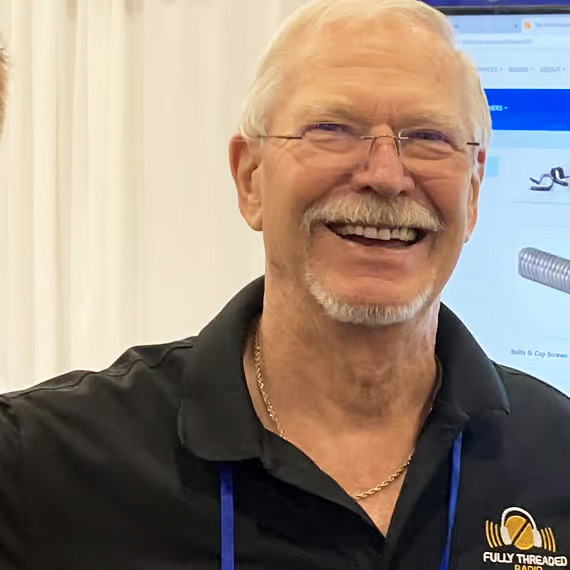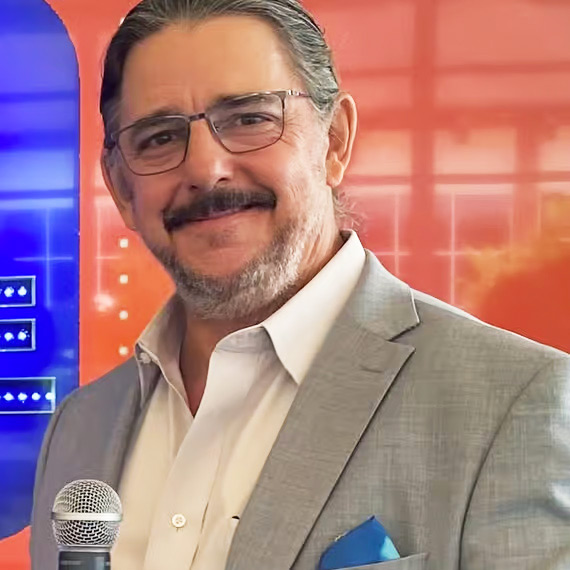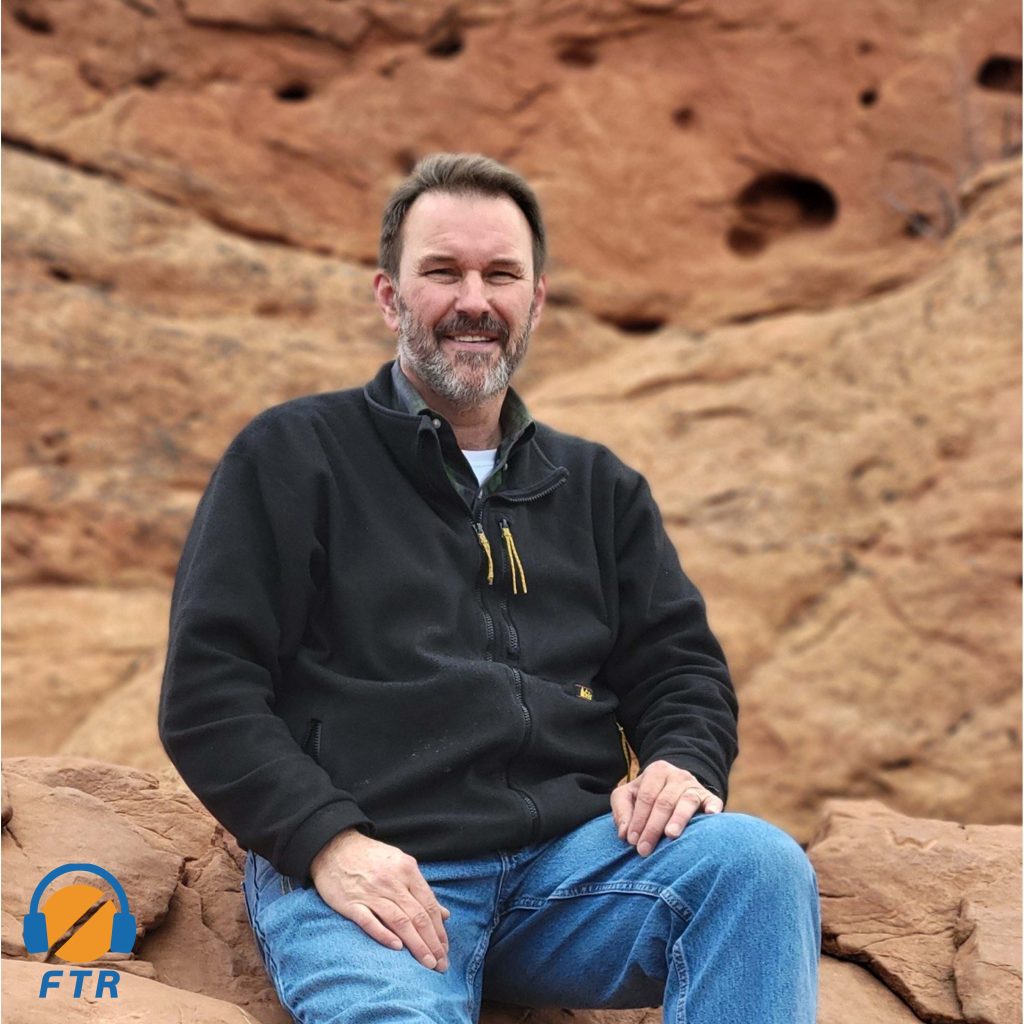
Laurence Claus is a widely known and respected fastener engineer, trainer, writer and mentor. With a career in fasteners that began on the manufacturing side, and spanning over 30 years, he continues his work today with the Fastener Training Institute, the Industrial Fasteners Institute and through his company NNI Training & Consulting. His writing appears in American Fastener Journal, Fastener Technology International, Distributors Link and others. Laurence Claus was inducted into the Fastener Industry Hall of Fame in 2025.
—
Listen to the podcast here
Important Links
- Laurence Claus on LinkedIn
- Porter McLean on LinkedIn
- Fastener Technology International
- Fastener Training Institute
- Industrial Fasteners Institute
- Distributor’s Link Magazine
- American Fastener Journal
FTR Unthreaded: Laurence Claus
Fastener Hall Of Fame Induction And Career Overview
Eric Dudas with you with an Unthreaded edition of the show. This time, it’s a conversation with Laurence Claus. We did this interview a couple of weeks after the International Fastener Expo, when he was inducted into the Fastener Hall of Fame. He was still riding the experience of that event when I talked to him about his career, his mentorship of so many people in the industry over the years, and his ideas about what lies ahead for the fastener industry. This was a conversation I was looking forward to, especially after I had a chance to get to know Laurence a little bit. I was interacting with him during Fastener Week. He’s been a long-time trainer, as you’ll read during this discussion.
Before we jump in, I’ll take a moment to acknowledge our partners. The title sponsors of Fully Threaded Radio are Star Stainless, Goebel Fasteners and Brighton-Best International. Fully Threaded Radio is also sponsored by Buckeye Fasteners, BTM Manufacturing, Eurolink Fastener Supply Service, Cresa, Endries International, INxSQL Software, J.Lanfranco, MW Components, Fastener Technology International, Solution Industries, Volt Industrial Plastics, and Würth Industry USA. When you get the chance, if you do, let them know you appreciate their support of the show. As I said, we recorded after the IFE. I’m publishing this about the third week of October 2025. Here’s my discussion with fastener engineer and trainer extraordinaire Laurence Claus.
—
Laurence, it’s great to see you. It seems like just the other day we were in Vegas.
Good to see you, Eric. It was just weeks ago.
You’re still riding that high.
A little bit. Unfortunately, you come back to real life after that.
Fastener Training Week And Mentorship Scale
Life goes on. You’ve got to keep proving yourself, which is no problem for you. I had a great time in Vegas. One of the highlights for me was certainly the Hall of Fame experience and listening to your acceptance comments. Let’s back up a little more. I had a chance to sit in on one of your classes. It was back in May of 2024. It was the Certified Fastener Specialist Training Week. It happened at Brighton-Best here in Cleveland. You were one of the instructors. It was you and Salim Brahimi. I enjoyed that class.
I train in a lot of different venues through several different organizations. Certainly, one of my favorite classes to do is Fastener Training Week. That class has a couple of unique pieces to it. It’s a week-long. We get to know the participants relatively well by the end of the week. I pretty much start any training this way, going around the room and having people introduce themselves. I always ask, “What are you hoping to get out of this?”
The normal response is, “I want to learn something new.” We tell them that we, as the instructors, and I know it’s definitely true for me. I think it’s true for Carmen and for Salim as well, that we learn stuff as well. Fastener Training Week, because we have a long time with all the participants, does allow that to happen. Fastener Training Week is a fun event for me. I get to do it generally three, maybe even four times a year. It’s always a real pleasure.
When Carmen was introducing you there in Vegas, he pointed out that out of any trainer in the fastener industry, you probably have twice as many pupils out there in the industry. That’s a huge accomplishment.
I heard Carmen when he said that. I’m not sure whether that’s true or not. Carmen certainly has been teaching for a long time. I’ve been training for many years, even prior to my past life. One of the things I did in my role was go to customers and do training sessions. In my current journey of training, I probably do more training than anything else. I don’t know how many training events I’ve had, but there have been several thousand participants.
I have to tell you one thing that I enjoyed about the way that you started Fastener Week. You spent about 15 to 20 minutes at the very beginning of a section. I remember the slide. It was The Fastener Industry: A Great Industry to Be in. You gave a little bit of history about how we as an industry got here.
You took that time to ramp up the excitement and to explain, especially to the newer people in the class, people who might’ve been newer to the industry. They found themselves being sent to this class to get their feet wet. You gave them a reason to get excited about fasteners. I came away excited myself. It was a great way to start. I could tell it was the mark of a skillful educator.
We have a great industry. It’s very sadly marginalized in the general population. We don’t think about screws and bolts. For individuals who are new to the industry or young in the industry, which is a good majority of the participants we have with Fastener Training Week. Laying that foundation at the beginning of the class is a good one. You’re here in this class to learn something new. You’re in a great place.

This is a great industry. There’s so much to offer it. Learning is part of that. Always be proud of the fact that you are in this industry. Although, the product may elicit yawns from most people, is absolutely critical to society. If our product didn’t work, things would fall apart. Things would be chaotic. I like to put that perspective as we start to train on all these things to know.
It’s remarkable, when you think about it, how much there is to know about fasteners. At Fastener Training Week, we spend a better part of three days strictly on classroom training pieces. The rest of that class involves a lot of hands-on and some practical type of education. We have at least three days that are full classroom training. We just barely scratch the surface of the knowledge that’s out there.
Are you kidding? I’d be the first to admit that. I’m glad the test was open-book. Let’s put it that way.
It is a wonderful industry. It’s been very good to me personally. I enjoy, as an instructor, having people new to the industry and being able to share some of that knowledge that will help new people to the industry become more successful. It’s a good place. It’s a lot of fun.
You’ve interacted with so many students. If you had to take a guess, sizing up the students who have passed through, how many would you say or what percentage are going to be the ones who go on to become these walking encyclopedias of standards knowledge, like you and Salim are?
I don’t know that I even want to guess on that. If you’re putting them in the context of somebody who’s going to become a super deep technical expert and deeply involved in standards work. It’s a relatively small percentage of the individuals that we participate. That’s perfectly okay. Not everybody is going to become a standards expert or ultimately replace being in the same role that I, Salim, or Carmen are in. Every student that we’ve had walks away so much more knowledgeable about the industry.
I’ve encountered multiple students years after taking the class. The feedback is always the same, “I learned so much. It has been so helpful to me in my role here since taking the class. It helped me springboard to become much better in what I’m doing.” The better question to ask is maybe not what percentage is going to become this type of expert. It’s what percentage of the students that we have are going to use that experience to become much better in the roles and in the future opportunities that they have in this industry.
That’s going to be a very high percentage. Surely, there are a number of students who are participants in our training who find some other opportunity outside of the fastener industry. That number is not going to be 100%, but an awful lot of people are going to stay in this fastener industry for their career. For those, a high percentage are going to use this and other training that they’ll receive as a springboard to continue to help them grow in their professions.
That’s probably a better way of looking at it. Refresh my memory. What’s the Fastener Training Institute’s policy on repeating Fastener Week? It seems to me like you could go into that class, go through it, go back out in the field, then realize all the things that you should have paid closer attention to, or you pick up with experience, and then want to take a refresher a year or two or even more down the road.
We absolutely would welcome that. I know that we had an individual who took the class. It may have been the class you were in, Eric. He came back for a second time. He said, “When I was in this the first time, I was a couple of months into this industry.” He’d made a move from some other industry into the fastener industry. He had used Fastener Training Week to help jumpstart his career in that.
He said, “I learned so much, but I realized I didn’t know what I didn’t know. I went back. Later on, I’m like, ‘Now that I have gained a couple more years of experience, I would get a lot more value out of the class by taking it again.’” He did. As I said, there’s a good chance that he was actually in the class session for a second round, the one that you took.
I know who you’re speaking about. There might have actually been two in that case because there was an older person, too, who had CFS. It’s good to know. Do you know what the policy is, though, of FTI? Is that a comp thing? Do you get a discount?
That I don’t know. You’d have to talk to Faster Training Institute on that. I know that they welcome individuals who would take it again. If they have any special policies for that, I’m not aware of them.
I know if you don’t pass the test the first time, you can take it a second time.
That’s right. We want people to pass that test. We work with them. We’ll work with individuals. Take it as many times as you need it until you pass it.

You’ve mentored so many people. I wouldn’t mind hearing if you have some students over the years that have kept in touch with you, and you’ve helped along, even beyond your classwork. Before you talk on that, can you point to anybody who was a great mentor to you, as you were coming up, and showed you the way on how you were going to lay your own career and how you were going to present?
Laurence’s Key Mentors: Porter McLean And Joe Greenslade
There are two people who fall in that crowd. One is from my past life. I keep referring to my past life. I spent the first 26 years of my career in this industry. I was working for a fastener manufacturer here in the Chicago area, where I live. I spent two years as a co-op/intern in college. When I came on full-time, I started as an application engineer and left that organization as their VP of engineering, probably the number two guy in the organization. I hung my own shingle. I’ve been doing what I’ve been doing for thirteen years.
We’ve got my past life and my new life. In the past life, the gentleman who hired me was a gentleman by the name of Porter McLean. There are certainly individuals tuning in to this show who know Porter. Perhaps, they know him well. He’s very prominently involved with the Industrial Fasteners Institute. Many folks have probably rubbed shoulders with Porter. Porter is an engineer and basically tucked me under his wing. I learned a tremendous amount from him.
He is also a very modest guy. He will tell you that I didn’t learn anything engineering-wise from him, but I guarantee you that I did. More than anything else, I learned from him, in that past life, how to be a business leader, how to work with customers, how to be a better engineer, and all those sorts of things. He was a wonderful mentor and remains a good friend of mine.
When I made the transition, though, I had a previous relationship with this individual. When I went out on my own, one of the first people to reach out to me and say, “Now that you’re a free agent, we’d like you to come get involved with us,” was Joe Greenslade at the Industrial Fasteners Institute. Anybody that ever met or worked with or even heard of Joe’s legacy knows that Joe is the poster child for an individual who believed in mentorship.
He mentored multiple people. His mentorship of me wasn’t a one-off deal. He was doing it with all sorts of people. When he retired from the IFI, he went and worked with under-resourced individuals in the high school kids in his community to help get them to college. Mentorship was huge to him. He truly lived and believed that. He will always be, in my book, perhaps the greatest mentor I ever had, at least on the professional side.
I’m not surprised at all to hear you mention Joe Greenslade as one of the key mentors at all. I had a feeling that was coming. I remember I mentioned to Joe early on the history of Fully Threaded what we were doing. I very jokingly asked him what he thought about fastener podcasting as a thing in the fastener industry. He gave me a dry response, I remember. He was a good sport about it, though. He came on and gave us a little bit of time. I wouldn’t say that he was completely impressed with it at the time, but nevertheless. H e was a great man. It was a good story there.
After I had received notification of the Hall of Fame induction and I was preparing a little message to say at acceptance, Joe immediately came to my mind. I was thinking about people who deserved a Hall of Fame spot. Joe was the first person who came to mind. At that point, I had not looked at who the previous recipients were. I knew of a number of the previous recipients, but I didn’t know who they were, going back.
In my mind, I said, “Joe is a superstar.” Joe is the Michael Jordan of the fastener world. He was an incredible guy. The energy that he had and the things that he accomplished were amazing. I was super happy to see, when I went back, and I looked at the previous Hall of Fame, that Joe was an inductee. He was deserving of that spot. It was very humbling for me to be placed in that same company.
You’re telling me. As it turns out, the honor is given for a variety of different reasons. Yours and his are among the noblest for sure. I also wanted to say before we switch gears here a little bit that he always reminded me of a guy that if he wasn’t in the fastener industry, he could have worked at NASA at mission control.
On the subject of guiding people into the future in their fastener career, you must be looking down the road at what’s coming for our industry. I have to ask you the mandatory Fully Threaded AI question. How do you see AI impacting the fastener industry? It’s a huge question unto itself. In general, I’m curious about how you would prep a professional getting into all this and what’s ahead.
Major Headwinds And The Impact Of AI In Parts Sorting
There are a number of different headwinds that we are facing here in the industry, and good things. I’m going to rephrase your question a little bit. What things do I see or envision that are going to impact the industry going forward? What are some of the things that are going to be meaningful to us as an industry for the next couple of years? Certainly, one of those is talent. It’s not only how we attract new talent, but also how we retain it. That’s been a question for some time. That’s not a new thing, but it’s continuing to be. That’s a point that continues to be a very important one to the industry.
It’s been years since Baby Boomers started to retire. I believe that’s continuing through 2030 or else. We’re still in the middle of that. You talk to any organization, and about all of them can share stories that we have a bubble of individuals. We have a group of individuals who have retired or will be retiring soon. We need new people to step in and take over from where they have left off. That’s going to continue to develop new individuals. It is going to continue to be a real challenge for the industry.
That’s certainly where I get a lot of satisfaction in knowing that I’m playing a piece in helping that and helping educate some of those individuals who are coming in. Every organization is going to have to wrestle with that question and figure out exactly how they’re going to do it. Quite frankly, it’s one of the key questions that I’m sure many have been asking, but will continue to have to ask and figure out good solutions for the coming years. That’s one thing that, as an industry, we’re going to continue to have to address.
Some of the things that are changing, perhaps, the way are opportunities and so forth in the industry. Electric vehicle and autonomous vehicle development is going to continue to be something that the industry has to watch. It will change at least the dynamics of certain parts of our industry. The automotive segment of our industry is significantly affected by that. I don’t know with the current political administration. There’s less emphasis, perhaps, on that.
The world is too far in on the electrification of vehicles that we’re not going to continue to see that technology continue to evolve and improve. It’s just a matter of time before we see a very major shift in what we have towards more different types of propulsion in vehicles. That will continue to be something that we, as an industry, can change the face of our industry a little bit. The one that’s come on to the stage here in 2024 or so is AI. It’s ironic. I was participating in a webinar. I was a participant. I had nothing to do with producing the webinar, but I was a participant in a webinar with a sorting automation company.
They were doing a webinar on how AI is influencing and evolving some of the technology that you have in high-volume part sorting. It was a very informative webinar. Not only did I learn about some of the significant innovations that have gone into the traditional pieces of part sorting of cameras, ways for cameras to see parts, and so forth. The purpose of this webinar is predominantly to talk about how AI is going to influence things.
They were showing some of the options that they have on their equipment now that utilize AI. It’s all about using AI to train the equipment to be able to recognize things that traditional methodologies didn’t allow us to detect, at least with a great amount of certainty. AI is jumping that high bar up and allowing us to be able to identify and discern problems that we would have never been able to discern before. That’s just one example.
It’s not only about how we attract new talent, but also about how we retain it. Share on XIt’s probably a very good example, but we’re going to see the same sorts of things. Innovation is happening in other systems with our forming equipment, the manufacturing equipment that we use. There are certainly opportunities to employ AI to make things more mistake-proof and to help the operator interface with the machine more successfully. We’re going to see it in the systems that we have in the office. I’m sure that AI solutions in the accounting area, in the engineering area, and stuff that are again being worked on. It can provide some enhancements to the traditional ways we used to do things.
Are you following any of the developments in AI-assisted inventory management?
I have not. To be honest with you, I don’t fully understand AI, admittedly. It’s not until participating in the webinar that I see how it provides some real improvements. I’m going to have to step my game up and see how it’s impacting some of these other areas more strongly.
Sure, as are most of us. I didn’t know because you’re not focused on the inventory side of things anyway, but worth a question. Getting back to what you were talking about with this part sorting technology that they were highlighting there in that webinar. You were talking about problem detection, maybe in areas where we were never able to see before. What insights do you think that AI is going to be providing? What kinds of unforeseeable things are you talking about there?
This particular webinar focused on checking the quality of threads. It was a very small segment of a broader context of sorting fasteners. Two areas have been traditionally challenging for automated part sorting. Crack detection is a huge problem for fastener manufacturers, particularly those that are making screws with recessed heads. It’s common to have a variety of different causes that can cause you to have cracks form in the head.
There’s the detection of those, particularly cracks that are tight and aren’t big bursts on the side of the head. Those have always been difficult to distinguish. On the threads, it’s having nicks in the threads. It’s having what we call a drunken thread, where the helix angle is off. There are a number of different problems that we can have in threads that are very hard to detect.
What the webinar showed me was that they’re employing AI by teaching the brain of the unit that when you see things like this, this is equal to a problem. We’re training it to be able to recognize anomalies that previously couldn’t be recognized. The goal in automated sorting is to be able to do that as quickly as possible.
Being able to teach the computer to be able to recognize things at very high speed, which is something that’s absolutely impossible for us to accomplish on a human basis, provides a lot of promise. In the area of threads and in the area of crack detection, AI is going to open the floodgates and provide a real jump in innovation and technology to be able to address those two longstanding challenging areas, making them much easier.

That’s going to be pretty exciting. I hadn’t heard of that. There are so many areas that AI has moved into. There’s promise out there. Put it that way. They call them drunken threads. Who started that?
I have no idea. It’s probably a pretty good description, though, because it has to do with a wavering helix angle. If you look at a part with a drunken thread, it looks cattywampus.
I get the reasoning behind it. I’m just wondering where that started and how widespread that use is.
That’s a pretty typical term. It’s not anything I coined.
I want to ask you about your writing because almost everybody reads Distributor’s Link Magazine. Somehow, you got to page eight. Pretty good placement there, Laurence.
I write for six magazines on a routine basis. Several of those are outside of the United States, but here in North America, I write an article for every journal in Link and for every journal in the American Fastener Journal. I write on an occasional basis for Mike over at Fastener Technology International. In my early days, I wrote an article there almost all the time.
I generally contribute maybe one or two a year to that magazine. I do write a lot. I have always enjoyed writing. I won’t necessarily say it’s easy. It’s becoming harder and harder to come up with things to write about. I find it a relief when the editors come and say, “Can you write on this particular topic?” It’s because then I don’t have to come up with anything.
I was going to ask you about that. I was going to say, where do you get the inspiration for your titles because I am completely with you.
These days, usually, they will come to me and say, “Here’s our next deadline. Can you give us an article?” I’m coming up with my own ideas. Depending on the magazine, I write between a mix of what the magazine folks would call an editorial piece, versus a technical piece. I would say that I probably write more technical pieces than editorials, but I do a mix of both of those.
Usually, the inspiration comes down when I sit down and start. Does something come to mind? Did I just do a training on something where a particular subject came up? Was there something on a standards committee that we were wrestling with that would be a good thing to talk about? Is there something in the editorial pieces? Is there something going on in the news or some headwinds in the industry that would make sense to talk about this particular topic?
To be a successful manager, you must enable the people who work for you to succeed. In other words, your success as a manager comes from making your team successful. Share on XYou’re pulling out whatever’s handy and whatever catches your ear. I’m right there with you. I was going to say about your articles. What I enjoy about your writing is that you do intermix it with editorial. Have you ever gotten yourself into any hot water with readers? I noticed that you do put your own political outlook in there occasionally, which I like a lot, by the way.
I’ve occasionally received feedback. I’ve never received any feedback that said, “You’re all wet. I don’t agree with anything you’re saying.” If I’m taking an editorial stance on something, I try not to take a very strong opinion one way or the other. I try to give fair coverage, although I’m not sure I always do a great job of that. I try not to come across as taking too strong a position on one side over the other. It’s more about, “Here are the facts. Here’s what’s going on. I try to keep it to that.
As far as your question on feedback, I’ve never had anybody get a hold of me and tell me I’m all wet or whatever. Those may have happened. That feedback may have gone to the editors of those magazines, and they chose not to pass it on to me. I don’t know. I do occasionally get feedback on technical things. I very much appreciate it when I get a comment or some feedback on technical issues because I’m not always right or I haven’t always stated things well. Getting feedback that shows me, “You missed the boat here, or you did not state that well enough” is helpful. It will improve me the next time I’m talking, teaching, or writing on that particular subject.
Was there ever a case where you found out that you were completely wrong?
Yes. I was doing a webinar on torque tension. I forgot the title, but it was on achieving preload and how we do that. I had a participant come back after the fact and say, “Laurence, what you showed on this slide is wrong. What’s on the slide does not illustrate what you said and what you had intended to say.” I looked at it and he was right. I reached right back out to him and thanked him profusely for bringing that to my attention. We fixed that. The next time I use that slide somewhere, it will be fixed.
It’s the ever-important visual aids. What are you focused on these days? What’s exciting in the fastener industry that’s got your attention?
As I said in my acceptance speech, as I look at my career, I’ve gone through this evolution. The first fifteen years of my career were all about, “What did I need to do to propel my career along?” As my career grew somewhere in that mix, I started to move into management roles. It was probably during an annual review with me. I had a boss who said that as you get into management roles, you have to change your functions.
To be a success as a manager, it’s about you allowing the folks that work for you to be successful. In other words, if you’re a successful manager, it’s because you’re making your team successful. That always stuck with me. We tack another roughly twenty years onto it. It’s another fifteen years later. Carmen called me a young guy in his introduction at the Hall of Fame. I’ve reflected on that. I probably have about ten or fifteen more years to give to the industry. I don’t consider myself to be in that sunset phase yet, but I’m approaching.
I’m closer to that than I am to the beginning phase. As I think about that and how I am going to finish well, my focus now needs to be on how I can continue to help reach in and help individuals who are new to this industry. As a trainer, I have a good opportunity to be able to do that. As I look out for the last quarter or so of my professional career, I’ve got to get around and focus on how I can pass along what I know to the next generation coming up.
Advice For Young Professionals: Take Initiative And Get Involved
I thought you were going to say something about a new lock bolt assembly or something like that, but you’re looking at how you expand your ability to give more to the industry, which is amazing. Let me wrap it up with this. We’ve talked a lot about mentorship and so forth. What we didn’t talk a lot about was that during the Hall of Fame presentation, I learned a lot about you that I didn’t know.
I don’t think many people knew, but it has to do with your generosity in a lot of other areas of life outside of fastener. Since you’re such a great mentor to many fastener professionals and so many young people in general areas of life. What one great piece of advice would you give folks who are coming up?
To fastener individuals, this was a mantra for me all along. That would be to take advantage of opportunities. If you have an opportunity to become a participant in a big project, a big initiative that your company is doing, take it. Get involved. That doesn’t just apply to the fastener industry. Over the course of my life, I’ve had a number of opportunities in different settings.
The one that I will pick as an example here will be this. I’ve had a couple of times where I’ve had to make a transition to a different church because I’ve gone from one location to another. The value that I found in getting out of that community has been a direct function of how involved I’ve been. I got involved with things right away. That pulled me into that community more quickly.
Take initiative and get involved. As an engineer, your growth doesn’t come only from engineering tasks, but from participating in cross-functional work—marketing, sales, accounting, and beyond. Share on XIn the fastener industry, a very similar analogy would be fastener standards. If you’re a technical person and you want to learn something about the industry and meet some iconic people in the industry. Go join ASTM, ASME, or the SAE Fasteners Committee. You don’t just join them. You join them, and you get involved. You can go to those meetings. You can sit in the back as an observer, or you can raise your hand when we’re looking for volunteers.
My advice here is to raise your hand for those opportunities where you have to be involved in something. Raise your hand and get involved. That’s how you learn. A lot of my training is in the classroom. We’re going through a classroom environment. I learned so much more by experience. That’s not minimizing classroom, having a fundamental background, and understanding how things work, but I learned things when I experienced them.
That would be my advice to young people. Take initiative. Get involved. If you’re an engineer, that involvement doesn’t necessarily have to be in just engineering stuff. In my past life, a lot of stuff that allowed me to learn, grow, and develop in my career. It’s being involved in projects that weren’t specifically or directly exclusively engineering related. They involved other aspects of marketing, sales, accounting, and things like that.
Personal Focus On The Scouting Organization And Servant Leadership
It sounds obvious and logical, but it’s sage advice. I’d say this, Laurence. It goes the same with the associations as well. A lot of people have an opportunity to meet people, network, learn new things, and do new things in that channel as well. It’s great advice. Let’s stay on the mentorship topic, but shift a little bit and talk about your focus outside the fastener industry.
I’ve made mention of the fact that I learned about you from the Hall of Fame presentation and all that, and things that I didn’t know. One of them was your deep involvement with the scouting organization. That means a lot to you. It’s taught you a lot in a lot of ways. You’ve helped a lot of people out that way, too. Would you like to speak on that?
I did not bring this out during the Hall of Fame speech, but my history with scouting goes way back. I started as a Cub Scout. I graduated from the Boy Scouts. I became an Eagle Scout. One of the highlights of my life is reaching that. As a kid, when I reached that, it was a momentous event, an accomplishment that we did. It wasn’t until later on, as I got a little bit older, that I was able to reflect on what scouting did for me. I would not be the person that I am now without the opportunities that I had in scouts.
I’m assuming that many who are tuning in to this show don’t have a lot of firsthand experience with scouts. That’s certainly fine. One of the hallmarks of scouting is that you develop young people with leadership skills. In my journey to Eagle Scout, I had the opportunity to become a more confident person, to learn to be a leader, and to learn to be a servant leader. There are many great things.
I have five children, but my three boys have all been part of scouting. My oldest is an Eagle Scout. My two younger ones are in the program. I became the scout master a couple of years ago of their troop when the father, who was doing that before, decided it was time for him to step away. I ended up stepping into his shoes. It is something that brings me a great deal of satisfaction, being able to work with these kids.
The greatest satisfaction comes from seeing a boy who starts in scouts at eleven years old, who is thoroughly immature and uncertain of life and their abilities. I watch them progress until they turn eighteen and age out, whether they make Eagle Scout or they don’t. It’s about seeing them progress, grow, mature, and pick up leadership skills. I know from my own personal experience that they will be able to employ them to greater degrees of success later on in life. Scouting is certainly something that has done a great deal for me. I will continue to give back to that for hopefully many years to come.
Sadly, a lot of folks in the audience probably aren’t connected with scouting anymore. It used to be pretty much a mainstay in the country. What age were you when you reached Eagle? I don’t know that many people appreciate what a truly awesome achievement that is.
Scouting goes from 11 to 18 years old. I finished my Eagle project when I was thirteen. You have to do a big service project. I became an Eagle when I was fourteen years old.
That’s quite young.
It’s a little bit on the younger side, but anyone who makes Eagle is a great accomplishment.
I’ve known a couple of guys. I have two close friends who are Eagle Scouts, and they are also engineers. Strange, isn’t it? I’ve also known one or two folks who did age out, and they didn’t get there in time. They were trying for it. It just didn’t happen for them. It’s been a lifelong regret. What was the step right under Eagle?
It’s Life Scout. Eric, as I’m sitting here and rolling it in my mind, I misspoke. I started working on my Eagle when I was fourteen. I became an Eagle when I was fifteen.
You’re a slacker.
Thirteen is a little bit aggressive. I’m thinking I did my Eagle Scout when I was a freshman in high school, so I would have been 14 going on 15.
The project is the equivalent of a thesis in a PhD program, for example. Do you mind me asking what your service project was?
Eagle Scout Service Project: Building An Observation Beehive
It’s a big deal. The whole idea is that you just don’t do a project to help someone. You actually do a project, which is meaningful, but you lead it. There is a state park nearby where I live. It’s called Volo Bog State Park. I had made a relationship with the naturalist who ran that park. There’s another state park nearby that has an observation beehive in its visitor center.
He wanted an observation beehive. The primary part of my Eagle project was to build an observation beehive that went into the visitor center at the Volo Bog State Park. I also designed and built several rest benches for the trails, also at Volo Bog. The primary piece and the one that is unique and special was building this observation beehive.
You used a lot of fasteners doing that, I bet.
I used some. Certainly, at that time, I had no appreciation for them other than that they were screws or bolts.
Fast forwarding to when you’re participating as a Scoutmaster. Have you ever found an occasion where you’ve recruited some young guys into the fastener industry? Has it ever come up as a life lesson?
I made some inroads in perhaps getting my oldest son into this industry. He served as an intern, but that wasn’t through scouting. I don’t think I’ve made a direct connection between any of our youth and the fastener industry yet. To be fair on that, when I started as a Scoutmaster, the older kids that were in my first year of Scoutmaster who are out of Scouts now are just freshmen, sophomores, or maybe juniors in college. I don’t think any of the kids that I have had under me as Scoutmaster are yet out in industry.
Maybe there’s a program there you can put together with the IFI, because I could tell you this. A lot of those guys that I know would be an asset to any company that would hire them. It’s a great screening program right there. If you make it through that, you can probably do pretty well in a fastener manufacturer.
The first boys to become Eagle Scouts while I was a Scoutmaster are now sophomores and juniors in college. They’re engineers and in business. They’d be great assets to our industry.
Thanks for sharing that. That’s great stuff. Great conversation. Laurence Claus, it’s been a pleasure.
I appreciate it. Thank you so much for having me.
I want to make one more comment before I roll out of here with you. You said that Carmen says you’re a younger guy. I can say this from experience, too, but have you taken a look at your Link Magazine photo?
Yes, it’s a little younger looking, right?
I respect that.
I can tell you a funny story on that. A number of years ago, I was participating in one of my clients’. It is a German company. They hold a conference every year. They basically bring together all their application engineers. They do a big conference about what’s new. Everybody gets to share some of their success stories.
You learn from one another. At this particular conference, this was done in Germany. It’s a German company, but they have people from all over the world who are participating. At one point, they wanted to have a keynote speaker come in and give a little educational talk. I don’t even remember the subject, but they’d broken it up. They had a German session with one guy, and then they had an English session with another guy. It’s the same thing.
We got this bio picture of this guy who’s going to come in. He was speaking about marketing, customer service, or something like that. This guy looked like 30 years old. The guy comes into the room to do the teaching. He looked to be about 80 years old. The dichotomy was so bad that we’re like, “He needs to update his bio picture.”
We’re all moving into the world of avatars anyway. What does it matter? Laurence Claus, thanks so much for being here.
Thanks, Eric.
 Apple Podcasts
 Spotify