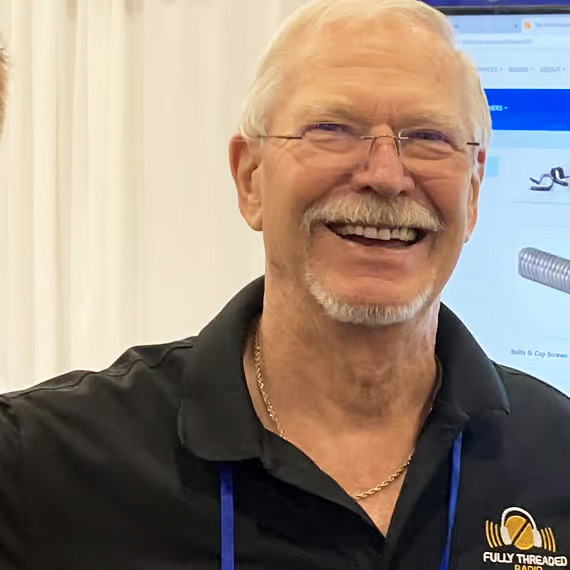
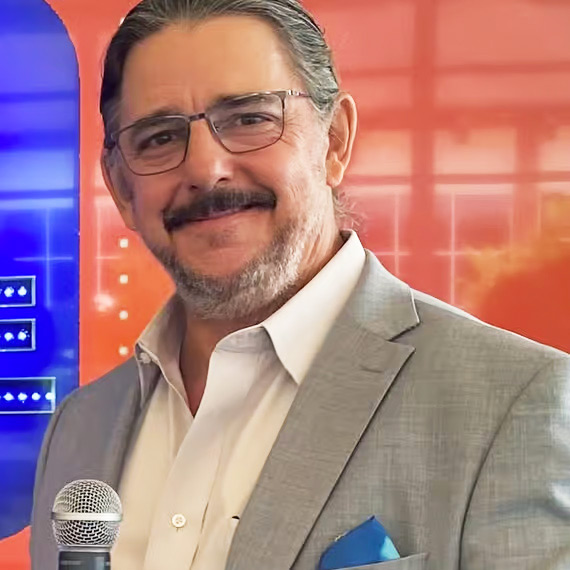
A focused discussion with Fastener Technology International senior news editor and FTR contributor, Mike McNulty, tracking his unexpected journey from engineering school to the desk of the industry renowned Fastener News Report. Run time: 48:38
Mike’s main gigs:
Fastener Technology International Magazine
Wire & Cable Technology International Magazine
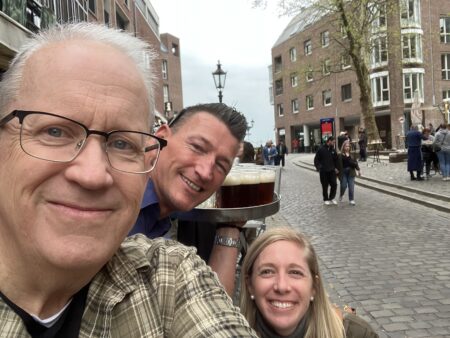
Mike McNulty at a Glance
- McNulty has been contributing to Fully Threaded Radio since 2010 — “we started doing this in 2010,” he says, “it’s been a lot of episodes.”
- He entered the fastener industry through the wire and cable trade, after roughly a decade there as a manufacturing engineer and in capital-equipment sales and marketing.
- A college writing professor returned his first assignment with no grade and the words “See me” — the turn he credits with changing his career.
- He helped produce the Fastener Tech Show as a partnership between Fastener Technology International and the Midwest Fastener Association, running every other year in Rosemont.
- On the industry today he points to data centers, electrification, and aerospace and defense as the areas outperforming general growth.
- The Fastener Distributor Index and the Fastener News Report are recorded separately from this conversation — the closing exchange makes that explicit.
- Run time: 48:38
Inside Mike McNulty
An Unthreaded conversation with Mike McNulty of Fastener Technology International, tracing an unexpected route from engineering school to the desk of the Fastener News Report.
Fully Threaded Radio’s Unthreaded editions set aside the regular program structure for a single long-form conversation. This one turns the microphone on a contributor listeners have heard for years without often hearing about: Mike McNulty, the news editor whose Fastener News Report has been part of the podcast since almost the beginning.
Eric Dudas opens by naming what the episode is for. “It’s another Unthreaded edition of the Fully Threaded Radio podcast,” he says at 00:02, “This time it’s a conversation with Fastener Technology International News Editor and longtime Fully Threaded contributor, Mike McNulty.” The framing is deliberate: a lot of people, he suggests, will find it interesting to hear how McNulty arrived at the job at all.
What follows is a career told backwards from its destination. McNulty did not study journalism and did not set out to work in fasteners. He came in, as he puts it, through the side door — hired to edit a wire and cable magazine that happened to have a fastener title alongside it. The conversation covers the college writing class that redirected him, the editorial page he has been writing ever since, the trade shows he helped produce and watched disappear, and an industry outlook delivered by someone who has spent nearly thirty years reporting on it.
What You’ll Learn
- The “side door” is McNulty’s own metaphor for how he entered the industry: hired to edit a wire and cable magazine, then told that fasteners are made predominantly from wire.
- His industry education was hands-on and arranged by others — Industrial Fasteners Institute figures including Charlie Wilson, Frank W. Akstens, Joe Greenslade and Rob Harris pointed him toward Ohio factories such as Lake Erie Screw.
- He did not train as a writer. He was good at math and science, poor at English, and took writing, literature and speech electives only after that professor told him engineering ability without communication would not carry him far.
- The editorial page has a rationale he borrowed from a colleague, Jim Keebler: it is “salt for the soup” — one page of opinion in a magazine of 140 to 160 pages, clearly identified as opinion.
- He models the multi-subject editorial on Steve Forbes at Forbes magazine and read The Wall Street Journal’s editorial page daily in the 1990s after a boss bought him both subscriptions.
- In nearly thirty years he recalls one real instance of blowback, over a trade show he criticized; when he asked the complaining exhibitors where he was wrong, he says, they could not say.
- On the Fastener Distributor Index he deflects credit to the show, describing his role as asking the questions and letting contributors share their insights.
- His outlook is that the fastener industry is mature and tracks general economic growth, with tariffs, supply chain, energy costs and interest rates as the live pressures.
Featured Voices
- Mike McNulty: News editor at Fastener Technology International and the voice of the Fastener News Report since 2010.
- Eric Dudas: Fully Threaded Radio host, conducting the conversation.
Also Heard
- Brian Musker
- Charlie Wilson
- Frank W. Akstens
- Jim Keebler
- Joe Greenslade
- Lynn
- Matt Brooks
- Paul Gigot
- Rob Harris
- Steve Forbes
Explore Mike McNulty
Timestamped guide to the episode. Times link to the transcript below.
- 00:02 — Produced show ID
- 01:19 — Host hand-off — Mike’s Fastener News Report style, and into the conversation
- 01:47 — Feature conversation
- 48:14 — Closing exchange
Introduction
Why this conversation, and why now
Eric Dudas frames the episode directly: an Unthreaded edition given over to a conversation with Fastener Technology International’s news editor. The Fastener News Report, he notes, has been a big part of the podcast since almost the very beginning — which is precisely why the route McNulty took to it is Würth Industry USA an episode of its own.
Introduction
The hand-off into the conversation
Before stepping back, Dudas describes the shape of a typical Fastener News Report — a preview of what is coming, then the line about staying focused on fasteners regardless of the distractions just listed. “So it’s going to be good to focus on Mike McNulty and his story right now,” he says at 01:30, handing over.
Feature conversation
An unexpected route to the journalistic voice of the fastener industry
The conversation opens on the podcast itself. McNulty dates his involvement to 2010 and remembers the early Fastener News Reports as too dense and too fast — “wordy and they were fast,” he says, recalling Brian Musker’s assessment that the content was good but the delivery was not. The format settled over years of coaching.
Then it turns to how he got here at all. He was hired to edit a magazine now called Wire and Cable Technology after about a decade working in wire and cable as a manufacturing engineer and then selling capital equipment. The fastener title came with the job, and his qualifications for it were, by his own account, having been to the hardware store. What resolved that was the observation that fasteners are made predominantly from wire.
Industry figures taught him the rest in person. Contacts at the Industrial Fasteners Institute sent him into Ohio plants — Lake Erie Screw among them — to learn cold, warm and hot forming, thread rolling, plating and secondary operations, navigating by handwritten directions in the years before GPS.
The pivot of the story is a college writing class. His first assignment came back with no grade and two words at the top: see me. The professor told him he could be the best mechanical engineer in the world, but without the ability to communicate he would not go far. He took more writing, literature and speech electives at Ohio State, and began publishing technical articles in the trade press — the groundwork for a job he had not imagined.
Fully Threaded Radio itself began with an editorial. Dudas read McNulty’s opinion page in Fastener Technology International, recognized a shared perspective, and sought him out at the Columbus show. McNulty remembers the ask clearly: the newly launched FCH Sourcing Network needed content — “eye candy,” as Dudas put it — to draw people to the site. That arrangement eventually became the podcast.
On the editorial page he is unapologetic. One page of opinion in a 140-to-160-page magazine, clearly labeled, is what his colleague Jim Keebler called salt for the soup. Readers who object can tear the page out. His position is that an editorial should take a stand and then provide evidence for it — and in almost thirty years the only serious blowback came from exhibitors at a trade show he judged badly promoted.
He also spent years on the other side of the trade show business. Fastener Technology International and the Midwest Fastener Association took over a show from the Industrial Fasteners Institute and ran the Fastener Tech Show in Rosemont every other year, succeeding an earlier event whose acronym he enjoyed pronouncing as “iffy.” When Fastener Fair USA arrived, run year-round by a professional show company, it diluted the field — though he credits the outcome with producing the Midwest association’s scaled-back tabletop week.
Away from the industry the conversation ranges over Adam Sandler films and an Irish grandparents’ dry wit, travel through Germany, Italy, Mexico, China and Singapore taken largely by public transport, and twenty-five campus interviews that produced twenty rejection letters — stamped REJECTED and hung on the wall of the house he shared with seven other students. Of the two offers he did get, he took the Ohio one over Anheuser-Busch in St. Louis, and met his wife there.
Asked where the industry is heading, he describes a mature market that tracks general economic growth, with data centers, electrification, and aerospace and defense currently running ahead of it. Tariffs, supply chain, energy costs, interest rates and inflation are the pressures; proximity to the customer and the factory is the lesson he thinks stuck after COVID, citing Toyota’s United States manufacturing as the kind of investment that follows from it.
The conversation closes on the job title. Dudas puts it to him that he is the editor and formally a vice president at Fastener Technology International. “Yep. That’s what’s on the card,” McNulty answers — before adding that mostly he takes a lot of information and boils it down into something useful.
By the Numbers
- 11 years — Years in wire and cable before fasteners (00:09:37)
- 10 years — Years as a manufacturing engineer and in capital equipment (00:10:05)
- 30 years — How long ago the trade show criticism ran (00:23:41)
Terms and Technical Notes
- FDI (Fastener Distributor Index) — The Fastener Distributor Index is the recurring data discussion that sits inside the Fastener News Report. McNulty describes his role in it as asking the questions and letting the contributors share their insights, crediting the show with setting up the interviews. (00:04:48)
- IFI (Industrial Fasteners Institute) — The Industrial Fasteners Institute is the industry body whose members introduced McNulty to fastener manufacturing when he arrived from the wire and cable trade, arranging the plant visits that taught him how the parts are made. (00:25:58)
- MWFA (Midwest Fastener Association) — The Midwest Fastener Association co-produced the Fastener Tech Show with Fastener Technology International, a booth-style event held in Rosemont every other year. (00:26:16)
Closing
Off the record, and back to work
The episode ends with the working relationship on display. Dudas notes they will turn the microphone off and back on in a few minutes to record the Fastener Distributor Index. McNulty’s verdict on the hour just spent: “This was easier than the FDI and the Fastener News Report. I didn’t have to do any prep.”
Terms and Technical Notes
- FDI (Fastener Distributor Index) — The Fastener Distributor Index is recorded in its own session, separately from this conversation — the closing exchange states as much. (00:48:14)
Related FTR / FCH Resources
Complete Transcript — Mike McNulty
Verbatim Descript transcript. Headings mark approved segment boundaries; speaker names appear only where evidence resolves them.
00:00 — Produced show ID
[00:00:00] Speaker: It’s Fully Threaded Radio Unthreaded.
00:02 — Host introduction
[00:00:02] Speaker 2: Hi everyone, Eric Dudas with you. It’s another Unthreaded edition of the Fully Threaded Radio podcast. This time it’s a conversation with Fastener Technology International News Editor and longtime Fully Threaded contributor, Mike McNulty. The Fastener News Report has been a big part of the podcast since almost the very beginning, and a lot of people will find it quite interesting to hear Mike’s unexpected route as the journalistic voice of the fastener industry.
00:32 — Opening sponsor acknowledgement
[00:00:32] Speaker 2: Not something that he set out to do, but I think we all agree he does a really great job of it. Brian and I have been so fortunate to have his partnership over the years, so I really enjoyed putting this one together. The title sponsors of Fully Threaded Radio, Star Stainless, and the Lynfast Solutions Group family of companies, and Brighton Best International.
[00:00:53] Speaker 2: Fully Threaded Radio is also sponsored by Buckeye Fasteners, BTM Manufacturing, Eurolink, Fastener Supply Service, Fastener Technology International, Gobel Fasteners, InSQL Software, J. Lanfranco, Cressa, MW Components, Solution Industries, 3Q Inc., Volt Industrial Plastics, and Worth Industry USA. Mike starts out his Fastener News Reports with a preview of what he’s going to talk about, and then he says he’s still focused on fasteners, no matter the hair-raising list of distractions that he just lists off.
01:19 — Host hand-off
[00:01:30] Speaker 2: So it’s going to be good to focus on Mike McNulty and his story right now. Sure appreciate you listening in, everyone, and hope you enjoy this conversation with Mike McNulty. Well, here’s a change of pace. Mike, thanks for being here. What took us so long to do this?
01:47 — Feature conversation
[00:01:47] Mike McNulty: I don’t know. Maybe I was afraid of it. Or, or thought of as another assignment that needed a lot of prep, and I didn’t wanna do it.
[00:01:55] Speaker 2: Oh, maybe in the old days, not anymore. Looking at your bio, I could see you’ve got almost… We’re right around the corner from 30 years in the fastener industry. That’s through Fastener Technology International, and of course, you got a long way looking over your shoulder with Fully Threaded Radio too.
[00:02:14] Speaker 2: That’s an amazing story. I’m so glad we’re taking this time for you to share a lot of it with our audience ’cause we don’t do enough of just spotlighting you.
[00:02:24] Mike McNulty: Well, appreciate the invitation, and, uh, and it’s been a good time. I look back at, uh, we started doing this in 2010, so, uh, it’s been a lot of episodes.
[00:02:33] Mike McNulty: I think it was episode number 13. Now we’re well into the 200s, so I would have never guessed we’d be doing it this long.
[00:02:40] Speaker 2: That’s probably true ’cause you’re a dogged researcher. I actually looked for the first time your name ever appeared on the show description, and it was episode 10, August 2010, which was right after we started ’cause we launched in March of that year.
[00:02:55] Mike McNulty: You’re right. Yeah, you and, uh, you and Brian had me on, and we were having a discussion, and I think I was, I was, uh, a little nervous and hyperventilating, I think.
[00:03:06] Speaker 2: That’s okay. The audio quality in those days was so bad that you wouldn’t have been able to hear it anyway over all the, uh, background, the buzz.
[00:03:13] Mike McNulty: Yeah, you’re right. I forgot about that. Yeah.
[00:03:15] Speaker 2: Well, the first time we ever used the term Fastener News Report on the podcast was episode 15, which happened shortly after.
[00:03:21] Speaker 2: That was November of 2010.
[00:03:24] Mike McNulty: All right.
[00:03:24] Speaker 2: Little bit of history there.
[00:03:26] Mike McNulty: Yeah, and I recall the, the first time I did, uh, the first few Fastener News Reports, they were wordy and they were fast and they were, again, the hyperventilation. I think Brian used to say, “The content was good, but the delivery’s not.” And it got better with you guys coaching me over the years, but I can remember, like, I was trying to speak as if I was writing, you know, it was like it was just too much information and, and then I’d try to go fast, and then you’d like, “Just slow down and do the headlines.”
[00:03:56] Speaker 2: Well, we’ve all had a journey on this thing- … learning as we go.
[00:03:59] Mike McNulty: Absolutely.
[00:04:00] Speaker 2: It’s been a lot of fun to develop it with you, and in those early days you were still trying to figure out what the format should be, and you’ve, of course, locked in your groove a long time ago. I don’t even like listening to the episodes, like before episode 100 myself.
[00:04:14] Speaker 2: I mean, I… it’s embarrassing.
[00:04:18] Mike McNulty: Right. But it was, like you said, it’s a journey, so you gotta start somewhere.
[00:04:21] Speaker 2: Right. Right. I’m not sure, and I didn’t look for this, when we actually started making the Fastener Distributor Index a regular feature, but now of course, you’re old school at that, and when I look back over the years at all the big names that you’ve had on with you, it’s really incredible, and you’ve developed that part of your skill as well.
[00:04:39] Speaker 2: You’re a really tremendous interviewer these days. I love what you’ve done with it. Sometimes, like I joke around, it should be The Mike McNulty Show.
[00:04:48] Mike McNulty: Yeah, but the, you know, and I, I appreciate that comment, but the credit to the, the Fastener Distributor Index or FDI, that, you know, that goes to you guys and, uh, you in particular, and, you know, you set up the interviews and I just, you know, just have to ask the questions and let them share their insights, which are good.
[00:05:03] Mike McNulty: So it’s really, you know, it’s really a product that you guys put together and I just happen to be the, uh… It fit inside the news report and I get to ask the questions and hear what the, what the contributors have to say, which is always pr- uh, always good insights.
[00:05:18] Speaker 2: Well, again, it’s a team effort, and the great thing is that the industry really seems to appreciate it, and you have a lot of listeners that just dig in right for that.
[00:05:27] Speaker 2: But looking back on this list, some of the greats, some of the big names, uh, Tim Roberto Jr. Uh, we used to have Mark Strandquist on occasionally. Yeah. Uh, Michael Knight, who was with Endries for a long time. He was a super heavyweight. Uh, John Zhu- Yeah … another big one. Mike Ren in the old days. I mean, wow.
[00:05:46] Mike McNulty: A lot of good, lot of good, uh, names there, for sure.
[00:05:49] Mike McNulty: Industry leaders.
[00:05:51] Speaker 2: You got any favorites or any that stand out?
[00:05:53] Mike McNulty: Oh, any favorites? Well, I mean, they’re all, they’re all good, and everybody’s got something good. I guess, you know, most re- I guess Tim O’Keefe always is a good, uh, thing. I think we have a little… Maybe we’re similar age or something. So those have been good.
[00:06:07] Mike McNulty: I mean, they’re all, they’re, they’ve all been good. You know, John Zhu’s very, uh, he’s got… He always talks about his different buckets and different things and prognosticating. Um, guy who helped set it up from Fastenal, Holden Lewis. Holden was always, you know, just takes the stage and keeps going. Most of the guys, and there’s been a few women, too, but it’s predominantly male.
[00:06:28] Mike McNulty: I don’t, you know, that’s just the way it worked out. But, um, most of the people doing it, they really run with it and, uh, like I s- I don’t have to do much other than prompt them to move to the next section.
[00:06:39] Speaker 2: Well, it’s come a long way, and I agree with you. Tim O’Keefe is always a giant in that area. And another big one who puts a lot of careful thought and consideration into it is, uh, GQ, so Bob Baer.
[00:06:52] Mike McNulty: Yeah, he does a lot of study in that. And then I’m also thinking as you’re, as you’re saying it, I appreciate the different, um, accents that people have. The different… You know, Tim Roberto has the N- the New Jersey East Coast thing, e-even though he lives on the West Coast, and then you get, uh, you know, Tim O’Keefe’s got the Midwestern, uh, uh, twang or whatever.
[00:07:10] Mike McNulty: So I appreciate the different geographical perspectives people bring.
[00:07:14] Speaker 2: You go out of your way to understand each person’s unique perspective and their background and stuff like that, and at the end of the segment, you pull out a little bit of that and you ask them what’s going on in their world, you know, with their company- Mm-hmm
[00:07:27] Speaker 2: what they’re involved in and so forth. And a lot of these guys are also double-dipping because they’re doing work for different associations and- Right … things like that. So are there any things that have caught you off guard over the years? Because some of these things have run, like, 45 minutes uncut. You know?
[00:07:43] Speaker 2: I mean, they- they’ve really gone in interesting directions.
[00:07:46] Mike McNulty: Um, I wouldn’t say off guard, but I think, you know, all the- all these people that we’ve interviewed, they all have, have a good story, you know, and a good career background. And, um, I like to tap into… You know, you- the listeners know this and you know this, I like to tie into the, the sports connections, and some of them have been, you know, good athletes or good, uh, you know, not just good business people, but they’ve done things outside of work or before their work that is kind of interesting.
[00:08:13] Mike McNulty: So I wouldn’t say off guard, but just very, you know, interesting backgrounds and common success, not, you know, outside of, outside of work as well as inside of work.
[00:08:23] Speaker 2: And a lot of things outside of work. Tim “Iron Butt” O’Keefe, we called him after your one interview- Yeah, right … I remember.
[00:08:29] Mike McNulty: Yeah, the motorcycle riding, sliding across the, uh, the highway on some kinda insects or something.
[00:08:35] Speaker 2: That was a great predominantly fastener-related story. Oh, brother. All right, so you’re mainly focused on fasteners, though. Let’s, let’s say that, and we haven’t used your catchphrase yet in this conversation, so let’s put it out there. And speaking of interesting career paths, you had one yourself. So we said you’re going on 30 years, and that’s…
[00:08:55] Speaker 2: We’re gonna say that’s through Fastener Technology International mostly, but you’re involved with some of the other titles over there, and you can expound on that a little bit, but you had never planned on getting into the journalism side of things.
[00:09:08] Mike McNulty: No, I mean, getting into journalism and in the fastener industry were not, uh, things that I, I expected to ever happen, and, uh, the, like you said, you know, coming into the fastener industry starting, uh, in 1996 was…
[00:09:19] Mike McNulty: I, I like to think I came in the side door of the fastener industry. So if you live in, uh, areas where you, you know, a lot of houses were built with detached garages, you had a front door, a side door, and a back door, and nobody really used the back door. But, uh, you could only use the side door if, if you knew the family.
[00:09:37] Mike McNulty: That was at least what my dad told me. You know, if you didn’t know the family, you, you had to go to the front door. If you knew them, you could go to the side door. And I, I entered the fastener industry, I like to think, through the side door because I had gotten, I had gotten hired to be the editor of a magazine called Wire- it’s now called Wire Cable Technology, and I had spent about 10 or 11 years in the wire and cable industry, which I had a colleague who said once that the wire and cable industry was my, was and is my first love, and that’s probably true, but I also, you know, I love the fastener industry.
[00:10:05] Mike McNulty: But I had spent 10 years working in the wire and cable industry, working as a manufacturing engineer, and then I sold capital equipment and did marketing and product development for capital equipment in the wire and cable industry. And I wrote, uh, technical articles along the way, and I got… Was being offered the job to be the editor of this magazine called Wire and Cable Technology.
[00:10:26] Mike McNulty: And then, um, so we, we came to agree, and they’re like, “Okay, and by the way, we also have this other magazine called Fastener Technology” and like, “What do you know about fasteners?” And I’m like, “Well- I’ve been to the hardware store to buy fasteners, and, uh, I’ve used fasteners, but that’s about all I know.” And they’re like, “Well, you’d be surprised to learn that fasteners are made predominantly from wire.”
[00:10:47] Mike McNulty: And I was like, “Oh, okay. I thought they were all machined, and I didn’t really know anything about the fastener industry.” So that’s how I, I got involved in the fastener industry. And then to, uh, learn about the fastener industry, like the owners of the, of the magazine, they introduced me to people at the Industrial Fastener Institute, Charlie Wilson, Frank Axtens, Joe Greenslade, Rob Harris, uh, other guys like that, and they’re like, “Okay, they’re gonna help you teach you how…
[00:11:12] Mike McNulty: about the fastener industry.” And they got me to go into factories around, uh, uh, Ohio. I, I can remember going, I think, to Lake Erie Screw and some other fastener places, which if I had to find them today, I wouldn’t know where they are. I just went there, and that was before GPS, so we just used, uh, handwritten directions to go there, and I went into these factories and learned how to, how to make fasteners from the, you know, the cold forming and warm forming and hot forming, thread rolling, plating, packaging, uh, secondary operations, all those things.
[00:11:41] Mike McNulty: So that’s how I got involved in the fastener industry and, you know, and then of course, going to trade shows and things like that, you learn it and going to different suppliers. So a lot of people with, like as I mentioned, the, the side door is a very welcoming industry in that. But, you know, going back, my, my background was engineering, manufacturing, and sales and marketing and product development.
[00:12:00] Mike McNulty: So, you know, you asked about, you know, the journalism background. I did not study, uh, journalism, and in fact, I was not very good in, in, uh, in English when I was in high school or even anything that had to do with storytelling like history and things like that. My favorite things in, in high school were the things that I was good at.
[00:12:18] Mike McNulty: I was good at math and science, and I liked industrial arts. I just kinda spilled over in that, but didn’t do any, any background in, in writing. In fact, I was kind of poor. My, my grades in English were like Bs and Cs and, uh And a, and a funny story was that when I, when I got into college and I was studying engineering, uh, we had to take electives, and I took English class, and it might have been English for non-English majors or writing for non-English majors.
[00:12:43] Mike McNulty: And our first assignment was to write a, a cover letter and a resume. And this was back before computers, and we had to do it on a, I had a manual typewriter with, uh- … onionskin paper and- That’s
[00:12:53] Speaker 2: going back, huh?
[00:12:55] Mike McNulty: And Wite-Out. And, um, so I, I spent a lot of time doing this, a lot of corrections back and forth. It took me a long time.
[00:13:01] Mike McNulty: I got it in, I turned it in. And, uh, you know, the next day or the next class, waiting for the papers to come back, and everybody’s getting their grades with notes and feedback and a letter grade. And I get mine back, and it just says, “See me,” on the top of the- … on the top of the paper. There’s no grade. And I’m, like, thinking, “Oh, boy, I was, uh, thinking I was probably gonna get a B on this or something,” but it says, “See me.”
[00:13:20] Mike McNulty: So I go see the professor, and, um, I don’t remember her name, but she was, you know, was very kind and she was, you know, good at, uh, at, at teaching this class. And she just said, um, “This is not good. It’s not good at all, and, um, you shouldn’t have even handed it in.” And I was, like, kind of shocked. And, and I said…
[00:13:38] Mike McNulty: And, uh, and she said, “What’s your major?” And I said, “I’m majoring in mechanical engineering.” And she said, “Well, you can be the best mechanical engineer in the world, but if you can’t communicate and you can’t write, you’re not gonna go anywhere.”
[00:13:49] Speaker 2: Wow. Well, that woman changed your life, man.
[00:13:52] Mike McNulty: She changed my life.
[00:13:53] Mike McNulty: She said, “You know, you’re gonna get… You’ll get hired ’cause you’re an engineering major and those are high-in-demand jobs, but you won’t really go anywhere.” So it’s kinda… It was kind of a shock, and I’m like, “Okay, I really gotta buckle down. I’ve gotta pay attention. I gotta put some work into this.” And I, I did well in the class and I really worked hard at it.
[00:14:08] Mike McNulty: And then I took several more English electives while I was at, uh, while I was in, in college at, at Ohio State, and it took me five years to finish my degree, so I had a lot of time for, uh, electives, and I took, I took some literature, and I took some other writing classes, and I took some speech classes. So I got, I got good at communicating, which was kind of a, a precursor into getting involved into, into journalism.
[00:14:31] Mike McNulty: So then when, you know, when I got into the wire and cable industry and I, I was working in engineering, then I was working in sales and mar- selling capital equipment, I wrote technical articles and presented them at, at conferences at different wire and cable trade shows and, and conferences that were published in this magazine, Wire and Cable Technology, and some other competitive magazines, so that’s where I’ve got the, uh, the background.
[00:14:52] Mike McNulty: So when I was being asked to, you know, if I wanted to work for the magazine, I’m like, “Well, I don’t know anything about journalism.” And they’re like, “Well, that’s okay. You understand the industry and, and, uh, we’ll teach you the journalism.” And they did. There was– I had some colleagues who were editors, you know, lifetime editors of, at magazines and, and publishing people, and they, they taught me how to, how to do the, uh, the journalism part, and then I just…
[00:15:15] Mike McNulty: You know, I had a love for manufacturing wire and cable, and then I got the, you know, that turned into love for, for fastener making and going into factories and talking to people and make these things. So I have the, I have the engineering and manufacturing background, and now, uh, ’cause of this woman in college, I, I learned how to communicate writing-wise as well as, uh, speaking-wise and-
[00:15:36] Speaker 2: And here you are.
[00:15:37] Mike McNulty: Here I am. Who would’ve ever thought I’d be, you know, doing it? I can remember being in, you know, in college, you know, waiting till the last minute to, uh, to write a, a paper the night before, and the same thing in high school. And I, and, uh, a funny story, in high school when I had to do book reports, I’d– I didn’t like to read, so I didn’t even read the books.
[00:15:53] Mike McNulty: I would kind of skim the first chapter and the last chapter, and then I’d ask people in study hall to tell me what happened in the book, and then I’d write the book report. So that m- made me first learn the, uh, interviewing skills.
[00:16:07] Speaker 2: tricks that we used to use before the era of AI, right? Right.
[00:16:11] Mike McNulty: Yeah, yeah.
[00:16:13] Speaker 2: Well, it’s to your great credit that you extended yourself and pushed yourself, and you were obviously driven, and good for you. So my next question is going to be your inspiration for what you’ve written, because I remember when we first connected… Actually, this might be a good direction to go down for a minute.
[00:16:32] Speaker 2: Uh, it was– Well, you have a different memory than, than I do. It wa- I, I recall reading Fastener Technology International and reading your editorial at the front of the magazine, and it struck me because it was what I now these days call predominantly fastener related, meaning you were doing some political commentary-
[00:16:53] Speaker 2: you know, in this technical magazine or in this industry magazine, and I really liked that ’cause we kinda shared the same perspective on that particular piece. And I reached out to you, and, uh, then I remember meeting you in person at a trade show, which probably was Columbus.
[00:17:09] Mike McNulty: Yeah. Yeah, we met in, uh, we met in Columbus, and, um, it was the, you know, the world-famous Columbus Fastener Show, which, well, I think it was called the National Industrial Fastener Show, but everybody referred to it as the Columbus Show, and it was, uh, you know, it was the biggest and the best show in the industry, which eventually went away.
[00:17:26] Mike McNulty: It was displaced by the Las Vegas show, but th-that’s a whole different story. But yeah, we met at the show. We were exhibiting there, and you came by, and I know you had just, uh, launched your business, the FCH Sourcing Network, and, uh You came by and you said, you know… And I don’t know what you called it.
[00:17:41] Mike McNulty: Did you call it a portal, or did you call it was it a B2B website or, you know?
[00:17:46] Speaker 2: We still don’t know what to call it, Mike.
[00:17:49] Mike McNulty: But it was a way for people to buy and sell fasteners on the internet, you know, and with computers, and you said you were putting this thing together and you needed, uh, to draw people to your site, and you said you, you know…
[00:18:00] Mike McNulty: I remember you came over and you were, you were very f- you were focused and and, um, serious, and also, you know, had a very strong handshake, and you said, uh, you needed to have something on the website to draw people in, and you called it eye candy. You needed eye candy for the website, and you wanted to know if Fastener Technology International would provide some, some news content or some article content for the, uh, for the website.
[00:18:21] Mike McNulty: So I always thought that was kinda funny ’cause, you know, fasteners and eye candy don’t always always go together. And, uh, but, you know, and then that, you know, eventually you, you, you guys rolled that into the Fully Threaded radio network, and here we are, you know, many, many years later, and, uh-
[00:18:39] Speaker 2: The rest is history, as they say
[00:18:40] Speaker 2: the
[00:18:40] Mike McNulty: rest is history. So, so yeah, we were like, “Okay, I don’t know. We can give you some headlines or we can give some stories to post on there. I don’t know.” You know. And back then people were talking about blogs and things like that, maybe we could blog and everything. But, uh, you’ve tied the, uh, FCA sourcing network together with, uh, predominantly fastener related podcasts that, you know, you’re able…
[00:18:59] Mike McNulty: It’s a platform to talk about your, your product and then also to talk about the industry, and that’s… Congratulations to you guys. It really worked out, and thanks for inviting me along.
[00:19:11] Speaker 2: Well, we’ve had a good run. Let’s keep it going. Well, uh, the terminology in all these things has changed a lot over the years.
[00:19:18] Speaker 2: You know, you brought up, did we call it a portal? I mean, that’s now sort of an ugly word you want to avoid. Same with marketplace. You know, we never really wanted to try to present ourselves that way.
[00:19:28] Mike McNulty: The marketplace.
[00:19:29] Speaker 2: Yeah. Ugh. And, uh-
[00:19:31] Mike McNulty: Getting rid of the brick and mortar stores, right?
[00:19:33] Speaker 2: Yeah. It’s ongoing. Okay.
[00:19:36] Speaker 2: Well, getting back to your opining on your editorial, you used to really get out into some, uh, choppy waters. I guess you still do. You mix it up pretty well these days with a little more tame content, but did you ever get any blowback from anyone? Did they ever say, “What, what are you doing? This is a fastener magazine.
[00:19:54] Speaker 2: Why are you talking about politics?”
[00:19:56] Mike McNulty: Yeah, I would get that. And, um- You know, the whole thing with the, the editorial page, the background for that, you know, editorial page is supposed to be opinions. And, uh, one of my colleagues, like I said, these guys were teaching me how to do journalism. His name was Jim Keebler, and he worked his entire career as a journalist.
[00:20:13] Mike McNulty: He worked in different, uh, magazines that are called, you know, for general manufacturing. He was kind of a, a legend in the, in the publishing industry, and he said that– He said the editorial page is kinda like salt for the soup. You know, the magazine is a soup, but you gotta spice it up a little bit with the, uh, with the salt or not spi- you know, s- flavor it with the salt, so it’s okay to talk about non-fastener things.
[00:20:36] Mike McNulty: You got a magazine that’s maybe 140 pages, 160 pages, and if you got one page that’s opinion and it goes off of the fastener industry or the general industry that’s being covered by the thing, that, that’s okay as long as, you know, as people know it’s an opinion page. And at that time, I had been reading, um Uh, we’re gonna back up a little bit.
[00:20:55] Mike McNulty: My previous job when I was in the wire and cable industry, I had got hired by this company to do their, uh, marketing and product development for their capital equipment for the, uh, for the cable industry and for fiber optics and communication cables. And, and my boss at the time, he was like, “You know, what do you, what do you read?”
[00:21:13] Mike McNulty: And I’m like, “What do you mean, what do I read?” I go, “I read some novels.” He’s like, “You need to read business stuff.” And he’s like, “So you need to read The Wall Street Journal and you need to read Forbes magazine.” And I’m like, “Well, those are too expensive.” Like, “Then why…” He goes, “Why don’t you read them, Michael?”
[00:21:25] Mike McNulty: “They’re too expensive. I can’t afford it.” And he’s like, “I’ll pay for your subscriptions.” So he got me a scrip- subscription to The Wall Street Journal and to Forbes magazine, and he, by the way, he was… He lived in the same neighborhood as Steve Forbes, so he was, you know, knew the… This was in Northern New Jersey.
[00:21:41] Speaker 2: Wow.
[00:21:41] Mike McNulty: He knew Steve Forbes. So I started reading these publications and, um, so maybe that, that’s probably, you know, influenced my conservative, uh, bent a little bit as well as some other thing, you know, just upbringing and things like that, and common sense. But- I like to read… You know, and The Wall Street Journal would have every day, like two or three subjects that they would cover in their editorial page.
[00:22:04] Speaker 2: Right.
[00:22:04] Mike McNulty: I read that. That was my favorite thing to read, was their editorial page.
[00:22:08] Speaker 2: Were those the Paul Gigot years?
[00:22:10] Mike McNulty: I don’t remember. This would’ve been in the 1990s.
[00:22:13] Speaker 2: Yeah, I think, I think he was running it. Okay, go ahead.
[00:22:16] Mike McNulty: Yeah, so but it was good. And then Steve Forbes, you know, a lot of editorials, you know, they would…
[00:22:20] Mike McNulty: in magazine, it’d just be one subject. And Steve Forbes was the editor of Forbes magazine, and he would cover two, three, four subjects. And so I’m like, “Okay, I’m gonna, I’m gonna follow his style. I’m not gonna just write about one thing for the whole page.” Sometimes that happens, but I wanted to do two or three things, and he would always end things with different restaurants that he and his brothers went to, or different sporting events they went to or things like that.
[00:22:43] Mike McNulty: So they, you know, they got outside of the business, uh, subjects, too. So those are, those are the two places I learned to write editorials was
[00:22:52] Speaker 2: reading those. Well, I, I, I really like the metaphor, you know, of the salt and, and the, the magazine itself is the soup and you’re just adding the spice and all that, but you do wanna be careful, you know, not to add, say, like jalapeno peppers if it’s a French restaurant.
[00:23:07] Mike McNulty: Right. And
[00:23:08] Speaker 2: that- So my, so my… Yeah, but my question would be, did you ever really piss off a sponsor or anything? I mean, did you ever lose
[00:23:13] Mike McNulty: any business? No. Well, yeah, one time we did, ’cause I was talking about… One time What were we talking about? It was something having to do with a trade show and, uh, uh, that didn’t go well.
[00:23:25] Mike McNulty: And it was on the manufacturing side and, and I was, uh, criticizing the show and the sponsor, and some of the guys, they got, they got mad and they, uh, some of the exhibitors got mad, and they were complaining to our publisher, but it was, you know, it was true. They did a, they did a lousy job promoting the show.
[00:23:41] Mike McNulty: This was, this was a long time ago, almost 30 years ago, and I criticized the, the show ’cause it was bad. And, uh, th- that was the only blowback from, you know, like, people that were buying ads in the magazine and, and everything. But then I talked to them and I’m like, “Well, tell me where I’m, where I’m wrong,” and they, they couldn’t.
[00:23:57] Mike McNulty: They were just thinking that it should be like the homer, you know, like, you know, if you got a hometown newspaper, it never criticizes this, the- Right. Right … politics or the hometown, you know, it’s gonna be- They just wanted
[00:24:08] Speaker 2: you to, to smooth
[00:24:08] Mike McNulty: it over … people aren’t gonna read it. Yeah. So they were mad, but then I would get other…
[00:24:11] Mike McNulty: I would g- occasionally get people complain, saying, you know, “This is a fastener magazine. Why are you talking about politics in Washington? Why are you talking about deficit spending? Why are you talking about socialism?” This and that, and then, then I would write back going, say, you know, “The magazine is 140, 160 pages long, and there’s one page in the magazine that is my opinions, and it’s clearly iden- identified as that.
[00:24:33] Mike McNulty: If you don’t like it, you can, you can cut that, rip that page out and look at the rest of the magazine, which is 99 point some percent focused on fasteners.” And that this was, you know, something to give some opinion about what’s going on in the industry, but also what’s going on in the world and politics, and things like that do, do affect, uh, industry and things, you know.
[00:24:53] Mike McNulty: So I think, I think I’ve done a good mix. Like you said, sometimes, you know, get… things were a little bit more aggressive than other times, and then other times it’s Kind of mild, but when people, in my opinion, when they, when they go to look at an editorial page, they wanna have you take a stand. Whether they agree with it or not is, is one thing, but you, you should take a stand and then try to provide evidence to support your, your opinion.
[00:25:16] Speaker 2: Well, I’d agree with you entirely on that. The problem that a lot of people have with that is it requires an ingredient that is sadly missing in a lot of places these days, and that’s called courage. And, you know, with the pussified world that we live in- … in a lot of ways, you know. Uh, as a matter of fact, that first email that I sent you, I think I even pointed that out to you because that was something that impressed me about you very early on.
[00:25:39] Speaker 2: So, uh, you got it.
[00:25:41] Mike McNulty: I get more good feedback than bad. The bad, there’s hardly any. My old boss, original boss, he said, um, most of the people agree, you know, they have the similar agreement. It’s fine. Keep doing, you know, do what you want. And only time he didn’t, he didn’t like it when I irritated the one trade association who put on a bad, uh, trade show.
[00:25:58] Mike McNulty: And it was some people at the IFI long time ago.
[00:26:01] Speaker 2: You know, on the subject of trade shows, I wanna ask you just quickly about the relationship that Fastener Technology had with the Fastener Tech Show, which ran for several years. I think it was an every other year show, but it was like a full-blown- Right
[00:26:16] Speaker 2: 10-by-10 booth style show that happened in Rosemont, and it was connected with the MWFA. How did that all work? Was it a partnership, or do you
[00:26:25] Mike McNulty: remember? It was a partnership. Yeah, it was a partnership with the, uh, Midwest Fastener Association and the show that preceded Fastener Tech, it was a show, I can’t remember the exact name.
[00:26:34] Mike McNulty: It was the Industrial Fastener and Forming International Show.
[00:26:39] Speaker 2: What year was this? Do you recall?
[00:26:41] Mike McNulty: It was in, the first one was in 2007, and then it went all the way to 2019 was the last one. And it was, like you said, you’re right, it was every other year, and before that, there was a show put on by the IFI, and it was the Industrial Fastener and Forming International Expo or something like that.
[00:26:58] Mike McNulty: And it was the acronym IFFI, and I used to jokingly call it iffy, you know? But it was, but it was a pretty, you know, it, it was, it was a show put on by the, uh, the Industrial Fastener Institute, and this is not the one that I was criticizing. This was a pretty good show, and it was, it was aimed at fastener manufacturers would go to the show, and you would– the exhibitors would be machinery and tooling people, and accessories and materials like wire that would be fed into machines for making fasteners.
[00:27:23] Mike McNulty: And it was a, it was a pretty good show, and it, it ran in Rosemont every other year. And then, um, the IFI, it was getting hard to produce and the, the attendance, you know, was getting, it was getting tough to draw. And it had also had seminars that we helped produce, and we were a partner of that show. We didn’t own it, but we were, uh, we supported it, and we provided content, um, uh, the educational content.
[00:27:45] Mike McNulty: And then around, I guess, 2005 or so, the IFI wanted to get out of the show business, all the legal stuff, and they wanted to separate it from their association business. It was taking too much time. And they went to the MWFA and they went to us, Fastener Technology International, and said, “Why don’t you guys take it over?”
[00:28:01] Mike McNulty: And so we, we did as a partnership with the, uh, Fastener Technology International and the MWFA and produced, uh, you know, starting in 2007 through 2019, produced a show every other year. It was in Rosemont, and it was, um… Oh, let me back up. The, the IFFI show also was, I think it was held in Cleveland and Rosemont.
[00:28:20] Mike McNulty: It rotated every, every other time. But, uh, the Fastener Tech Show was done well and, um, and it was, it was a good experience. But then when the Fastener Fair USA came on the scene Which was produced by a, uh, you know, a professional show company rather than association and a magazine Right, that was Matt
[00:28:37] Speaker 2: Brooks.
[00:28:38] Speaker 2: Kinda diluted the market.
[00:28:40] Mike McNulty: Yeah, they had been doing– They started out with, it was Fastener Fair Stuttgart, which became Fastener Fair Global, then they did Fastener Fair France, Fastener Fair India-
[00:28:49] Speaker 2: There’s
[00:28:49] Mike McNulty: a pile of them … Mexico, all over. And then, then they said, “Well, we’re coming in.” They, you know, they had the, they brought the big guns and they, they put it on, like, two weeks before FastenerTech.
[00:28:58] Mike McNulty: And so it kinda, you know, it diluted it and it kinda… And they had, you know, they had a whole staff of people that worked year-round on the show, so it kinda knocked it out. But what it, what it led to, the good fruit, was it led to the MWFA, what do they call it? Fastener Week? The show without balls, that’s what you call it.
[00:29:16] Speaker 2: That’s correct.
[00:29:17] Mike McNulty: FS and TNR Week, the whole week where they, they scale it back and they do it in a, you know, in a hotel. It’s tabletops, and they put some social events. They do the, uh, the golf and they do, uh, the mixer and now you guys do the, uh, the running race ahead of time and the, the charity work and stuff like that.
[00:29:35] Mike McNulty: So I think, you know, sometimes when something breaks down or whatever, something good comes out of it, and I think that’s what happened.
[00:29:40] Speaker 2: Well, these shows have a life cycle.
[00:29:42] Mike McNulty: They have a lifetime, yeah. And, and like I said, we d- let’s see, we did one, two, three… Yeah, we did six of them
[00:29:49] Speaker 2: I met a lot of people in the industry at that first one that I attended, and it was a very good show.
[00:29:55] Speaker 2: But you’re right, the MWFA has got that premier tabletop event now in the Midwest for sure.
[00:30:00] Mike McNulty: Yeah, it’s, it’s easier to produce. You don’t have to have a big exhibit hall and that, so it works out good and they do it, you know, and doing it every other year. So but it was a good experience for us. I enjoyed doing it, and like you said, things come and go.
[00:30:10] Mike McNulty: The Columbus show came and went, and the Las Vegas show is now in Phoenix, and who knows what’ll happen down the road.
[00:30:16] Speaker 2: Well, we’ll cover it on the next Fully Threaded, how about that?
[00:30:19] Mike McNulty: Right. Right.
[00:30:20] Speaker 2: You know, I wanted to ask you, in addition to you being a little atypical for an engineer in a lot of ways, uh, being so articulate and getting ideas from all sorts of places, you know, outside of your, your focus, you got a really good dry sense of humor too.
[00:30:36] Speaker 2: What kind of comedy movies do you like?
[00:30:38] Mike McNulty: Oh. Um, well, I like, um, the first one that comes to mind, I like Adam Sandler. I like his movies and, um, oh, I mean, the old ones when I was in college, I may be embarrassed to admit which ones I like, but Fast Times at Ridgemont High and, um-
[00:30:53] Speaker 2: Classic
[00:30:58] Mike McNulty: And all those, those mo- I guess it was John Hughes produced a lot of those, those funny movies, you know, going back to the, The Blues Brothers and some of the Saturday Night Live guys from, uh, what’s his name, Farley. Chris Farley was a funny guy. And, um, I, I probably get some of the dry sense of humor too from my Irish background.
[00:31:16] Mike McNulty: I have, uh, my dad’s parents are immigrants from Ireland and a big family, uh, nine children all together. And all the, all the McNulty men include, and my grandmother McNulty and grandfather McNulty all had that dry Irish wit,
[00:31:32] Speaker 2: so- Uh-huh …
[00:31:33] Mike McNulty: I think I learned it from them.
[00:31:34] Speaker 2: Yeah, I could see that.
[00:31:36] Mike McNulty: The deadpan zingers or whatever.
[00:31:38] Mike McNulty: How
[00:31:38] Speaker 2: about Python? Did you ever get into them?
[00:31:41] Mike McNulty: No, I didn’t. I don’t, I didn’t. I don’t think my dad let me watch those for some reason. Growing up, there’s a lot of things we weren’t allowed to watch on TV.
[00:31:48] Speaker 2: Yeah.
[00:31:49] Mike McNulty: So it wasn’t until I got to college age, you know, that I did stuff.
[00:31:52] Speaker 2: Well, you’ve seen Search for the Holy Grail, haven’t you?
[00:31:55] Mike McNulty: No, I haven’t.
[00:31:55] Speaker 2: Ah. Dude, we gotta get together one night. You have… Oh, I wish I was you. It’s one of the most brilliant comedies ever made- All right … in my opinion. I mean, top 10 for sure. Top 10 ever made. So yeah, you have that in store for you. I saw it the first time at the theater when I was in third grade, and I’ve seen it many times since.
[00:32:15] Speaker 2: And since, you know, those are your cousins, you, really it’s required for you.
[00:32:21] Mike McNulty: Yeah, I should probably check it out. And there was another guy from England that I wasn’t allowed to watch, I could… But I, okay, and I did watch the, I was allowed to watch The Three Stooges and The Little Rascals, which wouldn’t pass any political correctness test today, but.
[00:32:33] Speaker 2: Yeah, those are off limits for an entirely different set of reasons these days, right?
[00:32:37] Mike McNulty: Yep.
[00:32:40] Speaker 2: Well, okay, so speaking of Europe and, uh, overseas travel and everything, you know, you’ve always struck me as kind of a Ohio guy mostly, and, uh, you know, talking about the fastener industry and all the opportunities that it affords people, it’s allowed you, I guess, in a lot of ways to spread your wings and travel widely because you’ve been to Asia many times, you’ve been to Europe many times with the fastener industry and really to see the world.
[00:33:05] Speaker 2: I mean, it’s been a, a really great thing for you.
[00:33:08] Mike McNulty: Yeah. I mean, I mean, I really enjoy travel. I like, um, like as you s- you pointed out in the beginning, I’m an Ohio guy and I was, you know, I was born and raised in Ohio and lived here in Ohio until I was about, uh, 26 or so, and, um, before I got into the fastener industry, and then I got a job on the East Coast in the Philadelphia metropolitan area, and then I got another job in the New York metropolitan area, and I, you know, I used to think I was kind of a, an Ohio guy.
[00:33:33] Mike McNulty: You know, to me, a big city was Cleveland, you know? And I went to school in Columbus and we used to… Back then, Columbus was not metropolitan. We thought of it as a, as a farming town. But then going out to the East Coast, I was surprised at how much I liked it, and I liked the, the big cities. I like… You know, and a lot of people don’t like to go to…
[00:33:49] Mike McNulty: There’s a lot of things wrong in big cities, but there’s a lot of good and beautiful stuff in, in big cities. You can find something good everywhere, and, um You know, my wife and I, when we were first married, we lived in, like I said, in the Philadelphia area and then in New York City, and we enjoyed that whole East Coast travel.
[00:34:04] Mike McNulty: Uh, New York City and Boston and, uh, Baltimore and Washington, which, which would light up the crime stories. But I got very, um, comfortable in all these cities and using public transportation in them, and that’s when– It’s something I like to… You know, you just got a real good feel for the, the city when you did things that the normal people do there, even though a lot of people might think of them as, as dangerous.
[00:34:28] Mike McNulty: And then that continued on in travels in Europe and, uh, predominantly in, in Germany and Italy and, and using the public transportation there, and same thing in, in Asia and in, uh… I also traveled in Mexico when I was working in the wire and cable industry, selling machinery down there. And, uh, again, just, you know, beautiful experiences everywhere you went.
[00:34:46] Mike McNulty: So I was surprised that, you know, wherever you went, there were some common denominators. There’s always, you know, common dangers too in, in, in travel and that. But I always liked doing things in different places and, um, even used, like my travels to China, I, I would ride the subway and the, the public transportation in China, and that was, uh, one place that kinda surprised me was just the massive number of, of people, number one, and then it was probably of all the places I went, it was probably the place that had the least, uh, amount of, uh, friendliness, I guess.
[00:35:19] Mike McNulty: Or that it was harder to find the good stuff there in China than in the other places, so that was a little bit surprising. But I’ve, I’ve really enjoyed this re- you know, this Ohio guy got, got out, like, um, and traveled around. Like when I was in, in college, I had a bunch of interviews in, in college and, um, back then people would come onto campus and interview you.
[00:35:38] Mike McNulty: And I was, I was predominantly, you know, sticking towards the Ohio things, but I did interview some places outside of Ohio and I– when it came down to it, I had, um, senior year before I graduated, I had like 25 interviews, and I lived with seven other guys, and we all had a lot of interviews. People would come on campus, and you had criteria to interview with the places.
[00:35:55] Mike McNulty: And, um, of those 25 interviews that I had before Christmas in my, my last year in school, uh, I got 20 rejection letters, and my roommates got a lot of rejection letters too, and we hung them on the wall of our house. And then we made a… One guy made a stamp that said, “Rejected,” and we had red ink, and we put it on the, on the wall.
[00:36:14] Mike McNulty: But, and it– But I got, I got five callbacks, and of those five, two of them were progressive. One was a division of General Motors, uh, making wire and cable in Ohio, and the other was Anheuser-Busch in St. Louis, so. So I took a plane ride, it was only the second plane ride of my life, out to St. Louis from Columbus, Ohio, and interviewed with Anheuser-Busch, and it was a great job.
[00:36:36] Mike McNulty: It was the, it was the, it was the better of the two jobs that I got offered before Christmas. But, you know, one was in Ohio and one was in St. Louis, and at that time, as a 22-year-old Ohio guy, I couldn’t, uh, I couldn’t leave the state. I wanted to stay close to home, and I took the job in Ohio, uh, which is the factory that made automotive wire and cable for all GM cars at the time.
[00:37:00] Mike McNulty: And, uh, but I was afraid to go to St. Louis. And, uh, but I met my wife at that, at that job, and so that was good. And then we, you know, I took other jobs, went to the East Coast, and then I traveled all over the place. So it’s been a great, uh, great journey to get out of your comfort zone. And, um, you know, I can remember one time when I was first selling machinery and I was in Indiana driving to a customer, and this was before GPS, and you had the AAA map, and, and I was lost, and I’m on the side of the, the highway with the map on the, the trunk of a, a Firebird looking, trying to find my way and I’m thinking like, “What did I get myself into?”
[00:37:37] Mike McNulty: I had left Ohio and I’m- Serves you right … on the side of the road with a map. Yeah. But it’s been, yeah, it’s been a great journey and, and the fastener industry’s been good to me and to my family and all the, the great travel. And I, I love going to trade shows. I love going to factories and meeting people and seeing how things are, things are done and traveling around and finding all the, uh, the good, uh, good things in, in every place that we go.
[00:38:01] Speaker 2: You talk a lot about the beers that you sample, especially when you’re in Europe. Did you ever try any of the Asian beers? What’d you think of those?
[00:38:08] Mike McNulty: Yeah, I like… Well, one of my favorites was in Singapore. It was called Tiger Beer, and it was probably a favorite because it’s like, you know, 90 degrees and 90% humidity, and they have these areas that are called boat quays, which are just little inlets off of waterways, and, and you go there and there’s all these little restaurants.
[00:38:24] Mike McNulty: We would have these, these outings of North Americans in, uh, in Singapore. Uh, this was in the wire industry. We managed a trade association, and we’d get all the Americans who were there, and we’d have a night out in Singapore, and we’d have some appetizers and beer. And the Tiger Beer, they have these, these gals who are dressed in the colors of the beer, which I think are orange and blue.
[00:38:46] Mike McNulty: Not the beer itself, but their label is orange, and they walk around with pitchers of beer, and if, you know, if you take an inch off of your glass, they’d be right there pouring more beer into your, uh, into your glass. But it was, you know, it was hot, we’re outside, and it was a lager beer by the water, and, uh, so I really enjoyed Tiger Beer in Singapore.
[00:39:04] Mike McNulty: So those are good. But yeah, the, the best ones are in Germany, though. And we’ll tie it back into the, you know, the job offer for An- Anheuser-Busch. I didn’t take that job, but for a long time I would only drink Anheuser-Busch products because- ‘Cause they offered me a job, and it would’ve been a really good job, and it was be engi- manufacturing engineer for their, uh, their breweries and bottling plants, and I was gonna be working on designing packaging equipment and bottling lines and things like that.
[00:39:31] Speaker 2: That is really funny that you say that, Mike. Because in my youth, we, in Chicago, and my friends had a pact that we would never touch an Anheuser-Busch product- … because, you know, they were owners of the hated St. Louis Cardinals, and we were all diehard Cub fans.
[00:39:49] Mike McNulty: Yeah, right. That’s
[00:39:49] Speaker 2: a good rivalry. So we would, we would go to Wrigley, and we would consume way too much Heilman’s Old Style.
[00:39:54] Speaker 2: That was our label.
[00:39:57] Mike McNulty: Well, that’s funny. But I did have an allegiance for a long time, and when I was, you know, when I was in high school and college, I had some friends who liked Michelob LIGHT which we used to call Silver Bullets, and then after that job offer, I’m like, “I’m only gonna drink Anheuser-Busch products.”
[00:40:12] Mike McNulty: But then after traveling around and things like that, I realized that, uh, I like a lot of other craft beers better than, uh, Anheuser-Busch- … produces. So, sorry, guys. I broke my allegiance. I don’t know how many years it was after that, that I broke my allegiance to Anheuser.
[00:40:27] Speaker 2: Well, you grew up, Mike.
[00:40:29] Mike McNulty: Grew up, yeah.
[00:40:31] Mike McNulty: But yeah, that’s funny. I like your, your, you know, St. Louis… I always liked the Cardinals. You know, growing up I, I mean, I liked, I like all baseball, as you probably know if you listen to the podcast, but, um-
[00:40:43] Speaker 2: Well, let’s turn back a second to beer in our youths, and since you are such a huge sports fan, you frequently bring it into your Fastener News report, and this would not be a complete discussion if we didn’t talk about the Indians a little bit.
[00:40:58] Speaker 2: I bet you’ve got a lot of fond memories at Cleveland Municipal.
[00:41:01] Mike McNulty: Absolutely.
[00:41:02] Speaker 2: What was the label of choice in your youth watching the Indians?
[00:41:05] Mike McNulty: Well, I would say most of my Indians game, when I was a youth, I was too young. I started go- my dad took me to games, and then I started going to games with my, uh, Little League baseball buddies when we were like, I don’t know, 12 or 13.
[00:41:18] Speaker 2: Right, so you had three or four years till you started picking up a few brews.
[00:41:22] Mike McNulty: Yeah. Um, but, you know, interesting story is that we would, you know, we would, we would go, we would ride on the, uh, if you’re from Ohio, there’s a above the ground transit system called the, uh, RTA, Regional Transit, and, uh, we would take the Green Road Rapid Transit Uh, we’d get in in Shaker Heights.
[00:41:39] Mike McNulty: My dad would drop us off, and we would take the train to downtown Cleveland to the bottom of the Terminal Tower, and we’d walk over to the stadium, and we’d go to baseball games. And we would, uh, we would negotiate with the vendors to get lower prices on hot dogs, and they would blow us off until, like, the middle or the second half of the game when they, they had a whole case of stuff and they wanted to sell them.
[00:42:01] Mike McNulty: But so we did that, and then afterwards we’d go and we’d get, uh, get autographs from the players. And then once we had all the, the Indians that we liked, we’d, we’d go to the visiting locker rooms. And back then, the players would come out of the locker room and they’d right up face to face, and they’d…
[00:42:14] Mike McNulty: Some of them have a cup of beer in their hand or they, you know, you could smell the aftershave that they put on, and you were face to face with these players, and it was, it was just a great childhood memory, but didn’t drink a, didn’t drink beers at that age. And, um, I can’t think of what we would drink in the stadium.
[00:42:30] Mike McNulty: I don’t know.
[00:42:31] Speaker 2: Well, at Wrigley it was Old Style.
[00:42:33] Mike McNulty: Old Style, and that’s a great can, right?
[00:42:35] Speaker 2: Used to be.
[00:42:36] Mike McNulty: Used to be. Yeah, I haven’t had one in a while, but I, I, you know, I’m draw- I’m drawing a blank. And then, you know, now if you go to… you drink a beer in the, a stadium, it’s, you know, it’s like $15 or $20 or something.
[00:42:47] Speaker 2: Right. And try negotiating for a hotdog.
[00:42:50] Mike McNulty: Yeah. Oh, man. They, they would sell foot-long hotdogs, and we knew the, the guys, and they’d see us and they’d laugh and, and they’re like, uh, “We’ll come back later,” and we’d buy them, buy them cheap from them. It was great. But back then, the vendor had to buy the case of hotdogs, and then he could sell them.
[00:43:06] Mike McNulty: Whatever he made, that’s what he kept.
[00:43:07] Speaker 2: Right. That was the model.
[00:43:08] Mike McNulty: And my dad, that was his first job. He used to sell, uh… He was a vendor at Cleveland Municipal Stadium.
[00:43:14] Speaker 2: So he knew all the ins and outs.
[00:43:16] Mike McNulty: Yep.
[00:43:16] Speaker 2: Well, that was a little trip down memory lane. It’s been a predominantly fastener-related conversation-
[00:43:21] Speaker 2: Mike. I didn’t know that it was gonna go this way, but it’s been a lot of fun. I would be remiss if I don’t bring us back to fasteners for just a minute before we cut it.
[00:43:30] Mike McNulty: Okay.
[00:43:31] Speaker 2: And, uh, you’re a great observer of the industry. I mean, in a lot of ways, that’s my main role, too, is just sort of a pundit. And right now we’re watching a lot of things happen.
[00:43:40] Speaker 2: We’re watching tariffs, we’re watching supply chain crunches, like, I guess partly due to what’s happening with data centers. Uh, what do you see happening in the industry? What’s got your attention? Where do you see it going the next few years?
[00:43:55] Mike McNulty: Well, I mean, in general, you know, it, it’s a mature industry, and it, it follows the, the paths of the GDP in general, except when there’s some exceptional things going on with, uh, new technologies for, for the parts, making the parts, or new technologies that require more parts and the– So the, the things that are kind of coming out of the box right now are, you know, like you, you mentioned the data centers, electrification, also aerospace and defense are, are going up pretty strongly, you know, maybe because the world’s not as safe as it used to be or there’s some wild actors running the show.
[00:44:33] Mike McNulty: So those are, those are the areas that are pretty strong that are performing above the regular GDP. And, you know, the forecasts are, are pretty modest growth globally, uh, worldwide and, uh, you know, lower in the developed countries than in the, uh, the underdeveloped countries. And, uh… But it seems like it’s a good time to be in the industry.
[00:44:50] Mike McNulty: There’s a lot of good stuff going on, even though we have the challenges, like you said, with the tariffs, supply chain, um, cost of, uh, energy, the, um, interest rates being high and things like that, and all the inflation. So there is, you know, and this has been talked about in the FDI analysis, like some, something’s inflated from inflation.
[00:45:08] Mike McNulty: You know, the stock market’s going, going crazy up and up every, uh, every month. And, um, also, you know, we’re, we’re six years away from, from COVID, but you know, people learned a lesson of being close to, to the source, you know, close to the customers, close to the factory. I just saw a commercial yesterday with Toyota was talking about all the money they’ve invested in the United States, and they make, I think, 13 or 14 different vehicles in the United States, and they make them here now.
[00:45:34] Mike McNulty: And, uh, so the importance of being close to the, to the source of where the product is bought and where a product is made. So I think it’s, you know, North America is in, is, is in a good position, relatively speaking, to the rest of the world, and I think it’s a good place to be right now. Um, all the problems we have, they’re also evident in the other developed countries, but at maybe on a worse level than we have here.
[00:45:56] Mike McNulty: So I like to say sometimes we’re the, we’re the best of the worst. But, uh-
[00:46:00] Speaker 2: Right …
[00:46:01] Mike McNulty: still, still a lot of opportunity, still a lot of great… Still, still the best country in my view, um, on, on the planet, and we’ve got a lot of problems. We’ve, we’ve talked about these before, like too much debt, too much government spending, you know, people not paying attention to things, you know, distractions, addictions to screen, and I’m, I’m one of those people, you know.
[00:46:21] Mike McNulty: So, so I, I, I think it’s a, it’s a pretty good time to be, uh, in the North American fastener industry, for sure.
[00:46:28] Speaker 2: Well, you’ve been real consistent on your position about the US relative strength in the world, and I think a lot of people agree with you on that one, Mike. And nevertheless, it takes a lot of spirit and a lot of heart to hold out and do what you do.
[00:46:42] Speaker 2: And in this conversation, we’ve heard a little bit of the story behind all that, and- … I think a lot of people are gonna be… Well, they’re, they won’t be surprised, you know, but they’ll be happy to hear it. And, uh, you’re just a solid guy, and I sure do appreciate your contributions over the years. Looking at it in one perspective, if we keep going this way, the fully threaded relationship will extend for over half your career in the fastener industry, so how do you like that?
[00:47:09] Mike McNulty: Yeah. That’s good. I, I- Amazing … like I said, I, I appreciate the, you know, from our meeting back in Columbus to you asking me to do the Fastener News Report, and I gotta admit, you know, you know, when I, when we first started doing it, it was every two weeks, and it was like, it was, like, a lot of pressure, and I’m like, “Oh, my gosh, I got I got, have to do this every two weeks.”
[00:47:27] Mike McNulty: And we changed it every month, and it was, you know, the, the putting the, the energy into it. But it’s been a… It’s been fruitful. It’s made me grow in terms of, uh, speaking and condensing information. And, uh, so I appreciate, uh, you and Brian and Lynn, you know, letting me be part of the, uh, part of the team and helping me grow and become better at, uh, at what I do.
[00:47:48] Speaker 2: Mike McNulty, Fastener Technology International. He’s the editor. I think you’re formally a vice president over there, right?
[00:47:55] Mike McNulty: Yep. That’s what’s on the card. But mostly I take a lot of information and boil it down into something, uh, useful.
[00:48:04] Speaker 2: And to us, you’re the Fastener News Report guy. Sure do appreciate you being here, Mike.
[00:48:09] Mike McNulty: Yep. Thanks, Eric. Thanks for having me. It’s good to be here, and, uh, look forward to the next episode.
48:14 — Closing exchange
[00:48:14] Speaker 2: Well, we’re gonna be turning the mic off and then turning it back on in a few minutes to do the FDI, so how do you like that?
[00:48:22] Mike McNulty: This was easier than the FDI and the Fastener News Report. I didn’t have to do any prep.
[00:48:26] Mike McNulty: I just, just showed up.
[00:48:28] Speaker 2: Time to get to work.
[00:48:29] Mike McNulty: Yep.
48:34 — Production credit
[00:48:34] Speaker 4: Fully Threaded Radio is a production of Fasteners Clearing House.
 Apple Podcasts
 Spotify