Chicago hosts the MWFA 80th anniversary gala and FSTNR Week, mud races and table top interviews ensue (24:22). Huge news on tariffs with Canada dominates the Fastener News Report, as Hans Fuller of Fuller Metric joins senior editor Mike McNulty (1:01:43). The online sales game has changed dramatically in the age of AI, Justin King of the B2B eCommerce Association and Sam Aldinger with Highland Consulting explain the new terrain (1:52:19). On the Fastener Training Minute, industry guru Carmen Vertullo is right at home covering external hydrogen embrittlement (1:41:29). PLUS: NCFA & MWFA golf results, get extra cash at lease renewal time, and what to expect at IFE. As always, Brian and Eric let the good times roll. Run time: 2:34:59
Listen to the podcast here
Show Links:
LindFast Solutions Group NEW online platform combines top brands
Unthreaded: Introducing the Fastener Language Model
International Fastener Assembly & Summit schedule at IFE ’26
Carmen Vertullo’s Risk Management for the Fastener Industry conference, Dec 3-4 2026, San Diego
Video: AI SEO – Don’t get left behind
B2B eCommerce Association conference
Buddy Guy sings Sweet Home Chicago
Carmen Vertullo Guru Carver Consulting
Justin King B2B eCommerce Association
Sam Aldinger Highland Consulting
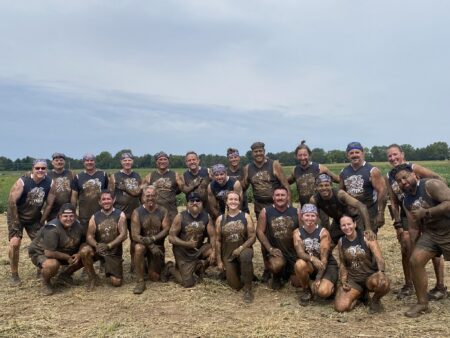
2026 Tough Nutters mud racing team FSTNR Week kick off
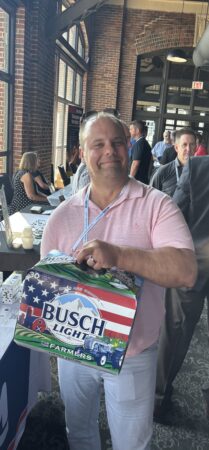
Grant Bele of MW Components takes the highly prized FTR Award at the MWFA!
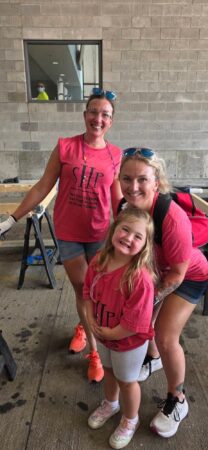
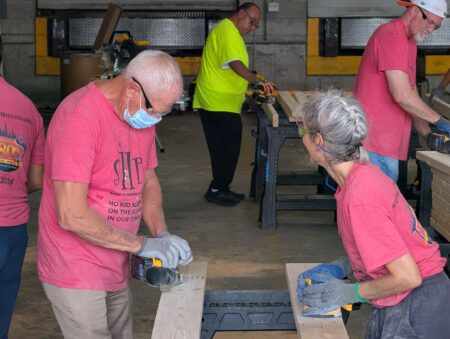
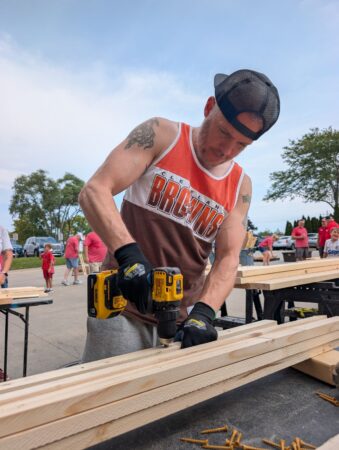
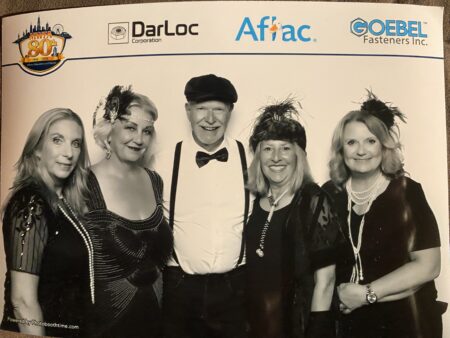
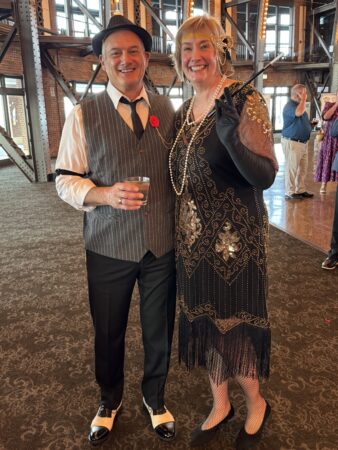
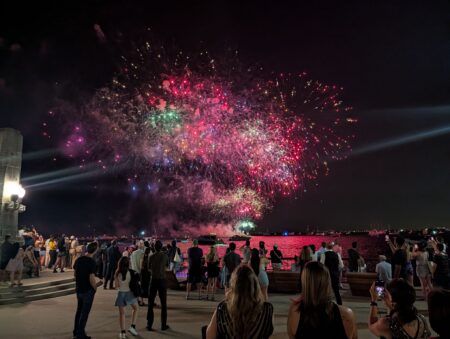
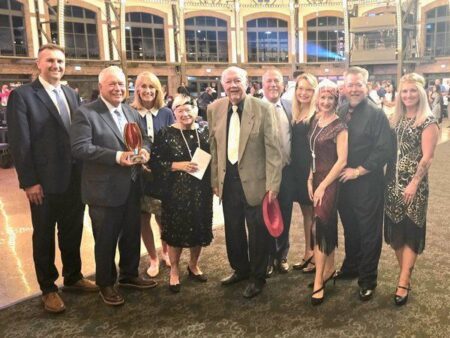
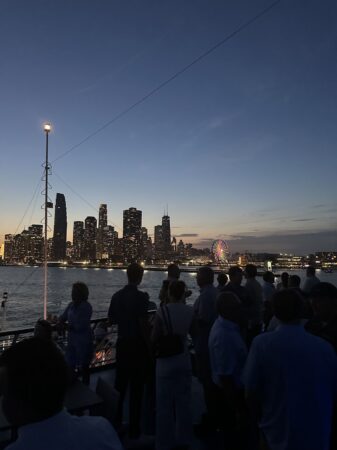
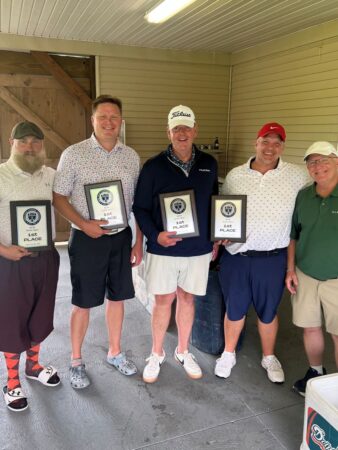
Meanwhile at the NCFA, GHIII and team BBI/Nucor take top honors at the Screw Open. I guessed correctly on the argyle socks.
Inside Episode 231
FSTNR Week and the MWFA 80th anniversary on Chicago’s Navy Pier; Hans Fuller on the August Fastener Distributor Index and the Canada tariff dispute; Justin King and Sam Aldinger on GEO and machine-readable product catalogs; Carmen Vertullo on external hydrogen embrittlement; and Marco Rodriguez on the tenant improvement allowance.
Episode 231 opens in the mud and ends with a bronze Bob Newhart. Chicago hosted FSTNR Week and the MWFA (Midwest Fastener Association) 80th anniversary celebration on Navy Pier, and Fully Threaded Radio was there for the Tough Mudder, the Sleep in Heavenly Peace bed build at SWD, the tabletop show, the golf outing and the Roaring Twenties-themed Hall of Fame dinner. Lynn Dempsey gathered a package of floor interviews from the week, and Brian Musker and Eric Dudas set the scene from their own vantage points.
The Fastener News Report with Mike McNulty carries the episode’s hardest news. Hans Fuller, managing director of Fuller Metric Parts, joins from the west coast of Canada to review the August 2026 Fastener Distributor Index, which came in at 58.3 for a 16th straight month in expansion territory, and to explain what retaliatory tariffs of 50% mean for a Canadian distributor trying to sell into and buy from the US. McNulty’s top story is Norm Fasteners acquiring a Plymouth, Michigan automotive fastener plant, and his Back Page report is a personal letter to Chicago.
The long-form feature is a conversation about GEO, the new discipline of being found by AI systems rather than by search engines. Justin King, chief AI officer at the B2B eCommerce Association, and Sam Aldinger of Highland Consulting argue that it starts with the product catalog, that the catalog has to be presented in a machine-readable form so that ChatGPT, Perplexity and other LLMs can classify it, and that a company needs a business strategy that AI accelerates rather than a separate AI strategy. They close with a preview of B2B eCommerce World, November 2-3 in Indianapolis.
Two shorter segments deliver practical technical and financial content. On the Fastener Training Minute, Carmen Vertullo follows his earlier segment on internal hydrogen embrittlement with external or environmental hydrogen embrittlement (EHE): what it needs to occur, why 410 stainless steel is a concern, and why it is more rare, more expensive, and rarely the fault of the fastener. In the Cresa Industrial Real Estate Update, Marco Rodriguez explains the math behind a landlord’s tenant improvement allowance and why it is an investment for the landlord rather than free money for the tenant. The complete transcript follows the editorial material below.
Episode 231 at a Glance
- FSTNR Week / MWFA 80th anniversary, Navy Pier, Chicago — field coverage from the Tough Mudder, bed build, tabletop show, golf and Hall of Fame dinner
- Fastener Distributor Index, August 2026: 58.3 (July: 59.9); forward-looking indicator (FLI) 56.9, down from a four-year high of 61.6 in July
- Hans Fuller (Fuller Metric Parts) on Canada and US tariffs: retaliatory tariffs around 50% and a dispute he expects to be a longer-term situation
- GEO feature: Justin King (B2B eCommerce Association) and Sam Aldinger (Highland Consulting) on machine-readable catalogs and strategy over ‘AI strategy’
- Fastener Training Minute: Carmen Vertullo on external hydrogen embrittlement (EHE)
- Cresa Industrial Real Estate Update: Marco Rodriguez on the tenant improvement (TI) allowance
- MWFA scholarship fund, the Quest for 80: Glenn Brinn reports the fund will reach 1.15 million disbursed since it started
- FNR top story: Norm Fasteners acquires a Plymouth, Michigan automotive fastener plant
- Run time: 2:34:59
What You’ll Learn
- The August 2026 FDI of 58.3 was the 16th straight month in expansion territory, but the forward-looking indicator fell to 56.9 from a four-year high of 61.6, and the six-month outlook moderated sharply.
- Hans Fuller says the tariff dispute has moved from uncertainty to a longer-term situation: Canadian retaliatory tariffs he puts at 50% make stocking parts from the US in Canada impractical, and some Canadian industries face severe pain.
- Fuller’s advice on reading the FDI: watch volume, not just price, because price increases can hide whether turnover is actually getting better or worse.
- GEO starts with the public product catalog — attributes, descriptions, images, PDFs and how-to content — and the goal is a program that makes it better every week, not a one-time fix.
- Present the catalog in machine-readable form behind the scenes so that ChatGPT, Perplexity and other LLMs see a clear path to the products; Justin King says it takes maybe a couple of hours, not an overwhelming project.
- Do not build an AI strategy; build a company strategy that includes data, governance and security, then ask what AI can accelerate. Justin King cites eighty-three percent of AI POCs sitting on the shelf unused.
- External hydrogen embrittlement needs a susceptible high-hardness material, a high load greater than 70% of tensile strength, and hydrogen from the environment; unlike IHE it can take days, weeks, months or years to occur.
- A high-strength A574 12.9 socket head cap screw unprotected in an outdoor environment is a recipe for EHE, and 410 stainless steel can be susceptible even at a lower stress level than standard steel.
- EHE cases are rarer than IHE but tend to be more expensive, and Carmen Vertullo says they are almost never the fault of the fastener itself.
- A tenant improvement allowance is an investment for the landlord: every dollar dropped in rent per square foot can lower the building’s value by twelve to seventeen dollars a square foot, while TI is a one-time capital expense that also creates a sticky tenant.
- Institutional landlords negotiate leases every day; most business owners do it once every five or 10 years — which is why Marco Rodriguez says showing up unrepresented gives away negotiating leverage.
- The MWFA Quest for 80 scholarship drive was about 94 to 96 percent of the way to $80,000, which will bring the fund to 1.15 million disbursed; donations of $1,000 or more are matched, and scholarships have never been lost in 25 years.
Featured Voices
Hosts: Eric Dudas, Brian Musker
- Lynn Dempsey: Recorded the FSTNR Week floor-interview package and the Glenn Brinn scholarship interview.
- Mike McNulty: Senior editor, Fastener Technology International; Fastener News Report.
- Hans Fuller — Fuller Metric: Managing director, Fuller Metric Parts; guest commentator on the August FDI results and the Canada tariff dispute.
- Justin King — B2B eCommerce Association: Chief AI officer, B2B eCommerce Association; the GEO conversation and B2B eCommerce World.
- Sam Aldinger — B2B eCommerce Association: Highland Consulting; fastener data consulting, homesteading, and the data side of AI adoption.
- Carmen Vertullo: Fastener Training Institute, Carver Labs, El Cajon, California; Fastener Training Minute.
- Jake Davis — BTM Manufacturing
- Marco Rodriguez — Cresa: Cresa; Industrial Real Estate Update.
Also Heard: Floor Interviews
- Heidi Voltrauer
- Anders Green — Alox
- Rich Cavoto — Metric and Multi
- Jeff Boyd — Surex Fastening Solutions
- David Gawlik
- Mike Lentini
- Mitch Hall — Allegheny Coatings
- Rosa Hearn
- TJ McFarlane
- Ebony Starks — Nucor
- Kyle Lindsley-Roach — EZ-LOK
- Carol Martinez — NBS Corporation
- Ben Belzer — EZ-LOK
- Bob Baer — Abbott Interfast
- Forrest Rogers — Brikksen
- Jennifer Ponce
- Myra Rinker — Nucor
Also Heard
- Glenn Brinn
- Emily Stays
- Nate Babbitt
- Matt Delawder — SWD
- Rob Reynolds — INxSQL
- Allison Campbell
- Kurt Zotterol
- unnamed Fastener Training Week student
Explore Episode 231
Timestamped guide to the episode. Times link to the transcript below.
- 00:00 — Cold open: show ID line (‘episode 331’ misread of 231) + Lynn Dempsey’s Tough Mudder interviews at the bed build (Forrest Rogers, Nate Babbitt, Bob Baer, Kurt Zotterol of Brikksen/Abbott; Emily Stays, Allison Campbell of SWD); Produced show intro: ‘It’s time for Fully Threaded Radio’
- 03:59 — Opening segment: Eric Dudas and Brian Musker
- 17:48 — Opening segment part 2 (‘Online Fastener Speakeasy’): Hall of Fame dinner recap; bed build at SWD (Big Steve’s BBQ, Parker, Jake Davis, Bill Davis); MWFA golf results (B&D Cold Headed Products; Rob Reynolds’ team 2nd); lead-in to Lynn’s interviews
- 24:21 — FSTNR Week floor-interview package gathered by Lynn Dempsey (bed build, Navy Pier tabletop, Hall of Fame party)
- 24:21 — Anders Green (Alox) — bed build recap
- 27:43 — Heidi Voltrauer (Volt Industrial Plastics) — boat cruise, tabletop show
- 29:04 — Fastener Training Week student (unnamed; in industry since 1998) — class with Laurence and Salim
- 30:50 — Kyle Lindsley-Roach and Ben Belzer (EZ-LOK) — new Los Alamitos location, AI/ERP, Steve Schaeffer retired
- 31:49 — Jeff Boyd (Surex Fastening Solutions / Penn Engineering) — Canadian customers and tariffs
- 33:35 — Jake Davis (BTM Manufacturing; MWFA) — week recap, golf, FTR beer award to Grant Beal, Hall of Famers
- 38:01 — Meet the Neighbors: Mitch Hall (Allegheny Coatings)
- 38:53 — Meet the Neighbors: Carol Martinez (NBS Corporation)
- 39:22 — Meet the Neighbors: Forrest Rogers (Brikksen)
- 39:54 — TJ McFarlane, Rosa Hearn, Jennifer Ponce (LindFast Group) + Mike Lentini (Spirol International)
- 42:31 — Ebony Starks and Myra Rinker (Nucor Fastener) — training class
- 43:56 — Hall of Fame party: Bob Baer (Abbott Interfast) with Mickey Baer
- 44:50 — Hall of Fame party: David Gawlik
- 45:16 — Hall of Fame party: Rich Cavoto (Metric and Multi) — 47 years, retiring
- 47:37 — Cresa Industrial Real Estate Update with Marco Rodriguez: tenant improvement (TI) allowance
- 52:32 — News-segment lead-in: Link Magazine (JC Rivet & Sales 50 years; Unthreaded column on a ‘fastener language model’); NCFA Screw Open (GH3, Dan Jerram, Aaron Palkovic, Mike Veach); FTR Award to Grant Beal; MWFA scholarship ‘Quest for 80’
- 56:42 — Glenn Brinn (Darloff Corporation, for the MWFA)
- 01:01:52 — Fastener News Report — Mike McNulty (Fastener Technology International); sponsored by Volt Industrial Plastics
- 01:01:52 — FNR open: sponsor credit; rundown (Fuller/FDI; Norm Fasteners top story; headlines; Back Page on Chicago)
- 01:04:52 — Fastener Distributor Index (August 2026: 58.3; FLI 56.9) with guest commentator Hans Fuller, managing director, Fuller Metric Parts
- 01:31:10 — FNR top story: Norm Fasteners acquires Plymouth, Michigan automotive fastener plant; FNR Fastener Newsmaker headlines (corporate and personnel); FNR Back Page: Chicago
- 01:33:52 — FNR top story: Norm Fasteners acquires Plymouth, Michigan automotive fastener plant; FNR Fastener Newsmaker headlines (corporate and personnel); FNR Back Page: Chicago
- 01:35:21 — FNR top story: Norm Fasteners acquires Plymouth, Michigan automotive fastener plant; FNR Fastener Newsmaker headlines (corporate and personnel); FNR Back Page: Chicago
- 01:41:34 — Fastener Training Minute — Carmen Vertullo: external / environmental hydrogen embrittlement (EHE)
- 01:41:34 — FTM part 1: IHE recap; introducing EHE; ‘when I return’
- 01:52:19 — Feature: Justin King (chief AI officer, B2B eCommerce Association) and Sam Aldinger (Highland Consulting)
- 02:28:22 — Closing segment: Brian and Eric
Recurring segment · sponsored by Volt Industrial Plastics
Fastener News Report: August FDI 58.3, Hans Fuller on the Canada tariff dispute, Norm Fasteners in Michigan
Mike McNulty of Fastener Technology International opens with the August 2026 Fastener Distributor Index: seasonally adjusted 58.3, just under July’s 59.9, the 16th straight month in expansion territory. The forward-looking indicator, also known as the FLI, decreased to 56.9 from a four-year high of 61.6 in July. Inside the numbers, sales took a big jump down from 82.7 to 63.8, unemployment was almost unchanged, and deliveries, inventories and pricing all went up. The six-month outlook moderated sharply. The ISM PMI dropped a little to 54.6 versus 55.6 but stayed above 50 for an eighth straight month. FDI data is collected and analyzed by the FCH Sourcing Network and Baird.
Guest commentator Hans Fuller, managing director of Fuller Metric Parts on the west coast of Canada, says his customers had an okay summer but everyone is now holding on a little bit because of the tariffs. He has shifted his own tracking toward volume rather than price, because margin can hide whether turnover is really improving. On the six-month outlook he expects Canada to be hit more severely: some industries could lose thirty percent of their sales, with job losses and possibly bankruptcies.
The tariff conversation is the heart of the segment. Fuller had thought the dispute was close to being sorted out but now expects a longer-term situation. Canada’s retaliatory tariffs, which he puts at 50%, make it almost impossible to stock parts from the US in Canada, and he describes the strangest feeling in 50 years of business: an industry that felt shared across the border now feels like maybe not. He points out that USMCA is an existing trade agreement, that the trade numbers are distorted by roughly $170 billion of Canadian oil refined in Texas, and that Bombardier employs 10,000 people building jets. McNulty sees North America as a natural trading block and a missed opportunity with no winners. Fuller’s read: things will get worse before they get better and may not return to where they were, but the dispute has also woken Canada up to being too reliant on one market.
Survey comments cover resilient data center and construction business, freight and ocean risk related to the Strait of Hormuz, and a LinkedIn post in which one Canadian company cancelled its trip to IFE in Phoenix in favor of Fastener Fair Global in Stuttgart. Fuller himself is still going to the PacWest Coastal Connection in Monterey. Fuller Metric Parts celebrated its 50th anniversary in June.
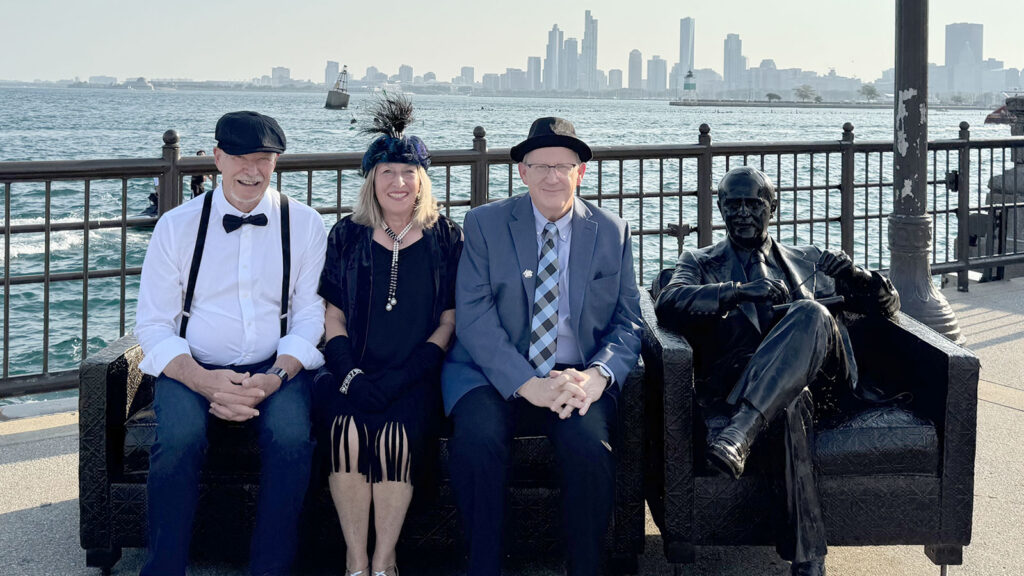
The top story: Norm Fasteners acquired a Plymouth, Michigan automotive fastener plant, a 120,000 square foot facility on a 9.4 acre site, bringing manufacturing and engineering closer to North American customers; Norm has operated in Michigan since 2018 with a Lansing regional center since 2019, began production in 1973, and employs more than two thousand people across nine countries. Newsmaker headlines include Edgewater Funds investing in Parker Manufacturing Group, Quantum Industrial Holdings acquiring Ferry Cap and Set Screw, LindFast Solutions Group launching a new digital commerce platform, AFC acquiring Signature Engineered Solutions, and a new partnership between Goebel Fasteners and SW Anderson. On the Back Page, McNulty writes a letter to Chicago: the MWFA board’s thank-you to attendees, the association’s origin as the Chicago Bolt, Nut, and Screw Association (CBNSA), and a photo with Brian Musker at the bronze Bob Newhart statue at the end of Navy Pier, arranged by Lynn Dempsey, before the Roaring Twenties-themed Hall of Fame dinner and fireworks over Lake Michigan.
I think, in our business today, you need to be flexible, you need to be able to turn on a dime. And I think for every negative there’s, there is a positive somewhere, you just have to find it.
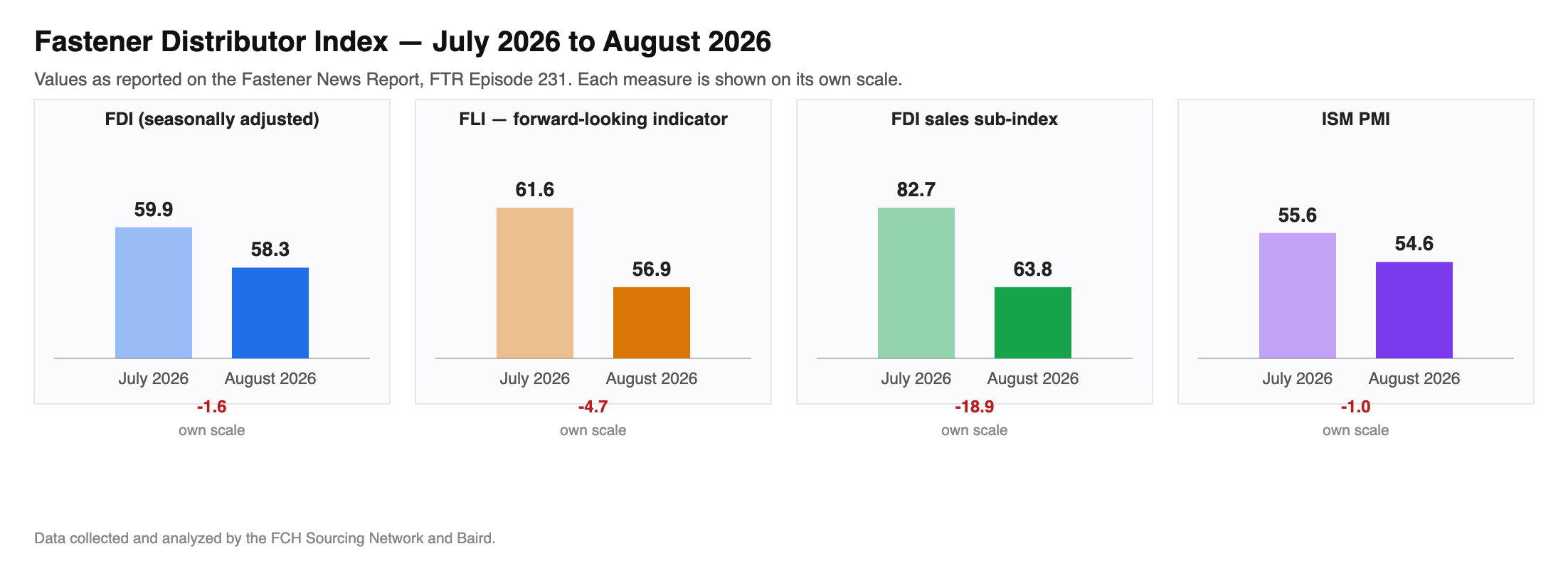
- FDI (seasonally adjusted): 59.9 → 58.3
- FLI — forward-looking indicator: 61.6 → 56.9
- FDI sales sub-index: 82.7 → 63.8
- ISM PMI: 55.6 → 54.6
- 01:01:52 — FNR open: sponsor credit and rundown
- 01:04:52 — Fastener Distributor Index, August 2026 (58.3; FLI 56.9) with guest commentator Hans Fuller — Canada tariffs
- 01:31:10 — Top story: Norm Fasteners acquires Plymouth, Michigan automotive fastener plant
- 01:33:52 — Fastener Newsmaker headlines: corporate and personnel
- 01:35:21 — Back Page: Chicago, the MWFA 80th, and the Bob Newhart statue
By the Numbers
- 58.3 — Fastener Distributor Index, August 2026 (seasonally adjusted) (01:04:52)
- 59.9 — FDI, July 2026 (01:04:52)
- 56.9 — Forward-looking indicator (FLI), August 2026 (01:04:52)
- 61.6 — FLI four-year high, July 2026 (01:04:52)
- 82.7 — FDI sales component, July (01:06:38)
- 63.8 — FDI sales component, August (01:06:38)
- 54.6 — ISM PMI, latest (01:09:46)
- 50% — Canadian retaliatory tariff rate cited by Hans Fuller (01:12:58)
- $170 billion — Canadian oil exports to the US cited by Hans Fuller (01:16:45)
- 9.4 — Size of the site at the Norm Fasteners facility in Plymouth, Michigan (acres) (01:31:42)
Terms and Technical Notes
- FDI (Fastener Distributor Index) — The Fastener Distributor Index, also known as the FDI, is collected and analyzed by the FCH Sourcing Network and Baird and seeks to identify demand, pricing and outlook trends within the American fastener distribution industry. (01:02:10)
- FLI (forward-looking indicator) — The forward-looking indicator, also known as the FLI, is reported alongside the FDI; in August 2026 it decreased to 56.9 from a four-year high of 61.6 in July. (01:04:52)
- MWFA (Midwest Fastener Association) — The MWFA was originally known as the Chicago Bolt, Nut, and Screw Association, or simply the CBNSA. (01:02:10)
Feature conversation
GEO and the machine-readable catalog: Justin King and Sam Aldinger on being found in the age of AI
Eric Dudas invited Justin King, chief AI officer at the B2B eCommerce Association, and Sam Aldinger of Highland Consulting after a run of aha moments building out the FCH system to support what he calls the new wave of search, GEO. Many in the fastener industry are still focused on SEO and their shopping carts. King’s framing: the information you hold about product content is becoming the source of truth for OpenAI, Claude and Gemini, and the algorithm appears to be shifting toward the product catalogs themselves, even the PDFs on those pages. It is moving as fast or faster than search did in the Google era.
The core premise is that it is no longer only humans reading a website; machines and agents are consuming it, and they read machine language best. King describes a small layer he built that packages his plain-language requests into JSON, which he calls simply a language computers understand, and finds it performs more efficiently, uses fewer tokens, costs less and does better. Applied to a website, human-readable content that is also presented in machine-readable form is brought in, understood and classified more easily by ChatGPT. Both guests want terms like agentic defined rather than thrown around as marketing language.
Where to start: the public product catalog on your website — attributes, descriptions, images, how-to information, PDF attachments, YouTube videos. King says now is the time to start a program that consistently makes it better, because there is no such thing as perfect content, only content that improves every week. The next step is presenting that catalog in machine-readable form, behind the scenes in the code, so that ChatGPT, Perplexity and others see a clear path to the products; he says it takes maybe a couple of hours. Aldinger cautions against throwing attributes on products with no strategy, and notes that companies adopting AI almost immediately run into problems that AI only highlights: what is our catalog, what should be on our website, what does this part mean to this customer, and how do we define a customer.
The strategy argument: King has watched companies say they missed email, YouTube, social, mobile and SaaS and vow not to miss AI, without being able to say what not missing it means. His answer is that you do not need an AI strategy; you need a company strategy that includes data, governance and security, and then ask what AI can accelerate. Building an AI strategy yields bolt-on, check-the-box solutions. He cites eighty-three percent of AI POCs sitting on the shelf, done for the purpose of doing AI rather than solving a business problem, and says his own organization runs 30 agents against its existing corporate strategy. Aldinger gives a recent example of a client requiring that AI be included somewhere in a project, which pulled focus from what they needed to do.
B2B eCommerce World, November 2-3 in Indianapolis, is previewed as the largest B2B conference in the world focused on manufacturers and distributors, with an audience about 60% industrial. Its three main threads are executive alignment, customer adoption, and AI as a thread through everything rather than a separate topic. Nick Pericle of 10xity is on the agenda. King offers VIP slots and free tickets through b2becommerceworld.org or by connecting on LinkedIn. The two agree to return for a session defining agents.
By the way, when I talk to the LLMs, I’ve moved away from just talking in plain language, and I’ve started kind of translating it to machine language because it just understands it better and faster and quicker and gets better results. So I think we’re gonna see a lot of that in the future.
By the Numbers
- 60% — Industrial share of the B2B eCommerce World audience (Justin King’s estimate) (02:19:42)
- 12 months — Acceleration Justin King uses as the test for an initiative backed by AI (02:17:29)
Field coverage · Lynn Dempsey
FSTNR Week on the floor: bed build, Navy Pier tabletop show and the Hall of Fame party
Lynn Dempsey’s interview package moves through the week: the day after the Sleep in Heavenly Peace bed build at SWD, the tabletop show at Navy Pier, and the Hall of Fame party. Anders Green of Alox recounts active rain at 8:00 AM on build day and how Matt Delawder and crew at SWD moved some 200,000 pounds of trucks out of the bays so the build could go on under cover, with slightly over 100 people on site. Jake Davis of BTM Manufacturing estimates close to 300 people at the golf outing and recaps the week for the MWFA.
From the tabletop floor: Heidi Voltrauer of Volt Industrial Plastics on the boat cruise; a Fastener Training Week student, in the industry since 1998, on how the class connects the dots between specs and test methods; Kyle Lindsley-Roach and Ben Belzer of EZ-LOK on a new Los Alamitos location; Jeff Boyd of Surex Fastening Solutions on seeing Canadian customers face to face for the first time in 10 years and the tariff situation; Forrest Rogers of Brikksen, a master distributor importing about 95% of its catalog; Meet the Neighbors with Mitch Hall of Allegheny Coatings and with Carol Martinez of NBS Corporation; the LindFast Group team of TJ McFarlane, Rosa Hearn and Jennifer Ponce, joined by Mike Lentini of Spirol, on the new website and one LSG under one roof; and Ebony Starks and Myra Rinker of Nucor on the training class.
At the Hall of Fame party, Bob Baer of Abbott Interfast, with Mickey Baer, reflects on 20 years of volunteering for the MWFA; David Gawlik is heard; and Rich Cavoto, 47 years in the industry at Metric and Multi and retiring, says longevity is paying off.
It feels awesome. So 20 years of volunteering for the MWFA, to secure a place forever, it’s really an awesome feeling. I’m happy for it, ’cause I really believe in the organization, and, I hope it goes on forever, because then I’ll be in there forever.
- 24:21 — Anders Green (Alox) — bed build recap
- 27:43 — Heidi Voltrauer (Volt Industrial Plastics) — boat cruise, tabletop show
- 29:04 — Fastener Training Week student (unnamed; in industry since 1998)
- 30:50 — Kyle Lindsley-Roach and Ben Belzer (EZ-LOK) — new Los Alamitos location
- 31:49 — Jeff Boyd (Surex Fastening Solutions) — Canadian customers and tariffs
- 33:35 — Jake Davis (BTM Manufacturing; MWFA) — week recap, golf, FTR beer award to Grant Beal
- 38:01 — Meet the Neighbors: Mitch Hall (Allegheny Coatings)
- 38:53 — Meet the Neighbors: Carol Martinez (NBS Corporation)
- 39:22 — Meet the Neighbors: Forrest Rogers (Brikksen)
- 39:54 — TJ McFarlane, Rosa Hearn, Jennifer Ponce (LindFast Group) + Mike Lentini (Spirol) — new website, one LSG
- 42:31 — Ebony Starks and Myra Rinker (Nucor Fastener) — training class
- 43:56 — Hall of Fame party: Bob Baer (Abbott Interfast) with Mickey Baer
- 44:50 — Hall of Fame party: David Gawlik
- 45:16 — Hall of Fame party: Rich Cavoto (Metric and Multi) — 47 years, retiring
By the Numbers
- 100 people — People on site for the bed build (Anders Green’s estimate) (00:25:33)
- 300 people — Golf outing turnout (Jake Davis’s estimate) (00:36:06)
- 95% — Imported share of the Brikksen catalog (Forrest Rogers) (00:39:27)
- 47 years — Rich Cavoto’s years in the industry (00:45:26)
Recurring segment · Fastener Training Institute
Fastener Training Minute: external / environmental hydrogen embrittlement (EHE)
Carmen Vertullo, from the Fastener Training Institute in Carver Labs in El Cajon, California, follows his last segment on internal hydrogen embrittlement from the plating process with the other kind: external or environmental hydrogen embrittlement, which he calls EHE. It is more rare, more insidious and oftentimes much more serious. The two types share almost everything: a susceptible high-hardness, high-strength material and a high load on the fastener, greater than 70% of the tensile strength. Fasteners are always under a tremendous load compared with other components, which is why they are the usual victims.
The difference is where the hydrogen comes from and how long it takes. IHE occurs in hours to days because the hydrogen is already there; with EHE it may take days, weeks, months or even years for enough hydrogen from the environment to get into the steel. The classic case is a high-strength socket head cap screw, A574 12.9, left unprotected outdoors — a recipe for EHE, and a case Vertullo says he is dealing with right now. These screws are often coated, for example with a dip spin coating, partly because they are used against aluminum in structural or curtain wall applications where dissimilar metals in intimate contact corrode.
410 stainless steel gets special attention: the bare-minimum stainless, iron and carbon with about 12% chromium against a 10% chromium minimum definition, with no nickel and enough carbon to be hardenable by heat treatment, unlike 304, 316, 18-8 and A2. That hardenability makes it susceptible even at a lower stress level than standard steel. Vertullo closes with some of the most expensive hydrogen embrittlement cases on record — very large bolts falling off a skyscraper in London, and the Bay Bridge in San Francisco — and the reminder that EHE tends never to be the fault of the fastener but of whoever specified or applied it.
- 01:41:34 — Part 1: IHE recap and introducing EHE
By the Numbers
- 70% — Load threshold (share of tensile strength) for hydrogen embrittlement risk (01:44:12)
- 12% — Chromium content of 410 stainless steel (01:49:37)
- 10% — Minimum chromium to be defined as stainless steel (01:49:37)
Terms and Technical Notes
- EHE (external hydrogen embrittlement) — External hydrogen embrittlement, also known as EHE, differs from internal hydrogen embrittlement from plating in that the hydrogen comes from the environment over time; it is more rare but oftentimes much more serious. (01:42:16)
Sponsored feature · Cresa Industrial Real Estate Update
The tenant improvement allowance: why landlords fund your build-out, and what it costs you
Marco Rodriguez of Cresa takes on one of the biggest items on a landlord’s lease proposal: the tenant improvement allowance, or TI. A proposal might offer fifty thousand or even five hundred thousand in TI depending on the building, and it is tempting to see it as free money, but landlords do not write checks out of generosity. To an owner, TI is an investment, not an expense: landlords prefer cutting a check for construction over discounting base rent, because every dollar dropped in rent per square foot can lower the building’s value by twelve to seventeen dollars a square foot when they refinance or sell, while TI is a one-time capital expense.
TI also creates a sticky tenant — like a VMI program for fasteners — because a space customized to your operations, from upgraded power to an air-conditioned quality lab, raises your cost to move; and standard upgrades such as LED lighting, modern HVAC and heavy electrical panels enhance the building. His closing point: institutional landlords and listing agents negotiate leases every single day, while most business owners do it once every five or 10 years, and showing up unrepresented lets the listing broker keep the entire fee and leaves your primary negotiating leverage on the table.
I was talking to a fastener business owner with a single location the other day, and he asked a very good question: Why would a landlord willingly fund my custom build-out? The answer is because to an owner, TI is an investment, not an expense. First of all, landlords almost always prefer cutting a check for construction rather than discounting their base rent.
By the Numbers
- 10 years — How often most business owners negotiate a lease (per Marco Rodriguez) (00:50:53)
Terms and Technical Notes
- TI (tenant improvement) — The tenant improvement allowance, or TI, is the amount a landlord’s lease proposal offers toward the tenant’s build-out; the landlord treats it as a one-time capital expense and an investment rather than a rent discount. (00:47:37)
Association news
The MWFA scholarship fund and the Quest for 80, NCFA Screw Open results, Link Magazine and the FTR Award
Before the news, Eric and Brian run through the new issue of Link Magazine — cover story JC Rivet & Sales at 50 years, FCH members for about 20 of them, and Eric’s Unthreaded column on the FCH scrubber software as what he calls a fastener language model — plus golf: the NCFA Screw Open, won by GH3 and Dan Jerram of Brighton Best with Aaron Palkovic and Mike Veach at Nucor, and congratulations to Grant Beal on the FTR Award at the MWFA.
Lynn Dempsey’s interview with Glenn Brinn of Darloff Corporation, recorded at the bed build, covers the MWFA scholarship fund and its Quest for 80. After giving out $50,000 at last year’s scholarship dinner, the drive was about 94 to 96 percent of the way to $80,000; reaching it means about 25 named scholarships of $1,500 to $6,000 and a total of 1.15 million disbursed since the fund began. Donations go through mwfa.org, anything $1,000 or more is matched, awards can be used at a junior college, four-year university or trade school within 18 months, and in 25 years the MWFA has never lost one.
- 56:42 — Glenn Brinn (Darloff Corporation, for the MWFA) — scholarship fund Quest for 80
By the Numbers
- $50,000 — Scholarships given out at last year’s MWFA scholarship dinner (00:56:59)
- $80,000, — Quest for 80 target (00:56:59)
- 1.15 million — MWFA scholarship fund total disbursed once the target is reached (00:57:38)
- $1,000 — Donation threshold for matching (00:58:49)
- 25 years — Years the MWFA scholarship program has run without losing a scholarship (01:00:18)
Related FTR / FCH Resources
- Fastener Technology International (FTR partner page)
- Cresa (FTR partner page)
- Volt Industrial Plastics (FTR partner page)
Complete Transcript — Episode 231
Verbatim Descript transcript. Headings mark approved segment boundaries; speaker names appear only where evidence resolves them.
00:00 — Cold open: show ID line (‘episode 331’ misread of 231)
[00:00:00] Speaker: It’s Fully Threaded Radio, episode 331
[00:00:04] Lynn Dempsey: Oh, wow. Okay, I’m over here. We’re almost ready to do Build a Bed, and before that I’m talking to some of the Mudder guys. I’m here with…
[00:00:11] Speaker 3: Forrest Rogers, Brickson.
[00:00:13] Nate Babbitt: Uh, Nate Babbitt from Brickson.
[00:00:15] Speaker 3: Bob Baer from Abbott. Kurt Zotterol from Brickson.
[00:00:18] Lynn Dempsey: How was the Mudder?
[00:00:19] Speaker 3: You can skip Kurt ’cause he skipped the Mudder, so I’ll- I’ll take that.
[00:00:23] Speaker 3: Oh. Uh, the Mudder was a blast. Um, it was my first run this year. I really enjoyed it. I am very sore, I must say. I hope it doesn’t spoil my golf game tomorrow, but had a great time. Uh, loved the people. Had a, had a great, uh, camaraderie with all the guys there. It was a lot of fun.
[00:00:38] Nate Babbitt: What a great event. So much fun.
[00:00:40] Nate Babbitt: Everybody just dove right in the mud, got covered head to toe. Uh, you just can’t beat it.
[00:00:46] Lynn Dempsey: Okay, now the one true way I know that you guys all did the Mudder is you show me your knees, ’cause your knees, uh, Eric’s knees are all cut up and everything. Oh, yeah. Yeah. Yeah. Yeah. Elbows. All right, Bob. Favorite obstacle.
[00:01:01] Mike Lentini: Wow, favorite. Well, I have to say, I missed the ice bath this year. I would’ve loved to have been in that yesterday. Um, the toughest one was the, was the six mud mounds that we had to go through. I think that’s where we all got our road rash. I don’t know if there’s a favorite. They’re all, they were all pretty tough.
[00:01:18] Nate Babbitt: All right, Kurt. Uh, the, the mud mounds were my favorite, ’cause we ca- everybody came out of that covered head to toe in mud. I mean, like, completely covered in mud, like sunblock.
[00:01:28] Speaker 3: Forrest. Uh, my favorite was probably the Funky Monkey, which is, uh, monkey bars on steroids, kinda like an American Ninja Warrior thing, so I made it three quarters of the way, so I’m proud that I made it that far.
[00:01:40] Lynn Dempsey: And then you dropped in the water, if I remember, Nate. Yeah.
[00:01:44] Speaker 3: Ninja. I didn’t wanna injure my shoulder. That was the only reason I dropped off.
[00:01:48] Lynn Dempsey: So big question, would you do it again?
[00:01:50] Speaker 3: Absolutely. No doubt, 100%.
[00:01:52] Lynn Dempsey: 100%, all in.
[00:01:53] Mike Lentini: I know you don’t have to ask me. Yeah,
[00:01:54] Lynn Dempsey: yeah, yeah. Bob, if, if, we wouldn’t have a Mudder if we didn’t have Bob, so how about you?
[00:01:59] Lynn Dempsey: You gonna do it next year?
[00:02:00] Speaker 3: I, I’ve been guilted into it. I will have to do it next year. One year to prepare. A whole year. Come on.
[00:02:07] Lynn Dempsey: All right. You know it. We’ll be looking for you then. All right, thanks, fellas. All right, we’re still at Build a Bed. We’re waiting for everything. There was a little rain delay.
[00:02:15] Lynn Dempsey: And now I’m with two more mudders. I’m with …
[00:02:18] Emily Stays: Emily Stays,
[00:02:19] Lynn Dempsey: SWD.
[00:02:20] Emily Stays: Allison Campbell, also with Emily from SWD.
[00:02:24] Lynn Dempsey: All right. Allison, come on closer here so we get y-
[00:02:27] Emily Stays: I’m her guest.
[00:02:27] Lynn Dempsey: Yes. All right. So tell us, how was the mudder?
[00:02:30] Emily Stays: It was a lot of fun, actually. Yeah. Yeah.
[00:02:32] Lynn Dempsey: Got a little dirty.
[00:02:33] Emily Stays: Yeah. Yeah. A little dirty, a little scratched up, but it was fun.
[00:02:36] Emily Stays: A lot of cool obstacles, a lot of mud, um, but it was a good time. Okay.
[00:02:41] Lynn Dempsey: I would do it again. All right, and you’d do it again?
[00:02:43] Emily Stays: Oh, absolutely.
[00:02:43] Lynn Dempsey: All right. So what obstacle do you not want to see again?
[00:02:48] Emily Stays: Ooh, good question. Um, for me, the one that you had to swim underneath the fencing in the water, in, like, the mud water, and you had to crawl to the end was kind of a little scary.
[00:02:59] Emily Stays: So I could, I could deal without that one again.
[00:03:01] Speaker 7: Okay. Mine was, uh, the, the slanted wall where you had to use other people to climb up to the top. Um, when you’re covered in mud and people abandon their posts and you just get to slide back down and get all these lovely scrapes and scratches, yeah, I could do without that one.
[00:03:19] Speaker 7: All
[00:03:19] Emily Stays: right.
[00:03:19] Lynn Dempsey: But you would both do it again?
[00:03:21] Speaker 7: Yep. In a heartbeat.
[00:03:22] Lynn Dempsey: 100%. All right. Yeah. And we’ll see you next year.
[00:03:24] Speaker 7: Absolutely. Yes.
03:35 — Produced show intro: ‘It’s time for Fully Threaded Radio’
[00:03:35] Lynn Dempsey: It’s time for Fully Threaded Radio
03:59 — Opening segment: Eric Dudas and Brian Musker
[00:03:59] Eric Dudas: It is Fully Threaded Radio, voice of the FCH Sourcing Network. If you buy, sell, manufacture, import, distribute industrial threaded fasteners, this is the podcast for you. And this time we’ve got another compendium of predominantly fastener-related info, commentary, and minutia for you Thanks for clicking in, everyone.
[00:04:20] Eric Dudas: Eric Dudas with you, and as always, the co-host of Fully Threaded is with us as well, coming to us from his sweet home, Chicagoland adopted home
[00:04:31] Brian Musker: Yeah
[00:04:32] Eric Dudas: It’s Brian Musker. Hey, Bri. Doing all right?
[00:04:35] Brian Musker: I’m doing great, thanks. I’m now rested after a pretty hectic week from Fastener Week, and, um, everything’s good.
[00:04:44] Eric Dudas: Fastener Week 2026 was a huge success. The MWFA celebrated its 80th in high style out there on Navy Pier in downtown Chicago, Illinois. We’ve got quite a bit of coverage on that today, and we open the podcast with, I guess, the unofficial opening of Fastener Week, Bri, that being the mud race. Yeah. So glad you and the lovely and talented Lynn Dempsey were out there again cheering us on.
[00:05:12] Brian Musker: Oh, it was sort of a fun day actually. I’m glad I wasn’t actually running in it, but- … lots of people looked like they got through, although there was a fair amount of mud around this time.
[00:05:23] Eric Dudas: Yes, we made it through again somehow. Every year’s a little different. This one was a lot of fun. We’ll talk about that a little bit, too, on the episode.
[00:05:31] Eric Dudas: We’ll actually start the podcast off today with a package of sound that the lovely and talented Lynn Dempsey gathered for us as Fastener Week progressed in our usual semi-comprehensive coverage fashion. It’s just a taste, folks. You had to be there really, and sadly, I only hit the first couple of events, had to duck out.
[00:05:50] Eric Dudas: I’m so glad that you and Lynn were able to be at the tabletop and, of course, the extravaganza in the grand ballroom out there on Navy Pier, Bri.
[00:05:58] Brian Musker: The extravaganza dinner was so well organized, and, um, set in sort of ’20s, though it was not really meant to be the, uh, Al Capone era, but it sort of influenced everything that people wore.
[00:06:16] Eric Dudas: Right. That’s what people always think of. 1920s, too, by the way, folks, not 2020s.
[00:06:20] Brian Musker: Yeah, 1920s. You’re right. I wasn’t… I was just one of the, the mob’s drivers. I was a rather minor character.
[00:06:30] Eric Dudas: We have a great shot of you and Lynn and Mike McNulty out there on Navy Pier as the cover art for this one. We’ll put a couple more photos in the show notes, but yeah, it was really cool that so many people decided to play along and get dressed up.
[00:06:43] Eric Dudas: I guess about 300 or so people attended that event, and again, we’ll cover more of that later. I should have said, on this, episode 331 of Fully Threaded Radio, we’ll be publishing this time on or about September 15th, 2026. And since that is the year, it’s not 1926.
[00:07:03] Brian Musker: Right.
[00:07:04] Eric Dudas: Most of you know that we’re operating in the digital era, and now the era of AI If you’re wondering what that means for your business, so is everyone else.
[00:07:13] Eric Dudas: Don’t worry. We’ve got a feature today that touches on a very important point if you’re trying to do anything online anymore. The whole game has changed. Sam Aldinger, he’s an independent consultant these days doing fastener data consulting, along with Justin King. He’s chief AI officer over there at the B2B eCommerce Association.
[00:07:35] Eric Dudas: They’re gonna jump on with me to talk about the big changes affecting internet SEO. That used to be search engine optimization. Well, now it’s GEO. That’s the new game in town.
[00:07:46] Brian Musker: Okay. So what does GEO stand for?
[00:07:48] Eric Dudas: Well, you’re gonna find that out right after you hear this.
[00:07:52] Brian Musker: Okay.
[00:07:52] Eric Dudas: Right. But broadly speaking, it’s the way your website turns up in the LLMs and the AIs, you know?
[00:08:01] Eric Dudas: Generative engine optimization.
[00:08:04] Brian Musker: Really? Okay.
[00:08:05] Eric Dudas: All right. You’ll learn more about that during the feature today.
[00:08:08] Brian Musker: Yeah, probably need to.
[00:08:09] Eric Dudas: You and everyone else.
[00:08:10] Brian Musker: Yeah.
[00:08:11] Eric Dudas: It’s pretty big. Also big is the latest tariff brouhaha with our friends to the north up in Canada. On the Fastener News Report today, Canadian Hans Fuller of Fullermetric joins Mike McNulty.
[00:08:23] Eric Dudas: They kick around the FDI, which is still pretty vibrant. Dipped a little, you’ll hear. Nothing too dramatic, but the big news is what’s going on with the whole tariff situation. And as you’re probably aware, if you’ve heard Hans before, he’s got certain thoughts on all that. Don’t miss it. Mike then will wrap up the news report with his take on Fastener Week and his feelings about his dreams of having a sweet home Chicago.
[00:08:53] Eric Dudas: That’s the Fastener News Report. On the Fastener Training Minute today, Carmine Vertullo continues his discussion on hydrogen embrittlement, this time looking at external HE. I know there’s a lot of HE fans out there in the audience. You’ll be real happy to hear this one. Plus, Marco Rodriguez is back with another commercial real estate update.
[00:09:13] Eric Dudas: This time he’s gonna talk about something called tenant improvement allowance, so if it’s coming up on your lease renewal time and you haven’t heard about that, better make sure to listen to Marco today. Better yet, reach out Marco Rodriguez on linkedin.com. He can steer you in the right direction. Grab some of that cash that’s available to you while you still got the leverage.
[00:09:34] Eric Dudas: All coming your way, folks, for the low, low price of absolutely nothing, courtesy of our partners, the title sponsors of Fully Threaded Radio, Briton Best International. Tested, tried, true, Briton Best. And Linfast Solutions Group, shoplinfastgroup.com is the new omnichannel way to get in touch with them.
[00:09:55] Eric Dudas: Linfast Solutions Group. Fully Threaded Radio is also sponsored by Buckeye Fasteners and the Ohio Nut and Bolt Company, BTM Manufacturing, Eurolink Fastener Supply Service, Endries International, Global Fasteners, InSQL Software, Fastener Technology International, Jay Lanfranco, MW Components, 3Q Inc, The Industrial Fastener Expo, Cressa, Volt Industrial Plastics, and Wurth Industry USA.
[00:10:24] Eric Dudas: Our email address is ftr@fullythreaded.com. Let us know what you think of the podcast, and if you’re a Spotify or Apple Podcast listener, please rate the show, throw a comment at us. We appreciate that Harpo agrees.
[00:10:41] Brian Musker: And I said, so I said free is good. But free is really only possible because we have these terrific sponsors.
[00:10:48] Brian Musker: Had them for years. We’ve become friends with them. We know them. We love to see them at their shows, so we’re very lucky and so are you. If you’re thinking of fasteners, think of them first, okay? I
[00:10:58] Eric Dudas: was talking to Tony Martinez over at Buckeye, and speaking of shows, he’s got a couple of new flavors of the chapstick that they hand out at their booth.
[00:11:07] Eric Dudas: So- … Buckeye chapstick, a big show favorite. Don’t miss it.
[00:11:11] Brian Musker: Yeah, right.
[00:11:13] Eric Dudas: Exotic flavors coming your way out in Phoenix, where I guess you really need it, right?
[00:11:18] Brian Musker: Yeah. Dry air.
[00:11:21] Eric Dudas: Of course, Vegas was no slouch for that either. I always used to make sure I had the Gold Bond powder packed when we headed out there. All right.
[00:11:28] Eric Dudas: IFE, the International Fastener Expo, might as well mention it right now. That’s coming up on October 7th through the 9th. I’m looking forward to it, Bri. I don’t think we mentioned this previously on the podcast at least, but I’m gonna have the chance to participate in a couple of panels at the breakout stage, whatever they’re calling it this year.
[00:11:48] Eric Dudas: One of them is with our friend Anders Green. We’ll be talking about AI in the fastener industry, and Brandy Bertoia from InSQL Software will also be on that panel. We’re gonna wrestle with a few of the headline issues that everybody’s thinking about in the fastener industry as they relate to AI. Should be a good time.
[00:12:06] Brian Musker: Cool.
[00:12:07] Eric Dudas: The other one is a marketing panel that will involve Joe Shoemaker with AFC. Sadly, Rosa got pulled out of this one. She’s not gonna be able to make it out to Phoenix this year.
[00:12:19] Brian Musker: Really? Okay.
[00:12:20] Eric Dudas: So I’m not sure how that one’s gonna be set up, but it’ll be good. Joe’s an ace. Fastenershows.com is the place to check out for more info on all that.
[00:12:29] Eric Dudas: Like to thank Würth Industry. They are the presenting partner sponsors of this event, and I noticed that on the 7th, which is when they’re having the big IFAS educational series, that’s the day before the show opens, Bri?
[00:12:44] Brian Musker: Mm-hmm.
[00:12:44] Eric Dudas: Würth people are well-represented. Dee Ward will be speaking, as well as Danielle Riggs.
[00:12:50] Eric Dudas: They’ve both been on the podcast before. Check them out at IFE on October 7th.
[00:12:55] Brian Musker: Cool. We’ll be setting out our booth for a start, but I’m sure that’ll be finished by then
[00:13:01] Eric Dudas: And I saw a post fly by, Brian, on LinkedIn that had the Stealthfast monkeys on there, but now of course they’re the Linfast Group monkey.
[00:13:09] Eric Dudas: And I’m not sure if it was just a graphic that was showing the possibilities of what might be coming, or if they’re gonna have all these different monkeys. They had all these different logos on it. I don’t exactly know what they have lined up, but again, suspense for one more reason to get out to Phoenix this year.
[00:13:25] Eric Dudas: But you don’t have to wait any longer to see the new shop.linfastgroup.com omnichannel website, because it’s out there. They launched September 1st. We’re gonna be talking more about this in depth on a later episode, but I wanna throw it out there right at the top. We’re very excited to see this development, and a lot of people are out there banging away on it.
[00:13:48] Eric Dudas: Like all tech releases, you know, I’m sure they have a few things to iron out as they go along, but this is a major milestone. And reading the press that they put out, it’s pretty obvious that what they’re trying to do with this, Brian, is not eliminate their more traditional-minded customers. They’re trying to really keep everything kind of the way it has been, just add this as another very comprehensive digital layer on top, where you can actually work with the three big names that Linfast Group has been known for, you know?
[00:14:19] Eric Dudas: You need stainless, you need regular old conventional cap screws, you need metric, get it all one place.
[00:14:24] Brian Musker: Yeah, as we know with some pain in the past, it’s sorta hard to introduce a new website.
[00:14:30] Eric Dudas: It is a major undertaking even in the best of situations. So congratulations, Linfast Group. A lot of hard work coming out right here.
[00:14:38] Eric Dudas: And again, it’ll be ongoing, but it’s a huge step.
[00:14:42] Brian Musker: Yeah, it is.
[00:14:43] Eric Dudas: All right. When we return, we will dig into Fastener Week. And before anybody asks or gets worried, don’t worry, we’re going to dedicate a full episode very soon to cover the mudder in depth because there were so many people who wanted to contribute, and we could spend easily the whole episode just talking about that.
[00:15:06] Eric Dudas: It was such a blast this year, and as usual, a few surprises and memorable things. But anyway, we’ll wait till everybody’s finally got all the mud out of all their crevices, and then we’ll, uh,
[00:15:18] Brian Musker: All right …
[00:15:18] Eric Dudas: regroup and do a special on that one. But for now, we’re gonna cut to a quick break, and when we return, we’ll put a wrench to this one.
[00:15:26] Speaker 10: Right.
[00:15:27] Eric Dudas: Thanks for clicking in, everyone. It’s Fully Threaded.
[00:15:30] Brian Musker: Radio.
15:33 — Produced show-ID bumper: ‘Coming to you across the vast audio radiance of the internet… Fully Threaded Radio’…
[00:15:33] Speaker 10: Coming to you across the vast audio radiance of the internet, it’s the voice of the FCH Sourcing Network, Fully Threaded Radio
15:45 — Commercial break 1
[00:15:45] Speaker 11: Hi, I’m Linda from Lindfast. If you’ve ever wished you could do business with more of our family in one place, now you can. At lindfastgrp.com, you’ll find Lindstrom Fasteners, Stelfast, and Star Stainless Screw Company together in one online marketplace. The same trusted brands, the same great service, just an easier way to shop, check inventory, and find the solutions you need.
[00:16:09] Speaker 11: Talk to your LSG representative about getting registered and see how easy it is to connect with the Lindfast family online. Lindfast Solutions Group, one family, endless solutions.
[00:16:24] Speaker 12: From thousands of in-stock fasteners, including NAS and MS hardware to custom parts built to your specifications, MW Components delivers. With US manufacturing across eight locations, we offer cold heading, precision machining, fully custom solutions, and engineering support for challenging applications.
[00:16:42] Speaker 12: From rapid prototyping to full production, we deliver the capabilities and skill for your most demanding needs. Learn more at mwcomponents.com/fasteners.
[00:16:52] Speaker 13: Need impact and standard sockets? Bright and Best has you covered. Renowned for quality products, Bright and Best sockets have the durability and quality you need with high-strength steel construction and a lifetime warranty helping you conquer any job.
[00:17:07] Speaker 13: From heavy-duty applications to general use, BBI has a full range of inch and metric sockets in stock. Available now. Visit brightonbest.com or call for large inventory, quality service, and fast delivery. Bright and Best, a partner you can count on
17:30 — YLT: Matt Delawder from SWD, home of the Black Ox (heard ‘Matt Delawder’)
[00:17:30] Matt Delawder: Hi, this is Matt DeLoder from SWD, home of the Black Ox. You’re listening to Fully Threaded Radio with your friends Eric and Brian
17:48 — Opening segment part 2 (‘Online Fastener Speakeasy’): Hall of Fame dinner recap
[00:17:48] Eric Dudas: Brian and Eric back with you on the Online Fastener Speakeasy
[00:17:55] Brian Musker: They don’t have too many of those in Cleveland, okay? I think there are more of them over here.
[00:18:01] Eric Dudas: GQ told me that Charlie Kerr called him up ahead of this thing and asked him if he could bring inside a violin case an actual Tommy gun.
[00:18:14] Eric Dudas: Yeah, Bob told him, “Nah, you probably shouldn’t do that. You know, it’s Chicago. Maybe in the 1920s, but not now. Doesn’t go over that well.”
[00:18:23] Brian Musker: Right.
[00:18:26] Eric Dudas: Charlie’s such a perfectionist, you know? He’s gotta have all the props down to the finest detail.
[00:18:31] Brian Musker: I saw him wandering around. He was in his dark suit and all done up.
[00:18:36] Eric Dudas: Well, it looks like you guys had a lot of fun, and in just a minute we’re going to play a package of interviews that the lovely and talented Lynn Dempsey gathered during Fastener Week. Again, it’s just a survey. We really didn’t do much to cover the whole lake cruise part of the thing, but that was a big success, too.
[00:18:56] Eric Dudas: They had a couple of hundred people out there. Congratulations all around to the MWFA board, and also on the 80th anniversary.
[00:19:04] Brian Musker: And I’d say probably m- I’m sure it was Matt’s idea, but the idea of dressing up in, in, uh, an outfit relative to the ’20s, and the really amazing thing is the number of people who really went out of their way to get dressed up, and this p- it was amazing.
[00:19:22] Brian Musker: Right. And I would say some of the… You know, in those days, the men were pretty boring. They just had either pinstripe or black suits, but the women’s outfits in the ’20s were really extravagant, and that was reflected in the people who, you know, turned up for the, uh… among the 300 people for the, for the, you know, dinner.
[00:19:42] Eric Dudas: Yeah, who would’ve thought so many of them had flapper dresses hanging in the closet?
[00:19:47] Brian Musker: Oh, yeah. I mean, Heidi had an amazing dress. Actually, everyone had amazing dresses. That was pretty cool.
[00:19:53] Eric Dudas: Plus the hats. I
[00:19:55] Brian Musker: mean, they had… Their hats were d- sort of different to what they wore for in the ’20s, but it was, uh, it was very cool all around, okay?
[00:20:03] Eric Dudas: Well, so appropriate for the MWFA, the best dressed of all the fastener associations. Which we’ve said many times on this podcast. Couple of points to bring out before we jump into these interviews, Bri. Course, as we said, the first day unofficially was the mud race on that Saturday, and then on Sunday was the Sleep in Heavenly Peace bed build.
[00:20:29] Eric Dudas: Always an interesting time. They had a great turnout this time at SWD, and I’d like to thank Matt DeLaughter especially for hosting, and he did the NFBBQA proud, Bri, because they served a fantastic barbecue buffet as we were wrapping up. Matt knows a lot of people in Chicagoland, and he’s got a buddy who runs Big Steve’s Smoke ‘Em and Choke ‘Em Barbecue
[00:20:56] Brian Musker: Yeah.
[00:20:57] Eric Dudas: And I don’t know how many pounds of brisket they laid on everybody, but they had chicken as well, plus all the fixings, smoked mac, cornbread, you name it. It was fantastic. Really appreciate that, Matt.
[00:21:09] Brian Musker: Yeah, it was, it was good. Good. Especially after… Well, it was… We did a lot of beds, okay? And it was very, very well organized, and so normally you just sort of slink away ’cause you’re sort of tired after standing up for five hours with a sander in your hand.
[00:21:27] Brian Musker: This time we could just sit down and have barbecue. That was cool.
[00:21:30] Eric Dudas: That’s true. And there was a great group of people who turned out. It’s one of the side benefits of participating in these charity events. You meet really interesting people. Had a chance to say hi to the Sims and Specials crew. Bruce and Kelly were there.
[00:21:45] Eric Dudas: Good to see them. Also Brian, we’ll be having him on the podcast, I’m sure. He’s the new president over there. Plus, Team Parker showed up for the race, and then for the bed build. Robert and Ashley, you guys were looking great out there on the course, and of course, like all of us, sweating your guts out while we were
[00:22:05] Eric Dudas: working away the next day. Of course, Parker Fasteners is huge into supporting Sleep in Heavenly Peace, so-
[00:22:12] Brian Musker: Yeah …
[00:22:12] Eric Dudas: not a big surprise. Jake Valdez Davis kept the whole thing rolling along. Unbelievable how much work you put into that, Jake, and lots of other folks as well. Hey, did you see Bill Davis with Bright and Best there?
[00:22:25] Eric Dudas: I saw him working the drills. He was wearing a tank top, and he’s been doing some training, Bri. We gotta get him on the mud team. Did you see the pipes on that dude?
[00:22:36] Brian Musker: I wasn’t looking around at men, okay?
[00:22:39] Eric Dudas: Yeah, always thought he was kind of a little guy, you know? But he was really showing off the guns on this one.
[00:22:44] Eric Dudas: He’s got a little new ink on there, too. Looking good there, Bill. Well, these are all parts of Fastener Week, the week with no vowels.
[00:22:52] Brian Musker: Yeah.
[00:22:53] Eric Dudas: But one of the main events also is the industry’s largest golf event, and I’ve got some results for you. This year they had 224 participants covering two courses out there at Cog Hill Golf and Country Club.
[00:23:07] Eric Dudas: First place team this year, B&D Coldheaded Products.
[00:23:13] Brian Musker: Cool.
[00:23:13] Eric Dudas: Yeah. Okay. We’ve, we’ve heard those guys take it before. They’re always near the top. The team of Jack Dobek, Eric Mason, Jim Quick, and Todd McRoberts. Todd, I didn’t know you was on that team. Good for you. Good to see his name on that roster.
[00:23:29] Eric Dudas: Congratulations, gentlemen, the MWFA 2026 golf outing champions. Second place, so close yet so far, guys, none other than our own from InSQL Software and the NFBBQA, Rob “Big Country” Reynolds. He was joined with LSG’s Brian Wheeler, plus Anthony Gallo and Morgan Wilson, who is hawking IT services for WTC these days, I heard, Bri.
[00:23:58] Brian Musker: Yeah, had a talk to him at the tabletop show.
[00:24:00] Eric Dudas: Few scratch golfers on that team, no slouches. Yeah. In a field of 224, second place is very impressive. Good job, guys. All right, there’s so much to cover, but I guess we’ll just jump into Lynn’s interviews here, give y’all a flavor of it. This year’s MWFA Fastener Week, what a blast.
[00:24:19] Eric Dudas: Oh, yeah.
24:21 — FSTNR Week floor-interview package gathered by Lynn Dempsey (bed build, Navy Pier tabletop, Hall of Fame…
24:21 — Anders Green (Alox)
[00:24:21] Lynn Dempsey: All right. It’s the day after the Build a Bed over at, um, SWD, and I’m talking with
[00:24:28] Anders Green: Anders Green from Alox.
[00:24:30] Lynn Dempsey: Yes. So Build a Bed, we worked hard?
[00:24:33] Anders Green: Oh, I mean, absolutely. Everyone was, was working hard. The, the first challenge that we had to overcome was, was the weather, and there was active rain early in the morning before we got started, like, at, at 8:00 AM.
[00:24:45] Anders Green: So there was definitely a worry about how we were gonna pull off this operation. The folks over at SWD, Matt DeLaughter and crew, uh, very resourceful. They moved probably some 200,000 pounds of trucks out of some bays, and that let the SHP people set up indoors, or at least covered. So that was a fantastic recovery from what could have been a, a little bit of a dicey start.
[00:25:12] Lynn Dempsey: Yeah. Angie was telling me that, um, Angie being Matt De- DeLaughter’s, uh, wife, uh, she was telling me the truck driver, uh, came in early, and I can’t remember his name, and I’m sorry ’cause I did go up and thank him. He and his wife came in early. They live over in Lockport, and they came in early to move all the trucks, and then he stayed and built beds.
[00:25:33] Anders Green: That’s, that’s awesome. I, I saw a lot of those, uh, folks that were, that were on site that seemed to be participating. Uh, and, um, I, I asked about the count. It seemed that we had maybe slightly over 100 people, uh, on site, uh, for the whole event. So, uh, and, you know, they, they brought in the, the box truck with generators and tool chests and, and probably 150 batteries to run everything.
[00:26:00] Anders Green: Um, it was pretty cool. It was slightly different than last year. Uh, the beds are the same, but this was a, I think, a different chapter maybe that we were, we’re working with, and some of the processes were a little bit different. Uh, they were doing some of the strapping in advance, where they strap down the, the bed boards that go into the frame.
[00:26:20] Anders Green: Um, and I was working on drilling holes into the ends of some of the frames, and what I noticed was they had some cool 3D-printed, uh, jigs that we were using for that. So some custom tech work that those guys have invested in. Pretty cool.
[00:26:36] Lynn Dempsey: Well, I start off helping the sanders, not sanding, but bringing in the wood.
[00:26:39] Lynn Dempsey: And then when dipping starts, I go to dip, and if I don’t dip it, I don’t see it, so that’s news to me.
[00:26:46] Anders Green: I think everyone’s, uh, attention gets lost to right about when the ice cream truck shows up. Yes. So, uh, and, uh, then the SWD people put together, uh, a big, uh, barbecue in the back. There was- Yeah … there was brisket, there was, uh, grilled chicken and, uh, baked beans and mac and cheese.
[00:27:04] Anders Green: So delicious finale.
[00:27:05] Lynn Dempsey: Yeah. That was Matt DeLauter’s friend, which I’m sure Matt will be on, and he’ll talk about his friend and everything. Yeah, that was good brisket.
[00:27:12] Anders Green: Uh, you know, the whole team, great work, uh, getting everything, uh, organized. Uh, you know, Jake was, uh, running the microphone and keeping us all on task.
[00:27:21] Anders Green: Mm-hmm. So, uh, excellent work really by, by the whole crew in making that event happen.
[00:27:25] Lynn Dempsey: Yeah. And that’s true. And a shout-out to Francesca and Jill. They were there- Mm-hmm … organizing and, and I’m sure they organized the ice cream. Women think of ice cream. So a s- a big shout-out for them. E- everybody over at Midwest, they did a great job.
27:43 — Heidi Voltrauer (Volt Industrial Plastics)
[00:27:43] Lynn Dempsey: All right, I’m over here at wonderful Navy Pier, and I found one of our sponsors. This is … Heidi Voltrauer. And tell me about the boat. Tell me about last night’s festivities.
[00:27:55] Heidi Voltrauer: Uh, last night was fun. It was a little warm, but we all dealt with it by drinking- … more alcohol. No
[00:28:02] Lynn Dempsey: kidding.
[00:28:02] Heidi Voltrauer: Yeah. No, it, it was beautiful.
[00:28:04] Heidi Voltrauer: I mean, the scenery and, you know, the food was lovely, the drinks, the company. You know, I’ve never taken that boat ride before, so it was fun for me. Mm-hmm. Um, and the … I mean, seeing the view was just beautiful. And today at the show? I think the show’s going great. I love the setup. I mean, you walk down one aisle.
[00:28:25] Heidi Voltrauer: You don’t have to look down different aisles to find people. You’re gonna see everybody down one aisle. So I kinda like that, and the view is beautiful. Yes. Oh, my gosh.
[00:28:34] Lynn Dempsey: We’re looking at wonderful Lake Michigan, and it’s a circular thing, so you can’t miss anybody.
[00:28:39] Heidi Voltrauer: Right. Right. Mm-hmm. I think it’s kind of a fun setup.
[00:28:42] Heidi Voltrauer: But, um, the show’s been good for us. So far so good, and we’re looking forward to the party tonight. Yes. 1920s theme.
[00:28:50] Lynn Dempsey: Yes, and are you gonna be set for 1920s? I
[00:28:53] Heidi Voltrauer: will be set. You … But you’ll still recognize me. I won’t be that crazy with my costume.
[00:28:58] Lynn Dempsey: And I’ll … And same with me. Yeah. So I look forward- That’s good
[00:29:01] Lynn Dempsey: to seeing you later.
[00:29:03] Heidi Voltrauer: Yeah, good
29:04 — Fastener Training Week student (unnamed
[00:29:04] Lynn Dempsey: seeing you. You too. All right. Thank you. All right, we’re still over here at Navy Pier at the MWFA, and I found someone who went to school, right? Yeah, yeah. So-
[00:29:13] Speaker 17: Going to classes this week. All
[00:29:13] Lynn Dempsey: right.
[00:29:14] Speaker 17: Yes,
[00:29:14] Lynn Dempsey: yes. So tell me all about it.
[00:29:15] Speaker 17: Oh, yeah. So, uh, yeah, so we started on Monday, uh, and there’s been different curriculum, you know.
[00:29:20] Speaker 17: And then at this portion we’re actually coming out and, uh, observing the show and, uh, you know, seeing all the different booths and tables here. So, um, that’s nice too. So it’s really been broken up. Nice mix of, uh, hands-on, a little bit more in the book at times, and then coming out and meeting people too.
[00:29:36] Speaker 17: So it’s been a really good week.
[00:29:38] Lynn Dempsey: All right, and who’s your instructor? Is it Lawrence?
[00:29:41] Speaker 17: Uh, yeah, Lawrence and Saleem are both, uh, instructing the class. And then Jo administrates it, so she’s been in the room quite a bit as well. Yeah.
[00:29:48] Lynn Dempsey: How long have you been in the fastener industry? Okay. So I’ve been in
[00:29:51] Speaker 17: the fastener industry since 1998.
[00:29:54] Speaker 17: But, uh, a lot of MRO sales early on, not as technical, and then, you know, changing my focus, uh, within the industry, so this class has helped with that.
[00:30:01] Lynn Dempsey: So even someone with your expertise, from 1998, you’re still learning something in school?
[00:30:05] Speaker 17: Yeah, absolutely. Yep, yep, absolutely. It’s, uh, it is an advanced class.
[00:30:09] Speaker 17: I think for brand new people, uh, it might be a little bit overwhelming amount of data. But when you have a l- little bit of experience, there’s a lot, a lot of dot connecting, that you hear about certain things, whether be it spec or whether it be a test methodology or something, and, uh, uh, this class really helps to connect all those dots, uh, and give a better understanding, you know, of a lot of those, uh, topics.
[00:30:29] Lynn Dempsey: All right. And do you have graduation later?
[00:30:31] Speaker 17: Well, I don’t know that whole process. I’m just going slowly. I think the process, we go through class, it ends on Friday, and then we do a take-home test, uh, and we submit that test. So I don’t think we’ll certify when we leave, but hopefully shortly thereafter.
[00:30:44] Lynn Dempsey: Oh, all right.
[00:30:45] Lynn Dempsey: Yeah. Yes, that’s probably wh- after the test you get your certification.
[00:30:48] Speaker 17: Right. Yep, yep, yep, yep. All right.
30:50 — Kyle Lindsley-Roach and Ben Belzer (EZ-LOK)
[00:30:50] Lynn Dempsey: All right, I’m still traveling around the show and I stopped at EZ-LOK, and I’m with…
[00:30:55] Kyle Lindsley-Roach: Kyle Lindsley-Roach. Ben Belzer.
[00:30:58] Lynn Dempsey: All right, fellas. So what’s going on? What’s new?
[00:31:00] Kyle Lindsley-Roach: A lot’s happening with us, actually. We, uh, just moved into our new location in, uh, Los Alamitos, and we’re gearing up for some expansion, so there’s a lot of growth opportunities with us.
[00:31:09] Kyle Lindsley-Roach: Working on a lot of e- efficiency and productivity projects, and as well as, uh, uh, automation. So we’re doing a lot with AI. We’re doing a lot with our ERP systems and taking an old-school industry and trying to make it real new school. So a lot happening from a small company, but it’s all in the name of growth.
[00:31:28] Kyle Lindsley-Roach: Yeah.
[00:31:28] Speaker 19: We gotta say happy retirement to Steve. Yeah. Steve Schaeffer just retired a month ago, so-
[00:31:33] Lynn Dempsey: Oh,
[00:31:33] Speaker 19: yeah … he had a nice little retirement party and now, uh, now Ben and I are trying to, uh, we’re trying to carry on his legacy.
[00:31:39] Lynn Dempsey: Yeah. Oh, we love Steve. Do you see him? Give him a little pat on the back for us. He does not have his number.
[00:31:45] Speaker 19: Oh. I’d send him a text to say, “How’s it going? How’s retirement going?”
31:49 — Jeff Boyd (Sherex Fastening Solutions / Penn Engineering)
[00:31:49] Lynn Dempsey: All right, and I stopped over here to see
[00:31:52] Jeff Boyd: I’m Jeff Boyd with Sherex Fastening Solutions.
[00:31:54] Lynn Dempsey: And Jeff, unfortunately, gets the hard question. Do you have Canadian customers?
[00:32:00] Jeff Boyd: We do, certainly. Yeah, we’re, uh, up in Buffalo, so Canada’s maybe 20, 20 or so minutes away from our office, so we deal with Canadian customers all the time.
[00:32:07] Lynn Dempsey: All right. So what did you do, think? Did you cry when you heard about, uh, Canada’s tariffs?
[00:32:13] Jeff Boyd: It, it’s gonna be a challenge, and I think it’s another in a series of challenges we’ve seen. You know, we, we do some manufacturing in Taiwan and Malaysia too, as part of Sherex and Penn Engineering. So over these last couple of years, we’ve seen a lot of our supply chain and processes and prices really challenged.
[00:32:28] Jeff Boyd: So this will be another one that’s gonna be … It’s gonna be tough. It’s gonna be creating some issues certainly for our Canadian customers. Not just our Canadian customers, Canadian businesses across the board, I think, who source anything from us American companies. Uh, we’re gonna have to really look at how we can get them sourcing, working things through our supply chain.
[00:32:45] Jeff Boyd: As a global company, if we can get things shipped to them, they don’t have to touch down on us in the US to try to make sure we’re keeping their supply chain running, but also not having significant pricing impact on them, so they’re not putting their customers in terrible positions.
[00:32:59] Lynn Dempsey: And here at the show, how are things going?
[00:33:02] Jeff Boyd: Oh, it’s been, it’s been great. It’s good to be down in Chicago. It’s been a really long time for me. Beautiful venue here. It’s a little distracting to look out at the lake over across from me all day, but it’s been, it’s been good to be here and to see so many customers and people I haven’t had a chance to put a face to a name, maybe ever, if at least not in the last 10 years.
[00:33:17] Jeff Boyd: So it’s been, it’s been a good show to be at here and, and happy to be representing Sherex at it.
[00:33:21] Lynn Dempsey: Good luck with Canada. I can’t offer any advice to you, so I guess you just ride out the storm.
[00:33:27] Jeff Boyd: It’s, it’s all anyone can do at this point, is just, uh, roll with the punches and, and do the best we can for our customers.
33:35 — Jake Davis (BTM Manufacturing
[00:33:35] Lynn Dempsey: All right. I’m here with Jake.
[00:33:38] Jake Davis: Jake Davis, VTM Manufacturing. How are you, Lynn?
[00:33:41] Lynn Dempsey: I am well. How are you?
[00:33:42] Jake Davis: Fantastic.
[00:33:44] Lynn Dempsey: And we’re here at Navy Pier. Look at my lake.
[00:33:46] Jake Davis: I know. Isn’t that beautiful?
[00:33:47] Lynn Dempsey: My lake is beautiful.
[00:33:48] Jake Davis: I know.
[00:33:49] Lynn Dempsey: All right. What do you wanna talk about?
[00:33:50] Jake Davis: Lake Lynn. Yeah. I didn’t know that existed, so- Lake
[00:33:53] Lynn Dempsey: Lynn, Michigan.
[00:33:55] Lynn Dempsey: If you can change names, I
[00:33:56] Jake Davis: can. You can. I hear you can these days, so yeah.
[00:34:00] Lynn Dempsey: So
[00:34:00] Jake Davis: what do you wanna
[00:34:01] Lynn Dempsey: talk about?
[00:34:01] Jake Davis: Just been an eventful week. Uh, association’s been blessed with just a fantastic week altogether, starting with the, the Tough Mudder on Saturday, uh, bed build on Sunday.
[00:34:12] Lynn Dempsey: You were very muddy at-
[00:34:14] Jake Davis: Yes … the
[00:34:14] Lynn Dempsey: Mudder.
[00:34:15] Jake Davis: That’s the muddiest I’ve ever been, I will say that. Real- uh, thrilled with the participation. Had 25 great, uh, Tough Nutters, um, all, all told, and just had a great day. Like I said, it’s just been a blessed week, a busy week. Uh, kinda culmination tonight, of course, after the show, golf outing, largest golf outing in the faster industry.
[00:34:36] Jake Davis: We had 224 golfers.
[00:34:39] Lynn Dempsey: Who won?
[00:34:39] Jake Davis: Um, you’re gonna ask me that. Uh, Jack Dobruck, B&D Cold Heading Products was first, uh, the team of Jack Dobruck. Um, and then Brian Wheeler and his team were one shot behind, uh- One shot … one, one shot behind. Um, I don’t have the, the numbers in front of me, but yeah, they got second, so we had first and second, so.
[00:35:02] Lynn Dempsey: Who won our beer?
[00:35:04] Jake Davis: Uh, Grant Beal, um, which I have stashed behind the, the table here. I’m hoping he stops by this afternoon. I’ve seen him three or four times, but he, uh, certainly doesn’t wanna carry it around, uh, the rest of the show, so hopefully he can stop by and, and pick up his winnings. He is, uh… I told him last night on the boat, he was very excited, uh, to share that with his team and his, his coworkers, so.
[00:35:29] Lynn Dempsey: I couldn’t get him to record earlier winning the beer for us.
[00:35:35] Jake Davis: Oh. He didn’t wanna, he didn’t wanna talk about that. But, uh, no, I mean, you kinda have to work at that to win that, so, uh- Yeah … in the, in the opposite way of the first and second place participants. So yeah, T- and Tuesday, honestly, um, just a, you know, a day inside, uh, we had just great presentations from QBQ, from Sundog IT, uh, the f- uh, Fed, Chicago, um, Fed, and then Darlene Collis, uh, update on some plating specifications, CBAM and, and PFAS.
[00:36:06] Jake Davis: And, and then the boat, I mean, I’ve heard just great things about it. We were just, you know, outside of it being a little warmer than we anticipated, we had a great turnout. I think we were probably close to 300 people. Beautiful sunset, a beautiful skyline, uh, on our way back. My
[00:36:22] Lynn Dempsey: city is pretty.
[00:36:26] Jake Davis: So like I said, and the show’s been, it’s been fun.
[00:36:29] Jake Davis: It’s a, it’s a unique, unique space here at Navy Pier, so we’ve been excited about this as an association for such a long time. Um, and just to see it all come together with the, the hard work of the board and, uh, and our executive director, Francesca Lewis, is just, it’s fascinating. And again, looking forward to tonight’s just celebration and Hall of Fame and fireworks and yeah- It’s gonna cap it off, uh, perfectly.
[00:36:55] Lynn Dempsey: All right. And so now here’s the big test.
[00:36:57] Jake Davis: Okay.
[00:36:58] Lynn Dempsey: Do you remember all your Hall of Famers tonight that’s going in?
[00:37:01] Jake Davis: Uh, well, one of them’s my father, Joel Davis Jr., so SWD, uh, is a company. David Golick, Paula Evets, um, Rich Cavoto, Bob Baer, uh, Becky Russo, uh, Body. Um, I’m missing one of the other company-
[00:37:20] Lynn Dempsey: That’s it.
[00:37:21] Jake Davis: Okay. That’s as close as I can get, for
[00:37:26] Lynn Dempsey: sure. All right. It’s very good. Yeah. Especially, uh, you look tired. Uh, I mean- Yeah, yeah … you’ve been going since Saturday. Like I said,
[00:37:30] Jake Davis: it’s, uh, I was just talking to somebody. It’s a lot, and, uh, it’s worth it. Um, I just love this industry. I love the people in it. Um, but the voice is starting to go a little bit, and, uh- Yeah
[00:37:43] Jake Davis: it’s just a lot of late nights, and so they add up. And I gotta drive back to Kansas City tomorrow, so praying for, for safe travels home. All right. So.
[00:37:52] Lynn Dempsey: I’ll, I’ll be watching you at the bar to make sure- … you don’t partake a lot All right, it’s time to meet the neighbors, and I’m here with
38:01 — Meet the Neighbors: Mitch Hall (Allegheny Coatings)
[00:38:01] Mitch Hall: Mitch Hall with Allegheny Coatings.
[00:38:03] Lynn Dempsey: And tell me what Allegheny Coatings does.
[00:38:06] Mitch Hall: We’re a metal protection applicator, so we are an applicator of zinc flake coatings, dry film lubricants, and also other platings and metal finishes.
[00:38:16] Lynn Dempsey: And you’re kind of new to the Midwest, right?
[00:38:19] Mitch Hall: Yes. Yeah, this is our first time exhibiting at this show. Uh, we’ve heard a lot about it, and we are in the dip/spin coating world, so we see a lot of fasteners.
[00:38:29] Mitch Hall: Uh, so we thought it would be good to check out, and it hasn’t disappointed.
[00:38:33] Lynn Dempsey: You’re looking at my lake over here, my Lake Michigan. Are, are you from here, or are you surprised with the surroundings?
[00:38:40] Mitch Hall: So our company is not from here. I’ve spent a lot of time here in Chicago personally. But no, we’re from Northeast Indiana, so about three hours east.
[00:38:49] Mitch Hall: Uh, but it’s always good to come back and, and see the lake.
38:53 — Meet the Neighbors: Carol Martinez (NBS Corporation)
[00:38:53] Lynn Dempsey: All right. Thanks a lot, Mitch. All right, we’re still doing Meet the Neighbors, and I went across the aisle, and I’m with
[00:39:00] Carol Martinez: Carol Martinez from NBS Corporation. We are a master distributor of flanged hex bolts and dowel pins.
[00:39:09] Lynn Dempsey: And if we needed to find you, how do we find you?
[00:39:12] Lynn Dempsey: You have a website?
[00:39:14] Carol Martinez: Yes. It is www.nbsfasteners.com. Perfect.
39:22 — Meet the Neighbors: Forrest Rogers (Brikksen)
[00:39:22] Lynn Dempsey: No worries. All right. We’re still meeting the neighbors, and here’s on the other side of me, I have
[00:39:27] Speaker 24: Forrest Rogers with Brixen. Brixen’s a master distributor, so we only sell to other distributors. Uh, we import about 95% of our product catalog and offering.
[00:39:39] Speaker 24: We do mostly stainless steel, uh, a little bit of brass material, a little bit of silicon bronze, but our bread and butter is stainless. Loving the show, loving the view. I’ve been watching all the boats and jet skis go by, wishing I were out on the water,
[00:39:50] Lynn Dempsey: so Thank you. It’s a good show. Good
[00:39:52] Speaker 3: show
39:54 — TJ McFarlane, Rosa Hearn, Jennifer Ponce (LindFast Group)
[00:39:54] Lynn Dempsey: Superficial.
[00:39:54] Lynn Dempsey: Yeah. Okay. I stopped again, and I’m with…
[00:40:01] TJ McFarlane: TJ McFarlane from the Linfast Group.
[00:40:03] Rosa Hearn: Rosa Hearn from Linfast Group. Jennifer Ponce from Linfast Group.
[00:40:07] Lynn Dempsey: What do you guys wanna talk about? The
[00:40:08] TJ McFarlane: show. The show.
[00:40:09] Lynn Dempsey: All right,
[00:40:10] TJ McFarlane: cool. It’s been good. It’s been a good show today. Lot of foot traffic, lot of local traffic, lot of places that we haven’t seen in a while, and, uh, we got a lot of people looking at some of the new companies that we’ve acquired over the past few years, AZ Wire, and Big Bolt, and, uh, N Urco Tape.
[00:40:24] TJ McFarlane: Uh, and now we’ve just officially launched our, uh, new website yesterday, the 1st, uh, so that should, uh, hopefully be a big game changer for our customers.
[00:40:33] Speaker 27: For sure. So, uh, yeah, big things coming. Uh, just enjoying the views here at Navy Pier. Things are really nice, and, uh, yeah, just kinda taking it all in.
[00:40:40] Speaker 27: It’s my first year here, so.
[00:40:41] Lynn Dempsey: Ah, first year in the fastener industry?
[00:40:43] Speaker 27: Uh, no, for, for the tabletop show.
[00:40:45] Lynn Dempsey: For the tabletop.
[00:40:45] Speaker 27: Yep, yep. Okay. So taking it all in, and, uh, yeah, having a good time.
[00:40:49] Lynn Dempsey: All right, good. All right, Rosa,
[00:40:50] Rosa Hearn: hit us with the big thing. No, it’s not about the big thing. This is my first time I’ve come to the Midwest Fastener Association in about 10 years, and I didn’t realize how many people have come here.
[00:41:02] Rosa Hearn: Like, so many vendors, so many people, it’s, it’s incredible. I really thought, you know, it’s a good show, everybody talks about it, you know, you hear about it, and coming from both California and Atlanta, like, you don’t really see, like, the excitement or the growth that you would think in the Midwest, but this is incredible.
[00:41:19] Rosa Hearn: This is, like, a lot of people all in one spot, and if you’re not here, you’re crazy.
[00:41:24] Lynn Dempsey: And I agree with you. Plus, this year you have my lake. You like my lake?
[00:41:30] Rosa Hearn: Aw, Lake Michigan. But yes, but for the first time Linfast is here with everybody. We’re talking Big Bolt, S- Star Stainless, Lindstrom, um, Solution Industries, and of course, you know, L- um, all in one roof, and we’re just really excited to be one LSG.
[00:41:45] Lynn Dempsey: Does everyone have their gangster outfit for tonight? Yes. All right. The ladies say yes. Uh- No … TJ? Well, we’ll get you dressed up. Thanks. No worry. That’d be great. We’ll find something.
[00:41:56] Rosa Hearn: You’re in Chicago. I thought
[00:41:57] Mike Lentini: you just said you would get me a dress.
[00:42:00] Lynn Dempsey: I was like, “I’m not in for the dress,” so. Dress up All right, so while I was talking with the Linfast Group, I have
[00:42:07] Mike Lentini: Mike Lentini, Spiral International
[00:42:09] Lynn Dempsey: who joined us, and he wants to talk about
[00:42:12] Mike Lentini: Military standard spring pins you can purchase through Linfast Solutions Group.
[00:42:17] Lynn Dempsey: All right, and what’s special about the pins?
[00:42:20] TJ McFarlane: They’re only located in our location in Norcross, Georgia, just outside Atlanta. That’s where we hold all of our MS product.
[00:42:27] Lynn Dempsey: Great.
[00:42:27] Ebony Starks: We’re done.
42:31 — Ebony Starks and Myra Rinker (Nucor Fastener)
[00:42:31] Lynn Dempsey: All right, I found two students from the training class, and I’m with …
[00:42:35] Ebony Starks: Ebony Starks of Nucor. Myra
[00:42:37] Speaker 29: Rinker, Nucor Fastener.
[00:42:39] Lynn Dempsey: All right, so what did you learn?
[00:42:41] Ebony Starks: I’ve learned a lot of things. I’ve only been in the industry for about, uh, three and a half months, so I’m starting out fresh, so I learned a lot about, um, the specs and the chemistries.
[00:42:50] Ebony Starks: I deal a lot in my role with, um, sending out certifications to our customers, so learning how to read that, knowing what specs to go to when I need to verify a part. Uh, we learned a lot of that this week, so it’s been really helpful for me.
[00:43:02] Speaker 29: I’ve learned a lot on how to read the specs, where, like, where in the spec is the information, the differences between the different specs, and then also ideas for how we’re setting up our master data on our system to help us align with the specs better.
[00:43:17] Lynn Dempsey: How long have you been in the industry?
[00:43:19] Speaker 29: Um, so I’ve been in the industry about five years. I’m just back in the industry after a hiatus of being elsewhere.
[00:43:27] Lynn Dempsey: And I’m, like, in the industry, like, on the outskirts. I don’t really work. All I know is when I first got in here, I couldn’t believe how many nuts and bolts and screws there were.
[00:43:36] Lynn Dempsey: Yes. Yes. Is the same with you guys?
[00:43:38] Speaker 29: Yes. Yes. Yes. Very much. It’s, it’s amazing how big the industry is, and I, until you’re in the industry, I don’t think you realize everywhere that nuts and bolts are.
[00:43:49] Lynn Dempsey: Oh, yeah. Yeah. That there’s a fastener for everything. Yes. Yes.
[00:43:52] Speaker 29: Yeah. Yeah.
[00:43:53] Lynn Dempsey: Yeah. Yeah. All right. Thank you, ladies.
43:56 — Hall of Fame party: Bob Baer (Abbott Interfast) with Mickey Baer
[00:43:56] Lynn Dempsey: We’re at the after-dinner party where we’re supposed to dress like gangsters, and we look damn good. And I’m here with a Hall of Famer. I’m here with …
[00:44:06] Mike Lentini: Bob Bear of Abbott Interfast.
[00:44:08] Lynn Dempsey: And Bob’s with his lovely wife. Mickey Bear. All right. And before they drink too much, or I drink too much, how’s it feel to be in that Hall of Fame?
[00:44:17] Mike Lentini: It feels awesome. So 20 years of volunteering for the MWFA, uh, to secure a place forever, it’s really an awesome feeling. I’m happy for it, ’cause I really believe in the organization, and, uh, I, I hope it goes on forever, because then I’ll be in there forever.
[00:44:36] Lynn Dempsey: Yeah. There you go, and it’s well deserved. Well deserved.
[00:44:39] Lynn Dempsey: And how do you feel? I mean, oh, yeah, but partners, you deal with a lot of stuff. We’re all very proud of him. He’s worked very hard. Congratulations.
[00:44:49] David Gawlik: Thank you very much.
44:50 — Hall of Fame party: David Gawlik
[00:44:50] Lynn Dempsey: Okay. All right, I’m here with another Hall of Famer. I’m with …
[00:44:54] David Gawlik: David Gawlik.
[00:44:55] Lynn Dempsey: How’s it feel?
[00:44:57] David Gawlik: It’s very nice. Very touching. Wonderful group of people.
[00:45:00] David Gawlik: I’m honored and very thankful.
[00:45:03] Lynn Dempsey: Yeah.
[00:45:03] David Gawlik: And they’re a wonderful group of people. I enjoy working with them, and let’s continue it with other people getting involved-
[00:45:08] Lynn Dempsey: Yeah …
[00:45:09] David Gawlik: MWFA.
[00:45:10] Lynn Dempsey: Wonderful. Yes. And you deserve it, so. Thank you.
[00:45:13] David Gawlik: Thank you very much. Appreciate it.
45:16 — Hall of Fame party: Rich Cavoto (Metric and Multi)
[00:45:16] Lynn Dempsey: Oh, we’re still here at the party. We’re having a good time, and I found another gangster on the Hall of Fame.
[00:45:22] Lynn Dempsey: I found…
[00:45:23] Rich Cavoto: Rich Ciavatto, Metric and Multi.
[00:45:25] Lynn Dempsey: How’s it feel?
[00:45:26] Rich Cavoto: Feels good. You know, I think longevity is paying off, 47 years in the
[00:45:30] Lynn Dempsey: industry.
[00:45:31] Rich Cavoto: 47
[00:45:31] Lynn Dempsey: years. I
[00:45:32] Rich Cavoto: think… Yeah. Yeah. I think I contributed a little bit, and had a lot of fun doing it, because I will be stepping down- Right … at the end of the year.
[00:45:39] Lynn Dempsey: And you’re gonna do the little retirement dance, right?
[00:45:41] Lynn Dempsey: Whoop, whoop. There you go. My gangster dance-
[00:45:44] Rich Cavoto: Rich, it, your- … with my gangster outfit
[00:45:47] Lynn Dempsey: Wow. There you go.
[00:45:48] Rich Cavoto: Yeah, great event. Yeah. Great turnout. We’ve got the whole
[00:45:52] Lynn Dempsey: gang watching. Yeah. I think 300 people tonight, and… I know. And we look great, don’t we?
[00:45:55] Rich Cavoto: Fabulous.
[00:45:55] Lynn Dempsey: Fabulous.
[00:45:56] Rich Cavoto: Fantastic.
[00:45:57] Lynn Dempsey: Yes.
[00:45:58] Rich Cavoto: Well, it’s all good.
[00:45:58] Lynn Dempsey: Hopefully there’s a good picture of the crowd so everybody knows how much we dressed up.
[00:46:04] Lynn Dempsey: Oh, I’m
[00:46:04] Rich Cavoto: sure, I’m sure there will be, you know, especially when we’re up on stage, and my picture’s gonna be up there. A few people like Jason Bertone will make fun of it, but that’s okay. That’s all
[00:46:12] Lynn Dempsey: right. That’s just- That is
46:36 — Commercial break 2
[00:46:36] Speaker 33: Deep in the industrial wilderness, distributors search for one of nature’s rarest creatures, the hard to find metric fastener. You’ve searched the usual sources. You may have even searched that mysterious box in the back of the warehouse. Before you declare it extinct, call Eurolink Fastener Supply Service.
[00:46:51] Speaker 33: For more than twenty-five years, we’ve helped fastener distributors track down the metric parts nobody else can. Eurolink Fastener Supply Service, hard to find metric fasteners delivered. Visit eurolinkfss.com.
[00:47:04] Speaker 34: When precision matters, Goebel delivers. Our distributors and authorized dealers partner with us because they’re done dealing with the usual headaches: long lead times, unpredictable back orders, and inconsistent quality from low-cost providers.
[00:47:19] Speaker 34: At Goebel, we don’t play those games. We keep consistent stock, we ensure dependable delivery, and we back every order with real technical support that keeps your projects moving on schedule. Because when precision matters, Goebel delivers
47:37 — Cresa Industrial Real Estate Update with Marco Rodriguez: tenant improvement (TI) allowance
[00:47:37] Marco Rodriguez: Hello, fastener professionals and FTR listeners. This is Marco Rodriguez with your Cresa Industrial Real Estate update, providing actionable information to help drive profitability for your business. Whether you’re renewing an existing lease or signing a new one, one of the biggest items on your landlord’s proposal is something called the tenant improvement allowance, otherwise known as TI.
[00:47:57] Marco Rodriguez: A landlord’s lease proposal might offer fifty thousand or even five hundred thousand in TI allowance, depending on the size of your building, and it’s tempting to look at this as free money. But remember, landlords do not write checks out of generosity. They’re making a careful calculation. I’m going to explain the math so you understand what they’re offering, and you can start using it as leverage to protect your business.
[00:48:19] Marco Rodriguez: I was talking to a fastener business owner with a single location the other day, and he asked a very good question: Why would a landlord willingly fund my custom build-out? The answer is because to an owner, TI is an investment, not an expense. First of all, landlords almost always prefer cutting a check for construction rather than discounting their base rent.
[00:48:38] Marco Rodriguez: For every dollar they drop in rent per square foot, it can lower the value of their building between twelve to seventeen dollars a square foot. This greatly devalues the building’s worth when they want to refinance or sell. On the other hand, tenant improvement or TI is just a one-time capital expense.
[00:48:54] Marco Rodriguez: Second, just like a VMI program for fasteners, landlords like TI because it creates a sticky tenant. When an owner customizes a space to your specific operations, whether it’s upgrading the power or building a custom air-conditioned quality lab, the cost for you to move greatly increases. Finally, standard upgrades like LED lighting, modern HVAC or heavy electrical panels enhance the landlord’s physical real estate long after your lease expires, and they get to depreciate those improvements on their taxes.
[00:49:22] Marco Rodriguez: So the natural question I am often asked is, exactly how much TI can I get? Unfortunately, there is no universal answer, and it comes down to three factors. One is your lease term. A three-year lease typically gets minimal TI. Often just cosmetic touch-ups like paint and carpet. If you can commit to a seven or a ten-year term, you can unlock substantial capital because the owner has a longer term to amortize those upfront costs.
[00:49:47] Marco Rodriguez: Of course, like anything, your credit profile matters. High credit, profitable corporate tenants command top-tier packages. Three is the space condition. In a second-generation warehouse needing minor modifications, allowances could sit anywhere between five and fifteen dollars a square foot. But if you take a new shell, meaning a brand-new building without anything built out, which requires offices, electrical drops and new restrooms, packages can scale anywhere from twenty-five to forty dollars or more per square foot.
[00:50:13] Marco Rodriguez: Once you establish your leverage, you face a strategic decision. Do you take the tenant improvement allowance, push for a lower base rent, or ask for rent abatement, AKA free rent upfront? And this answer, of course, will vary from business to business. If your operations require heavy, extensive build-out and you want to save your working capital for inventory, equipment or payroll, take the TI allowance.
[00:50:34] Marco Rodriguez: If the space works as is, getting three to six months of abated rent gives you immediate cash flow while you move in and ramp up. However, if your business is cash rich, you may want the lowest possible base rent. Lower rent compounds into massive savings over five to ten years because annual rent escalates annually, starting off of a much smaller base.
[00:50:53] Marco Rodriguez: So how do you get the best possible deal? And this brings us to the biggest mistake tenants make. Trying to negotiate alone directly with the landlord or their listing agent. Institutional landlords and listing agents negotiate leases every single day. Most business owners do it once every five or 10 years.
[00:51:09] Marco Rodriguez: In most states, building sales or things like home sale prices are available on consumer websites like Zillow, but commercial lease terms aren’t public information. So you need a dedicated tenant rep that knows what concessions are market and landlords are actually willing to make in each specific sub-market.
[00:51:25] Marco Rodriguez: More importantly, an expert rep protects you against standard lease traps like landlord administrative construction fees, rigid construction timelines, or forfeiting unused TI allowance back to the owner. Remember this, the landlord has already budgeted leasing commissions into the property’s underwriting.
[00:51:42] Marco Rodriguez: If you show up unrepresented, the listing broker keeps the entire fee and you leave your primary negotiating leverage behind. Ultimately, keeping these high stakes negotiation dynamics in mind is critical because passive management of your real estate leads to lost profitability. If you want to talk nuts and bolts or roofs and walls, I’m Marco Rodriguez from Cresa.
[00:52:01] Marco Rodriguez: You can find me on LinkedIn or email me at mrodriguez@cresa.com. And as always, don’t forget to pay your rent.
52:14 — YLT: Tim O’Keefe with GL Hewitt
[00:52:14] Tim O’Keefe: Hello, this is Tim O’Keefe with GL Hewitt. You’re listening to the world’s leading source of information on the faster industry, the Fully Threaded Radio podcast
52:32 — News-segment lead-in: Link Magazine (JC Rivet & Sales 50 years
[00:52:32] Eric Dudas: And it’s the new segment, and the new issue of Link Magazine just hit the streets. Cover story, JC Rivet & Sales. It’s 50 years. Wow, congratulations.
[00:52:45] Brian Musker: Cool.
[00:52:47] Eric Dudas: And I think they’ve been FCH members for about 20 of those 50 years, Bri.
[00:52:51] Brian Musker: Yeah, I think so too.
[00:52:54] Eric Dudas: Which is super cool. Good job, Alan, Greg. You’re standing on the shoulders of greatness, and you’re doing a great job yourselves.
[00:53:02] Eric Dudas: Good job, and nice to see you take the cover this time.
[00:53:05] Brian Musker: Yeah.
[00:53:06] Eric Dudas: Flip into the magazine itself, and somewhere in there, page 20 or 22, is it somewhere in there? The new Unthreaded column is there. This time I wrote about how the FCH scrubber software is kind of like a, what I’m calling a fastener language model.
[00:53:23] Eric Dudas: Everyone knows what an LLM is now. How about an FLM?
[00:53:27] Brian Musker: You’ll have to give some time for people to recognize those three letters, Eric. They’re just pr- they’re, they’re ingrained, this LLM thing, in their heads, okay? They, they don’t always understand what it is.
[00:53:38] Eric Dudas: That’s why they have to look at the new Link Magazine, Bri.
[00:53:44] Eric Dudas: All right, we’ve got more golf results for you as well. So the NCFA, North Coast Fasteners Association, had their annual screw open. Sometimes this gets overlooked in the aftermath of the MWFA, Bry. That’s why we’re highlighting it here. And we don’t wanna do that because especially this year, I don’t know if we’ve ever seen him in the golf winner’s circle before, Bry, at least I don’t remember.
[00:54:08] Eric Dudas: Brighton Best’s own GH3, along with Dan Jerram, also from BBI, joined up with Aaron Palkovic and Mike Veach at Nucor to take the prize. Congratulations, guys.
[00:54:24] Brian Musker: I’d like to see what special golf shoes GH3 wears. I mean- … it’s gotta be toned down from his usual outfit.
[00:54:31] Eric Dudas: He always comes on the course- … dressed to kill, stunning in argyle socks normally, if memory serves.
[00:54:38] Brian Musker: Yeah.
[00:54:40] Eric Dudas: Oh, and you know, we forgot to mention when we were talking about the MWFA, sorry, I gotta rewind to this, but we gave out an FTR award, the 30 pack of warm Busch Light at the MWFA this year, too, and we didn’t mention it, but I wanna do that right now. It was Grant Beal who’s with MW Components. I’m not sure what he did to earn it, Bry, but I did get a picture.
[00:55:02] Eric Dudas: He looked quite happy to receive the, the beer- … you know, and…
[00:55:06] Brian Musker: Yeah, I get lots of questions, why Busch Light? And I say, “Well, it goes back a sort of long way and you really should be asking Eric rather than me.” It goes back to old fishing days.
[00:55:17] Eric Dudas: It sure does. Yeah, we talked that through- … on a previous episode.
[00:55:20] Eric Dudas: We’ll have to redux that someday, but Grant Beal, congratulations on the FTR Award at MWFA. All right, so that’s enough for Fastener golf at the moment. We’ve got something more serious to throw in here. Before we get to the news with Mike McNulty, this time joined with Hans Fuller, that is all courtesy of our longtime sponsor of the news, that’s Volt Industrial Plastics, and of course, the title sponsors of Fully Threaded Radio, Linfast Solutions Group, and Brighton Best International.
[00:55:51] Eric Dudas: The MWFA, in addition to all the coolness that we’ve been talking about on the episode so far, has hit a landmark or a milestone, I guess you’d say, with their scholarship fund They work tirelessly at this, and Lynn talked with Glen Brinn at the bed build and did an interview with him about what’s going on for this current edition of their scholarship, and they really went all out to make it a big one for the 80th.
[00:56:17] Eric Dudas: Now, sadly, we recorded this too late to really promote it in advance, but we didn’t wanna miss the opportunity to highlight what’s going on here. And of course, this is every year. So they’re not going away. They’re gonna keep driving hard to have one of the finest scholarship programs in the industry, and so we wanna give them a little bit of a push.
[00:56:36] Eric Dudas: Glen is the driver of this at the moment, and he sat down with Lynn. Let’s play that clip now, Bri.
56:42 — Glenn Brinn (Darloff Corporation, for the MWFA)
[00:56:42] Brian Musker: Okay. Yeah, it’s pretty important
[00:56:45] Lynn Dempsey: Okay, we’re at Build a Bed, and we’ve had a little rain delay here, so I have grabbed
[00:56:49] Glenn Brinn: Glenn Brinn of Darloff Corporation on behalf of the MWFA.
[00:56:54] Lynn Dempsey: And he’s got some exciting stuff to talk about with the scholarship, so go ahead.
[00:56:59] Glenn Brinn: On behalf of the MWFA, uh, as this is our 80th anniversary, we’ve started the Quest for 80 after last year’s scholarship dinner, which we had given out, uh, $50,000. And the Quest for 80, we’re at about 96% of the way there. And once we reach that $80,000, proud to say that we’re gonna have about 25 named scholarships, and they’ll be given out anywhere from $1,500 to $6,000 to worthy recipients, uh, their, uh, the employees, their spouses, as well as their dependent children.
[00:57:38] Glenn Brinn: And after the $80,000 is disbursed, we will be at 1.15 million since we’ve started the scholarship fund.
[00:57:47] Lynn Dempsey: Did I hear that right?
[00:57:48] Glenn Brinn: 1.5 million? 1.15 million, yes. Wow. And, uh, without the help of, uh, all the companies, all the raffles that we have, all the donations that we have, that we receive, uh, we wouldn’t, that would not be possible.
[00:58:02] Glenn Brinn: And we’ve got a great committee. Uh, as a matter of fact, uh, it’s August 30th right now. The deadline, uh, by the time you get this, will have, uh, been reached, uh, September 1st. And, uh, we hope to have someplace between 25 to 30 scholarships given out. And, uh, our committee will meet, uh, the end of September, and the dinner will be the first Thursday in November.
[00:58:24] Glenn Brinn: You’re not gonna wanna miss that. And, uh, all of the recipients, the companies that sponsor, their, uh, families will be there. There’ll be a guest speaker like we’ve had in the past, and it’ll just be a wonderful time.
[00:58:35] Lynn Dempsey: Okay. So if I wanted to donate, because you’re 15%- Mm-hmm … was that the- We’re,
[00:58:40] Glenn Brinn: we’re, we’re about nine- 90, I believe it was 94%, actually, of the way there to 80,000.
[00:58:44] Lynn Dempsey: Okay. So 6%. If you wanna donate, where should they go?
[00:58:49] Glenn Brinn: Well, they should go online to mwfa.org, and any donation is obviously acceptable. We appreciate it, but anything $1,000 or more will be matched anywhere from 50 cents to a dollar for dollar.
[00:59:06] Lynn Dempsey: Wow. All right, everybody, get out there and donate. Um, what about if I want to apply for one of the scholarships?
[00:59:12] Glenn Brinn: If you want to apply, uh, September 1st is the deadline. Go on the site, um, at mwfa.org. And if, uh, if a, uh, dependent child is, uh, going into their senior year or even grads- all the way up to grad school, um, they can apply, uh, obviously for next year. It’ll, it’ll come out after the first of the year for next year’s scholarship.
[00:59:35] Glenn Brinn: Any employee, any spouse, any employee that’s taking at least six hours or more, ’cause a lot of them, uh, will do it over the summer, uh, that, that’s, that, that works. As long as they’re going to a c- a university or a trade school that’s certified, uh, when the scholarships are given out, the, uh, the bursar sends a letter and we send the money.
[00:59:56] Lynn Dempsey: Okay. And if I can’t make the September 1st deadline, ’cause we’re talking about this real close to the deadline, when does applications go on for next year?
[01:00:05] Glenn Brinn: I, I would say check the website after January 1st, and they’ll have until September 1st of next year to get on. And, uh, I’m sure that’ll be a record-breaker, too.
[01:00:14] Lynn Dempsey: Okay. And do I have to, uh, major in faceting?
[01:00:18] Glenn Brinn: No. No, not at all. Junior college, uh, four-year university, a trade school. Once you receive a scholarship, you have 18 months to utilize it. Uh, we’ve never lost one in the 25 years, uh- And
[01:00:34] Lynn Dempsey: any subject? If I could- Any subject … go in business or I could be a teacher.
[01:00:38] Glenn Brinn: You’d be surprised. There’s physical therapists, there’s sports medicine people, there’s, uh, doctors, lawyers, uh, CPAs. Any kind of major, it doesn’t matter. We look at the, uh, half, half of our criteria is looking at, uh, grade point average, test scores, uh, class rank. The other half is, uh, extracurricular activities and, of course, an essay, so we get to know who you are.
[01:01:03] Lynn Dempsey: Boy, what a great 80 for 80. I mean, what a great thing. 80 for 80. It was great. Wow. Wow. So thank you.
[01:01:11] Eric Dudas: All right, Glen Brinn with the MWFA. Get out to their website for more details on all that. And thanks, Lynn, for your great work on all the interviews you do. But now, Bri, we’re gonna completely switch gears.
[01:01:23] Eric Dudas: This one may get a little tumultuous, Bri, but strap yourself in and I’m sure you’ll make it through.
[01:01:29] Brian Musker: And now for something completely different.
[01:01:31] Eric Dudas: Yes. Wrong intro, Bri, but you got the right idea. Try again.
[01:01:38] Brian Musker: And now for news about screws you can use, here’s Mark McNulty.
01:01:52 — Fastener News Report
01:01:52 — FNR open: sponsor credit
[01:01:52] Mike McNulty: Thanks, Brian and Eric. This is Mike McNulty from Fastener Technology International Magazine, bringing you the Fastener News Report, which is sponsored by Volt Industrial Plastics, makers of the world’s finest plastic fasteners. Shipping container prices are headed to reach five figures. A college football team is recruiting ex-NFL players.
[01:02:10] Mike McNulty: Oil barrel prices are above $100. Former NBA players declared for the 2027 WNBA draft. The MWFA pulled off an epic 80th anniversary celebration in downtown Chicago, and I am still focused on fasteners and ready to deliver today’s Fastener News Report. In this episode, Hans Fuller, managing director at Fuller Metric Parts, joins us to reveal the latest results of the Fastener Distributor Index, also known as the FDI.
[01:02:38] Mike McNulty: Also in today’s broadcast, we have our top story on Norm Fasteners, plus newsmaker headlines from Parker, Ferrycap, American Fastener, Linfast Solutions Group, AFC, Tectorious, Goebel Fasteners, Semblex, Hewitt, MSC, the WiFi, and more. On the Backpage Report, we’re going to talk about Chicago. We’ll get to all of that and the latest FDI results right after this.
[01:03:04] Heidi Voltrauer: Hi, this is Heidi Voltrauer with Volt Industrial Plastics, and there are four things that separate us from the rest. There is a difference. Competitive pricing, fast lead times and delivery, no minimum quantity orders, and our customer service is above the rest. With a heritage of growth and hard work, Volt Industrial Plastics is committed to our customers and our future.
[01:03:25] Heidi Voltrauer: You are valued. We take pride in our company and the products we manufacture. We welcome every opportunity to put our experience, technical expertise, and rapid response production capabilities to work for you. Contact a member of our friendly, knowledgeable sales team today to find out how we can help.
[01:03:43] Heidi Voltrauer: You know the website, voltplastics.com.
[01:03:53] Speaker 39: Jalen Franco Fasteners has been making quality nuts in all kinds of sizes and materials for over fifty years. Specialized in the manufacturing of high performance lock nuts for high temperature, high vibration in areas where reusability is key. ISO certified and working with a large distributor network that we are always interested in growing with customers who care about quality, performance, and reliability.
[01:04:20] Speaker 39: And if you love nuts as much as I do, then you can reach out to us. We are always looking to grow our distribution network, and we service Canada, USA, and Mexico. There’s not much we haven’t done, and we’re happy to speak to anyone. Jalen Franco Fastener Systems serving North America and beyond.
[01:04:38] Speaker 39: jalenfranco.com.
[01:04:48] Speaker 40: Mike McNulty
01:04:52 — Fastener Distributor Index (August 2026: 58.3
[01:04:52] Mike McNulty: The seasonally adjusted fastener distributor index for August 2026 dropped to 58.3, just under last month’s excellent result of 59.9 seasonally adjusted. This was the 16th straight month of the FDI being in expansion territory. The forward-looking indicator, also known as the FLI, decreased to 56.9, noticeably down from a four-year high of 61.6 in July.
[01:05:18] Mike McNulty: Fastener distributor index data is collected and analyzed by the FCH Sourcing Network and Baird. The FDI seeks to identify demand pricing and outlook trends within the American fastener distribution industry. To get some insight on these results, we’re going to talk to Hans Fuller, managing director at Fuller Metric Parts.
[01:05:35] Mike McNulty: Hello, Hans. Thanks for joining us on the Fastener News Report.
[01:05:38] Hans Fuller: Thank you very much for having me. This… Get some foreign content going here.
[01:05:41] Mike McNulty: That’s right. Uh, from the West Coast of Canada, it’s good to have you back on. You’ve been on the Fastener News Report before, and you’ve also been on as a special guest with, uh, Eric and Brian to talk about things, uh, going on in, in Canada in the fastener industry.
[01:05:55] Mike McNulty: But let’s get to the FDI results. What do you think about the latest FDI results?
[01:05:59] Hans Fuller: Y- you know, it, it’s, uh, it, uh, it sounds like everyone’s doing okay. I mean, up here we’re also, it’s doing okay. It’s just, you know, everyone just keeps wondering, “Hmm, what’s, you know, what’s happening going forward?” So uncertainty certainly is the, uh, the, uh, the flavor of the day these days.
[01:06:17] Mike McNulty: Yeah. That, that’s true. And, and, and I think we’ve been, we’ve been talking about uncertainty for, like, six years, I think so. Always something new. But we’ll get to all the, the latest uncertainties a little bit later after we finish with the numbers. But let’s, let’s take first look at, like, as we mentioned, the, uh, FDI dropped a little bit and the FLI dropped noticeably down, uh, from last month.
[01:06:38] Mike McNulty: But, uh, if we look inside the, the details of the numbers, the, uh, the sales went down, took a big jump from 82.7 to 63.8. So everybody had a… Well, not everybody, but, uh, sales were noticeably lower in August than they were in, uh, in July. Is that similar to what you guys saw?
[01:06:55] Hans Fuller: My customers up here, I think had an okay summer, but, uh, I mean, lately now, I mean right now with this tariff stuff going on, it, it, it’s, it’s, uh, we’re seeing everyone seems to be holding on a little bit.
[01:07:07] Hans Fuller: But I think up here, um, we’ve had a, you know, it’s, it’s been pretty steady
[01:07:12] Mike McNulty: The other, the other number that went down slightly was unemployment, but it was almost unchanged. And then deliveries, inventories, and pricing all went up. So those two things going in the, uh, I guess you’d call those in the negative direction.
[01:07:23] Hans Fuller: Yeah. And then we’ve, we’ve actually changed our tracking a little bit that we’re– I’m a little bit more interested in what’s actually happening on the volume side because, um, you know, w- in, in, in terms of price increases, price increases, you look in your numbers and say, “Yeah, we’re doing great. We’re, we’re selling more.”
[01:07:41] Hans Fuller: But, uh, I guess as long as the margins hold, that’s okay. But I’m also very interested in what’s actually happening on a volume side so that we’re seeing are the– is our turnover actually getting better or is it getting worse? Because I feel like, yeah, I think maybe the, the numbers are hiding that our volumes are, are actually going down just because everything’s getting more expensive.
[01:08:01] Mike McNulty: Mm-hmm. Yeah, that’s a, that’s a good point to make sure you’re looking at the volume, not just the price. The other numbers that we have here, we have the, the six-month outlook. It, it moderated sharply. This time we had forty-six percent of respondents saying things will be better in six months, forty-three saying it’ll be the same, and eleven saying they’ll be worse.
[01:08:19] Mike McNulty: That was compared to last month, which was very robust. At sixty-six percent were thinking things would be better, twenty-eight the same, and six percent worse. So, so people definitely moderated their six-month outlook.
[01:08:31] Hans Fuller: Yeah. Uh, I think here in Canada, that’s gonna be more severe, uh, because of the some of these tariffs, and, and not even tariffs right now of, of, of blocking of, of certain categories, uh, selling into the US.
[01:08:44] Hans Fuller: Uh, there is some industries that are literally gonna be devastated because of the, the sudden change and, and, you know, maybe you lose thirty percent of your sales. You can’t just make that up. There’s gonna be job losses. There might be bankruptcies and things like that. So, um, we’re in a, uh, uh, some industries are gonna be fine, but other stuff is gonna be, it’s gonna be severe.
[01:09:06] Hans Fuller: Uh, but, uh, everyone you talk to does seem to be kind of going, “Well, we’ll deal with it,” um, you know, no matter how bad it’s gonna get. But, uh- I don’t know. This is, uh, yeah, going forward, I think here in Canada is, is, is, uh, you know, is gonna be… is a, is a big problem
[01:09:21] Mike McNulty: Yeah. Yeah. It’s, it’s definitely a, a big problem and, uh, these things change kind of fast and, and furious, which is part of the problem, I think.
[01:09:29] Mike McNulty: But, uh, hopefully they change for the better before they get worse.
[01:09:33] Hans Fuller: I was hoping that for this year when I, when I was at New Year’s, like, party going, “Yeah, this year’s gonna be better. We’re gonna fix it. We’re gonna, like, get back to it.” And then, and now we’re, now where we’re at, I don’t know.
[01:09:43] Mike McNulty: Yeah. Well let’s, let’s, let’s finish up with the number…
[01:09:46] Mike McNulty: The, the last number that we have is the ISM, uh, PMI. That’s the Purchasing Manufacturers Index from, uh, the group ISM. That dropped a little bit to 54.6 versus 55.6, but it was the eighth straight month above 50. So overall, this index is saying, you know, manufacturing’s still, still doing well, uh, overall. So I think that that’s a good sign.
[01:10:06] Mike McNulty: I mean, what do, what do you think?
[01:10:07] Hans Fuller: Yeah. It’s, I think, uh, talking to, you know, a buddy, my Trevor from PacBolt, you know, they’re busy, but again, they’re having such a difficult time pricing where you have, you know, you’re working with the US dollar steel that we’re landing in at a buck, buck 80 now, and the Canadian steel, you know, is worth a buck, but you can’t get it.
[01:10:26] Hans Fuller: So how do you price things? It’s just, it’s, it’s kinda crazy. So it’s very, um, up here, it’s a very difficult environment just because, I mean, their size of economy is, is much smaller. I think we’re the size of California, uh, as an economy and, uh, you know, the Canada’s is very, very large and there’s, we have different problems.
[01:10:44] Hans Fuller: But, uh, um, yeah, I mean, it’s, it’s, I think manufacturing here is still strong, but if you’re a manufacturer that is very US-based, uh, uh, then we have a problem.
[01:10:55] Mike McNulty: You’re in trouble. Yeah. All right. Well let’s, uh, let’s jump into the, the comments and then some of these are alluding to the, the tariff dispute, and then I’ll let you, we’ll get a little bit more deeper into that.
[01:11:04] Mike McNulty: But overall, the commentary was fairly constructive, and there were the, the big themes were people’s sales performance, tariffs, data centers, and freight costs being mentioned. So the first comment was, quote, “Customers and end markets are remaining resilient. Data center and sub-suppliers continue to be the tailwind for the industry.
[01:11:22] Mike McNulty: But the tariff dispute with Canada could have a meaningful impact in certain verticals, but I think it will be get sorted out at the last minute,” end quote. Sounds like you don’t think it’s gonna get sorted out
[01:11:32] Hans Fuller: Um, I think we were close to getting it sorted out, but, uh, it doesn’t look like it. I don’t th- I think this is gonna be, unfortunately, a longer term situation.
[01:11:43] Mike McNulty: A, a battle of wills?
[01:11:45] Hans Fuller: Yeah, whoever runs out of money first.
[01:11:47] Mike McNulty: Right. Or battle of stupidity maybe, so. Now I know you posted, I know we’re gonna jump in. You had, um, you had a comment on LinkedIn a few weeks ago that, um, you were, uh, I’ll just quote here, “So you made the decision to cancel your trip to the IFE Fastener Show in Phoenix.
[01:12:03] Mike McNulty: The new tariffs on Canada doing business in the US right now just isn’t practical for us. Honestly, it’s disheartening that we have to come to this. There doesn’t seem to be any real logic behind it. Instead, we’ll be attending the show in Stuttgart next March,” which is Fastener Fair Global, which is a pretty big show, pretty good global show.
[01:12:18] Mike McNulty: So anyways, you, you men- mentioned that two weeks ago, and, um, has that changed or gotten worse?
[01:12:24] Hans Fuller: No, I think I’m just gonna, you know, stick with it. I, I mean, nothing’s really changed on our side. I still will be going down to the PacWest Convention in Monterey, which I’m looking forward to, and I was thinking of, uh- That’s the coastal connection.
[01:12:37] Mike McNulty: Yeah …
[01:12:37] Hans Fuller: yeah, coast connection, which is, is gonna be an awesome, uh, a awesome little thing. And, and, uh, um, so we’ll, we’ll cont- we’ll go to that. Um, what’s, what’s difficult now is anything in the States coming to Canada with our re- we have now retaliatory traffics– tariffs, um, that are, you know, so we’re being semi-stupid also.
[01:12:58] Hans Fuller: Um, and I think they’re 50%, so it’s almost impossible, like- Right. It’s crazy numbers. Yeah, it’s a crazy number. We know we’re, we’re looking at… The other day we’re looking at maybe doing some, some, uh, um, t- uh, stocking the Ezi-Loks over here and, and, and doing, doing distribution, and it, it just doesn’t make any sense anymore.
[01:13:14] Hans Fuller: It’s just too much. Even when– The problem is when you put the inventory in, I mean, 50%. And you guys know what, what tariff’s all about, and, and you’ve lived with it, uh, for a long time now. But it just raises the cost. And the problem is, I think the US economy is so large that, yes, you can absorb it and y- and the usage is for the US, the price is the price, and you go on and do your thing, and you build your stuff for your economy.
[01:13:36] Hans Fuller: And it’s kind of like the other stuff coming in is, is not so much an issue anymore ’cause it’s, you’re kind of barred from, from, from, from– because of the tariffs. But Canada, we’re s- we’re, we’re, you know, we’re much smaller obviously. We, we don’t have the, the, the capacity to do this. And if we’re building for export, you know, it, it, you c- you can’t be buying these parts, you can’t be, you can’t be buying steel at $2 when it should be kind of at a dollar if that’s the rest of the world is buying at a dollar, if you’re trying to do something for the rest of the world.
[01:14:05] Hans Fuller: So, yeah, I don’t, I don’t know. I’m, I’m kind of like, uh, there’s this thing where, where, I mean, for the year– all these years we’ve been in business, we’ve been f- 50 years now, and, and this is kind of the strangest, strangest feeling that I’ve had with, you know, we’ve always felt like, “Hey, we’re part of this, this North American industry,” so connected, have all my friends and, and colleagues in the States that, uh, we work with and enjoy hanging out with, whether you’re a competitor or a customer or mostly just competitors.
[01:14:35] Hans Fuller: But you know, it’s, it’s been, it’s kinda been more a feeling of, “Hey, this is, this is our industry,” the– in the big picture, and now it’s kinda like, maybe not. Like you, you know- Yeah, knives are out … yeah. Yeah. So it’s just a, it’s kind of a strange, uh, situation You know, like you’re kind of on the outside looking in now
[01:14:54] Mike McNulty: Yeah.
[01:14:54] Mike McNulty: From my perspective, you know, I always thought of as, as North America as a good, as a great trading block with each other, and then against the other regions of the world, and a missed opportunity, and now this fight coming to a head, which I don’t see any winners.
[01:15:07] Hans Fuller: And the, the other thing which is I think people forget is that we actually have a deal.
[01:15:12] Hans Fuller: We have a, you know, USMCA, NAFTA, whatever you wanna call it. You ha- we, we… It’s not like we haven’t had a trade agreement. We have a trade agreement that’s been worked out and it, uh, and, you know, four or six years ago, the president, your president was, is the best deal ever. He signed it and he was super happy about it.
[01:15:32] Hans Fuller: And all of a sudden now we’ve been taking advantage of the US in some fashion, which I’m not sure which way it is. So it, if you look at, if you look statistically at the numbers, and in this meeting this is what we do, if you look at the numbers, the deal has been good for Canada, has been good for, it’s been also been great for the US.
[01:15:49] Hans Fuller: Yes, there’s some winners and losers, but right now the way it’s going is really there’s just losers and I think, you know, there’s no real, these tariffs are not benefiting, uh, the US in any big way. For instance, like Bombardier. He doesn’t like the jets. Well, there’s, Bombardier employs 10,000 people in the US.
[01:16:09] Hans Fuller: They make all the engines, they make all the, uh, the wings. Uh, Quebec more or less puts it together. So if you look at the actual data, you look at the actual numbers, this stuff just doesn’t actually make sense.
[01:16:22] Mike McNulty: Yeah. You also put on LinkedIn, you put, uh, a pretty good analysis and you said everyone talks about US-Canada trade relationship in the abstract.
[01:16:29] Mike McNulty: Here’s what it looks like broken down by category. You’ve got, uh, Canada to US exports and then you’ve got US to Canada exports and you lay it out pretty, pretty well. We’re not gonna go through all the numbers here, but you know, it’s, it’s, it’s complicated. It’s not so simple as, “Well, I don’t like this, I don’t like that,” and, or
[01:16:44] Hans Fuller: And, and the biggest…
[01:16:45] Hans Fuller: What’s throwing things out of whack, or when you look at the numbers, is that, uh, Canada is sending, uh, uh, I think wor- it’s $170 billion or something of oil to the US that’s mostly being refined in Texas, and then the, the US oil is being, being then exported to the rest of the world. Mm-hmm. Um, one of the things I didn’t realize is that, you know, I always thought that the oil that Canada has is the heavy oil, which your refineries are, are set up to do.
[01:17:13] Hans Fuller: But the heavy oil actually is, is the stuff that lets you make asphalt, lets you make jet fuel, ma- lets you make all these other products out of the oil. Where the light oil, that Texas crude, uh, lets you… Now, okay, I’m gonna probably be hammered on this. I’m not an expert in this thing and I’ll hands you wrong.
[01:17:28] Hans Fuller: But the light oil is not as versatile. You can make less parts, less things from it. And, and I think that throws it out of whack. And if you take the oil awa- if you take the oil away, then basically, uh, the US sells more stuff to Canada. At the end of the day, you guys manufacture things. We sell you mostly parts, and then the US has a much more larger manufacturing base, and most of that is being sold back to, to Canada.
[01:17:51] Hans Fuller: So I think, uh, the way the relationship has been, it’s been a win-win. And, you know, I don’t know where we’ll end up. I think we’ll end up somewhere, but I don’t think it’s gonna go back to the way it was, unfortunately.
[01:18:03] Mike McNulty: Yeah, I, I see it as a missed opportunity ’cause, you know, you had COVID where everyone was kinda like, “Okay, we need to pull things a little bit closer and, you know, shorten the supply chain and then, you know, get closer to your, your existing partners.”
[01:18:14] Mike McNulty: And now it’s, like, the opposite.
[01:18:16] Hans Fuller: I think from if, if from me as a, what do I know, but as a, from political perspective, what it’s done is it’s kinda woken Canada up a little bit and it’s g- and it’s kinda gone, “Hey, hang, hang on guys, you’re too reliant on the US. You’re too reliant on, you know, one market.” And I don’t think in the big picture that’ll be a benefit to the US with Canada kinda going, “Oh, hang on a second.
[01:18:43] Hans Fuller: We have to talk to… We have to be less reliant on the US.” Make deals with other people. Yeah. Yeah. I think that- Yeah … the, the deals, when, when the other side at some point goes, “Hey, hang on a second. We gotta diverse, uh, we gotta do this other stuff,” um, you know, then you c- you don’t have to be as, as, you know, “Yeah, we’ll give you this, we’ll give you this, we’ll give you this.”
[01:18:59] Hans Fuller: We ha- you have a little more garb- bargaining power. So I don’t know if it’s, if it’s in a, in the long term, from my perspective, maybe it was a good thing for Canada to kinda have to wake up, but there’s, there’s some really severe pain coming our way, unfortunately.
[01:19:12] Mike McNulty: That’s, that’s unfortunate. I, as I, as I said, I think it’s a missed opportunity to strengthen the relationship.
[01:19:16] Mike McNulty: You’re always gonna have disagreements and, and bad actors here and bad actors there, you know, between trading partners, people cutting corners and that. And then those should be investigated and handled separately, I think behind closed doors. And then you, people are misbehaving, they should be punished for it
[01:19:32] Hans Fuller: Absolutely.
[01:19:33] Mike McNulty: But just to do blanket stuff, it d- doesn’t help anybody and with good strong partners. But anyways, I think I’m preaching to the choir.
[01:19:39] Hans Fuller: Yeah. And you’re right. I think most people, I think, look at it and they, they go like, “Why?” You know, uh, Canada and the US have had this great relationship where it’s like, you know, if you’re gonna say what friends does the UF- US have, the USA have as a, from a country basis, I think we’ve always been on the top.
[01:19:59] Hans Fuller: So it’s like when you look at, okay, well, you know, h- how do you treat your friends and how do you treat your enemies? Well, I think right now it’s almost like I’d rather be an enemy. I might get a better deal.
[01:20:10] Mike McNulty: Yeah. Yeah, that doesn’t make any sense, yeah.
[01:20:13] Hans Fuller: Doesn’t make any sense.
[01:20:14] Mike McNulty: All right. But your, your take is that things are gonna get worse before they get better, and maybe not go back to where they were.
[01:20:20] Hans Fuller: Yeah. I, I, I think somehow this deal is per- is there’s a, an aspect that is highly personal, um, to this situation that will not be solved by logic, so I do not know where it’s gonna go.
[01:20:33] Mike McNulty: All right. We can move on to some of the other comments unless you wanna talk some more about that. I
[01:20:37] Hans Fuller: think I’ve talked enough.
[01:20:39] Hans Fuller: I think I’ve, I’ve, I’ve… I think there’s n- there’s a red light going on, saying, “Hey, you’re gonna be cut off here.”
[01:20:44] Mike McNulty: Okay. All right, well let’s move on to some of the other comments. We got some, you know, some sales stuff and some ocean freight. Next one is quote, “Solid month. We are seeing growth continue in data center and construction related business.
[01:20:54] Mike McNulty: Traditional customer base and product mix is still relatively flat.” End quote. Um, you guys seeing same stuff there in, in Canada and on data centers? Maybe, you know, I don’t know if you guys do work in that area. Wait, what’s a
[01:21:05] Hans Fuller: data center?
[01:21:08] Mike McNulty: Data… Well, I, I follow another industry, in the wire and cable industry, and cable makers and Corning and Prysmian and Verizon, all these people are announcing billion-dollar deals and roll-outs of cable, so there’s a lot of money going into these things.
[01:21:22] Hans Fuller: Yeah, they’re wor- I think they’re looking at a coup- they’re s- they’re, they’re looking at doing something up there too, and it’s, we’re having the same issue, like, people don’t like them, so same, you know, water and all this.
[01:21:31] Mike McNulty: I, I heard a conspiracy theory that that’s by China putting that bug in, in the people’s ear because they don’t want the US to be building so many data centers.
[01:21:41] Hans Fuller: The, the only thing that I, that I’ve kept track of a little bit is that, um, the power requirements, I know that we, British Columbia, west coast, we have some, a lot of dams and things like that, and they were like, a few years back they wanted to cancel projects ’cause they say we have so much power we’ll never use it.
[01:21:57] Hans Fuller: And now the projections are that with all the EVs and, uh, data center and stuff, we’re, now we’re gonna run out, we’re gonna run short again in, like, six years. So it’s, it’s crazy.
[01:22:05] Mike McNulty: All right. Well, I think it’s good progress, but… Okay, uh, next one. We’ve got risk t- related to the Strait of Hormuz are affecting ocean freight costs and availability, slowing supplier deliveries.
[01:22:17] Mike McNulty: Next, next comment, “Ocean freight issues are c- causing frustration and pain.” And I, I saw some report that those ocean freight, uh, the cost for a container is getting, getting pretty high. Are you guys hit by that too?
[01:22:30] Hans Fuller: Yeah, it’s same thing. It’s out of China or out of, out of the Asia, um, not quite double from a year and a bit ago, but, but yeah, very expensive.
[01:22:38] Hans Fuller: Uh, very unstable and again, the- It’s like anything, they just… If, if there’s a little blip somewhere, they take advantage of, of, of just to raise the prices
[01:22:48] Mike McNulty: Well, here’s a comment that combines tariffs and co- shipping costs. Says, “We’re still seeing signs of slowdowns in some industries. Tariff uncertainties cause us to lose sleep.
[01:22:57] Mike McNulty: Our customers still try and demand better pricing even as shipping costs for a container have nearly tripled.” Um, then we got one here related to the seasonality. Uh, uh, some end of summer vacationing in August may have contributed to slightly slower month versus July. August sales were sluggish like July, hoping to break this trend in September, but there always appears to be a lot of uncertainty with customers and suppliers.
[01:23:20] Mike McNulty: So now, yeah, we’re, we’re recording this almost in the middle of September. Well, first full week of September, but, uh, so the summer is basically technically over.
[01:23:29] Hans Fuller: We usually see September as a big bump, like it really gets going again. It’s, it’s, we haven’t seen a bump. It’s been just kind of rolling along.
[01:23:37] Hans Fuller: Uh, we’ll see what happens next couple of weeks. Um, if it picks up a little, we’ll see. Kids are just back to school here, so traffic’s getting bad again.
[01:23:47] Mike McNulty: School buses are slowing us down, but-
[01:23:49] Hans Fuller: Yeah, exactly …
[01:23:50] Mike McNulty: that’s good. The kids are excited kind of thing.
[01:23:52] Hans Fuller: Yeah. Finally getting back out of the house.
[01:23:55] Mike McNulty: Yeah, the, yeah.
[01:23:56] Mike McNulty: Parents may get back to a regular schedule.
[01:23:59] Hans Fuller: Yeah.
[01:24:00] Mike McNulty: All right, then the last comment, this one’s a little contrarian. It says, “We have seen a bit of slowdown in data center construction at the present time, which seems to have affected our sales in a negative way,” end quote. Hmm. So what goes up comes down, I guess.
[01:24:13] Hans Fuller: Yep
[01:24:15] Mike McNulty: All right. So that’s it, uh, on the comments. Anything you wanna add, uh, add more on the comments before we give you a chance to tell, uh, the listeners what’s going on at Fuller Metric as well as, uh-
[01:24:24] Hans Fuller: Well, I think that’s, uh… I think I’ve covered most of it.
[01:24:27] Mike McNulty: So what’s going on with you that, that’s not tariff related?
[01:24:31] Hans Fuller: Well, well, not tariff related. We’re st- we’re still around, we’re still kicking. Um, we, uh, we have been doing a lot of work on our, our, our e-commerce stuff, a- and our developers been hard at work kind of revamping our, our new site to allow the younger folk to not have to call us, because they don’t like doing that.
[01:24:50] Hans Fuller: Um, but, uh, you know, just driving efficiencies and, and trying to make smart decisions. I think you gotta be really careful these days. Um, yeah, Fuller, you know, we’re… We had our… In June, we had our 50th party. We had a party here, uh, 50 years. Congratulations. We had a little party in Vancouver with all our staff and some customers, then we had one in Toronto, and that was really nice.
[01:25:10] Hans Fuller: Um, yeah, we’re just going along, doing our thing, you know, keep, keeping the lights on. Finally got to buy a new car after, like, 10 years. Pretty excited about that.
[01:25:19] Mike McNulty: Yeah?
[01:25:20] Hans Fuller: So…
[01:25:21] Mike McNulty: Was it a difficult process, or was
[01:25:23] Hans Fuller: it enjoyable? Oh, no. Just it’s… No, it was fun. Uh, and j- and I’m, I’m a little bun- spontaneous and Karen, my wife, said, “Hey, we need a new car.”
[01:25:30] Hans Fuller: So she got me going.
[01:25:32] Mike McNulty: So you go, you do it quick. You don’t, uh-
[01:25:34] Hans Fuller: Yeah … grind it out and- I’ll, I’ll, I’ll go hard on the research and then I come and get a decision. That’s kind of my, my MO. So, but, you know, don’t be smart, silly about it. But- … you know, work every… I think every- everything’s good. I have no complaints.
[01:25:47] Hans Fuller: I think, uh, in, in our business today, you need to be flexible, you need to be able to turn on a dime. And I think for every negative there’s, there is a positive somewhere, you just have to find it.
[01:25:57] Mike McNulty: Yeah. Yeah, that’s a good point
[01:25:59] Hans Fuller: Well, one o- one other, one other point I was gonna mention, I talked to some of my, uh, some of my vendors in Asia, and es- especially it’s a couple of guys in China that I talked to, and I w- I, I felt like that the, this, this, all this, you know, tariff and all this other stuff kinda really would affect them, but it’s surprisingly not that much.
[01:26:18] Hans Fuller: I think there’s some customers that were very, very US-based, like some, some manufacturers, yes, it did. But a lot of other guys, talking to them, they’re, they’re busy, they’re just not busy with US exports. They’re more busy with internal stuff and, and other countries. And so I think in the big picture, to me, I think the world’s just kinda crazy.
[01:26:37] Hans Fuller: You know, we have wars going on. We have, you know, this Russia thing going on with Ukraine for how, how many years now? Yeah, right. It’s almost becoming the norm that we have wars. You know, we have- Right … we have this- You, you see a story about it
[01:26:49] Mike McNulty: and you’re like, “Well, whatever,”
[01:26:50] Hans Fuller: you know? Yeah. And we have the, the Strait of Hormuz and whatev- whatever you wanna call that, that’s going on.
[01:26:56] Hans Fuller: So I think we’ve almost become a little desensitized towards what the new normal is, because I think a few years back, if you were, were to say, “Hey, you know, there’s a war going right next door to Europe for the last few years, and there’s th- you know, and this and this and this,” it’d be like, “I’m… Oh my gosh.”
[01:27:12] Hans Fuller: You’d be shocked. But I think now we’re kind of like, “Yeah, I guess, I guess that’s what it’s, that’s what it is now.” So…
[01:27:18] Mike McNulty: Yeah. What do they say? The, the new normal or something?
[01:27:20] Hans Fuller: Yeah. But it’s
[01:27:20] Mike McNulty: not a good thing when you get desensitized
[01:27:22] Hans Fuller: to bad stuff. Yeah. It’s not a good normal, right? I’d just rather not You know, get, get some of these things settled out and, uh, and, and, and consider everybody, consider the, all your people and just not, you know, make it for, for whatever reason.
[01:27:36] Hans Fuller: So if you’re doing these things.
[01:27:38] Mike McNulty: All right. Well, let’s shift to something positive. You got- you talked about the 2026 Pacific West Coastal Connection, which is- Yes … next week. I’m not sure when this is gonna air, so it might air during the, during the thing. But it looks like a pretty good, uh, pretty good lineup at the Monterey Plaza Hotel in Monterey, California.
[01:27:53] Hans Fuller: Yeah. It’s, it’s gonna, it’s gonna be a lot of fun. Um, this one is, is really about giving everyone time to create those relationships. Uh, you know, there’s some, there’s some decent edu- you know, some good education stuff. We have a really nice session on actually how to use AI in your business, and, uh, I- it’s actually amazing.
[01:28:14] Hans Fuller: I mean, I’ve really used it a lot, and the time savings are incredible. Um, if you haven’t, if you haven’t done this, it may just be worth it just come down for that. It’s gonna be- Yeah … a lovely- A two-hour workshop … nice location. Yeah. Yeah. So, uh, um, yeah, I’m really looking forward to that, and I was thinking of canceling it ’cause I was angry, but my wife said, “No, we’re going,” so
[01:28:33] Mike McNulty: Yeah.
[01:28:33] Mike McNulty: It looks like there’s some education, there’s networking, there’s some fun- Yeah … there’s a, a coastal walk, a trail walk, and a kayak adventure.
[01:28:41] Hans Fuller: Whale watching and all with Dana. I think what’s really nice about this setup and this, uh, uh, this conference is that it gives you that it’s not so big. It really gives you that one-on-one time to, to sit down and, and get to know some of your colleagues that you may not, and you won’t really not get in, in a bigger convention where you’re talking to hundreds and, and literally hundreds of people.
[01:29:03] Hans Fuller: So yeah, it, it’s, it’s, it’s… I think this is what this is designed for, is more that intimate type of, uh, situation, which is, which is, I think, great because this is where you, you build your long-term, uh, relationships.
[01:29:14] Mike McNulty: Yeah, and the hotel looks like, you know, pretty good spot. I can see the water in the background.
[01:29:17] Hans Fuller: Yeah, I was, I was looking to stay a couple more days for the weekend- … and then the, the, uh, the price we’re getting is fantastic. Like, the next, uh, for the Saturday or Sunday, the price, like, went to two and a half times what the rate- … we’re getting. I’m like, “Nope.” Yeah, right. “We’re not gonna stay here.” With the Canadian exchange rate, it just makes it so much worse.
[01:29:37] Mike McNulty: Yeah, so you get a good deal with the, with
[01:29:39] Hans Fuller: the PacWest. Yes. It’s a, it’s a, it’s a really good deal.
[01:29:41] Mike McNulty: And I’m noticing these interesting names on some of the… Look at the John Steinbeck Boardroom and the Carmel Meeting Room, and that’s, uh, I was just thinking about John Steinbeck and The Grapes of Wrath recently.
[01:29:51] Hans Fuller: Yeah.
[01:29:52] Mike McNulty: Interesting.
[01:29:52] Hans Fuller: Yeah. Really looking forward to it. Excited about it.
[01:29:55] Mike McNulty: Good. Well, anything else you wanna tell the listeners before we wrap it up?
[01:29:59] Hans Fuller: Well, it’s, it’s, um, you know, it’s always a pleasure to be on the show with you guys, and, uh, and, uh, I’m sorry I’m gonna miss the, the Phoenix. Uh, we’re gonna have the, uh, uh, Tim Roberto will be inducted into the Hall of Fame- Yeah
[01:30:13] Hans Fuller: which is, uh, well-deserved. Uh, I’m a part of the committee on, on that, so the selection committee, and, and I think that’s a well-deserved honor ’cause he’s been such a great contributor to, to everything. And when I think about the PacWest and, and, and stuff, and then he’s always been up there telling us stainless steel and why the price, you know, why the price of stainless steel is going up.
[01:30:35] Hans Fuller: No. Th- thank you. Thank you very much for having me. And I didn’t wanna be all negative. I think I’m, I’m, I’m a positive person, but I think, you know, at the end of the day, things will hopefully will work out in one way or other, and we’ll just deal with it
[01:30:48] Mike McNulty: Right. Right
[01:30:49] Hans Fuller: Yeah
[01:30:50] Mike McNulty: So I think, uh, I still think that there’s, there’s a, a good opportunity there.
[01:30:54] Mike McNulty: Hopefully things will change. Maybe they’ll change before people hear this report.
[01:30:58] Hans Fuller: That would be lovely.
[01:31:00] Mike McNulty: All right. Well, have a, have a good time in, in Monterey, and, uh, thanks for coming on the, uh, on the show
[01:31:05] Hans Fuller: Awesome. Thank you, guys
[01:31:07] Mike McNulty: Good. That was, uh, Hans Fuller. He’s the managing director at Fuller Metric Parts.
01:31:10 — FNR top story: Norm Fasteners acquires Plymouth, Michigan automotive fastener plant
[01:31:10] Mike McNulty: The FDI number for August 2026 was 58.3 versus 59.9 in July 2026. Visit fdisurvey.com to participate in the process and get a detailed PDF copy of Baird’s monthly analysis. Now for today’s top story, Norm Fasteners added local manufacturing in the USA through its acquisition of an automotive fastener manufacturing operation in Plymouth, Michigan, building on the sales, engineering, logistics, and warehousing operations it has maintained in the country since 2018.
[01:31:42] Mike McNulty: The company is bringing its manufacturing and engineering capabilities closer to customers while expanding its service capacity across North America. The acquisition includes a 120,000 square foot manufacturing facility on a 9.4 acre site and its manufacturing assets. The operation produces high-strength bolts for the automotive industry with principal processes including cold forming, heat treatment, thread rolling, sorting, and packaging carried out in the facility.
[01:32:10] Mike McNulty: Norm Fasteners has operated in Michigan since 2018, and it has maintained its regional sales, engineering, logistics, and warehousing center in Lansing, Michigan since 2019. The Plymouth manufacturing facility complements these established operations. Together, the two locations form an integrated North American hub that brings manufacturing, engineering, sales, warehousing, and logistics capabilities together within the same region.
[01:32:35] Mike McNulty: Nedim Usall, vice chairperson from Norm Holding, said, quote, “The Plymouth acquisition is an important step in our journey to become a truly global fastener manufacturer. As we strengthen our manufacturing capabilities across different regions, we are building a structure that enables us to respond more quickly to the needs and expectations of customers in more than 50 countries.
[01:32:56] Mike McNulty: By bringing manufacturing, engineering, and logistics together in Michigan, we can work more closely with our North American customers while delivering the value-added products, solutions, and services they need.” End quote. During the transition, Norm Fasteners will prioritize continuity for the Plymouth facility’s existing automotive customer portfolio and production programs while integrating the operations with its global manufacturing quality standards The company aims to further develop the facility, increase its annual production capacity to twenty thousand tons, and expand its product and customer portfolio beyond the automotive industry.
[01:33:32] Mike McNulty: Norm Fasteners began production in 1973. Today, the company employs more than two thousand people and operates facilities with a combined annual production capacity of two hundred and forty thousand tons in nine countries, supported by sixteen logistics centers and sales centers. Next up, today’s Fastener News Maker headlines.
01:33:52 — FNR Fastener Newsmaker headlines (corporate and personnel)
[01:33:52] Mike McNulty: In corporate news, Edgewater Funds invested in Parker Manufacturing Group. Quantum Industrial Holdings acquired Ferry Cap and Set Screw Salix Group signed an agreement to acquire all the shares in Arvid Nielsen. Distribution Solutions Group acquired American Fastener Corporation. Morito Scovill acquired Edward Siegel.
[01:34:14] Mike McNulty: Grainger opened a distribution center in Oregon. MTS Threaded Products entered a strategic partnership with Tipco Technologies. Linfast Solutions Group launched a new digital commerce platform. AFC acquired Signature Engineered Solutions. Lubker Distribution acquired assets of Fastening Products of Lancaster.
[01:34:34] Mike McNulty: Tectorius launched a new website, and Goebel Fasteners announced a new partnership with SW Anderson. In personnel news, Semblex named Dan Curtis Director of Continuous Improvement. Hewitt announced German Ibañez as its new Regional Sales Manager for Mexico. Century Fasteners hired Michael Martins as CFO.
[01:34:55] Mike McNulty: MFC Industrial named Rob Kuhns to the role of Executive Vice President and CFO. And WiFi, also known as Women in the Fastener Industry, named Audrey Williams of Martin Supply as the winner of this year’s Edith Cameron Scholarship to attend IFE in Phoenix. You can get details on all of these stories and more in Fastener Technology International Magazine and the Fastener News Report monthly newsletter, both available online at fastenertech.com.
01:35:21 — FNR Back Page: Chicago
[01:35:21] Mike McNulty: Now let’s turn to the back page to talk about Chicago. As mentioned at the beginning of this report, the MWFA produced a stunning event on Chicago’s Navy Pier to celebrate its eightieth anniversary. There is no shortage of superlatives that can be used to describe the fastener industry’s time spent in Chicago this month.
[01:35:39] Mike McNulty: A few that I heard and read include unforgettable, incredible, perfect, memorable, wonderful, and fantastic. The MWFA board added some of its own in a letter to the attendees. Quote, “As Fastener Week 2026 came to a close, we find ourselves reflecting on the past week and are filled with heartwarming emotions.
[01:35:58] Mike McNulty: This year was especially meaningful as we celebrated MWFA’s eightieth anniversary alongside all of you, and what a celebration it was. From the Sleep in Heavenly Peace bed build to the golf outing, the welcome mixer, session day, the tabletop show, and our Hall of Fame dinner, every moment was made possible by the incredible people who make up this community.
[01:36:18] Mike McNulty: To all of our amazing sponsors, members, volunteers, and friends, thank you.” Without you, the MWFA would not be what it is today. Your generosity, dedication, and passion for the fastener industry are the foundation of everything we do, and this milestone year would not have been the same without your support, end quote.
[01:36:36] Mike McNulty: To everyone at the MWFA, originally known as the Chicago Bolt, Nut, and Screw Association, or simply the CBNSA, I offer my congratulations and gratitude, not only for a spectacular Fastener Week, but for reigniting my love and appreciation for the city of Chicago and the surrounding metro area known as Chicagoland.
[01:36:55] Mike McNulty: My personal admiration and affection for Chicago started four or five decades ago, first admiring the city through movies and television, then firsthand on road trips from Ohio with high school and college friends and with my younger brother to celebrate his 18th birthday. Those were followed by multiple working trips with business colleagues, and finally a few family trips with and without the kids.
[01:37:17] Mike McNulty: Movies and television shows that come to mind include The Blues Brothers, Risky Business, About Last Night, Ferris Bueller’s Day Off, Planes, Trains, and Automobiles, Home Alone, The Bob Newhart Show, and Hill Street Blues. Favorite Chicago sites I have experienced firsthand include the John Hancock Center, Michigan Avenue, the Chicago River, Wrigley Field, the L, Soldier Field, Lake Shore Drive, and now the Grand Ballroom at Navy Pier, the site of the Fastener Week exhibits and the Hall of Fame dinner.
[01:37:46] Mike McNulty: And thanks to the lovely and talented Lynn Dempsey, I now have another favorite Chicago spot. Lynn invited me and Fully Threaded Radio own Brian Musker to go see the bronze Bob Newhart statue at the end of Navy Pier and to get our picture taken with Bob and his famous couch. There we were, sitting with Bob Newhart, the American flags, the large anchor at the end of the pier, and the famous Chicago skyline as the backdrop.
[01:38:09] Mike McNulty: We did this just before enjoying the Roaring Twenties-themed Hall of Fame dinner, which was followed by fireworks over Lake Michigan. It was quite a night. On this trip, I stayed about a mile from the MWFA events, so I enjoyed early morning and late night walks through the city, taking in the abundance of food, drink, and shopping spots, dogs and their walkers, runners, great architecture, healthcare workers in scrubs, perfectly timed crosswalks, street sweepers, city and lakefront parks, cars, bikes, scooters, trucks, and parking garages.
[01:38:39] Mike McNulty: I also en- enjoyed driving into and out of the city, passing McCormick Place, museums, trains, and the White Sox right field along the way. Chicago gets a lot of bad press in the mainstream media, but there’s still an abundance of greatness in it. Many years ago, I told my wife about a personal goal of someday living in the city of Chicago.
[01:38:57] Mike McNulty: That never materialized, but thanks to the MWFA, or for us old-timers, the CBNSA, I had the pleasure of being a downtown Chicago resident for four days. It was a pretty good taste of Chicago and left me longing for some more This has been Mike McNulty of Fastener Technology International magazine, bringing you the Fastener News Report.
[01:39:18] Mike McNulty: Please send your news, pictures, comments, corrections, or complaints to me at mcnulty@fastenertech.com.
01:40:14 — Commercial break 3
[01:40:14] Speaker: Coming to the International Fastener Expo? Discover 100 years of stainless steel fastening innovation with Boomax. Explore high-performance solutions engineered for extreme loads, corrosive environments, and mission-critical applications. Visit Boomax with Linfast Solutions Group in Booth 1641. And for your next project, purchase Boomax products through Star Stainless, a division of Linfast Solutions.
[01:40:37] Speaker: Jalen
[01:40:37] Speaker 39: Franco Fasteners has been making quality nuts in all kinds of sizes and materials for over fifty years, specialized in the manufacturing of high-performance lock nuts for high temperature, high vibration in areas where reusability is key. ISO certified and working with a large distributor network that we are always interested in growing with customers who care about quality, performance, and reliability.
[01:41:07] Speaker 39: And if you love nuts as much as I do, then you can reach out to us. We are always looking to grow our distribution network and we service Canada, USA, and Mexico. There’s not much we haven’t done, and we’re happy to speak to anyone. Jalen Franco Fastener Systems serving North America and beyond.
[01:41:25] Speaker 39: jalenfranco.com.
01:41:34 — Fastener Training Minute
01:41:34 — FTM part 1: IHE recap
[01:41:34] Carmen Vertullo: Hello, everyone. This is Carmine Virtulo coming to you with the Fastener Training Minute from the Fastener Training Institute in Carver Labs in beautiful El Cajon, California. Last episode, we discussed hydrogen embrittlement, and that particular segment was about when it’s not hydrogen embrittlement, how to rule it out.
[01:41:56] Carmen Vertullo: We also talked about the various circumstances under which hydrogen embrittlement could occur from the plating process, which we call internal hydrogen embrittlement. But there’s another kind, another kind, and it’s called external or environmental hydrogen embrittlement, and that’s the kind we’re gonna talk about today.
[01:42:16] Carmen Vertullo: Turns out, even though it’s more rare, it’s more insidious, and it is oftentimes much more serious. So when I return, we’re gonna talk about external hydrogen embrittlement, also known as EHE.
[01:42:33] Eric Dudas: Quality products, quality service, quality customers. That’s 3Q Inc, a fastener distributor unlike any you’ve worked with before.
[01:42:42] Eric Dudas: With its unique remote managed inventory stocking programs, wide array of secondary service offerings, and wholly owned cold forming capability, 3Q Inc has been supporting fastener distributors since 2008. 3Q offers a wide range of 100% American-made fasteners, including ITW Cems lock washers as well as specialty and imported parts.
[01:43:04] Eric Dudas: Give 3Q a call today to discuss your needs and experience 3Q quality for yourself. 3Q Inc, www.3q-inc.com.
[01:43:18] Speaker 42: Downtime and inventory surprises cost time and money and pull focus from what matters most. Worth Industry builds inventory management programs tailored to your operation. The results? Lower total cost of ownership, predictable material availability, higher uptime, faster replenishment, and safer, more organized facilities.
[01:43:37] Speaker 42: With fewer escalation, less firefighting, and clear accountability, companies run smarter and operate with confidence. Visit worthindustry.com today.
[01:43:52] Carmen Vertullo: Well, welcome back everybody. This is Carmen Vertullo with the Fastener Training Minute. Today, our topic continues to be hydrogen embrittlement, but this time we’re talking about the other kind, environmental hydrogen embrittlement. I can’t say that fast three times, let alone once, but environmental hydrogen embrittlement, EHE.
[01:44:12] Carmen Vertullo: I’m gonna use the term EHE from now on. It’s easier to say. So the two types, IHE, internal, and EHE, external, sometimes called environmental, are very similar. They have almost everything in common. You need a susceptible material, number one, we talked about that last time, high hardness, high strength. You need a high load on the fastener, greater than 70% of the tensile strength.
[01:44:40] Carmen Vertullo: You need a source of hydrogen, and you have what is classified as a delayed failure. That is, there’s an element of time involved. And both types, IHE and EHE, have all of those components The difference is the sequence of events. In EHE or environmental hydrogen embrittlement, external, the hydrogen comes later.
[01:45:04] Carmen Vertullo: In IHE, internal, the hydrogen comes first. It’s the first thing that happens to the material. Well, it’s already susceptible, but when we put it in the plating bath, the hydrogen gets in it. In, uh, EHE, the product is put into service, the bolt. And by the way, hydrogen embrittlement is not just an issue for fasteners.
[01:45:24] Carmen Vertullo: It’s generally an issue for all high hardness, high strength steels and some other materials we’ll talk about such as some stainless steels. But fasteners are always under a tremendous load compared to other components. Generally, the other components, if they are under a load, they’re under a compressive load, which is put on them by the fastening that is holding them together.
[01:45:46] Carmen Vertullo: But occasionally, we do have the types of loads on non-fastener items that generate hydrogen embrittlement, but fasteners always have the kind of load we’re talking about. So we take this product that is susceptible, say a socket head cap screw 12.9. We install it into a situation. It’s not plated, no hydrogen.
[01:46:07] Carmen Vertullo: We put a big load on it, and within some amount of time, that fastener fails due to EHE. The question is, what the hell? Where’d the H come from? Where’s the hydrogen? Well, the hydrogen comes from the environment or external to the fastener. It was not there when we installed the fastener, and that source of hydrogen is corrosion.
[01:46:31] Carmen Vertullo: In other words, in that installed fastener environment, corrosion was allowed to occur generally because of some electrolytic process, rainwater, saltwater, urine, Coca-Cola, whatever, and we have some rust or some corrosion. Hydrogen is generated. That local hydrogen gets sucked right into the steel Now the difference is it can take a long time for that to happen.
[01:46:56] Carmen Vertullo: As differentiated from IHE, which takes only a few hours to a few days for that mechanism to occur, because the hydrogen’s already there, it might take days, weeks, months, even years for enough hydrogen to get into the steel to create the condition under which EHE could occur. And that’s a very common scenario that we see with socket head cap screws, where we have a EHE event because someone used these screws where it didn’t belong, maybe an outdoor structural application or something like that.
[01:47:32] Carmen Vertullo: That’s why socket head cap screws are intended to be used in machines like CNC equipment and large air compressors and things where they live indoors mostly, or if they live outdoors, such as on a skip loader or some kind of piece of heavy equipment, they’ll be painted or there will be something to protect them from the environment.
[01:47:54] Carmen Vertullo: So you never want to have a high-strength socket head cap screw, A574 12.9, in an outdoor environment that it’s not protected. It’s a recipe for EHE, a case of which I’m dealing with right now. It also turns out that certain other materials which we generally tend to think are not susceptible to hydrogen embrittlement, such as some stainless steels, particularly 410 stainless steel, which we like to make self-drilling screws out of, can become susceptible to hydrogen embrittlement.
[01:48:28] Carmen Vertullo: We often even coat these screws. We’ll put a coating on them, such as a dip spin coating to protect them, because another issue that we have is they’re often used with aluminum in the structural or curtain wall application that we might use them in And stainless steel and aluminum are not friendly together on the electrolytic scale.
[01:48:49] Carmen Vertullo: In other words, those two metals, when they are intimately next to each other, such as in a threaded hole or a bearing surface, and we have any chance of corrosion that’s coming from the weather or whatever else might be in the environment, it’ll be particularly insidious. The aluminum will corrode, it’ll generate hydrogen that’ll suck into the 410 stainless, which is in fact susceptible to hydrogen embrittlement.
[01:49:15] Carmen Vertullo: And the funny thing is, even at a lower stress level than steel, than standard steel is. So that’s one of the conditions that we can see if we’re not careful when we use 410 stainless steel. I would say the same about 430 stainless steel, but we don’t see that problem very much. And by the way, what is 410 stainless steel?
[01:49:37] Carmen Vertullo: Well, it’s the bare minimum stainless steel. It’s just iron and carbon, which makes steel, and then we put in about 12% chromium. The minimum definition to be stainless steel is a minimum of 10% chromium. Now, you’ll notice 410 has no nickel, but one thing it does have that has a big effect on its susceptibility is it has a higher level of carbon than other stainless steels.
[01:50:04] Carmen Vertullo: So it’s got about .015% carbon, so it’s got enough carbon in it to make it hardenable, ’cause it’s hardenable by heat treatment, unlike our other stainless steels, our 304, 316, 18-8, blah, blah, A2 stainlesses, which only get their strength and hardness through work hardening. Another topic altogether. So there’ve been some interesting cases.
[01:50:29] Carmen Vertullo: Some of our most expensive cases of hydrogen embrittlement have been EHE cases. We had some very large bolts the size of your arm fall off a skyscraper in London. We’ve had the Bay Bridge in San Francisco, famous, very expensive EHE case We’ve had, uh, undersea issues with deep-sea drilling rigs where we’ve had EHE issues on not very high-strength bolting as well, and a couple of others which are worthy of study at another time.
[01:51:03] Carmen Vertullo: So I just wanted to give you that information about the probability of EHE. It is more rare than IHE. It does occur. When it does, it tends to be more of an expensive problem. It also tends to be never the fault of the fastener. It’s always the fault of whoever decided to put the fastener in that condition.
[01:51:26] Carmen Vertullo: Occasionally, you might see a case where they’ll say, “Oh, this is hydrogen embrittlement,” but the real problem was the fastener had some defect in it. It had a crack or something. Well, that’s probably not true when that– when you see that it’s, it’s an excuse trying to be made. Well, I hope you learned something about external hydrogen embrittlement.
[01:51:47] Carmen Vertullo: This has been Carmine Vertullo with the Fastener Training Minute. Thanks for listening.
01:52:01 — YLT: Rob ‘Rob Reynolds’ Reynolds of INxSQL Software, from the nineteenth hole
[01:52:01] Rob Reynolds: Hi, this is Rob Big Country Reynolds of In-SQL Software coming to you from the nineteenth hole, and you are listening to Fully Threaded Radio.
01:52:19 — Feature: Justin King (chief AI officer, B2B eCommerce Association) and Sam Aldinger (Highland Consulting)
[01:52:19] Eric Dudas: Justin, Sam, I’m so glad you guys are here. I was saying earlier that I’ve been having all of these, uh, kinda aha moments as I’ve been going through this exercise of building out the FCH system to better support this new wave of search. I guess it’s called GEO, and a lot of people in the fastener industry need to know about this, I think, because a lot of people are still focused on SEO, and their shopping carts and so forth are geared that way, but there’s a lot to learn in this new world.
[01:52:49] Eric Dudas: So I’m glad you’re here, guys.
[01:52:51] Sam Aldinger: Glad to be here. Thanks for having us.
[01:52:53] Justin King: Yeah. First of all, I, I’m not sure how we haven’t done this before. How, how is this even possible? Yeah, we haven’t done mine, we haven’t done yours.
[01:53:01] Eric Dudas: Right.
[01:53:01] Justin King: So I think it’s, I think it’s crazy. I’m really, I’m really excited to be here and, and talk about this stuff.
[01:53:05] Justin King: I’m kinda curious what you’re kinda figuring out there on FCH and GEO and what search really means to you.
[01:53:13] Eric Dudas: Right. Right. Well, Justin, I tell you, Sam’s been on a few times and we’ve talked about topics hither and yon, but in this case, I’d like to zero in right on this. And, of course, you’re the king of B2B e-commerce, and so I’m sure it’s gonna hinge into a lot of other things.
[01:53:28] Eric Dudas: But specifically, the FCH Sourcing Network has been sort of a crossroads for the fastener industry for many years, and users are out there doing many different things out there. But one of them, where a lot of our members get value, is through the SEO benefit- Mm … meaning they have inbound clicks, they see the clicks coming into their own domains from us.
[01:53:51] Eric Dudas: So we do everything that we can to make sure that that’s happening. Well, in the process of all this, I realized that… Let’s see. There was a headline went by. I’m not sure where. It doesn’t really matter. It’s, these things are everywhere. Google’s reporting something like 68% of all clicks now have… Or excuse me, searches result in zero clicks.
[01:54:10] Eric Dudas: So this is not gonna stop this trend, and that’s because of AI, of course, which is becoming known broadly as GEO. That’s when I said, “You know, I’m gonna pick up the bat phone here, get, uh, some guys who know what they’re talking about.”
[01:54:23] Justin King: Yeah, I saw, I saw this week, maybe it was this week or last week, that, you know, the algor- just like, just like on Google, the algorithm’s always changing, like what they’re consuming, how they’re, how they’re giving results back to customers is changing.
[01:54:40] Justin King: In OpenAI and Claude, you know, the two kind of biggest ones, along with Gemini, that their algorithms are changing on what they’re consuming- And there were some reports, and this will be close to Sam’s heart, there were some reports that showed that things like a digital catalog or a company’s digital catalog or a catal- digital catalog like you have on FCH, how it’s becoming its own media property by itself.
[01:55:09] Justin King: Like the, the information you have about product content is the source of truth that’s going to, you know, OpenAI and Claude and Gemini as the source of truth for answering questions about the products th- themselves. So it’s not necessarily about like… It used to be even, even three months ago, we would talk about, “Hey, you need to put articles out there about how to,” or FAQ type articles to answer these types of questions.
[01:55:36] Justin King: And what the algorithm is showing, and can’t be proven, but it’s, what it’s showing is that it’s shifting more towards the actual product catalogs themselves, even the PDFs on those pages and things like that. I mean, first of all, it’s just fascinating. I think there’s a significant opportunity for any of the people listening to this to actually make their catalogs into media properties themselves.
[01:56:01] Justin King: But it also is showing how fast this is changing, right? And, and so radically, radically moves so fast, just like it did back in the day with Google. It’s moving just as fast or faster with the, with these new LLMs that are out there.
[01:56:16] Sam Aldinger: You know, I can attest from a practical standpoint, um, you know, I run a farm.
[01:56:22] Sam Aldinger: There’s constantly things breaking on the farm, and I find myself almost exclusively now asking and c- talking with AI on how to problem solve it versus trying to just do a search and, and learn that way. I, we as humans seem to be much more conversational and, and to me, providing that context gets me an answer much more quickly, and I trust it more.
[01:56:45] Sam Aldinger: Despite all of AI’s potential flaws, I’ve found that I turn that whole experience into an educational thing. For example, my, my tractor broke down. I had to figure out what was wrong with it. I found out that, you know, it, I had a specific type of carburetor, and it needed this, and I, I, I wouldn’t have known any of that.
[01:57:03] Eric Dudas: What kind of tractor are you running?
[01:57:05] Sam Aldinger: I’ve got a Farmall F, uh, 350.
[01:57:09] Eric Dudas: Is that a gas tractor?
[01:57:10] Sam Aldinger: It is. I’ve got a smaller Kubota diesel, um, that I use for field mowing and stuff, but-
[01:57:16] Eric Dudas: What year?
[01:57:17] Sam Aldinger: Uh, I think that one’s like a s- ’78.
[01:57:21] Eric Dudas: Oh, you got a newer one.
[01:57:22] Sam Aldinger: Yeah. The diesel is. The 350 is like ’56 or ‘7, I
[01:57:27] Eric Dudas: think. Oh, that’s great.
[01:57:28] Eric Dudas: You got me beat. I’m running a ’62 Ford 4000.
[01:57:32] Sam Aldinger: Oh, those are nice.
[01:57:34] Justin King: I live in a loft downtown.
[01:57:38] Sam Aldinger: Well, if you ever wanna come and, uh, you know, touch grass, feel free
[01:57:43] Eric Dudas: Not even an electric weed eater, Justin.
[01:57:45] Justin King: Nope. Nope, I sold it all.
[01:57:47] Eric Dudas: Uh-huh. You know who would get off on all this is, uh, Michael Knight. He’s a huge tractor buff.
[01:57:53] Eric Dudas: All right, back to the action.
[01:57:55] Sam Aldinger: Sorry to derail that conversation.
[01:57:57] Eric Dudas: Well, I kinda, I, I kinda did that, but I was looking for a way to point out that in addition to all your farming, your homesteading really, Sam, you also have a thriving fastener data consulting business. So I didn’t want folks who are not acquainted with you to get the wrong idea.
[01:58:13] Eric Dudas: You’re also in the industry, right? Fastenal guy.
[01:58:16] Sam Aldinger: Well, I’m, you know, ap- applying product knowledge, you know. S- somebody has to put together a good repair parts database-
[01:58:24] Eric Dudas: Of course …
[01:58:25] Sam Aldinger: for that tractor in order for me to even find it on, on AI, so. Um, and, and somebody has. So it’s, uh, you know, a thank you for the, the, the folks with doing the due data diligence to help me have a GEO experience for helping me solve my tractor part repair.
[01:58:42] Eric Dudas: Yeah, I had one of those just the other day with an old Woods finish deck. The belt… By, by the way, it’s a 178-inch belt. You would appreciate that. It’s absurd. But anyway, I did find it with the help of Claude. Well, there’s lots of ways we could go with all this. My mind immediately goes to the difference between old-fashioned text search and voice on all this, but let’s stick with just the idea here, because I came into this conversation with the formatting that’s required to really allow people to, to take advantage of GEO.
[01:59:14] Eric Dudas: Is that something you’re getting questions on a lot, Justin?
[01:59:17] Justin King: What do you mean by formatting?
[01:59:19] Eric Dudas: Well, for example, there’s all these new ideas that are out there about the way you put the JSON on all the pages so that it’s consumed correctly by the LLMs, I guess. I’m not even sure what the mechanism is- Mm-hmm
[01:59:32] Eric Dudas: for getting them in there. I mean, these are the things that fastener distributors are gonna need to understand if they’re not gonna get swept away in the old SEO world.
[01:59:41] Justin King: Yeah, I think, I, I th- I think there’s a fundamental shift when you think about… I mean, it really has to do with the future, even when we talk about agentic.
[01:59:50] Justin King: And I think we should try to define some of these terms throughout this conversation because they’re kind of thrown around in this kind of marketing fluff language, you know. Like agentic, like does anybody know what agentic means? And, and so we just kind of throw the words around. But-
[02:00:05] Eric Dudas: Pain in the ass.
[02:00:06] Justin King: Yeah, that’s right. I think that the, the core premise that you’re getting at a- and sets you up for the future is understanding that it’s no longer humans just reading a website. Three years ago, four years ago, we talked about customer experience, meaning a human coming to your website and being able to scan and find and, and, and find the solutions to their problem and fix their problems all through a visual human experience, right?
[02:00:40] Justin King: And now what’s starting to shift is that machines, I don’t care if it’s mag- agents or other things, machines are starting to consume this information. And as you start to work with AI, especially agents, you realize that when the agents best read machine language, I mean, it’s a machine, right? So it, it is best at reading machine language.
[02:01:09] Justin King: And yes, it can con- it can interpret the human customer experience, the graphics, the text on the page. But man, if you simplify it for the machine and say, “Hey, machine that’s reading this,” or, and, and the other way to say that is LLM or, uh, OpenAI or ChatGPT that’s reading this, the be- the easiest way for you to read this is in machine language, not in, not in human language.
[02:01:36] Justin King: By the way, when I talk to the LLMs, I’ve moved away from just talking in plain language, and I’ve started kind of translating it to machine language because it just understands it better and faster and quicker and gets better results. So I think we’re gonna see a lot of that in the future.
[02:01:51] Eric Dudas: What do you mean by that?
[02:01:52] Eric Dudas: Could you give an example?
[02:01:54] Justin King: Yeah. When, when I send a message to a, an agent to do something, um, there’s actually, I’ve built a l- little middle thing that takes that and packages it up and says, “Hey, this is all that he means here. He said it in his kind of Justin way,” right? “But this is really what he means, and this is what the output should look like, and here’s the input, and here’s the tools that you have available to do that.”
[02:02:25] Justin King: And it’s packaged, you mentioned the word JSON, and JSON is, is simply a, a language that computers understand. It’s a way of packaging, um, information together so that human– that machines can read it, not just humans. And so it packages that up into JSON and, and sends it to the agent to perform that piece of work.
[02:02:47] Justin King: And then what you find is That it performs it more efficiently and uses less tokens and uses less cost as a, as a, as the biggest example of that. It takes– It’s, it’s faster. It, it does better, it performs better. And so wh- when we think about a website, the, the website is human readable, but when you have ChatGPT trying to read that website, if you put the information that’s human readable also into machine readable and package it the way that ChatGPT is most efficient at handling, then it just responds better.
[02:03:24] Justin King: And by respond better, if it’s consuming your website, it means it brings your information in easier, it understands it easier, it classifies it easier into what type of products or categories it belongs in, and then it’s used easier inside of ChatGPT. And so the move right now is to not only just have a website, but be kinda hi- behind, kinda behind the scenes in the code of the website to package that information into machine readable, um, content that’s just really easy for all the LLMs to consume.
[02:03:59] Justin King: And so I, and I think that’s gonna change and continue. I think we’re gonna learn a lot more. I think we’re at the beginning of this cycle and not at the middle or end And so it’s important to have someone on your team that can follow these trends. It doesn’t have to be every day, but follow the trend generally over, over the, the course of weeks and sees what the LLMs are consuming and how they’re consuming it, and be able to make, you know, rapid changes, um, to affect that.
[02:04:29] Justin King: I think that’s, you know, that’s just a great kind of thing to be thinking about if you’re listening to this and that sounds interesting to you.
[02:04:36] Eric Dudas: Yeah. And there’s a lot of guys who kinda know what you’re talking about. Some aren’t as technical, but their ears are perked up and their tech guys on team or the SEO people in their group are, um, you know, they’re gonna be getting a pointer over to this episode.
[02:04:52] Eric Dudas: But, um, I should back up and say one of the reasons that I invited you and also Sam to come on and talk with me today is ’cause you know about what you’re talking about. You’re, as the chief AI officer over there at the B2B eCommerce Association, you’re doing a lot of cool things. We were talking the other day, you’re running like 30 agents to drive your business, which is amazing.
[02:05:15] Eric Dudas: I mean, we could do a whole segment on that alone. Plus you’ve got an event coming up not too far off, and I wanna talk about that later in this conversation as well. I’m sure you’ll be covering a lot of these topics. But this is the very point that I realized that I need to understand how all this stuff gets formatted.
[02:05:33] Eric Dudas: You make a good point. Standards are evolving. It happened in SEO. I mean, hell, every couple of months we’d get an alert, right, that Google had changed its algorithms. Same thing’s gonna happen here in the LLM world. But the point is, if you go out there today, you’re gonna see results presented, be it on Google or elsewhere in an LLM, and they’re gonna be clickless searches.
[02:05:55] Eric Dudas: I don’t know, how do we call this? But the point is, our guys wanna be there now. So what should they be doing?
[02:06:01] Justin King: Yeah. I mean, I, I, I really do. I, I do believe it starts with the product catalog. Uh, and this is, you know, this is something that we’ve been talking about, not for, not for the last three years as AI has come about, but it’s the point of inflection for all companies that as they look at their public catalog…
[02:06:21] Justin King: And then when I, when I say public catalog, what I mean is on your website, the products that are presented on your website, the attributes, the descriptions, the images, the how-to information, the PDF, um, attachments for it, the YouTube videos on how to replace things inside of a machine, you know, all of that, it consists inside of a, inside of a product catalog.
[02:06:46] Justin King: And now is the time not to, to fix the problem. Now is the time to start a program that consistently makes it better. There is no such thing as perfect content. There’s only content that’s getting better, that’s improving every day, every week, every month, every quarter, every year. This is not about perfection.
[02:07:07] Justin King: It’s about the time to start making it better. And, and that’s, and, and everybody can make it better. I mean, that’s the beauty of that, right? Is everybody can make it better. Everybody can add attributes.
[02:07:19] Eric Dudas: Well, you know, some people would argue that everybody adding attributes is what screws it up.
[02:07:25] Justin King: That’s, that’s probably true.
[02:07:26] Justin King: It makes it harder to find things and-
[02:07:28] Eric Dudas: Sam could speak to that.
[02:07:29] Sam Aldinger: Oh, there’s also an element of let’s just throw attributes on products just for the sake of throwing attributes on products with no real strategy. Um, you can, you can spend a lot of time doing that with bringing very little value to the organization.
[02:07:42] Eric Dudas: Good point.
[02:07:43] Justin King: I, I think the, I think the step after that is then being able to present that catalog on your website in machine readable so that when, when ChatGPT comes to your website, or Perplexity, or any of the others comes to your website, they see a clear path on your website of how do I get to the product catalog and how do I consume information about these solutions or these products that you’re known best for serving, right?
[02:08:11] Justin King: And you know the best about how, how that’s done. And that’s a real– That’s, that’s not an overwhelming process, guys. It’s, it’s, it’s not. It’s a very simple thing to do. It’s a very, it’s a very… It doesn’t take much time. It just takes maybe a couple hours, and it doesn’t take a whole lot of technical know-how to do it, but it’s so worth being able to put that information on there.
[02:08:33] Justin King: And, and again, you don’t see it on the website. You don’t see it presented. It’s just kind of behind the scenes living in the code that exists on your website.
[02:08:42] Sam Aldinger: You know, I don’t… If, if I may be so bold, we jumped right into AI, and I will say that, you know, when, when, when companies that I’ve worked with are trying to adopt AI, almost immediately they run into problems.
[02:08:57] Sam Aldinger: Um, and, and AI only highlights these problems, uh, i- in the terms of the catalog, Justin, like you mentioned. Mm. You know, it’s, it’s really about what is our catalog? And, and asking very simple questions around, well, what should be on our website? Or what isn’t ready to be on our website? There’s a, there’s a whole series of questions that ultimately come when you try to implement AI on top of essentially a, an assumed strategy, uh, not a clearly defined strategy.
[02:09:25] Sam Aldinger: And, you know, it, it’s forcing businesses to think a lot more about what should I have on my website? What is my product catalog? What does this part mean to this customer? And it… There’s so much context that we assume in our minds, um, I’m finding many, many practitioners out in the industry realizing that there’s actually a lot of assumptions being made in their business that have not been stated or defined, and that is what’s tripping them up with some of their AI adoption, you know, targets and things that they’re trying to do leveraging AI.
[02:09:59] Sam Aldinger: A- and, um, it’s, it’s becoming a much more large problem specifically around data sets regarding product catalog, like you mentioned. I think another major area is customer and defining a customer. And even in terms of some automation, like what are all the decisions that come through in facilitating a purchase order or in setting up a vendor?
[02:10:21] Sam Aldinger: And, and what are, what are all the human logic steps that happen there? And AI can accelerate it, but AI can’t always answer that. And I know it’s getting a little off-topic, but I’m biased, I’m a data guy, and so I, I see there’s a lot of assumptions around the data capture that companies think that, “If we just have a repository of PDFs, AI can solve all our problems.”
[02:10:43] Eric Dudas: Right. Right. No, you’re hitting a really good point, Sam. And I just wanna say one thing, guys. I wanna put this conversation into a sandbox because I’ve been talking to a lot of distributors… Well, actually, I’ve been talking to a lot of manufacturers as well lately. But talking to people, one of the huge considerations of all this, of course, is the security of doing this.
[02:11:04] Eric Dudas: So when you were talking about some of these companies and they’re reckoning with what do we put out there and so forth, they’re thinking about it in terms of also the security of it and, uh, letting sensitive information go, which subsets of their data they release. So I wanna just say for this conversation, we’re not talking about that- Mm-hmm
[02:11:23] Eric Dudas: because it’s just too big. So again, sandboxing it into just what do you need to do g- to get discovered. And I think that we all have a large learning curve in how we develop and provide this context for these different search scenarios, just like you’re describing, Sam. That’s been my own experience. I think I have a long way to go, but I didn’t even know this was a thing a little while ago, so let’s keep going.
[02:11:51] Justin King: I think, I think to build on what Sam talked about, you know, I, I’ve watched a lot of companies say, “Listen, we missed email, we missed YouTube, we missed social media, we missed mobile.” We missed SaaS applications. We missed Bitcoin. I’ve heard that before. Like, we’re not missing this one, right? We’re not missing this one.
[02:12:12] Justin King: And I applaud that, of course. You know, I, I’m a very big believer in AI. However, when you ask the question, what does that mean, we’re not missing this? And the answer’s always, “Oh, I don’t know. I have no idea what not missing it means. I just know I’m not gonna miss it.” And, and I think what that often forces a company to do, often through pressure through a board or private equity firms or, or whatever it might be, is to, is to answer a question of what’s your AI strategy.
[02:12:43] Justin King: And I don’t think you need to have an AI strategy. I think you need to have a strategy, a company strategy, that includes all the things Sam talked about, which is data. It includes governance and security, the things you talked about. And then looking at it and saying, “What are the things in our strategy that can be accelerated by this amazing technology that we’ve never seen its type of capability in our lifetime before?
[02:13:10] Justin King: What types of things can accelerate our existing strategy?” And some of the things inside your strategy that you might have put on your back burner ’cause it wasn’t possible to be done, might be elevated in this process because it can be done by intelligence instead. And for everyone listening, don’t build an AI strategy.
[02:13:33] Justin King: If you build an AI strategy, I’m telling you, you’re gonna get bolt-on solutions, and you’re just gonna be able to… You’re just gonna be checking the box of the things you do with AI versus saying, “Hey, this is our core company strategic plan that includes technology, includes digital, and this is how we, this is how we are able to achieve it through AI.”
[02:13:56] Justin King: And I just think that’s an incredibly different way and a different approach that every company should take instead of just building a separate AI deck and getting a consulting firm to give you a deck on it.
[02:14:07] Eric Dudas: That is such a great point, Justin. I think a lot of guys also realize that, but they just said, “Oh, crap.”
[02:14:14] Justin King: That’s right. I mean, a- a- and, and all your software providers are gonna be able to give you the check the box things, right? They’re gonna say, “Well, we have this, you know, this does AI.” And so you’re gonna be able to take that back to your whoever and say, “Yep, here’s our AI,” you know? But you’re missing the point.
[02:14:30] Justin King: Like, this, this is the most incredible technology that I have ever seen in my lifetime. I did Web3 and crypto. I was early in e-commerce, the… Probably one of the earliest guys in B2B e-commerce, and this is the most exciting, most incredible technology I have ever seen in my life, and I am a deep technologist.
[02:14:49] Justin King: And if you miss If you miss that point, you’re missing the real opportunity that exists behind this by accelerating your strategy. You, you talked about our 30, our 30 agents. We have a corporate company strategy that we were able to accelerate our strategy not by weeks or days, by months, maybe by years, because of our use of AI agents to accelerate our existing strategy.
[02:15:16] Justin King: Now, I could have come up with… I’m a chief AI officer, right? I could have come up with a AI strategy and, like, it could have been beautiful and it could have sounded amazing, but doing it behind the, the company and the initiatives that we have instead is probably one of the most incredible achievements that we’ve done
[02:15:36] Sam Aldinger: It’s– I, I can’t agree with you more, Justin.
[02:15:38] Sam Aldinger: I, I had a literal example within the last couple weeks where proposing a project with a, with a client, and one of the requirements back is we must include AI in here somewhere. There, there was so much pressure coming from the leadership direction that if they don’t have AI in their strategy, it’s viewed as a negative.
[02:15:59] Speaker 12: Mm.
[02:15:59] Sam Aldinger: And, and it’s, it’s interesting. It, it kind of takes the focus off of what they needed to do and, and they’re just trying to force something in. It’s not that AI doesn’t enable the process, but it’s that they-they’re thinking that they must just focus on the AI element of it rather than solve the business process and then overlay AI on top of it.
[02:16:21] Sam Aldinger: So trying to be very careful with clients on what this looks like. You know, you– we could have a whole project and never once mention AI, but once that project’s done, there are… You can say, “Well, we’re gonna take this component, this component, this component, this component, and we’ll take the most mundane tasks out of the, the team’s day-to-day and, and we’ll just put AI in there.”
[02:16:41] Sam Aldinger: And, and all of a sudden you’ve got a much happier group that never once even thought about AI during the whole project, potentially. I mean, the, it could be almost that simple, ’cause once a business process is defined, it is very easy to bolt on. I mean, this is, I think, you know, Nick Pericleous’ whole MO-
[02:16:58] Justin King: Yeah
[02:16:58] Sam Aldinger: in terms of how he goes to a– to and approaches companies. And it’s, uh, it’s just fascinating to see, to your point, this isn’t about an AI strategy, it’s, it’s really a strategy, a business strategy.
[02:17:10] Justin King: Eighty-three percent of AI POCs are just sitting on the shelf right now never being used. And when you dig into that information and the numbers, you find projects that were done for the purpose of doing AI, not solving a real business problem and not supporting the strategy of the company.
[02:17:29] Justin King: If, if, if I was to bring you a pr- if, if, if a CEO had an initiative in the company strategy and I was to bring an initiative that says, “I can accelerate that by 12 months, and it’ll cost me a third of the price, and it will be better than what we’re– better than how we planned on doing it,” I’m telling you, like, that’s gonna be…
[02:17:50] Justin King: It’s gonna go from POC to MVP to production in a short period of time, right? And so– And, and, and that’s als- I mean, it’s all so much common sense. I’m not, I’m not– You know, it’s very elementary. You know, this isn’t my idea. This is, this is other people that say this too, but it, but it really is key for everyone.
[02:18:10] Eric Dudas: Sam, you brought up Nick Pericle. Of course, a lot of people in the AI space know that he’s a kind of a hotshot young guy out there consulting on the topic. His new company, 10xity, is doing a lot of good things for companies. And I was very glad, Justin, to see that he’s going to be at B2B eCommerce World in November.
[02:18:31] Eric Dudas: That’s the event that I mentioned a little earlier. We should roll into that because I wanna give you a chance to really bring everyone up to speed. I would be shocked if there weren’t quite a few people whose attention we have right now, and they’re sitters for jumping into this.
[02:18:46] Justin King: First of all, I’m a speaker.
[02:18:49] Justin King: That’s… I built my whole career as a speaker. I love watching audiences change, mostly around kind of technology, um, organizational change. I’ve been in the B2B commerce space for a long time. I have never in my life run across a 30-something-year-old, and I call him a kid. He’s not a kid. Um, he’s a kid compared to me, that had so much cr- dripping charisma- Yeah
[02:19:16] Justin King: than Nick Pericle. From the stage, in person, over the phone, Nick and I, you know, Nick’s obviously deep in AI, and Nick and I have many, many 11:30 at night conversations that go to 2:00 in the morning So yes, when I, when we were putting the agenda together, the first, the first name that is gonna be keynoting our, our event is Nick, and he’s bringing an, an amazing and practical knowledge.
[02:19:42] Justin King: So B2B CommerceWorld this year will be the largest B2B conference in the world, and it’s all focused on manufacturers and distributors. For o- for your audience, I think the audience is 60% industrial, so it’s a square fit. And we really have three kind of main topics that we’re discussing. We’re talking about executive alignment, and executive alignment isn’t just related to commerce and digital.
[02:20:08] Justin King: Executive alignment and how do we, how do we get everybody in the organization on the same page when it comes to the initiatives that we’re doing in technology and digital, and that includes AI? How do we get everybody aligned? Not just that they know what we’re doing, not that we report on the cute things we’re doing once a month, but how do we actually get true alignment from the CEO throughout the org- whole organization?
[02:20:34] Eric Dudas: Justin, that is so key. I tell you, I attended the AI for Distribution conference that was put on by Distribution Strategy back in, geez, when was it? June? Seems like about two years ago. But it was just back in June, and what I found is that talking with a lot of the people there, Nick Pericle was there too, by the way, and, uh, a lot of the vendors and so forth, it took like five to 10 minutes just to establish with whoever you’d be talking to, “Hey, what are we actually talking about, you and me?”
[02:21:05] Eric Dudas: That’s so
[02:21:07] Speaker 32: true.
[02:21:07] Eric Dudas: It is. It is. You, you, you know, you have to feel around for what are you talking about? Everybody’s got a different idea in their mind. I want you to continue with this because it’s super exciting, but I wanna put out at the top here so people clearly understand what we’re talking about, there’s an event coming up November 2nd and 3rd, Indianapolis.
[02:21:25] Eric Dudas: The website, you can get more info. You can follow along ’cause the agenda for this event is out there. b2becommerceworld.org. What’s coming up after that, Justin?
[02:21:36] Justin King: That’s perfect. So we have executive alignment, and that’s, and that’s where I’ve spent my entire career, just on executive alignment and getting people on the same page.
[02:21:43] Justin King: I, I just find it beautiful when the light bulb clicks in teams’ minds and, and you watch people change. Number two is, okay, we got executives online and the organization aligned. How do we get customers to actually use this stuff, right? So it’s customer adoption. Okay, we put out a website. We put out AI tools.
[02:22:05] Justin King: We put out, you know, whatever, you know, whatever the next thing is, we’re gonna put them out. Now we actually have to get customers to use it. And we, we can’t, we can’t force them to use it. We, you know, is there a lot of kind of carrot and stick? Yeah, maybe. But is there something deeper there to discuss about how customers will actually use these tools?
[02:22:26] Justin King: So customer adoption. And then the third that kind of runs through the whole thing is AI, not as a separate topic, because I think, like we discussed earlier, I think that’s misplaced. But AI as a thread that kind of runs through how do we use intelligence. Even using the word AI I think is, is a little bit of a, you know…
[02:22:49] Justin King: It’s, it’s an underwhelming word to use versus intelligence. How do we use intelligence that you can program, programmable intelligence inside of our organization, inside of commerce, inside of executive alignment- I love it … inside of customer
[02:23:04] Eric Dudas: adoption- I love it …
[02:23:04] Justin King: throughout the whole thing. ‘
[02:23:05] Eric Dudas: Cause we’ve got AI fatigue developing, right?
[02:23:07] Justin King: We do. And so it’s, it’s gonna be really exciting. Hundreds and hundreds of, uh, manufacturers, distributors. You know, distributors will probably be… I think they’ll… It, it’ll represent about 60% of the audience. Uh, a lot of the fastener crew will, will be, will be there. I’m excited, um, to have them as well. So it’s a, it’s a great event.
[02:23:29] Justin King: We’ve got, we’ve got some VIP slots open, which gives you three nights in a, in a hotel room free. I’ve got some free tickets, um, available. We’ll make sure you guys all have the codes, and you can connect with me on LinkedIn too. I’m happy to give, give any of your audience that away too, and we’ll make sure you have all that information.
[02:23:47] Eric Dudas: All right. Shout that out again. How do they take advantage of that offer?
[02:23:51] Justin King: The, the best would be to connect with me on LinkedIn at Justin King, uh, or you can go to b2becommerceworld.org, and if you go to the Americas Indy, uh, there’s a VIP section there that you can, that you can click on and, and fill out the form and get your, get your application in.
[02:24:10] Justin King: We approve it really, really quick. And so you can, you can… Both those are really easy to do. Um, I’ll send it to you quick, or you can just go right to the site.
[02:24:18] Eric Dudas: Sam, we were talking earlier, you’re jumping into this thing too.
[02:24:21] Sam Aldinger: I just… I get the privilege to maybe throw some insights for practitioner, some of the practitioner or the distributor-led, uh, breakouts.
[02:24:29] Sam Aldinger: Talking with Jason Heim, I might have an opportunity to partake in, in that discussion. So I look forward to it.
[02:24:34] Justin King: It’s gonna be amazing.
[02:24:36] Eric Dudas: Well, you guys go way back, and I’m so glad that I was able to get both of you on the conversation today. Appreciate it and I look forward to doing this again maybe as a review of what went down in Indy, because this subject isn’t going away.
[02:24:50] Eric Dudas: It’s only gonna heat up. I know that B2B eCommerce Association’s gonna be doing more events like this in the future, and the industry needs to know about this material for sure. So thanks for being here, guys.
[02:25:03] Justin King: Thank you. I really, I really appreciate your time and enjoy the conversation. I think we should talk about maybe agents next and kind of define it in our next session and kind of figure out what that looks like.
[02:25:14] Eric Dudas: Let’s pencil something in because I’m all over that. As we speak, I’m sitting here wrestling with Ollama and, uh, got a little, I guess a typo somewhere in one of my config files because, uh, it’s crapping out Hermes right now, but I’ll fix it. Claude will help.
[02:25:31] Justin King: Definitely. Just send Claude on it and he’ll help you out.
[02:25:34] Sam Aldinger: Well, thank you for having us. I really appreciate taking the time to, to speak on this topic and, uh, look forward to B2B eCommerce world, Justin.
[02:25:42] Justin King: Can’t wait to see you.
[02:25:43] Eric Dudas: Justin King, Sam Aldinger, see you guys in Indy
02:26:06 — Commercial break 4
[02:26:06] Speaker 46: Hey, sport, you don’t look so good.
[02:26:09] Speaker 47: Man, all this walking at the fastener show is wearing me out. I don’t know if I can keep going.
[02:26:14] Speaker 46: I think I have just the thing to help you out, son. Have you ever heard of Old Rusty Bolt Beer?
[02:26:19] Speaker 47: No. What is it?
[02:26:21] Speaker 46: Why, it’s only the tastiest, most refreshing, ice coldest beer around.
[02:26:25] Speaker 46: The amber goodness of Old Rusty Bolt Beer is enough to jumpstart any weary fastener salesman.
[02:26:29] Speaker 47: I’ll try one. Wow, I feel better already. Hey, mister, what’s that name again?
[02:26:37] Speaker 46: Old Rusty Bolt Beer, brought to you by the fine folks at Buckeye Fasteners and the Ohio Nut and Bolt Company. Old Rusty Bolt, that’s the name, that name again, Old Rusty Bolt.
[02:26:50] Speaker 46: Buckeye Fasteners: more than just weld.
[02:26:56] Speaker 42: Downtime and inventory surprises cost time and money and pull focus from what matters most. Wurth Industry builds inventory management programs tailored to your operation. The results: lower total cost of ownership, predictable material availability, higher uptime, faster replenishment, and safer, more organized facilities.
[02:27:15] Speaker 42: With fewer escalation, less firefighting, and clear accountability, companies run smarter and operate with confidence. Visit wurthindustry.com today.
[02:27:25] Speaker 13: Need stainless hose clamps? Brightenbest has you covered. We now carry worm drive hose clamps available for immediate shipment in both type 304 and type 316 stainless steel with mini and standard styles available.
[02:27:39] Speaker 13: Brightenbest offers hose clamps with three-eighths inch and one-half inch bands in a wide range of sizes from six through 128 with lengths up to eight and a half inches. Available now. Visit brightenbest.com or call for large inventory, quality service, and fast delivery. Brightenbest, a partner you can count on
02:28:05 — YLT: Marcel Goebel from Goebel Fasteners
[02:28:05] Marcel Goebel: Hello, guys. My name is Marcel Goebel from Goebel Fasteners. You are listening to Fully Threaded Radio
02:28:22 — Closing segment: Brian and Eric
[02:28:22] Eric Dudas: Well, Brian, earlier in the episode you were wondering about GEO. Does that clear it all up for you now?
[02:28:27] Brian Musker: Yeah. Not entirely sure how to put it into a page, but it seems like you have to do it. Okay.
[02:28:33] Eric Dudas: Well, Justin and Sam are all over that. If you’re wondering for more information about that, of course, we have the B2B eCommerce conference coming up in November.
[02:28:43] Eric Dudas: Get out to b2becommerceworld.org on that, and you can reach out to Justin King on LinkedIn and request free passes to this thing. He’s also got a complimentary hotel stay deal that you might wanna take advantage of. It’s a little bit, Bri, I think like a timeshare. You know, you have to sit through a few meetings to get the free hotel rooms, but yeah, it might be worth it for some people.
[02:29:07] Eric Dudas: A lot of good content at this conference.
[02:29:09] Brian Musker: Well, many years ago, in our earlier days of FCH, we did that to, uh… when we stayed in Las Vegas actually, because it was just more convenient because we could get big… We had a pool, and we had a couple of rooms, and it was a big apartment.
[02:29:24] Eric Dudas: Well, if you take the deal, if you don’t, if you go to the conference or you don’t, GEO is something you’re gonna wanna keep your eye on if you’re doing any business online, if you’ve got a commerce site or shopping cart site.
[02:29:37] Eric Dudas: Getting things done in the fastener industry in the age of AI. Lot of new things we have to pick up, Bri.
[02:29:44] Brian Musker: Right. I’d
[02:29:44] Eric Dudas: like to thank Justin King with the B2B eCommerce Association and Sam Aldinger of Highland Consulting for joining us on that conversation. Also, everyone else who participated in the episode today.
[02:29:58] Eric Dudas: The lovely and talented Lynn Dempsey reached out and talked to lots of people who were at Fastener Week. Thanks everybody for contributing. And Hans Fuller and Mike McNulty were on the Fastener News Report today. Great job, gentlemen. Carmen Virtulo had the Fastener Training Minute
[02:30:16] Brian Musker: Actually, Lynn was the one who when we were planning our out- outfits, not Mike McNulty’s, we were all left up in the, the, uh, where the show was.
[02:30:25] Brian Musker: Everyone had gone and, um, I decided I’ll just get changed into my outfit right there because no one could see anyway. But Lynn was the one who convinced Mike that we had to go down and sit on the bench seats to get our pictures taken, and he was not amazingly enthusiastic until we really got there and realized it was a cool thing to do.
[02:30:46] Eric Dudas: Well, that turned out to be, I think, one of these timeless photos it’s gonna go down as. And of course, we’re using it as the cover art for this episode. But when I saw that, I didn’t even hesitate. I said, “There it is.” You know, you guys look great. The costumes, the Bob Newhart, I mean, so fitting, and the skyline in the background just absolutely perfect.
[02:31:07] Eric Dudas: And Lynn has such a sentimental feeling about Chicago, and of course you’ve been here for, or been there for 20-some years now. I had no idea that McNulty felt the way that he does about the city, but it has turned into your sweet home, hasn’t it?
[02:31:23] Brian Musker: So it have. Yeah, it has I do endure the winters, but the summers in the Midwest are amazing.
[02:31:31] Eric Dudas: Yeah, somehow the things we love always seem to have at least one downside, you know?
[02:31:38] Brian Musker: Oh, yeah. But this is a big one.
[02:31:42] Eric Dudas: Yeah. In the dead of winter you wonder about those springs and falls that make it so fantastic and, uh, yeah, it’s a great place in a lot of ways, that’s for sure. But here’s a unexpected serendipity that I ran into, Bri.
[02:31:56] Eric Dudas: So while I was looking for bumper music to close out the news report today, course if you heard the news report and Mike’s Back Page report, we rolled out with a jam by Buddy Guy, Delta bluesman extraordinaire from Chicago. He’s operated a club in downtown Chicago for many, many years. He’s getting up there these days, Bri.
[02:32:17] Eric Dudas: I don’t know how old he is, but I mean, he’s gotta be, I don’t know, 80 or so now.
[02:32:21] Brian Musker: He still does too, yeah.
[02:32:22] Eric Dudas: Yeah, he still jams. Well- Yeah … of all things, when I grabbed that segment and I ripped a little bit of the audio off, and by the way, the link to this is in the show notes on the fullythreaded.com website so you can see what we’re talking about, folks, to this YouTube video.
[02:32:39] Eric Dudas: But there’s Buddy Guy jamming out at his club. I didn’t realize originally, but who is playing keyboards for him on that video but our old buddy, Brother John Katke.
[02:32:51] Brian Musker: Oh, really?
[02:32:54] Eric Dudas: That’s right.
[02:32:55] Brian Musker: My God. Actually, we saw him at Buddy Guy’s place a different time, Lou and I did.
[02:33:00] Eric Dudas: Well, John has been hosting the open mic nights at Buddy Guy’s for many, many, many years.
[02:33:06] Brian Musker: Right.
[02:33:07] Eric Dudas: And I haven’t talked to him. I used to see him all the time and talk to him. A- as a matter of fact, I jammed with him a couple of times years ago. Last time was in 2006 maybe. We hired him to do a private party. Remember that? In Naperville at a golf club.
[02:33:23] Brian Musker: Yeah, yeah. That’s cool.
[02:33:25] Eric Dudas: And he had the same drummer, too, and I forgot that guy’s name, but he was a pretty cool guy.
[02:33:29] Eric Dudas: Drank many a beer with him. Anyway, kinda brings it all home, doesn’t it, Bri?
[02:33:35] Brian Musker: Yep. That’s why it’s my sweet home.
[02:33:39] Eric Dudas: I love it. All right, Bri. Well, we’re gonna let that one roll us outta here. Get out there and w- look at that YouTube, folks. It’s really very cool. Thanks so much for clicking in. We’ll be back soon.
[02:33:50] Eric Dudas: I’ve got a couple of really cool unthreaded interviews coming up, one of them with Daniel Schmidt. He’s the skipper over there at Würth Industry USA. Another one with Mike and Steve from LSG. I’ll be rolling those up pretty soon. We’ll get those published. So much good stuff.
[02:34:06] Brian Musker: Cool. Yeah.
[02:34:07] Eric Dudas: For Brian Musker, this is Eric Dudas.
[02:34:10] Eric Dudas: Get out there, sell some screws. Start getting ready for Phoenix, and we’ll talk to you next time.
[02:34:16] Brian Musker: Yeah, we’ll see you there. Right.
[02:34:19] Eric Dudas: The title sponsors of Fully Threaded Radio are Brighton Best International and the Lindfast Solutions family of companies, including Star Stainless. Fully Threaded Radio is also sponsored by Buckeye Fasteners, BTM Manufacturing, Eurolink Fastener Supply Service, Endries International, InSQL Software, GOBO Fasteners, Fastener Technology International, J.
[02:34:43] Eric Dudas: Lanfranco, MW Components, 3Q Inc, Cressa, Volt Industrial Plastics, and Würth Industry USA
02:34:55 — Production credit: Fasteners Clearing House
[02:34:55] Lynn Dempsey: Fully Threaded Radio is a production of Fasteners Clearing House
 Apple Podcasts
 Spotify