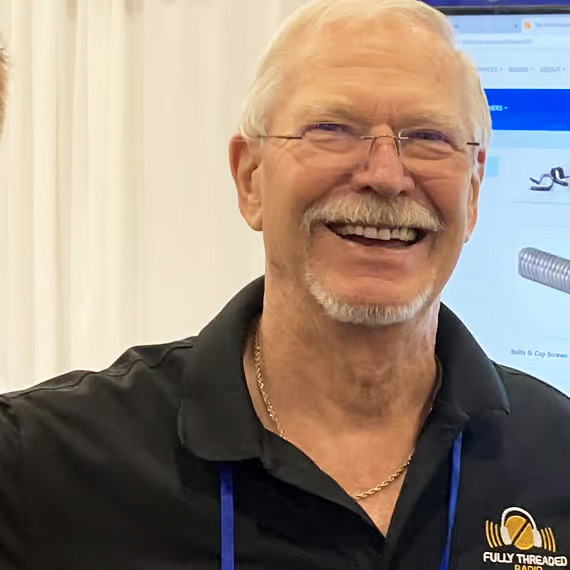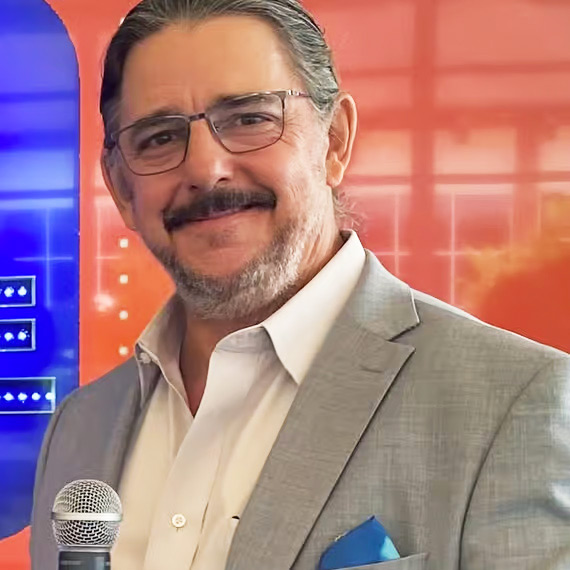
WIFI Woman of the Year and world traveler Darlene Collis of LSG talks shop and shows why she is the Fastener Ninja (1:05:51). On the Fastener News Report, Birmingham Fastener VP Anthony Crawl joins thread newsman Mike McNulty to marvel at the latest FDI numbers (19:18). Volt Industrial Plastics maven Heidi Volltrauer announces a voyage of her own (10:05). Carmen Vertullo presents his takeaways from the recent bolted joint symposium on the Fastener Training Minute (56:38). PLUS: Is the party really over for industrial property landlords? Brian hangs out with Horus and Eric bids farewell to an icon.
—
Listen to the podcast here
Important Links
- Mike McNulty on LinkedIn
- Carmen Vertullo on LinkedIn
- Heidi Volltrauer on LinkedIn
- Anthony Crawl on LinkedIn
- Nancy Rich on LinkedIn
- Marco Rodriguez on LinkedIn
- Darlene Collis on LinkedIn
- MRodriguez@Cresa.com
- McNulty@FastenerTech.com
- FTR@FullyThreaded.com
- Women In The Fastener Industry
- LindFast Solutions Group
- Birmingham Fastener
- Volt Industrial Plastics
- Fastener Technology International
- FTR Unthreaded: Link Magazine Publisher Leo Coar
- Stanley Black & Decker
- Howmet Aerospace
- Slidematic
- Threaded Fasteners, Inc.
- NEFCO
- Fastenal
- Wrought Washer
- Fastener Distributor Index
- Consolidated Aerospace Manufacturing
- TSA Manufacturing
- GradeEight Supply
- Bolt & Screw Supply
- Advance Components
- STS Industrial
- Nord-Lock USA
- Optimas Solutions
- Suncor Stainless
- Packer Fastener
- Click Bond
- Brighton Science
- Supply Technologies
- Industrial Rivet
- All Integrated Solutions
- Diversified Tooling Innovations
- BlackHawk Industrial
- Lamons
- Huyett
- Fastener Training Institute
- Carver Labs
- Stelfast
- Southwestern Fastener Association
- Aluminum Fastener Supply
Well Traveled
It is Fully Threaded Radio, the voice of the FCH Sourcing Network. If you buy, sell, manufacture, or distribute threaded fasteners, or if you find yourself dwelling on them frequently. This is the show for you. Eric Dudas is with you again. The co-host of Fully Threaded Radio is not with us this time. It’s a little bit of an unusual episode. Lifetime honorary Texan, Brian Musker, is gallivanting around North Africa, specifically Egypt. He won’t be joining us on this episode 223. We’ll be publishing on or about January 15th, 2026.
It’s the first full episode of this season. We got a special report out, but this is the first full-length one, if you want to call it that. It will be a little compressed without Brian, but we’ll make do. I’m so glad you clicked in. I got a text from Brian. He and Lynn are apparently touring the Temple of Horus in Egypt. As I understand it, that is about 60-some miles North of Luxor and not the hotel next to the Vegas show, folks. This is the real deal. They’re walking around. I look forward to hearing all about that when they get back. I’m sure fasteners are the furthest thing from his mind now. He needs the time off.
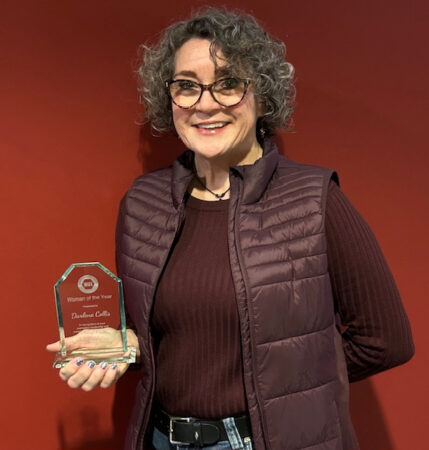
Our feature segment on this episode features another world traveler. It’s a conversation with WIFI Woman of the Year, Darlene Collis. She’s Vice President of Quality for the LindFast Solutions Group. I talked to her after the announcement about her award, which was great news and very well deserved. We cover a few subjects during this discussion. Including her work on the standards committees and her role as CBAM Specialist for LSG. Plus, a few off-topic areas as well much like you’d expect. She’s known as the Fastener Ninja. You’ll find out why.
On the Fastener News Report, Mike McNulty is joined by Birmingham Fastener Vice President of OEM Services, Anthony Crawl. This is Anthony’s first time sitting down with Mike to cover the FDI. He picked a doozy. If you’ve seen the numbers by now, you know what I’m talking about. He hits it out of the park on this one. That’s the Fastener News Report.
Leading into the news, we talk with Heidi Volltrauer with Volt Industrial Plastics. It’s been far too long since we had her on the show. She’ll update us on her travel schedule, among other things. She has a pretty big trip of her own coming up. It’s very exciting. Carmen Vertullo has the Fastener Training Minute. He just returned from a bolting symposium on gasketed joints. He’s going to take a look at gasket stress. It’s all coming your way.
The title sponsors of Fully Threaded Radio are Star Stainless, Goebel Fasteners, and Brighton-Best International. Fully Threaded Radio is also sponsored by Buckeye Fasteners, BTM Manufacturing, Eurolink Fastener Supply Service, Endries International, Cresa, INxSQL Software, Fastener Technology International, J.Lanfranco, MW Components, Fastener Fair USA, Solution Industries, Volt Industrial Plastics, and Würth Industry USA.
The email address over here is FTR@FullyThreaded.com. Your comments are always welcome. I’m zipping right along here, but I’ve got to tell you, folks. There is a definite disturbance in the force. Even though it is a little unnatural not to have Brian around, there are bigger things going on. I had the whole episode planned out around the big US Supreme Court tariff announcement that was supposed to come. It was delayed. I haven’t been able to find any reason why.
I can imagine there might be political reasons why the court is pushing it off. I have read reports that it’s possible they’re trying to kick the can forward, as they say, to the next session. There may be various reasons that they’re doing that. I don’t know. That’s speculation. Practically speaking, the fastener industry is standing around tapping its toe. I had a few folks lined up to give us some commentary on that, the reaction, and so forth. That’s not going to happen in this episode. We’re going to jump right into the news segment after we play a couple of messages here.
There’s another big reason that it’s an unusual time to be recording. I got to tell you, overall. I’m in a pretty crappy mood over it. I got my Link Magazine in the mail hot off the presses. I have an unthreaded column in this one entitled, “Why a Podcast About Screws Became a Conversation About Everything.” I already received a few reactions to that. Thanks for the messages, folks. As we ended the 2025 season with some sobering news, so we began 2026. As most of you know by now, we lost Leo Coar, the publisher of Link Magazine, and it hurts.
We’ll put a little bonus at the end of this episode that I’ll snip out of the conversation I had with Leo back in June of 2025. If you missed that episode, go back and read it. It was wonderful. His personality came through. He was a legend in the industry. He was just about ready to hit the age of 94 and going strong. We’ll miss him a lot. With all that, I decided to go with what we have and do the best we can. That’s what we’re going to do. It’s Fully Threaded Radio, folks. I appreciate you tuning in. I’ll be back in a moment to put a wrench to this one with Heidi Volltrauer.
Fastener News Spotlight: Volt Industrial Plastics, Trade Shows, & Industry Insights
It’s the news segment, a lot of people’s favorite part of the show. It’s become over the years. This time, Mike McNulty will be talking about the fastener distributor index, along with Anthony Crawl from Birmingham Fastener. It’ll be his first time joining Mike. He picked a good one, too. I don’t know if you saw the numbers yet. We’re going to get into it. Lots of stuff is going on in the industry, but this time, we are going to be joined by a familiar voice. She hasn’t been on the show for a long time. Heidi, how are you?
I’m great, Eric. How are you doing?
Never better. Heidi Volltrauer with Volt Industrial Plastics. I’m going to put it at the top of this segment here. I usually save it for later, but since we have you with us, Volt’s been a sponsor of the show for so long, and focusing on the news segment. We appreciate that. The last time I was down there, I think it was 2021. You’re down near flipping Arkansas, but that’s a part of the world I don’t get to often enough.
Most people don’t, Eric. It’s quite a challenge getting anywhere from here, and people coming in. You fly into Springfield, Missouri, or Little Rock. It’s a drive from there, but it’s a beautiful area.
It is in a lot of ways. I was wondering, do you get a lot of sales reps knocking on your door because of that? I would imagine you don’t.
We used to more often in the past. We don’t have a lot of sales reps come by anymore. That’s a good question. Also, they don’t approach me. I’m not the one that they’re asking for anymore. I might be out of the loop on that one.
Who would they ask for, if not you?
You’re talking about sales reps in our industry. This would be far out of their way just to stop by.
I got it.
There are other sales reps that are repping materials and other things that come by.
That’s why you need to do such a good job of getting out to all the shows and everything, which you do. You get your name out there. I thanked you off the air for the amazing T-shirt that you came up with for the Vegas show in 2025. You’re giving Craig Penland the run for his money with your T-shirt now, Heidi.
I don’t know. Don’t start something, Eric. You’re welcome. It was fun to have those T-shirts to hand out. Everyone at Volt has one. We all love those T-shirts. They’re fun to wear, and they’re comfortable.
The guitar picks came in handy too, by the way.
I don’t play guitar, but for Nashville, it’s a fun theme. All the other little things that we give out that go with the theme, such as harmonicas, a flyswatter shaped like a guitar, and silly things like that. They’re fun.
They get your name out. Volt Industrial Plastics is everywhere. We were talking earlier. You told me that although you will be at Fastener Fair in May, which is happening in Charlotte in 2026, you personally won’t be there.
I will not be at Fastener Fair.
I hope you have a good excuse for this.
I do. I’m going to be in Europe. My uncle Herman has put together this trip for our family. We’re going to a town in Austria. That’s where our name originated. It’s called Volderau. We’re going to be flying into Munich. We’ll go through Innsbruck and then into Volderau, visit that town, and then back to Munich. It’s going to be a fun family vacation. It’s a once-in-a-lifetime trip with my family.
Unfortunately, it fell on the dates of the show, so I won’t be at Fastener Fair. I was looking forward to seeing Charlotte, North Carolina, and seeing everyone. I love going to trade shows, seeing everyone, and catching up with everyone. It’s a fun business trip every time I go to the shows, but you’ll see Pam, Jesse, and Chad there. You still need to come by the booth. We’ll have some fun giveaways. Come by and see what’s new with Volt.
I know we will. Good for you for heading to Europe with your family to trace your family heritage. That is such a valuable experience if you can do it. My family did something similar. We went to Central Europe, went around the place, and saw where everybody came from. I’m so glad that we did that. How long will you be gone?
It’s going to be nine days. It’s not that long, especially for Europe. You know how that is. You get over there. You have to adjust to the time, jet lag, and all that stuff. I would have liked to have been there longer, but that’s just how this one’s working out.
You got things to do back here, too. You were telling me that you have been to Vienna before, but not for a long time. When was it that you were there last?
It was 2013. I can’t believe that it’s been that long ago. It doesn’t seem like it, but it’s been quite a while since I’ve been there. We have family there. We have family in Rosenheim, Germany. It was fun to get to see them. Vienna’s beautiful. That is such a beautiful city. I plan on going back at some point.
It is amazing.
I was just going to say. You said you’ve been there, too.
I’ve been there a couple of times. Last time was 2006. I’ve talked to people who have been there more recently. A lot of changes have taken place. Let’s face it. Europe overall is changing. I’ll be interested to compare notes with you next time I get down to Flippin, just because that’s the big metro center near you.
I’m in Yellville. That’s a pretty big town to compete with Flippin.
It’s a bedroom community. Getting back to that topic of operating in a small town or an out-of-the-way town. I’m sure that impacts your ability to pick up new help when you need it, too. Where do you recruit from?
In this community, there are a lot of people looking for jobs still. You would be surprised. There aren’t a lot of factories in this area. We have a boat manufacturer. There’s Walmart, grocery stores, restaurants, and things like that. People are still looking for jobs. We’re not hiring. When we do need to hire, it’s not that hard for us to find people.
In this community, many people are still looking for jobs. We’re not hiring right now, but when we do, it’s not hard to find qualified candidates. Share on XThat’s so interesting. Ranger Boats is the big monster down there. They have a competitor, too. It’s the offshoot. Is it Nexus?
It’s Vexus. Ranger Boats has always been a big company in this area.
Have you ever seen Tabitha? She left the fastener industry. She was one of the rare. She’ll probably be back, but now she’s doing the graphics for Vexus and Ranger.
I don’t see her, but I know exactly who you’re talking about. I’ve met her a handful of times at different shows. I haven’t seen her. I’ll tell her hello if I do.
I don’t know if she gets down that way, but she tunes in to the show.
Hello, Tabitha.
We’ve got McNulty coming up in just a minute again with Anthony Crawl this time to go over the FDI. We’re talking with Heidi Volltrauer with Volt Industrial Plastics, makers of the world’s finest plastic fasteners and longtime supporters of the show. The title sponsors of Fully Threaded Radio are Star Stainless, Goebel Fasteners, and Brighton-Best International. Heidi, I’m sorry that I won’t see you in Charlotte, but I know you’ll be in Phoenix later at that show. We’ll see you at the MWFA at the latest. There are some other things coming up. You never know.
I’ll be in Chicago and then Phoenix for sure. Southwest Fastener, I’ll be there, too.
I should have done this question at the very top to take care of business first. Is there anything at the top of your list in terms of industrial plastic fasteners that the audience should know about now? What do you have your eye on?
We have our eye on more business. We add new products every week. We’re making new tooling and adding to our website. You can check it out on our website and see what we’ve added. I’m curious to see how 2026 goes. In 2025, things slowed down towards the end for us. Things are taking off with a bang so far in January. I will let you know how things are going the next time I see you.
You know the website, folks, VoltPlastics.com. It’s been wonderful talking to you on the news segment. There’s one piece of business you need to take care of for me before you get out of here. You know what that is.
Eric, thanks for having me. With news about screws that you can use, here’s Mike McNulty.
—
Fastener News Report: FDI Insights, Tariffs, & Birmingham Fastener’s Growth
Thanks, Heidi. This is Mike McNulty from Fastener Technology International Magazine, bringing you the Fastener News Report, which is sponsored by Volt Industrial Plastics, makers of the world’s finest plastic fasteners. The United States Customs and Border Patrol announced a record-breaking $200 billion in 2025 tariff revenue. Ford and GM gambled big on EVs and lost a combined $26 billion. The Cleveland Browns football team fired its head coach for the 13th time in the 2000s. I am still focused on fasteners and ready to deliver the Fastener News Report.
In this episode, Anthony Crawl, Vice President OEM Services at Birmingham Fastener, joins us to reveal the results of the Fastener Distributor Index, also known as the FDI. Also, in this episode, we have our top story from Stanley Black & Decker and Howmet Aerospace, plus newsmaker headlines from Slidematic, TFI, Goebel, NEFCO, BBI, WIFI, Fastenal, Wrought Washer, LSG, and more. On the back page report, we’re going to talk about 2026. We’ll get to all of that and the FDI results.
—
The seasonally adjusted fastener distributor index for December 2025 surged to 56.4 after posting a sluggish reading of 49.5 in November, seasonally adjusted. This was clearly the best FDI result of 2025. The forward-looking indicator, also known as the FLI, dropped to 51.2 after recording a robust 55.9 in November.
Fastener distributor index data is collected and analyzed by the FCH Sourcing Network and Baird. The FDI seeks to identify demand, pricing, and outlook trends within the American fastener distribution industry. To get some insight into these results, we’re going to talk to Anthony Crawl, Vice President of OEM Services at Birmingham Fastener. Anthony, thanks for joining us on the Fastener News Report.
Mike, it’s a pleasure to be here. Thank you for having me.
Glad to have you on here. This is your first time on the Fastener News Report. You told me before we got on that you’re a long-time follower. You drew some good numbers, let me say.
I certainly did. Mike, as you alluded to, what a strong finish to 2024. That 56.4 stood out, but when I step back and look at the year, you can see a growing momentum from January through December. As the tariffs started to come on, they had a crest towards mid-year. There was a reset. Once the buying behavior were able to regurgitate the tariffs and what they meant going forward. They went from a more cautionary buying behavior to getting a little bit looser with their orders. Probably going from more long-term agreements than the short, choppy spot buys, as we like to call them. The FDI is an indicator of that and great momentum, going into 2026.
It was a good finish. I was a little bit surprised, but it’s not bad to get the best number of the FDI in the last month of the 2025.
Mike, looking at the patterns of the FDI quarter after quarter, traditionally, at the beginning of the quarter. The numbers started out lower, and then you could see the momentum towards the end of the quarter gaining momentum. Quarter by quarter, that was the trend. Certainly, for 2025, that was the trend. It’s another piece of information or data point that I picked up while going through the report.
That’s a good observation. Let’s jump into some of the numbers. We have all the different categories of things, but it was almost a full sweep. Sales, supplier deliveries, inventories, and pricing were all up. Only employment was down, but just down by a little bit. Anything jumping out to you there?
If we can just take sales, they certainly mirror the trend of the FDI. Again, each quarter began maybe a little weaker and got stronger as the quarter came to a close. That mirrored customer inventories, as you can see, quarter after quarter. Towards the beginning of the quarter, customer inventories were a little weak. That progressively got stronger towards the end of the quarter. All in all, I’ll use the word cautionary buying behavior a bunch. The data speaks to that behavior.
That’s a good phrase, cautionary buying behavior. You have to patent that or trademark it.
If I can go one further, Mike, and stepping back and looking at our industry as a whole. It certainly was an odd year. I’ve been doing this since June of 1990. I’ve never experienced a year like the one we had in 2025. For our industry, it was a transition and a reset. Manufacturing slowed, but it didn’t stop or back up. In our US economy, via the GDP, were up nearly two points year over year. Fastener distribution proved to be very resilient more than I had anticipated for some markets.
Some markets traditionally flourished through feast or famine. We saw that. The real story sits, Mike, in the distortion between GDP, PMI, and FDI. Looking at the numbers for the PMI, traditionally under 50, not such a good number. The FDI, gaining momentum to where we are now at 56.4. It certainly leads to a good forward-looking indicator for 2026.
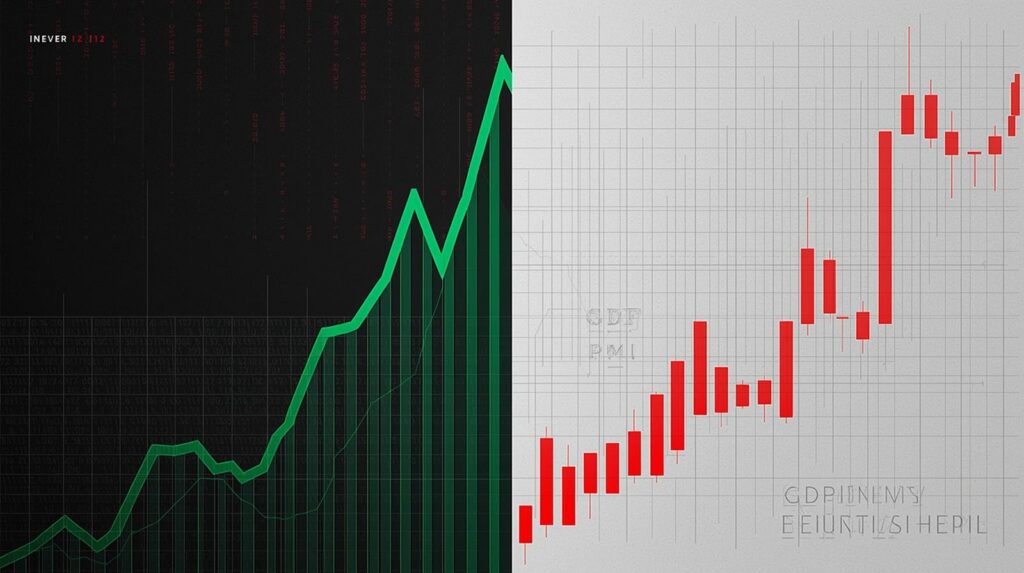
You brought up the PMI. It dropped to 47.9 versus 48.2. That was the tenth straight month below 50 and the worst of 2025 compared to the best FDI of 2025. We’re doing something better than the broad manufacturing sector.
It’s an anomaly of a year. I would not be surprised, Mike, if in the quarter for 2026, Q1, that we saw the FDI numbers jump to the upper 50s or low 60s. I feel that way. Momentum is certainly carrying us in that direction. In speaking to many customers quarterly, we try to stay at the hip and navigate through this uncertainty. We’re getting forecasts for 2026, numbers like 10% to 25% over 2025. That’s what we’re seeing. A lot of that is market-driven. Traditional markets such as heavy trucks and the likes and ag are slower than others, but even there, we’re seeing a small creep in the right direction.
That’s good to hear. Let’s look at the six-month outlook. The numbers stayed pretty bullish. We had 51% expecting things to be better six months from now, 34% the same, and only 14% expecting it to be worse. This is almost the same as we had, which was 52%, 32%, and 16%. It is optimistic. We’ve got well over 80% of the people expecting things to be better or the same as they are right now. What do you think?
I certainly mirror that outlook. We’ve been through the worst of it. We’ve had a reset. It’s time to get back to manufacturing and getting back to a normal, albeit a new normal, but it’s time to move forward with everything that we’ve been through. The six-month outlook, I remain very optimistic that we’re in store for a good 2026.
That’s definitely good to hear. I want to jump back on the PMI for a moment. The PMI that is posted in the report comes from ISM. As I said, they posted the worst of 2025 at the end of the year. A couple of episodes ago, we had one of the people who was on talking about another PMI indicator put out by S&P Global. I took a look at their numbers. They weren’t great either. They had a three-month low for the USA, a six-month low for Mexico, no change in Canada, and a five-month low for the world. I’m not sure where the pessimism is coming from there.
I can speak from our customer base, and then also what I’m hearing from my peers in the industry. There’s a lot of inventory yet to burn through. Still, I’ll use that word cautionary buying behavior again. The data will turn into decisions. After Q1, I would not be surprised to see those PMI numbers increase as confidence is restored.
Maybe they’re both behind the fastener industry. Anything else you want to add on the FDI or the FLI before we jump into the respondent commentary? It was pretty voluminous, a lot of comments this time.
I remain to have a very optimistic outlook. To be redundant, I’m encouraged with the trend, with the FLI, and what we’re seeing in the market. We’re in for a good 2026. The worst of it is past.
Let’s jump into the comments. The commentary overall suggested a fairly strong year-end for a lot of people and cautious optimism despite tariff headaches. You can jump in and weigh in on any of these comments as we go through them. The first one was, “The limited number of business days in December was expected to restrict sales, and it did. No surprise. We will do what we can to make up for it in January.”
We certainly had an incredible, record-setting December. We didn’t see that coming. If you look at the numbers in November, we went backwards a bit. We thought that December would mirror that trend, and it did not. It was a pleasant surprise indeed.
That leads into the next few comments. We have one, “The quarter ended on a record note.” Busy to the very end. That’s a good thing. Another one here says, “2025 was our best year to date. I expect the same type of activity in the new year.”
Amen to that. Coming from a place of sheer humility, we were very blessed to have another record year. Our markets are diversified. Certainly, in the OEM space, being spread out over the country, we’re in several different markets, but our waterworks, our structural, we had a phenomenal year. The numbers could be a bit deceptive, looking at the PMI, but we didn’t back up. We planned accordingly for 2026 to hopefully have just as good, if not better, a year.
It sounds like diversification is playing well for you guys.
It certainly has been our lifeline.
The next comment is, “I remain cautiously optimistic in spite of the tariffs.” There’s our first mention of the tariffs. We’ve got another one coming up. A couple of comments. “Customers are beginning to think they might have new jobs beginning late first quarter, where before, they were nervous to commit.”
I’ll go back to the FDI index. You heard me mention before that the quarter would start out weak, and then it would end stronger than it began. If you look at the beginning month of the following quarter, those employment numbers spiked. For May, 51.5, for September, 51.6, and so forth. The data is the telltale. With increased numbers, more confidence comes, and people are hiring.
That’s always a good thing. The next one categorizes the funniest and shortest tariff comment of the year. It was, “Tariffs suck.”
I got a chuckle when I saw that. That’s a mic drop right there. Tariffs suck.
That’s a T-shirt or a bumper sticker.
For the foreseeable future, at least under this administration, and no matter which way we sway under the next, tariffs aren’t going away. We may back up on the overall tariff percentage, but tariffs will certainly be a way of life going forward. It doesn’t make it any better. Well said by whoever responded to this. Tariffs indeed do suck.
For the foreseeable future—at least under this administration, and regardless of the next—tariffs aren’t going away. The overall percentage may decrease, but tariffs will remain a way of life. Share on XWe’re just going to have to deal with them. The next comment says, “Passing along round two of tariffs has been a challenge. Lead times have come down slightly. Many customer volumes have decreased, although it’s massed revenue-wise due to inflationary tariffs and surcharges.”
That’s a slippery slope. When we proactively presented the tariffs to many of our customers, it depended on the market segment. We had customers who said, “Bring them on. Don’t disrupt the supply chain.” We had others who challenged the tariffs. They challenged us to offshore from Asia domestically. Prices, many times, were inflated. They chose to go domestically and make smaller buys more frequently.
That certainly inflated the cost of goods. It was tough to navigate through that. It was tough in some cases to gain confidence, for lack of a better word, and get the buyers from cautionary buying behavior onto having some confidence, trusting in essentially what we have going in the supply chain over from Asia, and moving forward with the strategy, accepting the tariffs.
We got three more comments. They all have tariffs in them. Here we go. “Sales figures are up, but if we remove the tariff bump, I suspect they’re flat or even lower than 2024 year to date.” The next one says, “Total confusion with the Customs and Border Patrol on tariff calculations has led to uncertain pricing. Importers are starting to receive letters advising them of miscalculations when the Customs and Border Patrol did virtually nothing to clarify the 232 rules.”
The tariffs to 232 can all be a bit confusing. What we certainly did was educate ourselves fast so we could have these intelligent conversations, for lack of a better word, with our customers. We reached out to Scott Camp of Atlas and other importers who were versed in the tariffs and brought ourselves up to speed. I can see where the confusion plays, especially being one of one for the industry to deal with. My strong suggestion would be to educate yourself as much as you can, so you get more and more comfortable with the tariffs because they aren’t going anywhere soon.
That’s good advice. Get educated, be prepared, and just deal with them. One more comment. It comes up from up North in Canada. It says, “Canada has hastily announced and will enforce a global 25% tariff on steel derivatives and specifically all fasteners beginning in December, with the list only confirmed on December 12th. Without any real domestic sources for most parts, this will have a dramatic increase in prices.”
Nothing to add to that.
Be careful what you wish for. Those are all the comments we have. Do you have anything to summarize the comments, or do you want to move on to let the audience know what’s going on at Birmingham Fastener?
We can move on to what’s going on here at Birmingham Fastener. Lots of expansion here at Birmingham Fastener. We are opening up our location in North Carolina in January. That will be geared towards structural and OEM primarily, with some aerospace to a lesser degree. We’re very excited about that opening here in January. We are on the final leg of our expansion in Dallas, Texas. We’re getting the office folks migrated over from the old building to the new. We’re looking forward to operating out of that building.
We have a heavy emphasis on our Mexico operation in Querétaro. We have a lot of OEM opportunities that are going on in that part of the world. We’re very excited about that. Overall, our optimism is high. We’ve set an aggressive game plan and budgetary goal for the year. One of our core values is grit. We plan to do just that, grind it out in hopes that it yields another record-breaking year. That’s what we have going on here at Birmingham Fastener.
That’s a good approach. I’m looking at your news page. There were lots of acquisitions, expansions, and partnerships. It seems like it’s a good place to be at Birmingham Fastener.
I started here in July of 2019. In 2019, we opened Houston, Des Moines, Iowa, and Elmira, New York. It’s been hard to keep up with the acquisitions and new facilities opening ever since. It’s certainly been a fun ride.
All your marketing people had to make some changes in the logos, too, with all the stuff going on. Good job there.
It can be a little confusing. We take on the name of whichever region we’re in. Iowa Fastener, New York Fastener, and Dallas Fastener are all Birmingham Fastener companies. Brad Tinney likes it that way. We like it that way as well. It appeals regionally to the customer base.
It’s a good solution to maintain the long-time brands and integrate them with the Birmingham Fastener logo and brand. Good job, whoever’s doing that.
Thank you.
I was looking at your LinkedIn profile. It says you’re a past president and past director at SEFA, the Southeastern Fastener Association. Can you tell us what’s going on there?
It was a pleasure to serve on the SEFA board for ten years. I rolled off in 2025. Nancy Rich is absolutely the best in the business. It was an honor to serve on the board with her as our leader. I met a lot of great industry peers. It was invaluable education, swapping best practices, camaraderie, and spreading the fastener knowledge around accordingly. It was a pleasure.
Nancy’s in the hall of fame. She’s got a lot of experience in the industry and in the association. She also writes. She has a pretty regular column in the magazine, Fastener Technology International. You guys had your holiday event, and then you got your spring conference coming up in April.
It’s always fun. With the new board that’s on, there’s a lot of enthusiasm and engagement. I’m looking forward to the SEFA board taking it to the next level. It’s a great organization to be a part of.
Earlier, you mentioned that 2026 is your 35th year in the fastener industry?
Yes, I’ll be starting year 36. A little mindless fact, I started on June 30th of ‘90. That’s a Saturday, Mike. I started at a little mom-and-pop fastener distributor in Milwaukee, Wisconsin, by the name of Larson & Company. Larson & Company was acquired in ‘99 along with Iowa Industrial Products and the McIlhons, who owned Iowa Industrial Products. I got to befriend Casey and Ed. They’re a great family to be involved with. From there, I went on to Würth Service Supply and eventually ended up here at Birmingham Fastener.
Our vice president of sales, Rodney Holmes, gave me a call one day. I was on vacation. I was in the middle of Illinois. He gave me a phone call and said, “Would you be interested in coming to talk to the team and us here?” What started as a 45-minute visit ended up being an all-day visit. Brad Tinney and I sat down and talked about the future of Birmingham Fastener and my contribution. It made sense to come over and join such a great team here. It’s been a pleasure going on my sixth year here at Birmingham Fastener and 36 years in the industry. It all goes by so fast.
That’s a great career. The other thing I noticed is that you’ve been in three states in the Southeast, which are Alabama, Tennessee, and Georgia. It started in the Midwest and Milwaukee. What can a Midwest guy tell us about the Southeast?
The Southeast was quite an adjustment. When I was at Larson & Company, we migrated Southeast. Briggs & Stratton was one of our larger OEM customers. I moved to Macon, Georgia, as a service point between the Statesboro and Auburn plants. It has very warm weather, a lot of waves, and a lot of slow days, but I’ve certainly gotten used to it. I love the Southeast. I can’t see myself moving back to the Midwest, but it is a wonderful place to visit. My wife is a Michigan native as well.
You’re both Midwestern.
That’s right, so we go back quite a bit. She’s a diehard Michigan fan, and I am a Wisconsin Badger fan as well as a Georgia Bulldogs. It’s been a joy to live in the Southeast for sure.
We have a new football star coming from the Midwest in Indiana.
It’s been a joy to see. The NIL has certainly changed the landscape. Alabama being such a powerhouse for all these years and not seeing them in the National Championship Game is an adjustment, but it has been fun to watch.
We’ll have to tell the audience. We’re recording this before the National Championship Game, but I would say maybe both of us are going to be pulling for the Hoosiers.
I am 100% pulling for the Hoosiers. What a great story. That’d be a phenomenal finish.
Anything else you want to finish up with before we close it out?
No, Mike. Thank you again for having me. I appreciate it. I am wishing all the audience out there a very prosperous 2026. Strap up. It’s going to be one heck of a ride. We’re definitely looking forward to it. Thank you so much for having me on.
You’re welcome. Thank you for joining us. It’s your first time on. We hope there’s another time in the future. You did a good job.
Thank you very much.
FDI Results, Stanley Black & Decker-CAM Sale, & 2026 Industry Outlook
That was Anthony Crawl. He’s the Vice President of OEM Services at Birmingham Fastener. The FDI number for December 2025 was 56.4 versus 49.5 in November 2025. Visit FDISurvey.com to participate in the process and get a detailed PDF copy of Baird’s monthly analysis. For our top story, Stanley Black & Decker entered into a definitive agreement to sell its Consolidated Aerospace Manufacturing business, also known as CAM, to Howmet Aerospace for $1.8 billion in cash. CAM provides critical fasteners, fittings, and other engineered components for the aerospace and defense industries.
Chris Nelson, Stanley Black & Decker President and CEO, said, “Divesting CAM reflects our ongoing dedication to enhancing shareholder value and focusing on growing our biggest brands and businesses. The proceeds from this transaction are expected to significantly reduce our debt, positioning us to achieve our target leverage ratio. After achieving this financial goal, we will have greater flexibility to pursue additional value creation opportunities through a more agile capital allocation strategy.”
John C. Plant, the Executive Chairman and CEO of Howmet Aerospace, added, “The acquisition of CAM is a major step in our strategy to build out our differentiated fastener portfolio. CAM’s established brands, engineering prowess, and deep customer relationships are a perfect complement to our existing business. This transaction will allow us to better serve our aerospace and defense customers with a broader offering of mission-critical fastening solutions. It represents a compelling use of capital to drive value for our shareholders.” Howmet expects CAM to generate 2026 revenue of about $485 to $495 million. The transaction is expected to close in the first half of 2026.
Next up, the fastener newsmaker headlines. In corporate news, Slidematic Precision Components celebrated a $7.9 million expansion. Threaded Fasteners Inc., also known as TFI, acquired TSA Manufacturing. GradeEight Supply acquired Bolt & Screw Supply. Goebel Fasteners named Advance Components as an authorized distributor. NEFCO acquired STS Industrial. The Nord-Lock USA team won a Fastenal Supplier of the Year Award.
Optimas Solutions inaugurated a new office in India. Suncor Stainless launched a new line of patented swivel hoist rings. Brighton-Best International, also known as BBI, congratulated Packer Fastener on being named the 2025 BBI Tested, Tried, and True Distributor of the Year. Click Bond acquired Brighton Science. Supply Technologies announced plans to expand its North American distribution network with a new facility in Union, Ohio.
In personnel news, Daniel Florness will step out of his role as CEO of Fastenal on July 16th, 2026, when Jeffrey Watts, Fastenal’s current president and chief sales officer, will succeed him. LindFast Solution Groups, also known as LSG, promoted Stephanie Brandt to Vice President, Human Resources. TriMas appointed Paul Swart as CFO. Women In The Fastener Industry, also known as WIFI, reported that Damaris Hernandez of Industrial Rivet and Emma Tyloch of All Integrated Solutions received Joanne Sherman e-learning scholarships.
Travis Albrant joined Wrought Washer as plant manager at Diversified Tooling Innovations. BlackHawk Industrial appointed Steve Gettleman as Vice President of Category Management. Lamons appointed Joe Sadowski as its new CEO. You can get details on all of these stories and more in the Fastener Technology International Magazine and the Fastener News Report monthly newsletter, both available online at FastenerTech.com.
Let’s turn to the back page to talk about 2026. The end and beginning of any year always have a good share of big picture essays, opinions, commentaries, and all levels and types of media. If we agree that there is no year zero, then we are now in the first days of the second quarter of the 21st century, which implies a certain significance of the years 2025 and 2026. Fastener Technology International Magazine is not in the business of market forecasting and prognostication, but we observe trends and the ebbs and flows of industry activity.
Looking back and ahead, we can point to tariffs, commodity price fluctuations, AI, data centers, electrification, labor scarcity, geopolitical tension, supply chain disruptions, inflation, and sustainability as the attention and energy-grabbing signposts. The economic experts are projecting general and industrial market expansion through the year at about 3% to 5% overall and probably higher in some key areas like those mentioned. The standard and stable sectors that don’t get headlines should not be overlooked. Uncertainty has become the norm, so it seems to me that the fastener industry veterans and newcomers should be ready for 2026’s challenges and opportunities.
Despite all the distractions and noise, one can conclude that it is an exciting time for people and companies to be involved in making, processing, selling, and using all types of fasteners. As we start the new year, which is already zooming ahead, I recall that we heard Tim O’Keefe, the CEO of Huyett, tell the Fully Threaded Radio audience that 2025 would be the best ever, and if they didn’t believe it, they should retire or quit. If you’re tuning in to Fully Threaded Radio, then you probably didn’t give up on the fastener industry.
Let’s simply update Tim’s statement to read 2026 and consider another insightful thought that I heard. “Now is our time. We were not created for the past or the future, but for now.” Here’s to 2026 being the best year ever. This has been Mike McNulty of Fastener Technology International Magazine bringing you the Fastener News Report. Please send your news, pictures, comments, corrections, or complaints to me at McNulty@FastenerTech.com.
—
The Industrial Reset: Opportunities For Fastener Distributors In 2026 Real Estate
This is Marco Rodriguez from Cresa with your industrial real estate update. I want to talk about the great industrial reset. If you’ve felt like you’ve been on the losing end of real estate negotiations, I have great news. In 2026, the landlord party is officially over. We are seeing the national industrial vacancy rates hit between 7.5% and 8%. Keep in mind, anything over 8% is considered distressed. This is the highest vacancy we’ve seen in over a decade.
In markets that were once impossible to penetrate, like Miami, we’re seeing vacancies over 6%. Even New York’s availability is rising at the fastest pace in the country. For fastener distributors, this means you finally have the leverage to demand more than just a take it or leave it lease. In the Inland Empire of Southern California, vacancy has stabilized at 8%, but rent growth has turned negative for the first time in recent memory. Rents are down 4.5%.
Meanwhile, in high supply cities like Phoenix and Dallas, developers have been on a building spree. Phoenix added a staggering amount of inventory, pushing vacancies 10%. If you’re a distributor looking to service the West Coast without the California price tag, Phoenix is effectively on sale. The same goes for Dallas, where over 39 million square feet is currently under construction, keeping landlord pricing power in check.
Market concessions are back. This means free rent and high tenant improvement allowances. Looking East, Atlanta and Central New Jersey remain critical hubs for suppliers. Even here, the frenzy has cooled. Atlanta vacancy is hovering around 9%. While demand for class A space is still healthy, vintage buildings, meaning those that are brick construction and may have lower 20-foot ceilings, like the ones many fastener companies have occupied for decades, are struggling.
This is where the opportunity lies. In markets like New Jersey, there’s been a flight to quality. This means many tenants are moving out of older, cramped facilities into newer, high-clearance buildings. This is leaving a gap in the market for older buildings. If your business doesn’t need 30 or 40-foot ceilings, you can negotiate incredibly aggressive deals on second-generation spaces in these prime corridors.
As a business leader, what can you capitalize on? First, look for sub-lease spaces that offer tremendous value. These are spaces leased by companies that no longer need the space, but are still locked in for a few more years. Not only can you get below market rents, but often, these are fully plug-and-play warehouses, which means they’re moving-ready and someone has already paid for the racking, which they’ll leave behind.
Secondly, and I say this all the time, don’t wait for your lease to expire. With national asking rents finally moderating to around 1.5% to 2% rent growth, landlords are anxious to lock in creditworthy tenants. If you’re a profitable distributor or importer, you are the gold standard tenant landlords want. Start your lease negotiation at least 18 to 24 months before your lease expires or renews.
Whether you’re in SoCal, Phoenix, or near the Port of Newark, the next twelve months represent the best opportunity in a decade to restructure your lease, downsize into a more efficient high cube facility, or finally secure the expansion space you’ve been putting off. Now is the time to use your leverage. If you want to talk nuts and bolts or roofs and walls, I’m Marco Rodriguez from Cresa. You can find me on LinkedIn or email me at MRodriguez@Cresa.com. Don’t forget to pay your rent.
—
This is Carmen Vertullo with the Fastener Training Minute, coming to you from the Fastener Training Institute and Carver Labs in beautiful El Cajon, California. I just returned from a very interesting conference in Galveston, Texas, called the Bolting Symposium. While this conference has been going on for several years, it’s the first time I’ve been able to attend, even though I’ve known about it for a while.
It serves the needs of the community there on the Gulf Coast, mainly refineries and the oil patch folks. It was very interesting. They called it the Bolting Symposium. There was some stuff about bolts in it that was interesting, but not a lot. Its primary focus was on talking about gaskets and gasketed joints. When I come back, I’m going to tell you a little bit about the conference and a few things I learned or maybe relearned or unlearned. We’re going to talk about a thing called gasket stress. I hope you don’t suffer from this.
—
Lessons From The Bolting Symposium: Gasket Stress, Torque, & Cutting-Edge Tools
Welcome back, everyone. This is Carmen Vertullo with the Fastener Training Minute. We’re talking about gasket stress. I hope you don’t suffer from this, but it is a problem for a lot of people. In the bolting world, whenever we have a gasketed joint, that’s known as a non-rigid joint. That’s because there’s something besides metal in the joint. That something is soft compared to metal. Usually, it’s a gasket.

One of the ways that gaskets work is that we must supply sufficient stress on the gasket for it to seal. That method of applying that stress is by putting some bolts through the flange and through the gasket and clamping it all together. Some gaskets require a lot of stress to seal because they’re designed that way. Others require not very much stress because they’re soft rubber. If you don’t have enough stress on the gasket, it will leak. If you have too much stress on the gasket, you can damage the gasket, and again, it will leak.
The Bolting Symposium conference spent a lot of time talking about how we establish what that amount of gasket stress should be and how we apply it. The prevailing method of applying that gasket stress was with torque on the bolts. I was astounded at this because my experience now is that torque is not the best strategy for achieving a given amount of tension. We are after a given amount of tension.
It wasn’t like the object of the game was to tighten the bolts down until you had a certain gap between the flanges, which to me might have been a better way, but no, it was all about bolt tension. If you’ve heard me talk much on tightening strategies, you’ll know I’m a big proponent of using angle as a tightening strategy. That is the turn of the nut method over torque. At the Bolting Symposium, it was all about torque.
How do we know how much gasket stress we need? The gasket manufacturer will give you a number, sometimes called an m factor, or y factor, or some combination of those. It’s how much psi we need on the gasket itself. The flange compression system has an area. That’s based on the type of flange, if it’s a full-face flange, a raised face flange, or whatever. It’s essentially what the area is that’s squeezing against the gasket.
If you have a full-face gasket, you would imagine that would be the outside diameter of the gasket, minus the inside diameter of the gasket, minus all the holes. That area would tell us how much force we’re going to need, based on how many psi we have to put on the gasket. We tighten our bolts to give us that amount of psi. Sometimes, with some of these high-end gaskets that require a large amount of compression, standard bolts will not give you enough compression.
A B7 might not be good enough. A standard stainless-steel bolt might not be good enough. We might need strain-hardened condition material for stainless steel, or we might need something stronger than a B7, like a grade eight bolt, or something like that, in order to achieve that gasket compression. Sadly, I thought that if anybody would be state-of-the-art in tightening technology, it would be the oil and gas people, and the refinery people, but they still are pretty much set on torque. They talked a lot about torque wrenches.
One of the things that seemed to me was that torque wrench training is very important, and they spent a lot of time on that. They didn’t do torque wrench training, but they talked about torque wrench training and things that people are unaware of, apparently, like dropping a torque wrench can make it lose its calibration. That’s pretty old information.
Nowadays, modern torque wrenches can be dropped without losing their calibration. There are things like returning the torque wrench to its lowest setting before storing it. Modern torque wrenches can be set at a given setting and stay there all the time. Matter of fact, when you go to get the torque wrench out of the tool crib, you’re going to say, “Give me the 100 foot-pound torque wrench.” They’re going to give you the torque wrench that’s set at 100-foot pounds. I was interested in where they are in terms of that.
On the other hand, they had some state-of-the-art stuff there, some space-age stuff. They had this lady engineer. She had this robot thing that you clamp around the pipe. It’s got sockets on it. It crawls up and down the pipe, spins around, puts the sockets on the nuts, tightens it down incrementally, backs off, goes to the next set of bolts, and backs off. I thought that was absolutely incredible and amazing. It seemed like something you would use in space or under the ocean.
One of its cool features is that oftentimes in the refinery business, when you have to take something apart, you’re the human being. There you are. Theoretically, that pipe doesn’t have any pressure in it. You don’t know for sure. It might have some bad gases or something in it that could hurt you. There you are with a mechanic, just with gloves. You’re going to loosen the bolts on that thing. What’s going to squirt out on you? This little robot will let you stand 30 feet away with a Game Boy and loosen that joint. I thought that was very cool. I’m looking forward to learning more about that.
That’s about all I want to say about the Bolting Symposium. It was well attended, a couple of hundred people, very nice conferences, a nice model for some conferences that I would like to conduct here in San Diego and around the country. You’ll all be hearing more about that. It was a nice group of people there in Galveston who work in the refinery industry. It was my first exposure to it, so I’m looking forward to getting to know some of these people and reconnecting with them.
If you’re tuning in to this, and you were at the Bolting Symposium, please give me a call or an email and tell me what you think. I certainly will attend it in the future. It’s very affordable as those conferences go. That’s all I have to talk to you about. I hope you learned something. This is Carmen Vertullo with the Fastener Training Minute. Thank you for tuning in.
—
Celebrating Leadership & Innovation: Darlene Collis, Woman Of The Year, & Her Impact At LSG & WIFI
It’s feature segment time. First one of 2026. This time, it was very easy to make a selection on who I should invite on the show because we have the Woman of the Year. WIFI made their announcement. I was glad to see this one. It’s Darlene Collis with LindFast Solutions Group. She hasn’t been on the show for a while, but she’s here now. Hi, Darlene.
Hi, Eric. How are you?
I’m very well. Congratulations. I was thrilled to see your name when the big announcement came. Congratulations. What an honor.
Thank you very much. It is an honor. I was so stunned when I got a notification of that. Jen Kushner sent me a note. I was floored. I was super excited for the recognition, especially with the group of ladies who are involved in this organization, who have strength in history. I am honored.
You’re the VP of Quality for LSG. There’s lots to talk about. I want to get into this award and maybe talk about WIFI a bit, too. I’m dying to know. My memory says that last time we talked, I don’t know if it was on the show or when we were speaking at one of the shows, you headed out to Disneyland, or is it Disney World, Tokyo? Did you finally make it out there? I know you’re huge on Disney. What was that like if you made it?
We did go to Tokyo Disney. It was incredible. It was so much like Disney World, with the exception of the language. Even going on the Haunted Mansion, that ride had the deep James Earl Jones voice, but it was all in Japanese. We were cracking up. It was fantastic. It’s so fun to see the changes in cultures as you’re going around the world.
When I was in China in 2025, we were there in the April timeframe. I wanted to go to Shanghai Disney, but my colleagues told me that we couldn’t go because there were eight million people there. We have to go during the week the next time I come over there. That’s the plan because I would like to get to Shanghai Disney now and Euro Disney. Those are my goals.
There are five of them?
Yes. There might even be another one. I got to look at that. I know that Euro Disney is probably going to be a little tougher to get to, but Shanghai Disney, we drove by it. I could see it. It was just too busy to get to. Next time. It’s on the bucket list.
You’ll check that one off, too. I’m quite sure. Good for you. I’ve not been a huge Disney guy myself, but I have been to Epcot Center down in Florida. Did they have a connected theme park like the Tokyo one also, or was it a standalone? Give us a little bit of a flavor for what that was like. Was it a standalone?
There are two. It was almost like the Islands of Adventure and then the primary, almost like if you were going to Florida and you went to Magic Kingdom, then you’d have Hollywood Studios. It was very similar. You’ve got Epcot, Hollywood Studios, and the four parks down in Disney. Animal Kingdom is the other one. When you go to Tokyo, there are two. We only did that one time we were there. If we ever got the chance to go back, we could go to the other park the next time.
I’m sure the prices were on a par with what you see here as well, right?
It was way less. You’d be surprised. It’s half the price of what we pay here in the US to go. That was surprising. It was half the price.
Was it 50/50 kids to adults? What was the ratio? I’ve been reading a few stories about the huge number of adult Disney heads, much like yourself, but at Disneyland, the ratio of adults to children is pretty surprising.
There are a lot of people. I know a lot of people who go because they’ll go to the Food and Wine Festival. When you go to Epcot, there are beers from around the world. That’s not for the kids. That’s for the adults. There are a lot of us who like to go partake in that kind of thing.
The WIFI group is pretty much, as far as I know, all adults. They gave you the Woman of the Year Award. What an honor. You got the call from Jen, you said. It must feel good.
It was fantastic. I was so very grateful for the recognition and humbled. I love this group of women. They do so many things when it comes to scholarships, mentoring, and networking opportunities. There’s always something to do. They have so many positive programs out there. These things are done free of charge. We get involved with a lot of different areas of the industry, which is a lot of fun to see. You’ve got some strong women in that organization. It’s nice to stand with this group of women.
I was looking back at the history of the Woman of the Year. Pam Berry was the first recipient back in 2017. It’s hard to believe.
It’s a lot of fun. As I said, I feel very fortunate when that plaque came. It’s sitting right next to me. I don’t carry it around, but I want to.
We’re going to put a picture of you with that plaque for this episode. People can take a look. What should people know about WIFI if they’re tuning in and they want to get involved, particularly the ladies in the audience?
If you get on the WIFI website, there are a lot of places where you can put in an application. One of our people at LSG contacted me and said, “How do I get involved in the mentoring program?” I had her go in and grab the application, fill out the mentee application, and submit it. Dianna Barnes is in charge of the WIFI mentoring program.
That’s very exciting because she’s got a lot of passion around that. We have several mentors within our organization who participate. We do that aside from the jobs that we already have. Being able to pour into the industry and bring other women up to the levels that we’ve been able to do that. It’s rewarding to be able to help in that way.
Being able to pour into the industry and help other women reach the levels we’ve achieved is incredibly rewarding. Share on XIt’s FastenerWomen.com, if you want to get more info on that or look up anything else that WIFI is involved in. You can’t miss their booth at any of the shows because, put it this way, it’s the pinkest booth on the floor every year. Hands down.
There’s a lot of energy in that booth. That’s for sure. There are a lot of fun things, good conversations, and a lot of positive momentum there.
There’s giggling as well.
It’s what we do. We go in there, and we have a good time. We can work and have a good time. It all comes together.
Darlene, you are a quality powerhouse. Everybody looks up to you. You’re involved in standards committees. You’re very knowledgeable on a range of subjects. I want to give you a chance to talk about whatever is most important in that area right now. I got to tell you. I was looking at your bio on LinkedIn before we turned on the recorder. We’ve talked many times in the past, but to make sure I didn’t overlook anything obvious. It’s what hosts do. I’m looking at the progression of the roles that you’ve had.
You were very strong in sales early on, and quality also. As it’s gone, you’ve become more focused on the standards. I don’t know if it’s focused, but you’ve become more adept at what you’re doing. How have you been training yourself? You’re not a trained engineer, but you’re in that role. You’re in that world. I’m impressed by that because a lot of people look up to you for being the go-to person in this area.
I’ve been very fortunate. The people who I have been mentored by in my history have been strong. Being involved in these standards organizations, I get to collaborate with some of the industry powerhouses like Laurence Claus, Carmen Vertullo, and Salim Brahimi, not to name drop. As I said, when you sit in these organizations, and you listen to the things that they have to say, and you have an interest in things like hydrogen embrittlement and the upkeep of these standards, it takes a lot of work. It takes a lot of effort. It takes a lot of knowledge.
It’s helped me enhance what I know in this industry. As you study these standards, and you look to see where we can make improvements, or if we’re re-approving them for continued use as is, all of those things have to be looked at. As we go into these standards organizations, whether it be ASTM, ASME, IFI, SAE, or ISO/TC2 organizations, all of those standards need to be kept up. As I get to sit in these standards organizations with these powerhouses that know so much and pour into our industry every day, I feel very fortunate. I have learned a ton in doing exactly that.
That’s where I’ve come up through the years, through my mentors in the industry, as I was working in the organizations. Getting to collaborate with all of those people on a regular basis is a phenomenal thing. They’re good resources to have. When Carmen, specifically, does his fastener experts talk, and it’s a call that we have every two weeks, we go through real-life issues and questions. We talk about different products. It’s super helpful. As I said, you don’t always get that in other industries. One of the things that this industry is very good at is mentoring.
Yes, good point, and sharing. I remember I stopped off at the IFI because I knew an ASTM committee meeting was going on. I wanted to experience one for myself, just sit in the background. I was so surprised because I knew Carmen would be there, and Laurence, Salim, and a lot of other people, but I didn’t expect to see you for some reason. There you were.
I remember it occurred to me as I sat there, observed, and took it all in, that it takes a special kind of person with a certain tolerance for that kind of committee work. What would you say is the right temperament for somebody who might be dabbling with the idea of jumping into these standards committees? It’s been brought up before. Carmen and Laurence have both said to young people, and I’ve asked them, “Make sure you ask us, and we’ll have a way for you.”
I’ve been involved in ASTM F16 for Fasteners for over fifteen years now. Being involved in that group, I was the one who sat in the back corner, listened, and soaked it all in. When you go in there, the standards work can be a little bit overwhelming. You have these people who are willing to pour into you and work with you to become a bigger part of those organizations, just naming again, Carmen, Laurence, and Salim. There’s John Metcalfe. There’s Kevin Menke. You’ve got so many people in this organization. Bill King is another one. These people all get in there.
We put our interests aside for the best interest of the industry. When we go in there, we try to make these standards make sense to everybody. When you and I are reading these standards, and we’re trying to understand what they mean, then that’s where we want to make sure that we bring some clarity to what they have to say. As fastener distributors and manufacturers, these standards are everything to us because it’s our guide on how to make these properly. For example, one of the things that’s been going on is that we’ve been talking about F912 for socket set screws. I’ll go do a little bit of a rant here.
As fastener distributors and manufacturers, these standards are everything to us because they guide us on how to make them properly. Share on XPlease do.
As we talk about F912, these are socket set screws. They are intended for parts that are used in compression. There have been a lot of conversations about when somebody takes a socket set screw, and they use it in tension. ASTM F912 is for socket set screws. When you take a set screw and you use it in tension instead of compression, it changes the application. It’s no longer applicable to that standard. If you’re making a part and you’re using a part to ASTM F912, these are 45 to 53 HRC. They’re high-hardness Rockwell parts. You have to talk about what if I plate these parts? Do I have to bake them?
I know where you’re going.
If you have to bake these, and you’re talking about them being 45 to 53, in imperial standards, you’d be baking them for 24 hours. The vendors are like, “Why? No, we don’t have that time.” Technically, if you’re using these in compression, no baking and no testing is required. The standard doesn’t necessarily say that today, but that’s being changed. The F912 is in revision. All of those things will be clarified in that new update that’s going to be coming out. Kevin Menke, Bill King, and I are all working on that right now.
That’s a great example of some of the deep work that you’re doing there. That’s the experience that you don’t get without experiencing it on a committee or something similar, right?
It came up because of questions from vendors and customers. Internally, we’re like, “These are 45 to 53, but they’re used in compression. Do we have to bake them for 24 hours?” According to ASTM F1941, we do. This is a different application because they’re used in compression, which is a different animal. If you look at the ISO 4042, they put a disclaimer for socket set screws, parts used in compression. They don’t need to be baked and tested.
In ASTM, that’s not there. We have to infer that because the ASTM F1941 says anything over 39 HRC needs to be baked for at least fourteen hours. When it’s over 44, it has to be baked for 24. These parts are that, but they’re not used in tension. That’s where that clarification is going to be made in the next revision of F912.
These meetings generally travel. They’re not always at the IFI or in one particular location. When you do participate, do you always have to go in person, or are you able to Zoom in?
You can Zoom in. Most often, there are hybrid meetings where you have some people who are participating online and some people who are in the room. I find it beneficial to be in the room. The reason why is that you get that real interaction, even going to take the coffee break and talking about what we just talked about in that meeting. You get a little more interaction when you’re doing that specifically. I like to be there, but if there’s a case where you can’t, for you have a meeting, you have a medical appointment, you have kids to take care of, or whatever it is, you can participate in a hybrid.
It’s nice here when we have the ASME meetings in Independence at the IFI because it’s such a fantastic space. The ASME meetings are almost always held exclusively at the IFI and Independence. When we go to May Committee Week, which is going to be coming up in a few months, it will be held in Dallas. They go from place to place. We travel around. It’s Jacksonville after that, I believe. We’re going to Dallas in May, and then the November Committee Week will be in Jacksonville.
What’s the frequency?
ASTM F16 and B08 both, because I sit on both committees. F16 is fasteners, and B08 is inorganic coatings and metallic coatings. Those committee weeks are in May and then again in November every year.
The main reason that I asked about that, Darlene, and I knew the answer already, is that it’s for anybody who is tuning in and toying with the idea of perhaps getting involved, which is a very good idea, both for individual development and for the betterment of the industry. It might help them to know that they could get in remotely if they’re not sure about whether their particular organization would be able or willing to let them travel quite that much, at least initially. When you’re a powerhouse like yourself, you can call the shots a little bit more, but for people starting, it may just be the encouragement they need to jump in.
There are times that if you’re just getting started and you want to see what it’s like, and how you want to participate is by sitting in a meeting and doing it online, you have more opportunity to sit back and listen to some of the interactions and get used to it before you start getting involved in committee seats and subcommittee chairman. I’m the subcommittee chair of B08.10, and I am on the executive committee of both F16 and B08. You can get involved in working groups. If you have something to say about a particular standard, those are the things that you can start to dip your toe in the water if you’ve got those kinds of interests.
Do you have any background or exposure to Robert’s Rules of running a meeting?
Yes. That’s one of the things that I always find very structured about Toby Anderson, who has been our committee chairman for several years. I think it’s six. He is going to be the past chairman’s position because he has reached his tenure with three renewals of a two-year term. He was big on Robert’s Rules. He would always conduct the meetings respectfully because that’s the thing. Some people are passionate about these standards when they come in. They have an agenda, and they want to see something get fixed or improved. We always handle things respectfully. That Robert’s Rules of Order make a difference when you’re doing that.
That’s what it’s designed to do. It’s funny watching on the news. I’m sure you see this, too, but the way the world’s going these days, with all these ultra opinionated people who are sometimes a little out of control. They’re sitting there in these congressional meetings. The chairman is just slamming the gavel and trying to get order again. I always remember my time in Toastmasters, where I learned all about Robert’s Rules. It’s way more complicated than it seems. You need a lot of discipline to follow it. If you can, you can keep your meetings pretty productive.
That’s what it’s all about because everybody is getting pulled out of their normal day-to-day activities to come to and do something in the best interest of the industry. If we conduct ourselves with that focus in mind and are respectful to everybody in the room, we get way more done.
Everybody is being pulled away from their normal day-to-day activities to do something in the best interest of the industry. If we conduct ourselves with that focus and show respect to everyone in the room, we accomplish much more. Share on XSo much we could talk about with a stand. Anything else that’s coming our way that we should know about before we turn the subject? You’re involved in so much.
That’s the thing. I know that there are some standards that are going to hit the wire that people will be looking for. In ISO/TC2, the subcommittee fourteen for coding, there are revisions to the hot tip galvanizing standard underway for the ISO 10684, and then also the ISO 15330. It is very interesting to say that 15330 is the standard for hydrogen embrittlement. It was always considered the sustained load test for hydrogen embrittlement, but we’re redefining the scope in terms of talking about this being for internal hydrogen embrittlement, as opposed to external hydrogen embrittlement that happens in application.
Those are the things. We’re structuring the definitions between the two and understanding that the standard is for internal hydrogen embrittlement. A lot of interesting things are going on. These are the things, when you get more deeply involved in these standards, where that extra knowledge comes from. It forces you to learn more about those standards. I’ve been very fortunate to come up and be involved in standards pretty much my entire time in this industry. These things force you into doing that. If you want to learn more about standards, get involved in a standards organization. It’ll force you into it.
I don’t necessarily want to turn the corner on this discussion, but that must be the same reason that you got pulled into the whole CBAM topic and became the local expert or the resident expert on that subject.
Yes. CBAM is evolving. It’s very interesting because I know way more about it than I ever thought that I would need to or wanted to. CBAM is so interesting because there was a CBAM framework in the Green New Deal that, when Trump took office, he killed. Sheldon Whitehouse has reintroduced this legislation in a new act. Being a Democratic initiative, I don’t know how much traction they’ll get. You’ve got other nations that are coming in with CBAM legislation. The UK is planning on going live with theirs.
They have legislation in place. They’re planning ongoing live in January 2027. Taiwan is doing something similar. Canada is developing their own legislation. We have Sheldon Whitehouse here, who is proposing the CBAM legislation for the US. Honestly, if we had CBAM in the US, it would make life so much easier because when we go out, in CBAM, you take your precursors. You make sure that any raw materials that you’re using that are coming into your process have to be considered, and the embedded emissions from that.
Any direct embedded emissions from production processing. Whether you’re cutting, chamfering, threading, head stamping, or heat treating, all of those things get added in. If you’re outsourcing any part of that, let’s say heat treat, coatings, or patching, we’re supposed to embed those into our CBAM templates.
Here in the US, if the secondary finishing applicators are not sending parts to Europe, they’re not doing that because why would they? It’s hard. You have to monitor your processes, pull and extract that data, and figure out. We’re using 77,000 megawatt hours in a month. How am I turning that into where it’s coming from within my organization and within my building.
I know that I’ve spent this much carbon emissions on this particular process, and then I add it into the next, to the next, to the next? I fully believe that someday, going to a technical college or going to college for engineering, this regulatory type of engineering will be a degreed position. It’ll be a degreed engineer. It’ll have to be.
They’ll have some specific LLMs that’ll do the job for us. It’s so complicated from what I’ve heard. I don’t have direct experience. Craig Penland was on the last episode. He gave us a little thumbnail about it. We talked quite a bit offline, also. The complexity there, it almost makes this whole calculating the derivatives tariffs look easy.
The thing is, it’s dealing with a massive fiction to begin with, in my opinion, which makes the whole thing another one of these issues that we have in the world today that doesn’t make a lot of sense. You’re looking at something through a lens that’s been foisted upon us. It would be better if it all went away.
Unfortunately, because it’s such a strong initiative coming out of Europe, other countries are starting to pick it up because they don’t know what else to do. They’re like, “We’re going to do our own,” with the UK being Brexit, and they’re doing their own thing. You’ve got other countries that are jumping on that bandwagon to make sure they’re keeping up.
You’ve got China, Vietnam, India, Malaysia, and all these other countries that are trying to figure out how to offset CBAM so that their products can be accepted without dramatic implications, these adjustments, and these e-certificates that are going to have to be surrendered when their parts end up in Europe. There’s a lot of worldwide initiative going on about CBAM. It’s quite the topic. That’s for sure.
It’s not going to go away. You’ll be on the show again, Darlene.
Hopefully, I’ll have good updates for you as this thing evolves because, with the pressures, even though it’s the Democrats that are proposing this new legislation to pick it up, the CBAM framework that was already there and push it in to the US industry, I’ll be curious to see what kind of pressures if it does take a new administration to pick it up. Does it get picked up in advance of that because there’s so much momentum behind it worldwide? Time will tell.
I get it. I see why you are attributing it as more of a Democrat initiative these days, which is accurate. In actuality, both sides are accepting it as inevitable. They’re arguing about how they’re going to do it, which is the real pity in all this. We don’t have any real representation that’s on the side of truth and validity, in my opinion. It’s another one of these things we’re looking at in the world and saying, “Why are we doing this?”
It’s definitely bipartisan, but primarily, like I said, you’ve got two Democratic senators who have proposed it again, where it got squashed in the Green New Deal. They picked it up and reintroduced it as new legislation. We’ll see where it goes because there is some bipartisan support. It makes sense. We don’t want to be held at a disadvantage because that’s what the whole CBAM is.
Europe says, “We have lofty carbon goals where others don’t.” We don’t want to be held at a disadvantage. If you make parts outside of Europe and ship them in, you’re going to pay the difference. You’re going to level the playing field for us so that we don’t get put at a disadvantage because of our lofty carbon reduction goals.
Funny how all this playing field leveling is going across the board, isn’t it?
Yes, very interesting.
To offset all this, I’m going to have to have Charlie Kerr on in the near future to blow this whole discussion out of the water for us and be a good palate cleanser. LSG is doing lots of exciting things that, regardless of what’s going on in the background, they’re making a lot of people take notice. I’m sure you’ve got a bunch of them to lay out for us. What’s at the top of your list?
I’ll start with WIFI because we’ve got so much positive momentum. We have so many incredibly talented, strong women in our organization who are joining and being promoted within LSG. We have our veteran, Steph Brandt, who was named VP of HR. We’ve got Rosa Hearn, who is our Vice President of Marketing. Diane Markey is our Senior Director of Program Management.
Heather Skiba joined our organization as Senior Vice President of Operations. Jess Proctor is in Project Management. I could go on and on. Janice Lopez of Stelfast is now a board member of the Southwestern Fastener Association. I joined the WIFI board. There is a lot of exciting momentum behind women in the fastener industry, which is exciting within our organization. That’s one thing.
In terms of other initiatives, we’re going to be doing monthly webinars to highlight LSG and its divisions, showcase our experts, and highlight how partnerships work across our divisions. Bryan Wheeler has the stainless talk, the webinar. In February, Randy Hrdlicka from Lindstrom Purchasing will be highlighting Lindstrom Fasteners and sharing metric insights. I was excited that I’ll be doing that in September for finishing and secondary processing because that’s my area of expertise. That’s going to be exciting to have those monthly webinars that we can put out into the industry, and people can join and listen in.
I know Rosa, as you said, is at the helm of amplifying all these messages. I’m expecting we’re going to see some announcements of all this on LinkedIn and other platforms. Can people get on mailing lists for all this, too, I expect?
Absolutely. That’s where Rosa is heading all of that up. She’ll be blasting that out on social media to let people know when those webinars are scheduled so that people can register and join.
We’re seeing LSG pick up momentum. A lot of key people have come on board, and lots of progress is being made. A lot of facility consolidation, too, I noticed in 2025.
As a benefit, when we do those consolidations, it’s a one-stop shop. People can stop. They’re going to pick up products that they bought from Lindstrom, Stelfast, and Star Stainless. We’ve got metallurgy in Elgin and also in Strongsville, Ohio, where they can do testing and inspection reports, PPAP packages for people, category three inspection upgrades, and all of those different things. We have a lot of momentum through that consolidation.
I have to ask, because it’s a tradition on the show to spend time considering what’s coming down the road with the Stelfast monkey, now the LSG monkey, all restyled, I should add, for the new entity. We always had fun trying to guess the color. Simi was the one who would ultimately pick it out in the old days, when it first started. I don’t know how all that works now. Is that a topic around the water cooler over there at LSG?
It always is because people always look to see what the monkey is going to be like. I gave Dana a hard time because in 2025, that monkey had big ears. It’s always fun because Dana keeps it very close to the vest. We never know until we get there what it’s going to look like. I thought I was going to get an insight because of one of our vendors when Jim Jordan and I were offshore. I thought we were going to be able to see what this monkey is going to look like, but they wouldn’t give up the goods. They wouldn’t tell us what it was going to look like. It was still a surprise to us when we went to the show in 2025.
It’s a carefully guarded secret.
Always.
Did you hear about the cape snafu in Vegas in 2025?
I did. I watched it happen. I walked in, watching everybody redo the capes that were on the monkey to make sure that we had everybody’s logo on there. That was fun to watch.
There were some senior people who were involved in reattaching the capes to I don’t know how many hundreds of monkeys. You’re the VP of Quality, Darlene. I hope you were involved in that.
I walked in at the end because I had a meeting that I was going to. When I walked in, I had missed all the fun, but it was an all-hands-on-deck situation.
The first time we’ll see it is out at Charlotte at Fastener Fair. Is that correct?
That’ll be fun. That’ll be our first time in Charlotte, as Fastener Fair expands its reach. It’ll be fun to see everybody out there in May.
We’ll be looking forward to that. A lot of people know that you came into LSG by way of Solution Industries. You were over there for a few years. You’re very good friends with the Riddells. John Riddell is the previous owner of Solution Industries, one of the co-founders, and an all-around great guy out here in Northeast Ohio. I am going to ask you before we wrap up this conversation, what do you hear about John and Shelly? I know a lot of people miss them at all the events.
I’m very fortunate to still stay in close contact with John and Shelly. Shelly and I play golf in the summer. We play every Tuesday night. We travel around. Sometimes, John joins us. It depends on what’s happening, but we’ve been doing that for several years. It’s always fun to catch up with them. Still, they are crazy with their grandkids. They have so much energy going on in their house. It’s always fun to be able to have an opportunity to catch those guys. They are as good as they get. I love John and Shelly. I am always fortunate to still stay in touch with them.
How cool. I did a little fishing with John over the years. I took him out a few times and did some musky fishing. We got a nice musky out on the West Branch a few years back. We did some bass fishing as well. I heard that he got himself a nice walleye rig after the whole acquisition. Did you ever get to go out on that?
I did. I was able to go out, went out one time to fish, and went out one time just for a casual boat ride to go to dinner. It was very nice having that boat in Lorain. I know he enjoyed it very much.
That’s Lake Erie, for those of you who don’t know what we’re talking about. It’s like a religion here in Ohio, getting out there. I’m glad to hear that he’s making good use of all his free time, resources, and so forth. That’s the culmination of a fastener’s life, well-lived in a lot of cases. That’s awesome. We’ve been talking with Darlene Collis. She’s the Vice President of Quality over at LSG. That’s LindFast Solutions Group. They are longtime partners of the show and friends of the show as well. Check out LindFast at LindFastGRP.com. That’s the website. Darlene is everywhere all the time, so she’s easy to find. I got her through LinkedIn. You can, too. Darlene, great to talk to you again as always.
Thank you, Eric. It’s always a pleasure to talk to you.
Woman of the Year, congratulations.
—
A Life Of Fasteners, Factories, & Far-Flung Adventures
I received another text message from Brian. They are currently on an island in the Nile River, it looks like. He certainly gets around. Don’t worry. He’ll be back for the next episode. We’re going to put this episode to bed now. Speaking of well-traveled individuals, Darlene Collis with LSG gets around quite a bit, too. We spoke to a lot of folks on the episode who are well-seasoned travelers.
I like to thank them all, including Anthony Crawl with Birmingham Fastener. He joined Mike McNulty with Fastener Technology International Magazine on the Fastener News Report. Heidi Volltrauer, as we heard, will be setting off for Europe in the not-too-distant future. Always good to hear from her. I forgot to mention at the top of the episode that Marco Rodriguez with Cresa chimed in as well. There’s Carmen Vertullo at the Fastener Training Minute. There’s a guy who never stops moving. We need to do a segment with him one of these days, where we let him riff on some of his travel stories. He’s always got one in hand.
There are lots of stories to discuss in the fastener industry. That’s what we do here on the show. It’s all made possible by our partners. The title sponsors of Fully Threaded Radio are Brighton-Best International, tested, tried, true, Brighton-Best, Goebel Fasteners, quality the first time, go Goebel, and Star Stainless. Right off the shelf, it’s Star. Fully Threaded Radio is also sponsored by Buckeye Fasteners and the Ohio Nut & Bolt Company, BTM Manufacturing, Eurolink Fastener Supply Service, Endries International, Cresa, INxSQL Software, Fastener Technology International, J.Lanfranco, MW Components, Solution Industries, Volt Industrial Plastics, and Würth Industry USA.
If you enjoyed the show and you listen on the Apple platform, Spotify, or one of the other players that are out there, please drop us a rating and a review. It helps us. I’ve been remiss all this time in asking you to do that, but it’s a New Year’s resolution to start building that part of it up as we move ahead. Before I get out of here, I want to mention that during the conversation with Darlene Collis, if it sounded like I got a little ornery on the subject of CBAM, it’s because that is a subject that does get under my skin.
One thing I do love about the fastener industry is that the commodities we deal with are, to a certain extent, quite definable. You need a weld nut. You need a grade five weld nut. You go to Buckeye Fasteners, for example. You can look at what that part is. You can specify it. Generally, you can understand what it is or what it’s supposed to be. Fortunately, in the industry, do business with people who are going to treat you squarely. The idea behind the whole carbon swapping scheme, in my view, is based on very poor evidence with no upside that I can see, only lots of problems, including the bureaucratic overhead that Darlene’s now involved in.
I’m not speaking for her or anybody else in particular on this. It’s the way I see it. I went back into the archives and took a look at a debate on the great CO2 argument that was put on several years ago. It was the Heartland Institute. You could see both sides present very clearly and in a fair manner what they feel the real issues here are. You can see for yourself how that turns out. It’s important to look at these things because we’re traveling down a path here that does not fall into the well-traveled category that we’d all like to be on.
There’s a lot more to say on that, but we’ll keep it predominantly fast and related for the moment. Let me know what you think about that. Thanks again for tuning in to Fully Threaded Radio, everybody. It means a lot. Again, it’s a rather raw way to start the year, but here we are. There are many things to feel grateful for and look ahead at. Brian will be back with us next episode. We have Jun Xu with Brighton-Best International lined up to talk with McNulty next time. There’s an example for you. For the well-traveled Brian Musker, this is Eric Dudas. Get out there. Sell some screws. We’ll talk to you next time.
—
Back then, I took a look to see what I could be in. What kind of a business can I be in that the big guys aren’t going to chew me up? I saw that nobody was concentrating on aluminum fasteners at the time. Alcoa had twenty distributors, but they told all those twenty guys that they had to buy a certain amount of fasteners to be a distributor. They all bought the same thing. We walked in. They wouldn’t give us the line. We bought all that inventory from all those distributors. Ultimately, they didn’t bother with them anymore. We took over the aluminum fastener business in the States. It’s been good for us. It’s a small business, but a good one.
That’s the important thing. I was talking with Tracy in Nashville, and we cooked up this idea about getting you back onto the show. By the way, I do thank you for being here. We communicate here and there. I’ve worked with you on the magazine a little bit. I’ve been badgering you to do this for a while. Thanks for finally jumping in. Tracy was telling me about some of the amazing things that you did before you got into fastening. You’ve had several different careers. I wonder if you could give a quick punch list on that because it’ll amaze people.
I’ve been in the fastener business since 1954. I came out of the Navy. I was going to make the Navy a career. All my friends came home at the same time. We had some good parties. I thought, “Let me get a job and see what happens.” I applied for a job at Southern Screw Company. The girl who interviewed me was an assistant manager there. She’s been my wife for 68 years. We hooked up and got married. It’s been great. We have a good family.
They trained me at Southern Screw to run one of their four warehouses. There were only four warehouses. Not a lot of warehouses opened up. A lot of the things I did after that, I did at the same time I was in the fastener industry. I did them at night and on weekends. I did that. I was playing hockey at this rink. The guy didn’t want to own it anymore. He was going to go bankrupt, so we bought it. A couple of hockey players and I bought it. We ran it for twenty years. I had one of the best hockey programs on the East Coast.
You started five years old. You can play until you’re 80. We did, and it was great. I have a good story about that. When we bought the business, we didn’t have a lot of money. To cut the ice, we had a Jeep and a blade. It took us forever to cut the ice. It wasn’t great. The ice wasn’t great afterwards. I called Frank Zamboni in California. I said, “Frank, I got no money, but I need a Zamboni to make this thing work because every two hours, you have to cut ice.”
He said, “I’m coming to New York. Let’s talk.” I met him in New York and talked to him for about an hour and a half. He sent us a free Zamboni. He said, “I’m going to make a loan for you in the bank, but I’ll pay the loan until you guys get established, and you can pay the Zamboni off.” We kept that Zamboni for twenty years. It’s the best thing we’ve ever done. It’s the best thing he’s ever done. Ultimately, we paid it off. He was a friend for a long time, until he died. Madison Square Garden didn’t have a Zamboni. I had a Zamboni, and Madison Square Garden didn’t have one. They had a union problem. That was just one of the businesses.
I was a policeman. I was a volunteer in a small town where I lived. They came to us one day and said, “We don’t want to hire full-time guys. If you want to be a policeman and fill in. You’re already trained.” I said, “Fine.” Two other guys and I became regular policemen. I did that for about eight or nine years. All my other things got a little too involved. I had to drop out of it. It was a good time for all those years. I’d work from 4:00 to 8:00 at night, 4:00 to 12:00, 12:00 to 8:00 in the morning, on weekends. It was a small town, one cop on a desk, one or two cars on a road. We did it for a long time. It was a lot of fun. It was interesting. I met a lot of people, sometimes, not the kind of people you want to meet, but it was good, though.
I’ve been in a bunch of businesses. I was a rep. I didn’t get a branch from Southern Screw Company. There were only four, and I didn’t get one. saw that it wasn’t going to be for me. It would take too long, so I became a rep. I became a national rep. I had a national rep organization for years. You’re in the business in 1974. It’s the best year we’ve ever had. ‘75 was the worst year we ever had. The country was in a recession. The fastener industry was in a depression.
I had to close a national rep organization because companies didn’t want to pay commission. A lot of companies went out at that time. They couldn’t sustain it. I kept thinking, “What am I going to do now?” Around ‘75 or ‘76, my sister-in-law, Marianne, who you might know, became my partner in a magazine. I decided there was no magazine in the industry at the time. We decided to publish a magazine. She and I got together. We partnered up. We started Link Magazine.
We’ve been doing this for our 48th year, publishing magazines. It’s been good for us and good for the industry. I know what the industry needs and what they’re looking for. They’re looking to train their people and give them more knowledge. That’s what we do. We try to provide that for them. That’s another thing we did. I saw the aluminum company in the ‘80s, and I decided to try that. I built Aluminum, which is still going pretty strong.
I bought a factory in Detroit, a nut factory, Wolverine Nut. I knew I could get orders. We had plenty of orders. I couldn’t get anybody to work. The crew I had was terrible. They worked there before. I hired them to work for me. They just were not good workers. I couldn’t hire anybody. I looked at it and said, “This is not good,” so I closed it down.
I built another factory, stainless steel rods, threaded rods, and dowel pins. That was going pretty well, too. One day, I could buy a finished product for what I was paying for the wire. Nobody wanted that product. All of a sudden, imports came in bad. They took over that business. I had to close that factory. There have been some not-so-good things that, over the years, I had to close the business down. The rink lasted twenty years. The politics in that town changed. They didn’t renew our lease, so we had to get out of that. I ran another rink for another guy for a couple of years. We’ve done a lot of things.
 Apple Podcasts
 Spotify