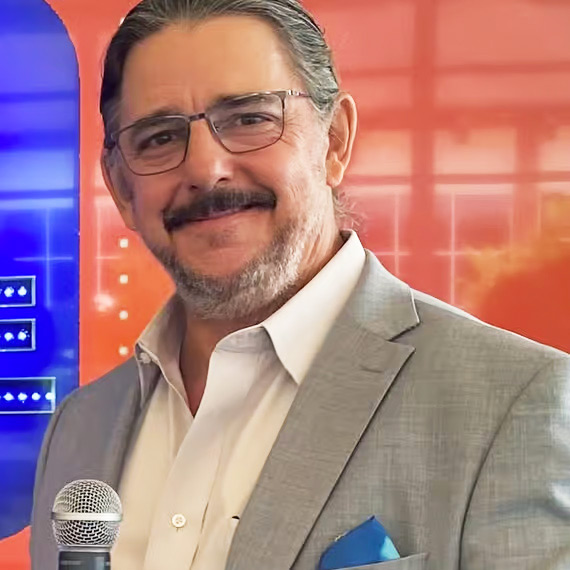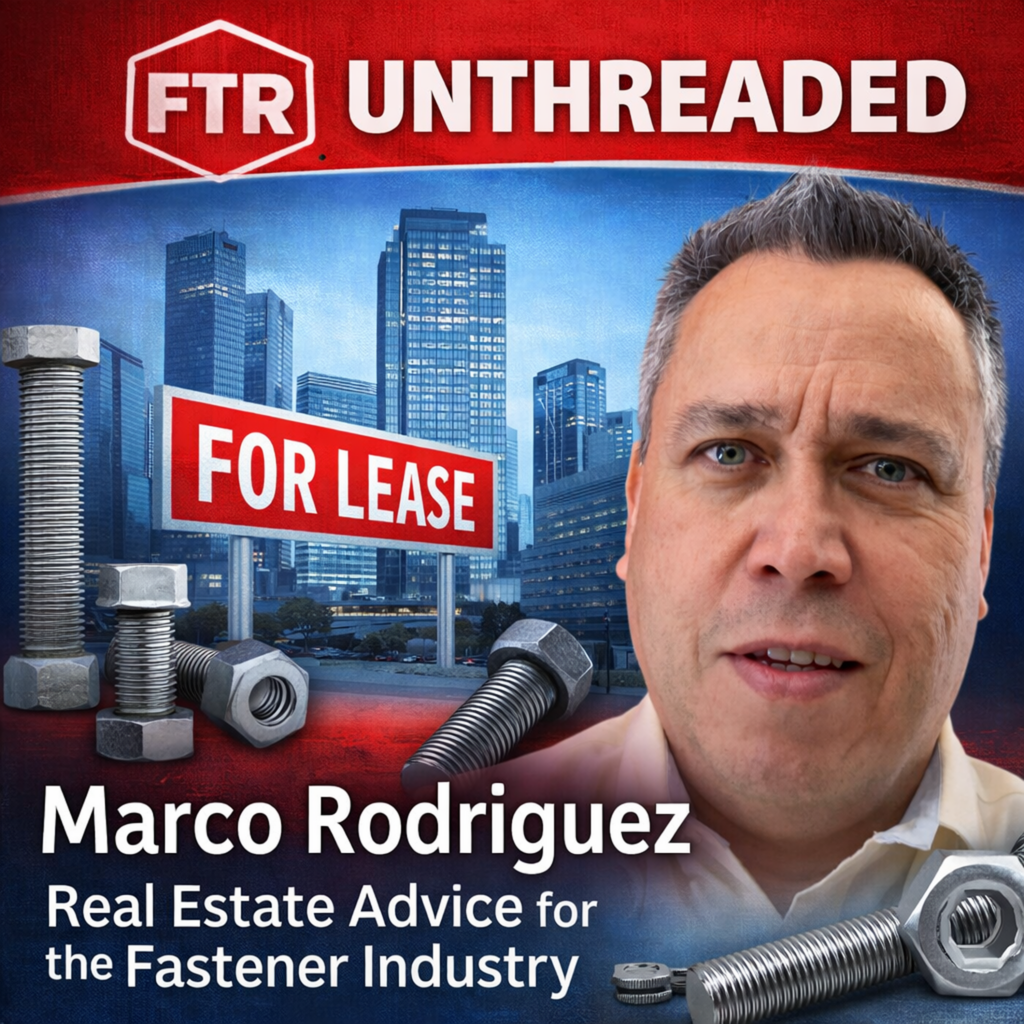
Real estate advisor Marco Rodriguez has deep roots in the fastener industry. He reveals strategies for getting the upper hand in commercial leasing negotiations, showing why he has become the go to voice for advice on commercial real estate in the fastener industry. He also shares his thoughts on the impact of AI data centers on the commercial real estate leasing market.
Contact Marco Rodriguez of Cresa: https://www.linkedin.com/in/marco-rodriguez-51b8914/
—
Listen to the podcast here
Important Links
FTR Unthreaded: Marco Rodriguez
This Unthreaded edition of the show is a conversation with Marco Rodriguez of Cresa, an expert real estate advisor. Everyone, Eric Dudas is with you again. The regular audience to the show knows that Marco has been dropping in his commercial real estate updates for the last several episodes. He is sharing his knowledge and developing wisdom with the fastener industry in hopes that you will think of him next time a real estate issue comes your way.
Specifically, when it comes to finding a new space for your distribution or manufacturing operation. As you will hear, along with the vast team he is connected with, Marco is building up a real knowledge base in this area, and he has serious fastener industry credentials. It is a good conversation, and you will get to know the voice behind the commercial real estate update a lot better. The title sponsors of Fully Threaded Radio are Linfast Solutions Group and Brighton Best International.
Fully Threaded Radio is also sponsored by Buckeye Fasteners, BTM Manufacturing, Eurolink, Fastener Supply Service, Cresa, Fastener Technology International, Fastener Fair USA, Goebel Fasteners, INxSQL Software, J.Lanfranco, MW Components, Solution Industries, Volt Industrial Plastics, and Würth Industry USA. I will drop a link to Marco’s LinkedIn profile for this episode. If you want to reach out to him, he is easy to catch and a good guy to have in your Rolodex.
We make a couple of references to Vegemite during this episode. For anyone who is not plugged into that little joke, we use our little Vegemite sample packs as a marketing device at the trade shows we hit with FCH Sourcing Network. We have had a lot of fun with Marco over the years talking about that. He, for whatever reason, caught the vibe on that one. Here is my conversation with Marco Rodriguez of Cresa.
—
From Fasteners To Real Estate: How Industry Insight Shapes A Trusted Voice
Marco, you are rapidly becoming the voice to go to in the fastener industry for advice on commercial real estate. Thanks for being here.
I appreciate it. I appreciate you. Someone wants to hear what I have to say.
You always have very perceptive questions. Whenever you would come up to the booth, Brian and I would be in Vegas, or whatever show we are at, you always seem to understand what we are going through at the moment. You ask us about, and I am talking specifically about your suggestions on the marketing angle, how we use Vegemite as our foil. With all that, you picked right up on that.
It is interesting. I had spent almost twenty years in the fastener industry. When I left to get into real estate, you see it from the outside, and you pick up on perspective. I am always looking for different ways to market and get people’s attention. I like the Vegemite take, and I have younger children. I know what they are doing on social media. I thought there was an angle there. You guys can leverage video and humor to capitalize on the Vegemite connection.
I am still flirting with the whole video thing. It is a big beast in the cage that I have not let out yet, but I think you’re right on that. Anyway, after all these conversations and stuff, you are working with us on the show’s last several episodes. I really like the short segments that you do. They are really informative, and I know you bust these things out about it. It is like Carmen doing the Fastener Training Minute. You look out there and see what’s relevant. A lot of topics are going on in real estate these days. It is a tumultuous economy. It is a tumultuous world, really. You are right out there.
Carmen and Mike McNulty set the bar very high with their segments. I feel like I need to step up my game. They do a fantastic job providing nuggets of information. I am hoping that 1 or 2 audiences benefit from what I have to share.
Data Centers & The New Gold Rush: Power, Scale, & Shifting Demand In Industrial Real Estate
Let us dig into a provocative subject right out of the gate here, Marco. Data centers are everything in the news these days. First of all, they are going up everywhere, and they have these enormous power requirements and also enormous, apparently, fresh water requirements for their cooling systems and everything.
In the headlines that I am reading, you see different municipalities, and they are arguing over how this is going to affect the communities that they are going into. There are all kinds of ideas about where to place them and so forth. One thing is for sure. This is a major force out there. How is that, as far as you could see, impacting fastener warehousing operations or even office operations that you are dealing with?
It is a major topic. One thing is for sure. There is just so much money behind these data centers. I think it is an unstoppable force. Companies like Amazon, OpenAI, and Facebook are not going to stop building these things. It will be an ongoing fight, but I am certain that there is enough capital and pressure behind them that it is inevitable that they will pop up everywhere.
There is just so much money behind these data centers—they are an unstoppable force. Share on XLuckily, you rightly pointed out that the biggest factor determining their location is the availability of power. We are not talking megawatts of power. We are talking about gigawatts of power. They are often in really remote areas where power sources tend to be, just like nuclear power plants. Nuclear power plants tend to be far from homes and industrial and commercial centers. Wind farms tend to be out and about in remote areas.
Data centers need to be close to the sources of power, and luckily, those are not typically competing with warehouses and manufacturing locations. If it is intense heavy manufacturing, it might be because, let us say, someone making solar panels or steel requires a lot of power. The objection seems to come more from environmentalists worried about the water consumption. Of course, your everyday consumer is worried that data centers are going to be driving up power prices.
I am taking it from that response that you are not really seeing any impact yet on any of the conversations you are having with the fastener world.
Interestingly, the data centers themselves do not compete for space with fastener distributors. Someone described it to me as the modern gold rush. There is such a race to build these data centers that the suppliers to the data centers are making a killing. Everybody, from the large high-voltage transformers to the racking, the data racks that house all the servers, the cooling systems, refrigeration systems, and cabling.
There is just an enormous list of suppliers to the data centers that are making a killing. Since there is a race to be the first, when someone like Google calls for pricing, they do not really care how much that stuff costs. It is really how quickly you can produce it, and can I get to the front of the line ahead of someone like Facebook? What we are seeing more of are the suppliers competing for space, the distributors of equipment needing space very quickly, and fairly large amounts of it.
I can totally see that. These operations are just cropping up overnight, and they need huge amounts of resources to grow.
These are really large spaces that the suppliers to the data centers use. We are talking half a million square feet, a million square feet. We at Cresa have worked with some of these companies to find very large spaces. With a few exceptions, fastener companies do not use, whether you are a manufacturer or a distributor, they do not have spaces that large.
Just thinking of some of the large fastener distributors or importers, they might have 300,000 to 500,000 square feet of space. The data centers and their suppliers are playing in a different league than the fastener industry. I would fathom to say that most fastener distributors are probably in smaller buildings, a 20,000 to 50,000 square foot building. Certainly, some of the more remote locations might be in a 5,000-square-foot building.
From Coastal Shifts To Career Pivot: Market Migration & An Industry Insider’s Transition To Real Estate
That makes total sense to me. My thought was really more along the lines of the competition for the resources. I do not know that this is all fleshing out yet. It is just a specter on the horizon, but I see it in all the headlines. I do not have any direct interaction with it, so I am just asking. How about we move to another controversial subject right now?
That is the move away from a lot of these West Coast ghost cities like Portland, Seattle, and so forth. I have talked to several distributors over the years who fled those cities because it just got unmanageable for them, unworkable where they were. Those guys are splitting. Is anybody moving into those places, or are they just ghost towns now?
I would not say ghost towns. Any of your audience would tell you fasteners are used everywhere. Maybe demand has dropped off a little bit, but there is still a decent manufacturing base up in the Northwest. I am thinking of a few companies that are looking to expand in those areas. You are seeing a lot of flight from the downtown areas, and that has impacted the office primarily. I would say industrial demand has held consistently across the board.
Of course, it has grown in states like Texas and the Southwest. Phoenix had a big boom in industrial demand. As it relates to our industry, I am curious to see what some of your fastener distributors would say, but I would say industrial demand has held fairly strong. There is not a whole lot of fastener consumption in any major metro downtown, whether it is Dallas, Texas, Portland, or downtown LA. They tend to be in industrial pockets and manufacturing pockets.
You are not getting a lot of calls for guys that are wanting to move into those areas, I am gathering.
No.
They are the hot markets that you were talking about on your last installment, I guess.
The good thing about fasteners is that I have not heard too many stories of homeless people breaking into fastener warehouses to steal some grade eight or hex head cap screws. There is not a high value commodity that they can easily fence like copper wire.
There are other problems, but I take your point. You can talk to Rick Peterson about that. You remember him?
I am sorry, who is Rick Peterson?
He sold his business a couple of years ago, but he had some interesting tales to tell about that area. We will not dwell on it. You keep bringing up the fastener industry, and we are talking about real estate. The overview here, really, and let us just give a little bit of insight into people who might be coming into this without really knowing you that well, and the bridge that you had to get from fasteners, which you understand deeply, into real estate, which makes you such a good person to talk to about looking for space. How did you make this transition?
It is an interesting story. It was made for me partially. I had been in the fastener industry since the early 2000s, working for, at the time, what was GE Supply. That was a company that was formerly Questron. I spent a number of years there. That company later became Gexpro Services. Afterwards, I worked at LoneStar Fasteners in Houston and got into the oil and gas fastener industry.
Were you doing sales at this time?
At Gexpro, I was what we call the vertical leader. That meant a P&L responsibility for everything related to the energy industry. It was essentially a business leader. Of course, like any business leader, you never give up sales. I was working with companies like GE and wind turbine manufacturers, gas turbine manufacturers, all sorts of large diameter exotic metal fasteners that we sold to OEMs primarily. I took a role as the managing director of LoneStar Fasteners in Houston.
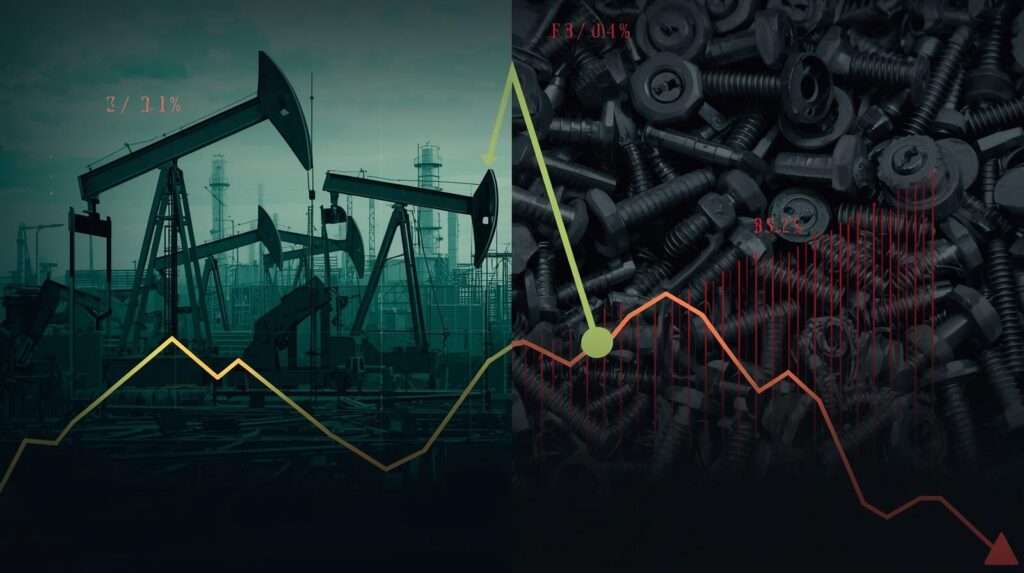
The oil and gas fasteners is a different world. They use a lot of studs and a lot of 2H nuts. I am sure people are familiar with them, but it is just a different demand model. It is all made to order, or there is very little predictability. It is largely influenced by oil prices. When oil prices are high, people are buying fasteners like crazy. When oil prices drop, as they did in 2015, demand dries up as well.
From Oil & Gas To CRE: How Industry Experience Became A Competitive Advantage
I tell you all of this because I then went to work for Würth Industry USA, a fantastic German company. I was about 49 years old, and the company restructured. My role was eliminated, and I had to make a career decision. Did I want to find another job in the fastener industry or do something completely different? Real estate had always been attractive to me.
I very quickly discovered I was terrible at selling houses, and I sold none as a matter of fact. Luckily, someone pointed out to me that there was a whole other side of real estate called commercial real estate. I had spent an entire career inside warehouses, manufacturing plants, and distribution centers. I quickly took to that. That was really an area where I felt at home.
Found your groove.
I found my groove. That is a better way to say it, perhaps.
You do not really have the hair for residential.
I do not like to do the spray tans either. It puts me at a disadvantage.
Now you are in the smash mouth world of commercials, and you have got a captive market with fasteners because you know it so intimately.
You spend twenty years in the industry, you meet a lot of people, and when your show is confirmed, it’s how important relationships are. We are an industry that is not terribly known for turnover. Luckily, a lot of the people that I worked with or interacted with, whether they were customers or suppliers, are still in the industry.
I was able to connect with them and understand the problems from their perspective, which is rare in real estate. I was not trying to push buildings or force anybody to move. I understood the challenges they are facing, whether it is contracts with their customers, quickly rising rents post-COVID, unrealistic landlord expectations, etc. I was able to understand their language and offer an informed perspective.
Mastering Leases & Strategy: Insights On Fastener Industry Needs & Navigating Institutional Landlords
One of the things I like about your real estate updates is just the deep strategy that you offer. You have thought about it a lot when I play these things. I am thinking to myself, I never really thought about it that way, but you have accumulated a lot of wisdom over your time doing this. I really admire it.
Prior to getting into real estate, I never really thought about it. I did not realize there were all these little specialties, like just like in fasteners, you have got specialties. You have got people who focus exclusively on stainless fasteners, metric fasteners, or fasteners for the construction industry. Similarly, in commercial real estate, there are people who focus either on a specific geography or on data centers. What we just talked about at my company, one of the things that attracted me to go work for them is that they exclusively represent tenants. We never take the landlord’s perspective.
The people that I have met in this industry have been working here for twenty years. They have amazing strategies, amazing ideas, proven tactics that, when we negotiate with landlords on our clients’ behalf, we are able to get good outcomes. I did not invent these. I still consider myself a rookie in this industry. When I work with people who have supported our clients, these are national clients for years, and they have seen everything. I can just pick their brain and say, “What would you do in this situation?” Nine times out of ten, they have got way better ideas than I could ever come up with.
In your experience so far, what have you discovered about the unique needs of the fastener industry or wholesale distribution operations?
That is a good distinction. To some extent, fasteners are unique, but it is not uncommon. Electrical distribution faces many of the same problems as hose distributors. Industrial distribution as a whole has many similar situations. What we see is similar to what people are complaining about is home affordability. There have been very large, powerful Wall Street-backed groups buying up large swaths of warehousing. As an example, Prologis is the world’s largest industrial landlord.
They have a tremendous amount of leverage. They own more warehouses than anybody. That gives them somewhat of a monopoly. If you are in a market where you need to renew your lease and you are paying, let’s say $5 a year per square foot, and Prologis now says your rent is $9, you have limited leverage in pushing back on that. What I have learned is that it is important to get ahead of the lease expiration and not be at the whim of these institutional landlords.
Whether it is us or somebody else, get assistance and get market intelligence so you know how best to negotiate. Know what the market is at, know what landlords are willing to give, and what they are not willing to give. Most of the time, landlords have the advantage because they are larger and they can live with you leaving and that building being six months vacant. You have got to build a strategy, get ahead of it, and know what your options are so that you do not just have to take what they give you.
Get expert guidance and market intelligence so you can negotiate from a position of strength. Know the market, understand what landlords will and won’t concede, and build a strategy that gives you options—so you’re never forced to accept whatever they… Share on XDo you have any feel for the fastener industry, what the breakdown would be for companies that own their building versus lease it?
It really depends on the size of the company. Even in our industry, in the fastener industry, there has been consolidation. Maybe 10 or 20 years ago, most of these distributors were individually owned or family owned. They have been rolled up into bigger companies. Some of them have been bought by private equity.
Private equity and corporate clients tend to lease because it is a better use of their capital. They prefer to reinvest the capital that they might have tied up in a building in their business. Private equity definitely does not like to own buildings. Smaller companies that are owned by an individual owner or family think about it differently.
They think about building generational wealth, and they tend to own their buildings. When they sell those companies, sometimes they retain the buildings and then lease them back to the buyer. Honestly, I do not know if there is a hard number or what percentage. Someone even asked me how many fastener companies there are. I do not think I would be able to come up with a number.
There is a good one. Whatever there is, there is going to be less in about a month.
I look on LinkedIn, and it seems like every other week, some company is getting acquired.
Every now and then, you see somebody putting their shingle out, starting up something new, but mostly it is going the other way.
It is tough to compete as a small guy now to put your shingle out. You have to have significant volumes, and there is added complexity of tariffs. You have to have some purchasing power to get the best deal, not just from the many overseas manufacturers, but also from the shipping lines, overseas freight, and domestic carriers. I think gone are the days when you could just be a one-man show and work from your home and make a decent living.
Navigating Boom-Bust Cycles: How Early Planning & Tenant Advocacy Protect Businesses From Rising Rents
On the other hand, having said that, when we’re thinking about these boom-bust cycles, and you were talking about oil and gas earlier, you were also mentioning Texas earlier. There is a huge overlap there because when oil and gas go crazy, which it seems to do periodically, you see all these little stud manufacturers and things pop up. Those are the guys that you might be looking to work with, aren’t they?
I remember running into some old colleagues at one of the fastener shows, and they asked, “What are you doing here?” I asked them, “Do you have four walls and a roof?” Of course, the answer is yes, everybody needs this. Absolutely, we work with companies as they start out. Everybody needs a place to operate. Particularly in Houston, there is a lot of manufacturing or conversion. They are buying a threaded rod or just a bar and having to cut it and thread it. There is a fairly decent demand from these smaller guys that need to lease some space and then, as they grow, find a larger space.
I guess the startups are way more likely to be leaders. You were talking about this trend towards bigger and bigger consolidated landlord operations. As I see it, it’s happening in residential areas too. You hear about BlackRock Holdings. It is like 30% of all residential homes now. That was a figure I saw thrown around. Does that jive with what you hear?
These BlackRock and other large institutional landlords see a tremendous advantage. I am a capitalist. I am not going to beat them up for what they do, but they know that companies are very unlikely to move. Unlike apartment dwellers or homeowners, they might move every couple of years. Once a business has set up tons of steel racking, loaded up their bays with pallets of heavy product, or, in the case of manufacturing, even if you are just cutting bar or threading, making the investment and setting up all that equipment, the landlord knows that you are unlikely to move.
That gives them a lot of leverage to raise your rent. Look, some of these are public companies. Prologis is a public company. You can go read their annual report. They brag to their investors that, on average, they’ve increased their rent 40% to tenants. They want to attract investors. That is something they brag about. Other large landlords like EastGroup are large public companies. You can read their reports, and they are raising rent. As a tenant, that is very challenging when your rent goes up 40%. Imagine if your employee costs went up 40% or your cost of product went up 40%. It is very impactful.
Of course. That is where we need an advocate like Cresa to help us when we are out there in the market looking for somewhere to go.
We would love to work with anyone, of course. Coming from the fastener industry, I love to reconnect with people from the industry, but I encourage people to get professional advice and know what their options are. If there is one thing your audience takes away, it is that they should start the lease renewal process as early as possible. I am working with a company in Houston.
They are not a fastener distributor. They distribute oil and gas products. Initially, they told me, “Look, we are three years away from our renewal. We are good.” I said, “Do you know what rents are going to be in three years from now?” First of all, they are 50% higher than your current lease rates. You are up against a major increase in operating expenses. Would you not want help in knowing what your options are? They agree that there is no harm in getting advice.
The weird thing about my business is that we do not get paid by our clients. If we get hired by a tenant, we get paid by the landlord. If you have ever bought a home, you’ve hired a real estate agent to represent you, and you know that they get paid by the seller of the home. Similarly, there is no risk to our clients in getting our advice. They could fire us at any time, but we get paid by the landlord.
The point is, we work with companies to come up with a strategy. The biggest strategy is starting early and looking at options. There is a little bit of poker playing here to bluff and have your landlord worried about you potentially moving. They know that if you call them up three months before your lease expires, you are not going to interrupt your business. You are not going to move out in three months.
They can double your rent, and you really have limited options. If you start two years ahead of time, then there are many options. You could build a building. You can maybe buy a building. You can build a building, which is called a build-to-suit. Maybe you move down the street to a competitor’s, a competitive landlord’s building. That is my advice to your audiences, whether they use us or someone else, start the process as early as possible.
Reputation, Referrals, & Market Intel: Leveraging Trust & Expertise In Commercial Real Estate
It makes a lot of sense. I have heard you say that before. Strictly speaking, from your perspective, working on spec is a tough way to make a living, but on the other hand, from the client’s standpoint, they know you are working hard for them, and they know you are doing an honest job of it. I speak from experience in that area, Marco. Keep it rolling.
When you are a professional services company, whether you’re an attorney, a doctor, or a trusted advisor, your reputation and word of mouth are everything. Even though we are working on spec, as you say, if we do not do a good job for our clients, then they are likely to either not recommend us or, worse, badmouth us. Luckily, I have been able to use my industry reputation to connect with old colleagues, and those colleagues have been happy to refer me to other people in the industry who could use our services.
When you’re a professional services company—whether you’re an attorney, a doctor, or a trusted advisor—your reputation and word of mouth are everything. Share on XAs I said at the top of the conversation, we ran into you multiple times at the various shows. What’s on the docket for you? Are we going to see you at any upcoming shows?
I did not make it to Vegas this year. Actually, I am done with Vegas prices. I am definitely planning to attend the Phoenix IFE show this year.
The Vegas show in Phoenix, we are calling it.
I attended another fastener show, the STAFDA show, earlier this year. I was very impressed with the Phoenix Convention Center. I am eager to get to Phoenix. I seem not to be deliberately, but I seem to have been going every other year to the Fastener Expo. I forgot where it is going to be held this year. Is it Charlotte?
Yes.
I was in Charlotte for another event, and I also loved the Charlotte Convention Center. I was very impressed with how clean downtown Charlotte was. I am looking forward to that event as well.
Cool, I will be seeing you there then. What was your impression of STAFDA? You mentioned you were there. I heard that there were some big changes after that show that they were announcing.
It was my first time going to STAFDA, so I did not have a point of comparison. To repeat the term you used earlier about Portland, it seemed like a ghost town. The exhibitors I spoke to were very underwhelmed by the quality and the quantity of attendees. It is not an industry that I am particularly involved with, specialty tools and such, but I will say that I am not planning to return to that show.
It is not a show that I have been heavily involved in either, but I did hear that, and I think big changes are coming with STAFDA. I know their senior management, and things turned over a little bit. I guess we will stay tuned to that. A few fastener guys do attend that. Marco, what else can we tell the audience about Cresa? It has been great talking to you and getting to know you a little bit better here. If there is a takeaway that you want to leave with audiences, lay it out there.
I talked about the one takeaway about starting your lease renewal process early. I hate for this to sound like a commercial, but Cresa is growing. When I started with the company in 2024, we had about 50 offices across the country. We are about 62. We provide services like project management. Not only do we put tenants into the right spaces, whether it’s office buildings or distribution centers, but we also have project managers on staff who will help outfit those buildings, build out what’s called tenant improvement offices, or other construction projects.
When there are large investments, we work with state and federal governments to find incentive dollars to attract companies to those locations, and we are national. If someone calls me and says they would like to go to Florida, I would work with them, and we would use our local office. We have feet-on-the-street intelligence and work with our national team to see if there are eligible tax incentive dollars for new jobs or investments. One thing the current administration has done is make it more attractive for overseas companies to invest in our country. There is quite a bit of money available that not everyone is familiar with.
That is an interesting angle. You have got a lot of market Intel in that area, too, it sounds like.
I have to be truthful. I have a tremendous team. We have thousands of employees and really smart people. If you were counting solely on my knowledge, I would not offer much, but luckily, I have a vast wealth of smarter people behind me.
You know where to get it.
That is right.
Marco, last question for you. We were talking at the very top about your love of Vegemite.
It is right up there with brisket. They go one and two on what’s my favorite food.
Brian would not argue with you on that one. What I was going to say is maybe we could talk to one of your kids about helping us out with our social media presence and the whole Vegemite push. It sounds like they would be great at that.
We started early, so my kids are adults. The youngest is a freshman in high school. What you need is a teenager. You need a TikToker who could do the fancy editing with subtitles and the quick cuts? I am telling you, I think that would be a hit. If you could somehow capture people’s facial expressions after tasting that, I am sure it would be the talk of the next show you are in.
We will talk about it in Charlotte. What would you say?
I would love it. Looking forward to it.
All right, Marco. We have been talking with Marco Rodriguez. He is with Cresa. He is your fastener commercial real estate guy. He is the voice that you have been hearing on the show lately, and I sure do appreciate you joining me.
Eric, long before I worked at Cresa, I have been a listener of FTR, and believe it or not, I am always picking up something.
Appreciate that. We will talk to you soon.
 Apple Podcasts
 Spotify