Würth EVP Larry Stevens shares his thoughts as he guides the world’s largest industrial supplier toward global integration and connectivity. From simple midwest beginnings, he spent 16 years building the business in Asia before returning to the U.S. to focus on directing the company’s vast collection of companies towards a more unified growth course. During this wide-ranging conversation, Larry shares many experiences, including his reactions to some of the more “exotic” cuisines he was presented in the east, and his unexpected feelings upon returning to the west. He also looks to the future of a more globalized world, where technologies such as AI and additive manufacturing are changing the way business will be done.
—
Listen to the podcast here
Important Links
- Larry Stevens on LinkedIn
- Würth Industry
- Brad Spencer on LinkedIn
- Marc Strandquist on LinkedIn
- AJ Strandquist on LinkedIn
- Ed Taggart on LinkedIn
- Rusty Partch on LinkedIn
Special Report: Würth EVP Larry Stevens
Introduction
This is a Fully Threaded Radio special episode. Thanks for clicking in. Regular readers of the show know that Würth Industry has been a long-time partner. With this support, we not only provide industry interviews, news and commentary, but also things like the Fastener Distributor Index and the FCH Sourcing Network platform. Which is just about ready to get a massive and long overdue upgrade, by the way. Stay tuned. We’ll be discussing that quite a bit in detail soon.
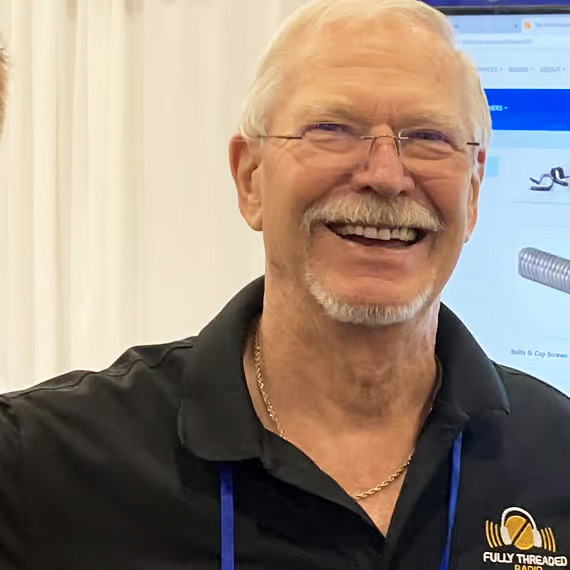
This episode is a full-length conversation with Würth Industry Executive Vice President Larry Stevens. I met Larry in person for the first time at the IFE in Las Vegas. He’s very easy to talk with. During the discussion, we cover his tenure building Würth’s business in Asia as well as what he’s focused on as the company continues its transformation as a truly unified global industrial distribution powerhouse.
We cover lots of ground. He’s quite candid about how he got to his current role as skipper of Winna. He’ll get a feel for the way he’s thinking on a range of issues as diverse as the role of the rising BRICS Coalition to the culture shock he felt when he returned to the US after sixteen years in China. We touch on his early career, AI, additive manufacturing, and a whole lot more.
Again, Würth has been a great partner of Fully Threaded for many years. I’ll also point out that the title sponsors of Fully Threaded Radio are Brighton-Best International, Goebel Fasteners, and Star Stainless. Fully Threaded is also sponsored by Buckeye Fasteners, BTM Manufacturing, Eurolink Fastener Supply Service, Fastener Technology International, INxSQL Software, J.Lanfranco, Solution Industries, 3Q Inc., Volt Industrial Plastics, and of course, Würth Industry. I enjoyed putting this one together and getting to know Larry. I know you’ll enjoy reading it. Thanks again for reading. Here’s Larry Stevens, Executive Vice President of Würth Industry.
—
Larry Stevens, thanks for being here.
Thank you, Eric. I appreciate the invitation. I’m looking forward to our discussion.
I am, too. We’re heading into Q4 2024 already. There’s so much happening for Würth. We could take the whole day and not cover it all. When we spoke in Las Vegas at the Fastener Show, we promised to start off with a few personal adventure stories. I’m going to do my best to hold you to that.
I’ll do my best to keep them clean. We’ll save the more risqué ones at a later time.
You’re at the pinnacle. You’re doing things on an enormous scale, but you come from humble beginnings. You’re an Ohio guy, aren’t you?
Absolutely. You know you live in Ohio. By law, I have to say OH. I was fortunate enough. I grew up on the Ohio-West Virginia-Pennsylvania borders, a little town called Columbiana. It’s most famous for the birthplace of Harvey Firestone. There’s a lot of history for the community. It’s not that old. It was a nice little place to grow up.
It helped me as I moved out, went out into the world, and traveled around the United States. I’ve been very fortunate enough in this industry to see lots of neat and unique places. Getting to travel around and see how different the United States is. How different the rest of the world is from where I grew up has been beneficial for me. I enjoyed it. I’m taking a lot away from that.
Starting Würth’s Business In Asia (China)
We spoke in Las Vegas. You talked in that brief time a lot about your experiences in Asia. Before you came back to skipper Würth, the North American, at the top, how did you wind up in Asia? That’s the beginning of this chapter of your career. How did that transaction happen?
I started out in the industry with Flexalloy. I started in 1996. The company was going well. It got to a point where it was either we had to start acquiring companies, or the ownership. Andy Rayburn needed to sell the company. He decided to sell it and we were purchased by Textron. I was with Textron for about two years. They made the decision that I was no longer part of the solution and would probably be considered part of the problems.
I was given the opportunity to leave and I joined Würth. I left on a Thursday. I called up a good friend of mine, Brad Spencer, who had left Flexalloy and went to Würth Service Supply. We met at a place called Scorchers for a couple of wings and to commiserate our experiences. Eight days later, I was in Wichita, Kansas as a branch manager for Würth Service Supply responsible for Wichita, Kansas and Springfield, Missouri.
Not to say anything negative about Wichita, Kansas, but it was a tad lonely. When the opportunity was presented, the question was asked by Marc Strandquist. Would I be interested in going to China? I said, “Heck yes.” The natural question was, “Have you been there before?” I said, “I probably can’t even find it on a map, but I’m living in Wichita, Kansas.”
I went with nine other individuals, had a round of interviews. I got the opportunity to go. I got there and landed in April of 2005. I had my preconceived notions of what China looked like, what it was like. I had read the rape of Nanjing and thinking that Japan wasn’t much different. I’d read Shogun and some things about Hong Kong.
I’ve been very fortunate in this industry to see many unique places, traveling across the U.S. and the world. Seeing how different life is from where I grew up has been incredibly valuable. I’ve really enjoyed it and taken a lot from the experience. Share on XShanghai is nothing like that. It was a very modern, thriving city, bright. Yet, still in 2005. It had a little bit of a Wild, Wild West feel to it. They turned the city lights off 8:00 PM every night. Pollution was extremely bad. Things had started to loosen up. I could live wherever I wanted. It was just a real adventure to be said, “Here you go. Go start a company.” I said, “How do you do that? Go sell something.”
Another gentleman named Arne Brandis from Germany came over. The two of us worked together to open what was then called Würth Fasteners Trading. We made a ton of mistakes. That’s one of the beautiful things about Würth and being a family-owned company. They give lots of people a tremendous opportunity to go out, learn, make mistakes, and to learn from those mistakes. They don’t overreact when you make a mistake.
They don’t want to lose tons and tons of money through mistakes. Mistakes that are morally questionable, we’ll put it that way, aren’t permitted. Good, honest, “I tried something that didn’t quite work out.” They let you do that. I got the opportunity to go to China, open a company from a green field, make mistakes, and to learn from those mistakes. After my contract ended, I came back for about seventeen months. I then went back to China and stayed there for fourteen years and nine months. That’s how it all started. Somebody said, “Would you like to go somewhere?” I said, “Yes.”
This is one of those mind-blowing fastener stories that I love so much. You just basically leave on a mission, completely unknown. This time, I’ve never heard it driven out of boredom. This is great, Larry.
Where I grew up, you know the area. At the time, this was the late ‘70s, early ‘80s. The steel industry had died. The rubber industry in Akron had relocated, let’s put it that way. The coal mines were played out. There wasn’t a lot of work. Any place that seemed new, fresh, and exciting, that was the place to go. Honestly, if they’d said, “Go to Turkey. You want to go to India, South Africa?” It wasn’t necessarily China. It was the chance of adventure, the chance to go and see something. I’m not so fond of riding on airplanes. Back then, to take a flight overseas, that was amazing. That was a lot of fun. It was just a tremendous opportunity that I had a lot of fun with.
Fastener Industry Shift And Würth’s Local Focus In China
You expanded your horizons. That’s for sure. Looking back to where you are, that’s pretty obvious. Let me ask you this. During your period there, that was 2005. How would you characterize the whole fastener industry shift into manufacturing so heavily in Asia at that point? It was already in full thrust. The master distribution model in North America had already started on this or was right about to start on this consolidation period. How do you characterize it?
I would say it had started already. When I was with Flexalloy again, the ownership had made a decision that they should sell versus continuing to try to finance themselves and to buy others. I’ll say right near the beginning of the consolidation process. A lot of the manufacturing had already moved down south into Mexico.
I don’t know that North American manufacturing had moved over to Asia at that time. In my opinion, most of it was already homegrown over there. At the time, it seemed like specials were coming from Taiwan and standards were coming more from the mainland. I don’t remember Vietnam or Thailand having much of an industry for fasteners. I didn’t do a whole lot of buying myself. Once I got to mainland China, that’s where our main focus was.
We were there to service customers that were in China, to buy locally, to warehouse local, manage the quality, manage the supply chain, and to supply local. We had no desire to export or to import. We tried to only buy local and manage it local. Usually, depending upon the customers we were doing, we usually only imported about 4% of the products that we sold in China through what is now Würth Industry China. At some point, that number of parts jumped up to about 17% of our parts. Those were usually parts that were very specific and had to come from a specific manufacturer that was not in China.
I’m surprised to hear that because you answered my next question in that answer. I’m just very surprised. With all the material coming across the water into North America. I’m shocked.
Würth has a sourcing organization. They’re called Würth International. As you see at the fastener show, many of the suppliers throughout Southeast Asia, India, Turkey, all of the Asian suppliers. The command of the English language, both written and spoken, is excellent. People don’t seem to comprehend how educated the people are in Asia.
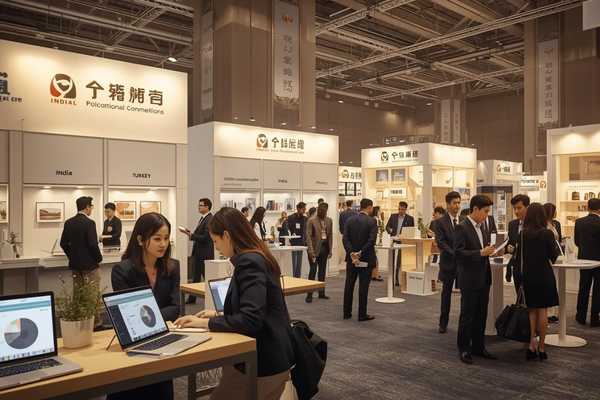
The need to have people there was more to do our quality inspection pre-shipment, which we have. I apologize that I’m not so good with English measurements anymore. We have an 800-square meter lab at our CDC in Haiyan, just South of Shanghai. We have the second largest lab in the Würth Group in Mainland China. We have a large lab also in Taiwan.
What we were doing a lot more of in support of the rest of the group was quality supplier auditing, making sure that they were qualified and following the rules of the group. Whether it comes to labor laws and how they process and process management controls, all of the things that are necessary to generate a quality product.
As far as actual sourcing and purchasing on behalf of the organizations, that was done through the organizations themselves. We did more if there was an expedite or they needed somebody to run over and talk to somebody concerning answering a technical question. That’s what we were doing to support the rest of the world. Personally, we did not purchase anything and export it. We were there to service local customers and to provide the same level of service that the customers demand and want globally. That was our main purpose, not to be a sourcing organization.
As you developed over there and ultimately moved full-time for those fourteen years, you must have had to learn each piece of this one by one. Here you are with a pretty good mastery of across-the-board skills. I read your LinkedIn bio, Larry.
The real fact of it and the beautiful thing of what I experienced was, as you read my bio, I’m not an Ivy Leaguer. I don’t have a McKinsey-worthy CV. I didn’t finish at the top of my class. I graduated from the University of Akron. I was there a little bit longer than most people because I had a lot of fun. I wasn’t the best of students. I’ve never had the best scores. I never had these, “This is the guy” type of things.
I learned very quickly to judge people, to find talent, and to work with them. I was very fortunate when I went to China. This would be a key takeaway for me. If young people were to ask me, the key is to allow other people to be successful, to turn your weaknesses into a strength. I don’t speak the language. I found out very quickly I could not speak the language. I could order a beer and some other things. I could get around. That was the key.
It is the fastener industry after all.
You saw my physique. I’m not over-exercised. I just got the opportunity to learn how to let people be successful when it comes to all facets of the company. I got very fortunate that I was able to hire some spectacular people who understood the business, learned very quickly, and understood where we wanted to go and how we wanted to do things.
I did visit suppliers. I spent a long-time visiting customer. We worked on different topics. Most of it was done by the people there. I got the opportunity to learn how to take every one of my weaknesses and turn it into a strength. That’s where you can say, “How did you survive for sixteen years in China when you didn’t speak the language? You’re not an engineer. You never were very successful as a salesperson. How is that possible?”
I got the opportunity to lead a fantastic group of individuals. I learned very quickly that I can’t do everything. I learned not to micromanage. I learned how to let other people make mistakes. I’m just very fortunate in getting that chance. That opportunity to grow and develop myself by staying out of the way and ordering a beer.
Amazing what happens when you do that, isn’t it? You mentioned Marc Strandquist when you were talking about how you made it over to Asia initially. As you probably know, and most readers do, Marc was honored posthumously by the NFDA. He received the Fastener Professional of the Year Award. It turns out your connection with Marc was very fortuitous. As you’re explaining all this, it reminds me about his story a little bit. He was the same way in some ways.
I would say Marc’s greatest strength, as I remember it and I apologize this may sound a little bit like an ego trip. Marc had a fantastic ability to recognize talent. He was never afraid to, let’s say, overstock talent. Maybe there were three people for the same job. He had the ability to hire all three and to keep them all interested by giving them three majorly different tasks, even if it wasn’t their position to begin with.
I took that with me over to China as an example. I used to drive people crazy. I had a technique that when the person came in and complained about something, that was their job. If you complained about the smell of the bus, you were in charge of the bus. If you had salespeople that complained about purchasing, they were in charge of purchasing. That was to get people out of their ruts and allow them to expand and do other things.
Maybe nobody would agree with me, but I thought he did an excellent job of identifying talent, letting them be successful. Challenging them and letting them go do other things than what they might have been hired to do. That would be one of the reasons you would have given him the award. I was long gone. I’m completely wrong in that, but I don’t believe I am. That’s one of the great strengths that he had. He was also a phenomenal salesman and just high energy all the time.
It’s an interesting take. He had an amazing group of people in his orbit. That probably explains it.
He had some great mentors as well. I knew Ron Nordstrom, who would be a guy. If Marc was here, he would say he had a tremendous, huge influence on his life. He was an interesting man that I always enjoyed talking to. I’m sure Marc could give you the same stories about how he learned from other people.
Cultural Differences And Business Mindset In China
Let’s talk a little bit about some of your stories from Asia. Particularly, involving the culture shock that you experienced when you dipped your toe in Asia and subsequently decided to stay there. There’s got to be a bunch of them. Can you pull one out that maybe illustrates the whole thing?
There’s probably too many to remember in the very beginning. Again, probably a lot more that need to spend a little bit of time with a couple of beers. I’d say one of the things that amazed me the most. I don’t want to say culture shock, but I found it very fascinating that everybody goes over there and they read books on how to do business.
The first thing that I’ll say was a culture shock is the Chinese just do business. They don’t read any books about doing business. While we’re all busy reading books about how to do business, they’re just doing it. That would be one thing. They just do business. They don’t write books about it. Nobody ever talked to me about books that they read about how to do business in China.
In China, people just do business. They don’t spend time reading books about it—they simply do it. While many of us study how to do business, they’re already out there doing it. Share on XAmericans read books on how to do business in the United States. We read books on how to do business in Europe. We read books on how to do business in China. The Chinese just do business. That was one thing. Another real cultural shock, I’ll say, is that in many ways, the thought process is 180 degrees from how we grew up and learned.
A very simple thing was that as we were growing up, I was taught that to cheat somebody was bad. Chinese children are taught that to be cheated is bad. It’s a little fundamental difference, but it drives a lot of the behavior and what you would see and experience there. It’s your fault if you get cheated. In our culture, at least to how I was raised, people had sympathy for me if I got cheated because the other guy was bad.
In China, they had no sympathy for me if I got cheated. I was a fool. A fool gets cheated. It’s a different mindset. You see that in how people drive, how food plays so much part of the culture, how to do business, and stuff like that. You hear about all the exotic and crazy food. Those people don’t eat it. They want to see how you react when you eat it.
Is this what that’s all about? It’s all a scam for tourists.
I believe so. What fascinated the Chinese about me is, I grew up in the southeast part of Ohio. My grandparents were children of the depression or young adults in the depression. Whatever my grandfather could catch, we ate. That turns out to be a lot of the things that people tried to shock me with in China. We didn’t eat dogs here, but if it was a snake, a turtle, frogs, you name it. If it could be caught, my grandmother knew how to cook it. A lot of the foods I ate were very comfortable to me because it reminded me of being young with my grandparents.
You were already desensitized.
It was a lot of fun to try different things, whether it be duck tongue or chicken feet or river worms. I would not recommend that. Everything else I enjoyed. There were a couple of things I only tried once. Mostly everything was a lot of fun.
I can imagine that. I don’t think I’d be going back for seconds on the river worms either, Larry.
I know for sure. I had several beers in me before I tried that one.
Here’s the biggie. I didn’t think we’d be venturing into these waters. I’m going to throw it out there anyway. The great Bruce Darling of Porteous, you probably encountered him in your various travels. He once told me the story at the Pac-West. This was years ago. He told the story about receiving the great honor at the table in front of a whole lineup of dignitaries. He was corralled into eating a deer penis.
Unfortunately, for me, I never held such an honor and was never held in that high esteem.
You never went down that road.
They never honored me with such a thing. Nor did I get the chance to eat any monkey brains.
I might’ve drawn the line there, too. It’s almost like you have to sit through an episode of fear factor to do business in some places.
There’s also a level of respect that many times people don’t understand there. You can say, “I’m sorry. I’m not going to do that.” They don’t mind. If they want you to try it, sure. The concept of, “You have to drink. You need to smoke.” They want you to try the food, for sure, but they themselves probably won’t eat it. When it came to drinking and smoking and things of that nature, it was very easy to say, “Thank you. I don’t do that.”
They would accept that. The people that I always dealt with all throughout China and Asia were never offended if I said, “I’ve had enough. No, I prefer not to have wine at 9:00 AM. I don’t smoke.” There were a lot of myths that I had the opportunity to see were not true. It was okay to say no. If you didn’t want to eat that part of the deer, it was okay to say no. I never got that honor.
Good to know. It helps to put that in some perspective a little bit. When you were saying earlier that most Americans or North Americans, aren’t aware of how educated and how people do business in Asia. China, specifically, we’re talking about here. It’s no surprise. There’s a lot of misunderstanding, I would say. This is all very enlightening to a lot of people. Is there any other glaring misconception that you can think of that we should know about?
The biggest misconception, in my opinion, is that people are walking around in fear. That the government is very draconian. That if you spit on the street or if you step on a crack, you’re going to go into prison for the next twenty years. You can’t be a fool, that’s for sure. If you violate common decency and things of that nature, you’ll wind up in jail.
If you’re just a normal person and you’re enjoying life, you’ll find that the people of China and all of Asia are just wanting the same things you are. They want to have a family. They want to have fun. They want a good, comfortable living. They want to live in a comfortable place and have a safe place to live. They want to live in peace.
That was one of those things that were quickly changed. My opinion when I got over there was they weren’t draconian. Police weren’t running around beating people up. Where I grew up and when I grew up, I have an uncle that went to Vietnam. My brother was almost drafted. They ended the draft before he graduated high school.
When I went to Vietnam, I had certain expectations that I would not be welcomed, that there would be this hostility toward me. It wasn’t that. The Vietnamese are very welcoming. They’re very curious and interested. Same with the people in Cambodia, Thailand, Malaysia, Korea, Japan, all throughout Asia. People were very welcoming and warm. This fear that the governments were going to arrest you at the drop of a hat, I never saw it. Never experienced it, never knew anybody who experienced it.
Reverse Culture Shock Returning To The US
It’s very comforting to re-acquaint ourselves with the idea that there’s some universal human principles. That we are part of a human family. Some of these things are, again, universal. You mentioned to me when, again, we were speaking in Vegas. When you returned to North America, when you got back to the US, things had changed in a lot of ways that were a little shocking to you. You had a reverse culture shock a little bit when you returned back in 2022. I’m sure you visited from time to time. When you came to relocate, that was surprising to you, it sounds like.
As you and I had talked about at the time, it was quite a culture shock coming back how expensive things had gotten. That would be one. To me, the perception of a lack of respect for each other, for authority, and the way people were treating other people was a complete shock to me. I would come back for two weeks a year.
To see the way people were treating the people who work in restaurants or even how the restaurant people were treating the patrons or each other. It just was not what I remembered. It just was disappointing that we seemed to have been digressing and going backwards in how we were treating each other. That was one thing.
I would say, our movement in technology. Many of the things that we were doing in Asia that other people would not necessarily like or recognize is paperless. I never carried any cash for a long time. The facial recognition, that’s a very sensitive topic. You’ll look at your phone to turn it on. These things like that, just things that I wasn’t quite expecting.
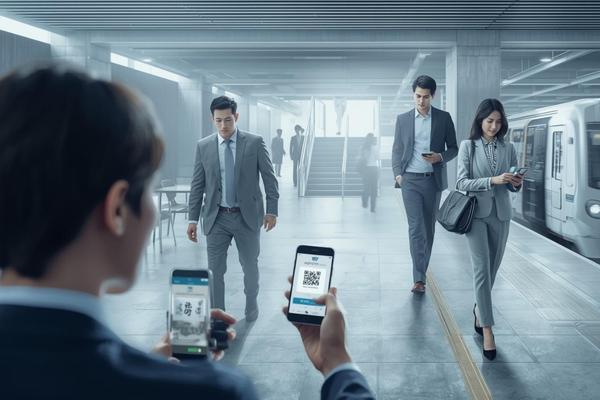
I want to ask you about technology as it applies to supply chain management and so forth. In terms of these cultural impacts that we’re touching on, do you see these things as depersonalizing to a point where it’s affecting our demeanor as a society? Is that what you’re saying?
I never thought about it in that way. It became part of normal life. Those things haven’t happened here, I guess. Maybe they’re happening much slower. I never thought about it as depersonalizing everything. The use of the technology became so much more convenient.
I think I misunderstood. You’re saying that in Asia, it was prolific already. We’re a little bit delayed, but the contrast. I got you. That’s interesting. Let me ask you this then. What about popular entertainment? Music, television, what they’re exposed to over there. Would you say that it’s fostering a more respectful behavior? Is that maybe it?
I don’t know about that. I would say it’s that the people were raised to be a little bit more courteous. There’s a lot of people. When you first go over there, you feel that people are rude, but they’re not necessarily rude. There’s only a lot of people. I never experienced people just outright disrespecting somebody else, or maybe yelling at somebody who didn’t bring the right food. They might say, “I didn’t order this.” There was not this hostility that it felt like when I came back. I don’t explain it very well. It was a feeling of a lack of respect that you seem to have in all of Asia for each other. I don’t know what causes it or how it changed so much.
The Impact Of AI On Future Supply Chain Management
We could continue talking about your experiences in Asia, as I said, pretty much all day. Let’s turn the page to touch on that technology question. It’s been a long time coming. With so many technologies reaching such an advanced stage, it feels like we’re moving into a fully digital age. Might be a little way off, but we’re going there. What’s the most impactful thing that you think is going to hit the supply chain technology-wise? That we should be looking out for, that you’re already gearing up for. What’s your overall outlook on all this?
It’s fascinating. Number one, I hope we never lose the human interaction. I don’t know the proper technology terms. When we look at the artificial intelligence aspect of things, how we will be able to manage and control the use of data, or the flow of data from the customer through companies like ourselves. The distributors, service providers, all the way down to the manufacturer and to the mills.
How we can connect all of that data to become much more accurate and much more precise in the elimination of waste. Whether it be natural materials, whether it be time, all of those things. That’s going to be important. It’s going to be fascinating when we can connect the end user all the way back to the raw material producer through linking all of these data in the systems.
It probably will never be in my lifetime that that’ll happen. That’s where we got to go. That’s what’s going to be exciting, that experimenting and exploring that into the future. How do we connect all of these things together in a seamless path that will be beneficial for everybody? It will eliminate waste. It will eliminate how we waste energy. It’ll eliminate how we waste raw materials.
It will streamline everything because in every process, everybody knows that there’s scrap, there’s waste. We’re wasting our raw materials. We’re wasting our energy. When we can get that all linked together, we can become very efficient and help sustain things moving forward. To me, it’s that type of technology and where we’re going with it is to me the most important thing that we’re looking at.
Are you working with your supply chain partners, both upstream and downstream to get this going? You guys must be in the driver’s seat in a lot of ways in this area.
We’re trying our best. It is something that is almost science fiction that everybody’s interested in. Putting the adequate resources is something that everybody’s trying to figure out the best way to do and how to do it. The quick answer was yes. How successful we are, we’re still at the infancy stage, especially with our industry.
If you look at our industry, you can say we’ve standardized thread pitches. We’ve standardized materials, but we haven’t standardized box quantities. There’s lots of opportunities still to do old fashioned stuff to get us all ready to go. The answer was yes. We’re working on it both with our customers and with our suppliers. We have a long way to go. We’re just scratching the surface on this and what it can do for us.
Putting the adequate number of resources on all levels of the business toward this is something our competitors, our customers, our suppliers. Everybody’s trying to figure out how to invest, where to invest, and where this is taking us. It’s going to be a very exciting time for the next 4-5 years in figuring out where we’re going to go with this and how we’re going to do it. It’s such a huge opportunity. It’s going to be a lot of fun.
As people read your comments there, there’s going to be a sigh of relief because there’s so much hype that addresses these various technologies that are in the news and everything. There’s a fear that people are behind. They look around and they see even the big guys are figuring it out. It’s comforting to tell you the truth, Larry.
I won’t say some of the things I’ve heard in the past. We, as an industry and as people, like to use a lot of buzzwords. Everybody, even the biggest of companies, are still trying to find their ways with even some of the simplest things that aren’t even technology-oriented. Whether it’s company culture, how we deal with different topics globally. I haven’t met anybody that’s behind on it because I don’t know anybody who’s ahead.
Additive Manufacturing (3D Printing) And Digital Inventory Services
Let me ask you this. You’re driving, among other things, additive business. I’ve always had my eye on that. AJ has been on the show several times giving us updates. The latest was a whole system that you have in place to do a variety of services, engineering all the way down to fulfillment, equipment, leasing, it sounds like. How’s that additive manufacturing side of things going for you?
It’s exciting. Personally, I find it very fascinating. The things that we’re doing and the opportunities that it presents. Again, also finding where that fits in this whole supply chain world. I don’t know if you’re a Star Trek fan. We’re almost to the point where you’re the replicator. You just walk up to it and you say, “I need tea earl gray.” I don’t remember the rest of it.
The things that they’re doing and the team that AJ has. Those are some smart people there. Ed Taggart and the whole team over there. They just are in love with what they’re doing. They’re having so much fun, and the value that they’re bringing. We have a digital inventory system that is so new that everybody wants it. Nobody’s quite sure how they’re going to use it.
It’s something that’s going to allow the world to have parts, spare parts specifically, instantaneously per se. At a moment’s notice, you can print a part and be off and running. Our customers love it. Our suppliers are very intrigued by it. It’s so new that they’re not 100% sure what we can do with it or what they can do with it.
We have a digital inventory service that will allow people to get a part within a day that doesn’t require a production run of 10,000 pieces. It allows people to keep equipment in the field running much longer without these expensive inventory carrying costs. It doesn’t waste raw materials. It allows us to conserve our natural resources.
The things that we’re doing, probably one of the most important things. It’s a shame that this is a major topic. It’s the data security. These guys have locked that in. The protection of the customer’s data is first and foremost probably the most important part of the digital inventory services. What AJ and his team is doing is just so fascinating. As I said earlier, it’s almost science fiction. It’s just so logical. I enjoy being around them because they make you feel young. They’re not young, not all of them, but they’re just so brilliant.
They can explain it in a way that makes it sound so simple and obvious. It’s exciting stuff that they’re working on. It is something that not all customers understand how valuable it is. We just got to get a better job, do a better job of educating them on how good this can be. It is fascinating stuff that they’re doing. it’s something that’ll help differentiate ourselves globally and help the whole industry globally to advance. As I said, help us save natural resources and do things the right way moving forward.
We always enjoy getting those updates. On Fully Threaded Radio, we’ve been advocating for and watching 3D printing/additive manufacturing. Since I first heard of it, probably back in 2012, 2014 in that zone. When this whole thing started blossoming with Würth, I was thrilled. when AJ came on, I was even more thrilled.
He’s a fantastic young man. He knows how to motivate his team. He’s just a joy to be around and to work with. The future’s there in that generation and what they’re doing.
Seeking A Breakthrough In Additive Manufacturing And AI Limitations
One more thing on the additive, I don’t know if you’re plugged in at this level or not. Are you expecting any breakthrough moment for an additive that’s going to rip it open? There’s been a long time that we’ve been waiting for something like that. Many advancements have been made. No doubt. A lot of exotic metals can be formed there and so forth. It’s still holding back for some reason. Where’s the singularity here?
I’m not technical enough. In my mind, this is going to sound goofy, when they can print in 3D printing. In most of the technology that I’ve ever witnessed and seen, you’ve got the lasers or the things above the filament coming in a single point. When they can be printed from, let’s say, they got the six sides all at once, then you can shorten lead times. Make it almost, I don’t want to say, instantaneous. You can speed it up. Maybe even make it into a production atmosphere. It’s just too expensive to be making things in 3D printing that are in mass production.
Nobody’s expecting to see Grade 2 machine screws rolling off of a 3D printer.
Not anytime soon. I don’t know what the next step is. That’s my opinion. They might just all laugh at me if they heard that. To me, that’s what it is.
It’s a good point. Maybe they are. What do we know, right?
Exactly. They’re laughing at me. I forget who it was. They were talking to me about artificial intelligence. I apologize. I met so many people in the show. They were talking about how they had taken all of these shows, these technical training, and had made it like a ChatGTP.
That was us. Wait until you see it. It’s Scroogle.
The first question you ask is, “Which bolts can’t you make?” It was 10.9s and 12.9s. My first question to me was, “Why not?” It was because of the hardness. I don’t understand. You can make it out of any material you want. You’re basically heat treating it right there. I understand you need to bake it later to release some stress and all those neat things. We just talked about hydrogen embrittlement and all those other cool things. I don’t see why you can’t make those bolts in 3D printing. There are still limitations to it.
You’re hitting on a limitation of 3D printing, Larry. You’re also hitting on a limitation of AI. I’ll tell you what, as we’re feeding this thing data and we’re teaching it. It appears to make inferences, which I don’t believe that it is. It just appears to be. It’s making all of its pronouncements based on conventional knowledge.
That’s why it’s artificial. It isn’t intelligence yet. I don’t know if it ever does cross that line. What it can do, at this point, is regurgitate with stunning speed these amazing answers. So far, everybody we showed it to. We had a very crude demo version of this thing in Vegas. Everybody was flabbergasted when they saw what it does.
It’s so fascinating, that instantaneous data. To get that back so quickly, that’s just the same thing that we talked a little bit about when it comes to facial recognition and all of those things, how technology is advancing and what it can do for us. We just don’t know. It’s so fun to hear and see. As you said, it’s only regurgitating what we know. The speed at what it’s doing is fascinating.
Confusing humanity at very high speed.
On a positive note, I had no idea who said it. Apparently, I said it accurately when it was you that said it. I listened part way.
Impressions Of The International Fastener Expo (IFE)
We were all absorbing a whole lot of information while we were there. It turns into a blur. You do walk away with quite a bit. It was great to see you there. Let’s get your reactions overall to the show. Previously, you mentioned that this was your first one. I can understand. You’ve been away for a long time. It’s very refreshing to hear somebody, especially at your level, who’s getting a first glimpse of the Fastener Show. What are your takeaways there? You might have fresh eyes on this whole issue.
I enjoyed it. I don’t know if I talked with you about it. I talked with Jeff Schmidt and the guys from Brikksen about the topic. To me, I’m accustomed to Asian-type shows. It was very quiet. I’m used to there being music playing, people having their videos, their marketing and advertising-type activities taking place and trying to draw people to their booze.
Overall, I had a lot of fun. I enjoyed meeting a lot of people that I’ve only known their names. I got to meet some old friends I haven’t seen in years. The show, to me, I’ll say it was very quiet. I was not expecting it to be so quiet. On one hand, I was told by a couple of people that two days is too long. On the other hand, when you’re doing the proper discussions, you’re meeting with suppliers. You’re engaged with what’s happening. Four days is too short.
I’ve had some people tell me two days is too long. But when you’re having real discussions, meeting suppliers, and staying engaged with what’s happening, four days actually isn’t enough. Share on XMy first impression was that the show’s too quiet. I would like, as you talked about a little bit ago, intermingling all of the different countries into one nice, beautiful melting pot. It would be too short. I wasn’t the one working in the booze. Having done both walk around aimlessly and work in booze, four days can be a heck of a marathon. I enjoyed it. I don’t think I would change anything other than maybe how everybody’s intermingled. It was fascinating to me. I enjoyed it. I’m looking forward to going out again. Somebody mentioned that they should try to rotate it. Was that also you?
That’s a pretty common reaction. There’s a lot of controversy on that. Some people are tired of going to Vegas. Others like the momentum they have there. Personally, I think it’s a no-win conversation because there is no right answer. Both sides have some virtue and some drawbacks. I’m coming down. I’ll say it formally here. I’m coming down on. I hate to say this, Larry. Keep it in Vegas just because of the momentum side of it.
Las Vegas is built for conventions, I’m sure. It would be challenging to find. I don’t know the total attendance there, the number of people that came through the doors.
It’s in the ballpark of somewhere between 4,000-5,000.
That seems like a pretty good number. The accommodations were great. I personally don’t enjoy gambling, but the food and everything that Mandalay Bay had to offer was fantastic. Again, I enjoyed myself as the first show. I’ll get to go again next year, hopefully. I’ll have a better feel for what’s going on, how things are going. I’ll just be more comfortable as to how things work and what’s going on.
For me, it was a great pleasure to be there. We had the opportunity to sponsor the session stage, what we’re doing and getting our Würth brand out there. We’ll be a little bit more active in what we’re doing next year and continue to develop and grow this. I enjoyed it. I have no objections to going to Vegas again. First time to the show, first time ever to Vegas.
You addressed a couple of my questions right there with those comments. My only complaint with what Würth is doing and the show is we had no Dee Ward on the floor this 2024. That hurt a lot of people, Larry.
I did that on purpose. He’s just nothing but a boat anchor. He’s been dragging us down for years. No, he’s a fantastic young guy. He’s relocated with his family. He’s in Kuala Lumpur, Malaysia. He’s in Ho Chi Minh city in Vietnam. He’s got a tremendous career ahead of him. I know everybody loves him. He’s got a fantastic personality. His personality will work exceptionally well in Asia.
He’s a teacher, he’s a coach, he’s a leader that people enjoy being around and they follow. He’s going to do spectacular in Asia. The good news is that he’s not following a superstar so he can only take the team up. I’ll continue to remind him that he has to lie through his teeth about who he replaced. He’s going to do fantastic. He’s already enjoying it.
It’s a great young team throughout the Asia Pacific and Africa region for us. Honestly, all of the infrastructure is there for us to be successful. What we have been missing is a dynamic sales leader. That’s Dee. He’s got a great team. As I said earlier, you know him, he’s a fantastic coach. He’s a fantastic motivator. He’s just going to do fantastic. When his time is up, he’s not going to want to leave. I’m sure we’ll have a position for him that will maybe force him to leave. We’ll see.
He told us the story about how his family came together to make this decision. They were all gung ho. It’s a remarkable story. Overall, it was sad that he wasn’t there. The Dee Ward fan club was a little forlorn, but we understand. It’s good to hear all that stuff.
I’m a new member of the fan club. He’s been in that Marine industry for so long. He’s become an anchor. He drags us down.
We’re working with the Marine and Brikksen folks on some inventory issues and getting to know them a whole lot better. A lot of stuff going on at Würth. You touched on something while we were talking about the show there with all the things that Würth is involved in with the International Fastener Expo. That’s a relatively new development. You’ve taken a little bit of turn. You’re driving Würth in a lot of directions. What’s the highlight of what you’re trying to do, Larry, with Würth?
Würth’s Strategy For Global Connectivity And Standardization
What we’re trying to do is bring our organization to the next level. When you look at what Würth did in the United States, they purchased a lot of strong regional players. They’ve allowed those companies to develop, grow, and to stay in their niche markets. When we look around the world and we see throughout the rest of the world, all of the companies are operating on the same operating system. They’re using the exact same part number system.
Würth Industry, what we call Windwork globally, is completely connected. That hasn’t existed in the United States because many of these legacy companies that were purchased are not using the same operating system. In Asia, almost all of the companies were greenfield. Over my time in Asia, we’ve opened Japan, Thailand, South Korea, Taiwan, Mainland China, Vietnam, and India.
We have Australia, South Africa, all of those companies are all in Turkey. They’re all connected using the same operating system. We want to bring our companies here in the United States together so that we’re all using the same operating system. We’re all using the same part numbers, all the same processes, so that our customers can get this totally seamless feel globally.
Many of the customers that existed in 2014 were independent and not global players. Those have been bought. The existing customer base is evolving and changing. We have to evolve and change with them, consolidating our services, making sure that we operate as a single unit, and can provide the type of global services that our customers need and want.
They have to have it so that they get the same level of service, the same level of quality globally. That they get that same look, feel and understanding as to what they can expect from Würth Industry Services globally. We know that this is always a very sensitive topic. They want the same level of service, but they’re not going to get the same price.
They’re not necessarily going to get the exact same part globally. They expect the same level of quality and the same level of, as I said earlier, service. We need to be able to do that. The United States is that one area that, again, the US, in my opinion, is being behind in many ways. This is one area of global connectivity.
Being part of a total global network hasn’t always been in the United States. Not only at Würth, but in our industry and how we do things. That’s what we’re working on. We’re bringing ourselves toward that. When it comes to being part of the United States, our companies have all been very active in social topics within their regions.
By bringing Würth into a more marketable point of view so that more people see it and recognize it, we might be able to have a bigger impact on our communities and do the things socially that the Würth family wants us to do. They don’t do these things for recognition. They do it for what’s right. If we bring everything together, we can work better on identifying those things that the family finds important to them and to the community.

It’s not only about business and servicing our customers. We want to bring all of our units together, operating as a single unit. To bring and upgrade the levels of service that our customers are receiving and asking and wanting. Not only in North America, but globally with this connectivity. It’s going to take us more than a day or two to accomplish this. We want to do it without losing all of those great things that we had.
By little regional companies that look, the feel, the smell, and what everybody wanted, whether it was from Des Moines Bolt or Revcar or Marine Fasteners. Keeping that while bringing in the whole globe and the connectivity of that. That’s what we’re working on. That’s what we’re going to drive for. It’s something that I believe our customers have been asking for. To me, it’s been forever.
I know that my predecessors all had the same idea. Many of the things that we’re working on were ideas that were presented over the years, whether it was Dan Hill or Marc Strandquist. They all had a vision of us being able to work globally and be totally connected. Here’s the time for us to do that. That’s what we’re doing.
The ERP standardization portion of this project is daunting, as you know. This is the piece that I’ve had probably the most intimate view of because we’ve been involved in so much of the data cleansing and the weeding out here and there. That is not even complete yet. I know that it’s such a slog to do all these things.
A lot of progress has been made for sure, but it is a huge task. With the reorganization and focusing on realigning business units and things, it’s very large. I have this sense that you’ve turned a corner. In keeping with this, you’ve made a recent very substantial restructuring. A lot of people may still be confused about the way you’re laid out.
Centralizing Management And Rebranding To Würth Industry
We’re working on it. I don’t know the confusion. We’re moving things to try to centralize the management so that we’re consistent throughout how we’re doing things. We’re rebranding those companies. Würth Industry will be our brand. We’ll be bringing everybody under the same brand moving forward to help try to alleviate some of the confusion as to whether it’s Würth RevCar, Würth Service Supply, or Würth Adams.
Most everybody in the industry is accustomed to seeing the word Würth. It’ll just be Würth Industry as we move forward. Whether it was Northern Safety, then went to MSM. It will be Würth Industry in the coming years as well. We’re bringing all of that together. The objective is to eliminate any confusion in the marketplace as to what we’re doing and how we’re doing it.
We want to be presenting ourselves and being one organization to our supply base and to our customer base. One of the issues in the past was that you might have a customer with five locations throughout the United States being dealt with by four different Würth Industry entities. You’ll be seeing that they’ll be able to get one invoice. We’ll be able to do the things that they want to do.
The data cleansing for all organizations is always a challenge. We’ve got some good people. We’ve got some enthusiastic people working on the project, coming together, and getting that momentum going with something. It scares people. It is a change, but it’s a very positive change. It’s a very exciting change.
We’re going to see things start moving and getting quicker. We’re going to get a lot more efficient. There’ll be a lot more clarity as we move forward. I would say one of the things that everybody can say is we don’t have 100% of the answers. We’re working hard to understand the specific questions that people might have. As you know already, technology is evolving very fast. Things that I might say that we’ll be doing in five years. There might be totally different technology available.
Subject to change.
We’ve allowed ourselves enough flexibility. We’ve got the general plan laid out. We’re moving forward. We’re making a lot of headway. I would say the biggest topic for us is positive mental attitude. Making sure that we’re properly communicating to our suppliers, to our customers, and to our people inside.
Communication is always fun, but always challenging because you’re not always 100% sure what message people are wanting to hear. We’re experimenting with how we do things like podcasts, live streaming, and simple emails. My entire team is trying our hardest to get out to every location. Explaining to our team, explaining to our customers and our suppliers where we’re going, where we want to and how we want to get there.
Opportunities like this are tremendous for me. It’s an exciting time for us. Some people are going to be a little bit stressed because change is always, “I’ve been doing this the exact same way since 1994. Why should I change today?” In 1994, you were probably riding on bias ply tires. You’ve got all-season run-flat radial tires. You’re much safer than you were before. Things evolve, things change. We’re hoping that everybody will hop on board and be enjoying the ride that we’re on.
That’s a well-known story. You hit it on the head there in terms of needing to repeat those messages and squeezing out all that ambiguity. Speaking from personal experience, this is probably true across industries. In the fastener industry, we’ve tried to communicate certain messages over and over. Years later, we still find, much to our horror, that some of the basic ideas just haven’t driven home widely yet. You got to keep hammering. That’s all there is to it.
I don’t remember who. Again, I don’t have a great memory. I was told that if you don’t repeat a message seventeen times, nobody thinks you’re serious.
Did you by any chance attend Rosa Hearn’s marketing conference?
No.
She said that exact thing.
There you go.
It must be an industry standard in the world of marketing. I’ve heard that. I know that it’s true. It may be higher than seventeen, Larry.
You just mentioned marketing. We’re looking at how marketing can work and should work. My people laugh at me because they ask me, “What’s marketing?” To me, it’s like if you watch the movies of the medieval King Arthur. He’s got Merlin. He’s got a wizard or a mage. They don’t know what they do. They know they need it.
As we move forward, doing the marketing topics, how we do it, and what we do is something that we’re learning and experimenting with. I know Rusty Partch and my marketing team are all giggling and laughing. They’re wizards. They’re going to abuse the heck out of everybody else. It’s such a fascinating thing that we know we need it, but I don’t know what it does. I’m pretty darn sure we need it.
Marketing, you know it when you see it.
I’ll never make that claim. It’s something that’s very important. We’re going to continue to explore it as well and how we can get out there. Again, be part of the community and see where we can make a difference.
Let’s fold back into something that you do know a lot about concretely. It’s filled with ambiguity also, but on the other hand, it’s more of a business issue. You thought I might let you coast into the finish line on this one, but no. You mentioned that all these things are subject to change and changing conditions, which everyone understands.
One of the looming huge potential issues on the horizon for everybody is this idea of this BRICS Coalition, which is apparently arising as a competitor to the more Western. We’ll call it the Federal Reserve System or the Anglo-American Alliance or however you want to look at it. In any case, we’ve got different ways of thinking about the economy. They seem to be splitting. How does this impact a company like Würth who’s trying to evolve into this completely global entity? How do you guys think about this?
What we see as a positive because it is inevitable that things are going to change. Things are going to evolve. Will the US dollar go away as the number one currency? Probably not in my lifetime, but that’s not to say in 1984, 1974. Anybody would have ever thought the Euro would exist. Do I see the Renminbi Chinese yuan becoming the currency to compete with the US dollar? I don’t see that happening. It’s good if it does because it gives people options and allows almost a whole other industry to continue to develop and grow.
It’s inevitable that things will change and evolve. The U.S. dollar likely won’t lose its position as the world’s leading currency in my lifetime, but in 1984 or 1974, no one would have predicted the Euro would exist. Share on XWe see it as a very positive thing that it gives many countries an opportunity to develop and grow. It should help those countries that may or may not be as financially stable or able to do business in a way that we want them to do business. I don’t see it as a threat. I don’t think I’m pretty very confident the Würth Group does not see it as a threat. I don’t necessarily see it as an equalizer, but I don’t see it as a bad thing.
We’ll see how it evolves in the future. I don’t think there’s any major issues with the development and growth with how this happens. Provided we don’t go into these armed camps again, as when we were young folks living under this fear of nuclear disaster. I don’t believe it’ll happen that way. As far as an economic force, it’s a good thing.
A lot of people are praying against that uglier scenario. I hope you’re right on that. Either way, it’s going to be part of the upcoming operating environment. I noticed that you did not offer the idea of a third option. In other words, the loss of the dollar or the rise of the RMB. What about none of the above? There’s something altogether. You don’t know the answer to this either. I’m not expecting you to, but I think in those terms a lot. We just don’t know what’s around the corner.
I would say that should be a viable option. In our current state of mind, it would be very challenging to get to that. Maybe our younger folks will. Prejudice, nationalism, all of those things will be what holds us back on that. It would be great if my kids get the opportunity to have such a system in place. There’s just way too much nationality involved, prejudices, and all those evil nasty things that exist in the world that would make that impossible to happen.
You’ve got a massive organization to run. I’ve been keeping you. I very much appreciate you sitting with me. I’d like to turn it back to one question that hinges off of what you just said, Larry. Hope you’ll take this one in stride. Do you figure you’ll ever return to Asia to live?
It’s quite possible. My wife and I have had that discussion. I prefer warm. I don’t mind the moist. Yes, I would say absolutely we would. My kids grew up in Shanghai. I’m living in Richmond, Virginia, which is to them a quaint little village with lots of trees. They miss not hopping on the subway or grabbing a bus or what we would call Uber.
My oldest daughter is 17 and can’t understand why I want her to drive. “Why would I ever drive?” She just walked out the door and around the corner, there was mass transit. The quick answer was yes. I’m enjoying it here. It’s much easier for me with the language and how things operate, still educational and trained. I’m learning a lot about how to do business in the United States. I still have quite a bit of time yet to have some fun. Yes, I would not say no to going back to Asia and finishing things out.
A lot of unknowns still, but I get the flavor of that. One thing we do know though, and you said this earlier, you will be back in Vegas. I’d like to take a moment just to personally thank you and Würth for supporting the Fastener Show and of course, the Fastener Training Institute. We need big hitters out there like you to keep behind it. Let’s face it, it’s a small ocean we’re fishing in. It’s a very important effort. I thank you.
I appreciate you letting me come on. I appreciate you letting me go on. Hopefully, you can cut out a couple of things that’ll be of interest to other people. We didn’t talk about this, but one of the things I took away from the show was the strength of the fastener manufacturing industry in the United States. It feels much stronger than it was when I left. I don’t know if that’s true, but it feels like they’re still a lot of things being manufactured in the United States. Even more will be done in the US in the future.
The industry for us is strong. The future is bright for what we’re doing and how we’re doing it in the United States. Having seen it in Asia up close, there’s always going to be a need globally for everybody to be able to do things. It seems like we’ve got a lot going on here in the United States with regards to manufacturing. We’ve always had great concepts in distribution and understanding full service and value. The industry is very strong. It’s going to continue to get stronger in the years to come.
Larry Stevens, Würth Industry. Thanks so much for being here.
Thank you very much. I’m looking forward to getting the opportunity to chat with you again.
 Apple Podcasts
 Spotify